• Fri frakt över 249 kr
  • •
  • Snabba leveranser
  • •
  • Billiga böcker
Kundservice

Du är på sajten för privatpersoner.

Företag, bibliotek eller offentlig verksamhet?

Du handlar på classic.bokus.com, där alla dina funktioner finns intakta.
Till classic.bokus.com
Bokus logotyp. Gå till startsidan.
  • Erbjudanden
  • Nyheter
  • Student
  • Topplistor
  • Barn & ungdom
  • Bokus Play
  • E-böcker
  • Pocketböcker
  • Spel & pussel

10% rabatt på allt med kod NYSTART10 →

Sidfot

Mina sidor

    Hjälp

    • Kundservice
    • Vanliga frågor och svar
    • Frakt och leverans
    • Retur vid ångerrätt
    • Reklamera vara
    • Betalning
    • Köpvillkor
    • Allmänna villkor
    • Information om webbplatsens tillgänglighet

    Om Bokus

    • Om oss
    • Pressrum
    • För studenter
    • För företag
    • För bibliotek och offentlig verksamhet
    • För leverantörer
    • Hållbarhet

    Populärt

    • Aktuella erbjudanden
    • Presentkort
    • Studentlitteratur
    • Nya böcker
    • Topplistor
    • Signerade böcker
    • Engelska böcker

    Inspiration

    • Boktips
    • BookTok
    • Populära bokserier
    • Barnbokskaraktärer
    • Populära författare
    Logotyp för Bokus
    Följ oss på Facebook (extern länk)Följ oss på Instagram (extern länk)Följ oss på YouTube (extern länk)Följ oss på TikTok (extern länk)
    bokus @ CookiesAnpassa cookiesIntegritetspolicyKöpvillkor
    Till Citymail hemsida (extern länk)Till Budbee hemsida (extern länk)Till Postnord hemsida (extern länk)Till Schenker hemsida (extern länk)Till Early Bird hemsida (extern länk)Till Walleys hemsida (extern länk)
    1. Naturvetenskap och teknik
    2. Geovetenskap
    3. Geografi

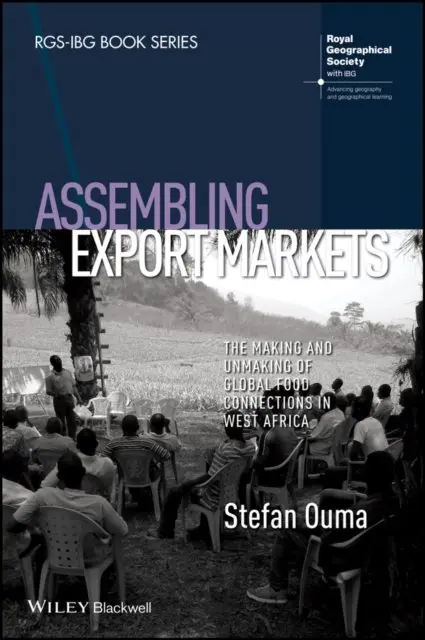
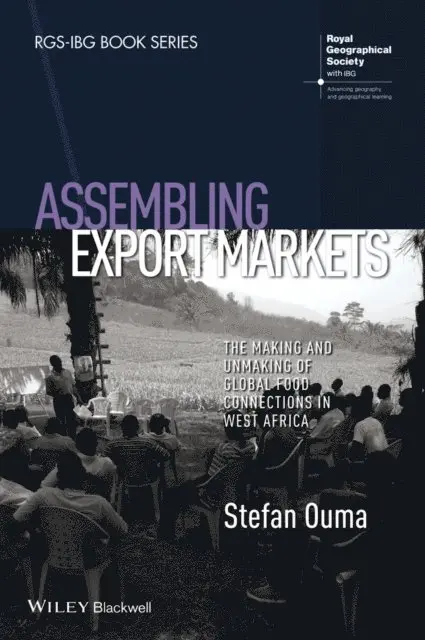
    Assembling Export Markets

    The Making and Unmaking of Global Food Connections in West Africa

    AvStefan Ouma

    Inbunden, Engelska, 2015

    Del i serien RGS-IBG Book Series

    669 kr

    Tillfälligt slut

    Fler format och utgåvor

    Häftad

    352 kr

    E-bok

    395 kr

    E-bok

    947 kr

    Beskrivning

    Assembling Export Markets explores the new ‘frontier regions’ of the global fresh produce market that has emerged in Ghana over the past decade. Represents a major and empirically rich contribution to the emerging field of the social studies of economization and marketizationOffers one of the first ethnographic accounts on the making of global commodity chains ‘from below’Denaturalizes global markets by unpacking their local engagement, materially entangled construction, need for maintenance, and fragile characterOffers a trans-disciplinary engagement with the construction and extension of market relations in two frontier regions of global capitalismCritically examines the opportunities and risks for firms and farms in Ghana entering global fresh produce markets

    Produktinformation

    • Utgivningsdatum:2015-05-12
    • Mått:160 x 236 x 18 mm
    • Vikt:467 g
    • Format:Inbunden
    • Språk:Engelska
    • Serie:RGS-IBG Book Series
    • Antal sidor:264
    • Förlag:John Wiley and Sons Ltd
    • ISBN:9781118632611

    Utforska kategorier

    • Geografi inom Naturvetenskap och teknik

    Mer om författaren

    Stefan Ouma is Assistant Professor in the Department of Human Geography at the Goethe University of Frankfurt. Being an economic geographer by training, he has worked extensively on global commodity chains, agrifood standards, smallholder agriculture, and contract farming in East and West Africa.

    Recensioner i media

    "A rich exploration of the sociomaterial processes of marketization of two case studies of agriculture projects linked to the European market. Ouma's theoretical approach is eclectic, diverse, and interdisciplinary, edging on the line of exploration. The focused presentation of the various actor processes compels the reader to stay attentive to the details. This is a book that makes an extraordinary contribution both theoretically and empirically to the understanding of the ways in which global agro-export markets, which connect goods and products from the Global South to retailers in the Global North, are created through local projects."—Gale Raj-Reichert, Queen Mary University of London, UK (The AAG Review of Books, Volume 7, 2019: Issue 2)"I learned a lot reading this monograph, and find it to be a valuable addition to the commodity chain literature, providing sharp insights for thinking about critical ethnographies of markets and market making."—Edward F. Fischer, Vanderbilt University (Economic Sociology: The European Electronic Newsletter, Volume 18, Number 2)"Focusing on development through export-oriented integration into global markets, [Assembling Export Markets is] grounded in a wealth of ethnographic material, gathered with an amount of fieldwork that few scholars are prepared or are able to invest in the current academic environment.... This impressive study of attempts to make agricultural markets in Ghana is cutting-edge scholarly work of the highest quality that I greatly enjoyed reading."—Christian Berndt (Economic Geography, Vol. 93 No. 2)

    Innehållsförteckning

    • Series Editors’ Preface viiiPreface ixTechnical Remarks xiList of Figures xiiList of Tables xiiiAbbreviations xiv1 Introduction: Struggling with “World Market Integration” 1Rethinking Global Connections 6Grounding Commodity Chains: Geographies of Marketization 9Matters of Concern 14The Practical Means of Marketization 15Marketization as Proliferation 16Of Frontier Regions and Borderlands 16How This Book Unfolds 172 Querying Marketization 21Studying Markets as Practical Accomplishments 23Markets as Sociotechnical Agencements 25“Problems” of Market]Making 29Exchanging Goods the “Right” Way 31Qualified Objectifications 32Detachment/Calculation 35Singularizations 36Knowing and Doing Markets 37From Market Knowledge to Knowing Markets 38Power in/through Markets 39Formatting Market Encounters 42The Order(ing) of Markets 44Conclusion 493 Remaking “the Economy”: Taking Ghanaian Horticulture to Global Markets 53Models of Organizing “the Economy”: From Macro to Micro 56A Tale of Two Frontiers 59Markets for Development: Organic Mangoes in Northern Ghana 60Fresh from Farm: JIT Pineapple Markets 66Sites of Attention 71Conclusion 744 Critical Ethnographies of Marketization 77Researching Markets in the Making 79Outside/Inside “the Market” 81“Reconstructing” Market Practices 85Technicalities? 86Knowledge Production: Heuristics and Limitations 88After “the Field”: Veni, Vidi, Vici? 90Conclusion 925 The Birth of Global Agrifood Market Connections 94Nothing Was Packaged for (High]value) Export 97Market Enrollment, Not Integration 98The Messy Economics of Outgrowing 107Market]making as Boundary Work 108Outflanking Nature? 113The Terms of “World Market” Enrollment 115Good(s) Connect(ions) 119Having the “Right” Product 121Performing the Audit Economy 122Relational Properties of Competition 123Ongoing Struggles for Retail Worth 124The Orderings of JIT 125Conclusion 1266 Enacting Global Connections: The Making of World Market Agencies 131Qualculating the Mango Tree 133Indeterminate Framings of Worth 133Struggling for the Agricola Oeconomicus 137Responsibilizing/Autonomizing Farmers 140Standardizing Market STAs 141Standards and the Stubborn Social 147Value/Power 149Conclusion 1517 Markets, Materiality, and (Anti])Political Encounters 153The Hidden Conditions of Global Markets 155Powerful Valorimeters 157Pricing, Returns, and Visible hands 159Power Relations as Relations of Accounting 162Accounting: Frontstage 165Accounting: Backstage 166Conclusion 1718 Market Crises: When Things Fall Apart, or Won’t Come Together 174A Model in Crisis 177MD2 Takes Over the Market, or How Goods Become Delegitimated 178Trading Down in Times of Crisis 183Currency and Capital Volatilities 183When the Supply Base Disenrolls … 184Reassembling the Market Social? 187Recalcitrant “Nature” and the Crisis of the Developmental Market 189(Mis])calculating “Nature” and other Surprises: Mango Trees as Precarious Commodities 191Crisis Accounts 193Regrouping 196The Corporate Calculus of the Crisis 197Fixing Yields: Contested Pathways of Qualification 198Conclusion 2019 Conclusion 205Beyond Inclusion 209“Market Modernity,” Alternatives, Critique 212Beyond Agrifood: Profanizing Marketization 213References 215Index 232