• Fri frakt över 249 kr
  • •
  • Snabba leveranser
  • •
  • Billiga böcker
Kundservice

Du är på sajten för privatpersoner.

Företag, bibliotek eller offentlig verksamhet?

Du handlar på classic.bokus.com, där alla dina funktioner finns intakta.
Till classic.bokus.com
Bokus logotyp. Gå till startsidan.
  • Erbjudanden
  • Nyheter
  • Student
  • Topplistor
  • Barn & ungdom
  • Bokus Play
  • E-böcker
  • Pocketböcker
  • Spel & pussel

10% rabatt på allt med kod NYSTART10 →

Sidfot

Mina sidor

    Hjälp

    • Kundservice
    • Vanliga frågor och svar
    • Frakt och leverans
    • Retur vid ångerrätt
    • Reklamera vara
    • Betalning
    • Köpvillkor
    • Allmänna villkor
    • Information om webbplatsens tillgänglighet

    Om Bokus

    • Om oss
    • Pressrum
    • För studenter
    • För företag
    • För bibliotek och offentlig verksamhet
    • För leverantörer
    • Hållbarhet

    Populärt

    • Aktuella erbjudanden
    • Presentkort
    • Studentlitteratur
    • Nya böcker
    • Topplistor
    • Signerade böcker
    • Engelska böcker

    Inspiration

    • Boktips
    • BookTok
    • Populära bokserier
    • Barnbokskaraktärer
    • Populära författare
    Logotyp för Bokus
    Följ oss på Facebook (extern länk)Följ oss på Instagram (extern länk)Följ oss på YouTube (extern länk)Följ oss på TikTok (extern länk)
    bokus @ CookiesAnpassa cookiesIntegritetspolicyKöpvillkor
    Till Citymail hemsida (extern länk)Till Budbee hemsida (extern länk)Till Postnord hemsida (extern länk)Till Schenker hemsida (extern länk)Till Early Bird hemsida (extern länk)Till Walleys hemsida (extern länk)
    1. Ekonomi och Ledarskap
    2. Ledarskapsböcker

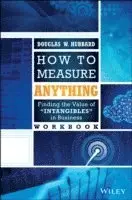
    How to Measure Anything Workbook

    Finding the Value of Intangibles in Business

    AvDouglas W. Hubbard

    Häftad, Engelska, 2014

    251 kr

    Beställningsvara. Skickas inom 5-8 vardagar. Fri frakt över 249 kr.

    Fler format och utgåvor

    E-bok

    305 kr

    E-bok

    305 kr

    Beskrivning

    The invaluable companion to the new edition of the bestselling How to Measure Anything This companion workbook to the new edition of the insightful and eloquent How to Measure Anything walks readers through sample problems and exercises in which they can master and apply the methods discussed in the book.The book explains practical methods for measuring a variety of intangibles, including approaches to measuring customer satisfaction, organizational flexibility, technology risk, technology ROI, and other problems in business, government, and not-for-profits. Companion to the revision of the bestselling How to Measure AnythingProvides chapter-by-chapter exercisesWritten by industry leader Douglas HubbardWritten by recognized expert Douglas Hubbard—creator of Applied Information Economics—How to Measure Anything Workbook illustrates how the author has used his approach across various industries and how any problem, no matter how difficult, ill defined, or uncertain can lend itself to measurement using proven methods.

    Produktinformation

    • Utgivningsdatum:2014-04-15
    • Mått:150 x 229 x 13 mm
    • Vikt:249 g
    • Format:Häftad
    • Språk:Engelska
    • Antal sidor:160
    • Förlag:John Wiley & Sons Inc
    • ISBN:9781118752364

    Utforska kategorier

    • Ledarskapsböcker inom Ekonomi och Ledarskap

    Mer om författaren

    DOUGLAS W. HUBBARD is the inventor of Applied Information Economics (AIE). He is an internationally recognized expert in the field of decision analysis and challenging measurements and is a popular speaker at numerous conferences. AIE method has been applied to dozens of large Fortune 500 IT investments, military logistics, venture capital, aerospace, and environmental issues. Doug is the author of How to Measure Anything: Finding the Value of “Intangibles” in Business (Wiley).

    Innehållsförteckning

    • Preface ixAbout the Author xiPart I Questions 1Chapter 1 The Challenge of Intangibles 3Learning Objectives 3Chapter Overview 3Questions 4Chapter 2 An Intuitive Measurement Habit: Eratosthenes, Enrico, and Emily 9Learning Objectives 9Chapter Overview 9Questions 10Chapter 3 The Illusion of Intangibles: Why Immeasurables Aren’t 15Learning Objectives 15Chapter Overview 15Questions 16Chapter 4 Clarifying the Measurement Problem 23Learning Objectives 23Chapter Overview 23Questions 24Chapter 5 Calibrated Estimates: How Much Do You Know Now? 31Learning Objectives 31Chapter Overview 31Questions 32Chapter 6 Quantifying Risk through Modeling 39Learning Objectives 39Chapter Overview 39Questions 40Chapter 7 Quantifying the Value of Information 47Learning Objectives 47Chapter Overview 47Questions 48Chapter 8 The Transition: From What to Measure to How to Measure 55Learning Objectives 55Chapter Overview 55Questions 56Chapter 9 Sampling Reality: How Observing Some Things Tells Us about All Things 61Learning Objectives 61Chapter Overview 61Questions 62Chapter 10 Bayes: Adding to What You Know Now 69Learning Objectives 69Chapter Overview 69Questions 70Chapter 11 Preference and Attitudes: The Softer Side of Measurement 77Learning Objectives 77Chapter Overview 77Questions 78Chapter 12 The Ultimate Measurement Instrument: Human Judges 87Learning Objectives 87Chapter Overview 87Questions 88Chapter 13 New Measurement Instruments for Management 93Learning Objectives 93Chapter Overview 93Questions 94Chapter 14 A Universal Measurement Method: Applied Information Economics 99Learning Objectives 99Chapter Overview 99Questions 100Part II Answers 105Chapter 1 The Challenge of Intangibles 107Chapter 2 An Intuitive Measurement Habit: Eratosthenes, Enrico, and Emily 109Chapter 3 The Illusion of Intangibles: Why Immeasurables Aren’t 111Chapter 4 Clarifying the Measurement Problem 115Chapter 5 Calibrated Estimates: How Much Do You Know Now? 117Chapter 6 Quantifying Risk through Modeling 119Chapter 7 Quantifying the Value of Information 125Chapter 8 The Transition: From What to Measure to How to Measure 129Chapter 9 Sampling Reality: How Observing Some Things Tells Us about All Things 131Chapter 10 Bayes: Adding to What You Know Now 135Chapter 11 Preference and Attitudes: The Softer Side of Measurement 137Chapter 12 The Ultimate Measurement Instrument: Human Judges 139Chapter 13 New Measurement Instruments for Management 141Chapter 14 A Universal Measurement Method: Applied Information Economics 143