• Fri frakt över 249 kr
  • •
  • Snabba leveranser
  • •
  • Billiga böcker
Kundservice

Du är på sajten för privatpersoner.

Företag, bibliotek eller offentlig verksamhet?

Du handlar på classic.bokus.com, där alla dina funktioner finns intakta.
Till classic.bokus.com
Bokus logotyp. Gå till startsidan.
  • Erbjudanden
  • Nyheter
  • Student
  • Topplistor
  • Barn & ungdom
  • Bokus Play
  • E-böcker
  • Pocketböcker
  • Spel & pussel

10% rabatt på allt med kod: NYSTART10 →

Sidfot

Mina sidor

    Hjälp

    • Kundservice
    • Vanliga frågor och svar
    • Frakt och leverans
    • Retur vid ångerrätt
    • Reklamera vara
    • Betalning
    • Köpvillkor
    • Allmänna villkor
    • Information om webbplatsens tillgänglighet

    Om Bokus

    • Om oss
    • Pressrum
    • För studenter
    • För företag
    • För bibliotek och offentlig verksamhet
    • För leverantörer
    • Hållbarhet

    Populärt

    • Aktuella erbjudanden
    • Presentkort
    • Studentlitteratur
    • Nya böcker
    • Topplistor
    • Signerade böcker
    • Engelska böcker

    Inspiration

    • Boktips
    • BookTok
    • Populära bokserier
    • Barnbokskaraktärer
    • Populära författare
    Logotyp för Bokus
    Följ oss på Facebook (extern länk)Följ oss på Instagram (extern länk)Följ oss på YouTube (extern länk)Följ oss på TikTok (extern länk)
    bokus @ CookiesAnpassa cookiesIntegritetspolicyKöpvillkor
    Till Citymail hemsida (extern länk)Till Budbee hemsida (extern länk)Till Postnord hemsida (extern länk)Till Schenker hemsida (extern länk)Till Early Bird hemsida (extern länk)Till Walleys hemsida (extern länk)
    1. Kultur
    2. Arkitektur

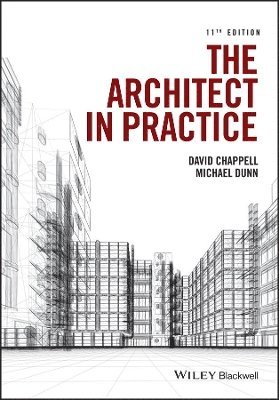
    Architect in Practice

    AvDavid Chappell,Michael H. Dunn

    Häftad, Engelska, 2016

    698 kr

    Beställningsvara. Skickas inom 5-8 vardagar. Fri frakt över 249 kr.

    Beskrivning

    Throughout its many editions, The Architect in Practice has remained a leading textbook used in the education of architects. While the content of the book has developed, the message and philosophy has remained constant: to provide students of architecture and young practitioners with a readable guide to the profession, outlining an architect's duties to their client and contractor, the key aspects of running a building contract, and the essentials of management, finance and drawing office procedure.The eleventh edition follows in that tradition. The text has been brought up to date to ensure it follows the new RIBA Plan of Work 2013 as the guide to the architect’s workflow. In addition, a number of changes to standard forms of contract were made with the publication of the JCT 2011 suite of contracts, and the RIBA Standard Form for the Appointment of an Architect 2010 (2012 Revision). These new forms are fully covered. In addition, the opportunity has been taken to reorganise the layout so that the content flows in a way that is more consistent with current architectural practice, and to deal with the increasing use of BIM. The eleventh edition of The Architect in Practice continues to provide the guidance and advice all students and practising architects need in the course of their studies and in their profession.

    Produktinformation

    • Utgivningsdatum:2016-01-22
    • Mått:173 x 244 x 20 mm
    • Vikt:875 g
    • Format:Häftad
    • Språk:Engelska
    • Antal sidor:512
    • Upplaga:11
    • Förlag:John Wiley and Sons Ltd
    • ISBN:9781118907733

    Utforska kategorier

    • Arkitektur inom Kultur

    Mer om författaren

    DAVID CHAPPELL BA(Hons Arch), MA(Arch), MA(Law), PhD, RIBA has 50 years of experience in the construction industry having worked as an architect in the public and private sectors, as contracts administrator, as a lecturer in construction law and contracts procedure and as a construction contracts consultant. He was Professor of Architectural Practice and Management Research at The Queen's University of Belfast and Visiting Professor of Practice Management and Law at the University of Central England in Birmingham. The author of many books for the construction industry, he is Director of David Chappell Consultancy Limited, is a specialist advisor to the RIBA and RSUA and regularly acts as an adjudicator. MICHAEL DUNN FRICS, FCIArb, BSc (Hons), LLB, LLM is a quantity surveyor with over 25 years of experience in the construction industry, having worked in both the public and private sectors. He was a lecturer and course leader at Leeds Metropolitan University on its Construction Law & Arbitration postgraduate course, and is now a director with Rex Procter & Partners. He is a visiting lecturer on Birmingham City University's and the RIBA's (Chester, Hong Kong & Dubai) Part 3 professional practice courses, and at Leeds Beckett University on its Construction Law & Dispute Resolution postgraduate course.

    Innehållsförteckning

    • Preface xiii Acknowledgements xviiAbbreviations and Acronyms xixPart 1 Practice 1A THE PRACTITIONER 31 The Construction Industry 31.1 Introduction 31.2 Significance of the construction industry 31.3 A changing industry 41.4 Clients 61.5 Contractors 71.6 Consultants 91.7 Clerk of works 131.8 Construction industry bodies 14References and notes 212 Academic and Professional Qualifications 222.1 Introduction 222.2 Relevant bodies 242.3 Architectural education and training 292.4 Examination of professional practice 362.5 Approval of educational programmes 362.6 Practising in the United Kingdom 412.7 Practising in Ireland 422.8 Practising in Egypt, Nigeria and Malaysia 432.9 Maintenance of standards, regulation and codes of conduct 462.10 ARB’s standards of professional conduct and practice 472.11 RIBA code of professional conduct 532.12 The RIAI code of conduct 552.13 Continuing professional development 55References and notes 573 Employment Opportunities 593.1 Introduction 593.2 Private practice 603.3 Local authority 623.4 Other public sector organisations 633.5 Large companies 643.6 Contractors 643.7 Manufacturers 653.8 Academia 663.9 Other specialisation 673.10 Adjudicator, arbitrator or expert witness 68References and notes 694 Employment 714.1 Finding employment 714.2 Acceptable job titles 884.3 Employment 894.4 Job description 924.5 Hours of work 934.6 Overtime 954.7 Salary 964.8 Benefits 974.9 Professional activities 984.10 Expenses 994.11 Leave 1004.12 Disciplinary and grievance procedure 1034.13 Notice and dismissal 1044.14 Spare time practice 1054.15 Monitoring of telephone calls and e-mails 1074.16 Discrimination 107References and notes 1095 Types of Practice 1105.1 Sole principal 1105.2 Partnerships 1115.3 Incorporation 1175.4 Co-operative 1215.5 Group practice 1215.6 Developer/architect/contractor 122References and notes 1236 Setting Up in Practice 1246.1 Sole principal 1246.2 The decision 1246.3 Timing 1256.4 Practical points to decide 1266.5 Business plan 1316.6 Enlarging the practice 132References and notes 134B PRACTICE MANAGEMENT 1357 Management Principles 1357.1 Objectives 1357.2 Leadership 1367.3 Communication 1377.4 Delegation 1387.5 Motivation 139References and notes 1408 General Office Practice 1418.1 Introduction 1418.2 Telephone, facsimile (fax) and e-mail 1418.3 Information technology 1448.4 Letter writing 1458.5 Reports 1468.6 Filing 1478.7 Office-based meetings 1498.8 Drawing office practice 1498.9 Computer-aided design 1538.10 Presentation 1548.11 Reproduction 1558.12 Work programming 1558.13 Sources of information 156References and notes 1659 Marketing 1689.1 Active marketing 1689.2 Brochure 1709.3 Website 1719.4 Social media 1729.5 Advertising 1739.6 Contacts 1739.7 Competitions 1749.8 Frameworks 1759.9 Retaining clients and recommendations 175References and notes 17610 Insurance 17710.1 Introduction 17710.2 Premises and contents 17910.3 Public liability 18010.4 Employer’s liability 18110.5 Professional indemnity 18110.6 Latent defects insurance 18310.7 Other insurances 184References and notes 18411 Finance and Accounts 18511.1 Introduction 18511.2 Accounts 18511.3 Profit and loss account 18511.4 Balance sheet 18611.5 Assets 18811.6 Liabilities 18811.7 Capital 18911.8 Cash-flow forecasting and budgeting 19011.9 Books of account 19111.10 Fee invoicing 19111.11 Value added tax (VAT) 19111.12 Computerisation 19211.13 Annual accounts/auditing 19211.14 Staff time records 193References and notes 195Part 2 Running a Project 19712 The RIBA Plan ofWork 2013 19912.1 Sequential framework and Plan ofWork 19912.2 The Plan ofWork explained 20212.3 Building information modelling (BIM) 20812.4 BIM overlay to the Plan ofWork 20912.5 Green principles 20912.6 Green overlay to the Plan ofWork 21012.7 New words and phrases 211References and notes 21213 Stage 0: Strategic Definition – Appointment 21413.1 Introduction 21413.2 Scope of services 21513.3 Determination of the fee 23313.4 Terms of appointment 24013.5 Consultants 24313.6 Project managers 245References and notes 24814 Stage 0: Strategic Definition – Terms 25014.1 Standard forms of agreement 25014.2 Standard Agreement 2010 (2012 revision): Architect 25114.3 Duty of care agreements (collateral warranties) 280References and notes 28715 Stage 1: Preparation and Brief 28815.1 Feasibility studies 28815.2 Site and building acquisition 29315.3 Surveys 29515.4 The brief 30115.5 Reporting 302References and notes 30316 Stage 2: Concept Design 30416.1 Design data 30416.2 Concept design and its development 30516.3 Cost estimates and planning 30616.4 Procurement paths and implications for the professional 30716.5 Contract selection and implications 31716.6 Guaranteed maximum price 32016.7 PFI Contracts 32216.8 Partnering 323References and notes 32517 Stage 3: Developed Design 32717.1 General 32717.2 Planning applications and approvals 32817.3 Other approvals 35317.4 Property 353References and notes 36118 Stage 4: Technical Design 36318.1 Technical design 36318.2 Production information 36618.3 Building regulations 2010 (as amended) 369References and notes 37919 Stage 4: Technical Design: Tender Documentation and Tender Action 38019.1 Introduction 38019.2 Co-ordinated project information 38119.3 Bills of quantities 38319.4 Specifications 39019.5 Schedules of work 39319.6 Activity schedules 39319.7 Tendering 39319.8 Preparing the contract documents 403References and notes 40420 Stage 5: Construction 40520.1 Contractor’s programme 40520.2 Meetings 40820.3 Site inspections 41320.4 Safety 41420.5 Architect’s instructions and variations 41520.6 Variations and their valuation 41820.7 Controlling costs 42220.8 Workmanship and materials 42320.9 Certificates and payments 42620.10 Delays and extensions of time 43520.11 Financial claims 43820.12 Termination 440References and notes 44321 Stage 6: Handover and Close Out 44621.1 Practical completion 44621.2 Rectification period 45121.3 Adjustment of contract sum 45421.4 Final certificate 457References and notes 46122 Stage 7: In Use 46322.1 Review of project 46322.2 Architect’s review 46422.3 Client review 46622.4 Review of building in use 467References and notes 467Table of Cases 468Index 473