• Fri frakt över 249 kr
  • •
  • Snabba leveranser
  • •
  • Billiga böcker
Kundservice

Du är på sajten för privatpersoner.

Företag, bibliotek eller offentlig verksamhet?

Du handlar på classic.bokus.com, där alla dina funktioner finns intakta.
Till classic.bokus.com
Bokus logotyp. Gå till startsidan.
  • Erbjudanden
  • Nyheter
  • Student
  • Topplistor
  • Barn & ungdom
  • Bokus Play
  • E-böcker
  • Pocketböcker
  • Spel & pussel

10% rabatt på allt med kod NYSTART10 →

Sidfot

Mina sidor

    Hjälp

    • Kundservice
    • Vanliga frågor och svar
    • Frakt och leverans
    • Retur vid ångerrätt
    • Reklamera vara
    • Betalning
    • Köpvillkor
    • Allmänna villkor
    • Information om webbplatsens tillgänglighet

    Om Bokus

    • Om oss
    • Pressrum
    • För studenter
    • För företag
    • För bibliotek och offentlig verksamhet
    • För leverantörer
    • Hållbarhet

    Populärt

    • Aktuella erbjudanden
    • Presentkort
    • Studentlitteratur
    • Nya böcker
    • Topplistor
    • Signerade böcker
    • Engelska böcker

    Inspiration

    • Boktips
    • BookTok
    • Populära bokserier
    • Barnbokskaraktärer
    • Populära författare
    Logotyp för Bokus
    Följ oss på Facebook (extern länk)Följ oss på Instagram (extern länk)Följ oss på YouTube (extern länk)Följ oss på TikTok (extern länk)
    bokus @ CookiesAnpassa cookiesIntegritetspolicyKöpvillkor
    Till Citymail hemsida (extern länk)Till Budbee hemsida (extern länk)Till Postnord hemsida (extern länk)Till Schenker hemsida (extern länk)Till Early Bird hemsida (extern länk)Till Walleys hemsida (extern länk)
    1. Ekonomi och Ledarskap
    2. Ledarskapsböcker
    3. Projektledning

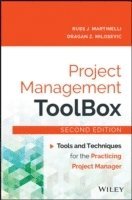
    Project Management ToolBox

    Tools and Techniques for the Practicing Project Manager

    AvRuss J. Martinelli,Dragan Z. Milosevic

    Inbunden, Engelska, 2016

    720 kr

    Tillfälligt slut

    Fler format och utgåvor

    E-bok

    1 105 kr

    E-bok

    1 138 kr

    Beskrivning

    Boost your performance with improved project management tactics Project Management ToolBox: Tools and Techniques for the Practicing Project Manager, Second Edition offers a succinct explanation of when, where, and how to use project management resources to enhance your work. With updated content that reflects key advances in the project management field, including planning, implementation, control, cost, and scheduling, this revised text offers added material that covers relevant topics, such as agility, change management, governance, reporting, and risk management. This comprehensive resource provides a contemporary set of tools, explaining each tool's purpose and intention, development, customization and variations, and benefits and disadvantages. Additionally, examples, tips, and milestone checks guide you through the application of these tools, helping you practically apply the information you learn. Effective project management can support a company in increasing market share, improving the quality of products, and enhancing customer service. With so many aspects of project management changing as the business world continues to evolve, it is critical that you stay up to date on the latest topics in this field. Explore emerging topics within the world of project management, keeping up to date on the latest, most relevant subject areasLeverage templates, exercises, and PowerPoint presentations to enhance your project management skillsDiscuss tips, reporting, implementation, documentation, and other essentials of the project management fieldConsider how project management fits into various industries, including technology, construction, healthcare, and product developmentProject Management ToolBox: Tools and Techniques for the Practicing Project Manager, Second Edition is an essential resource for experienced project managers and project management students alike.

    Produktinformation

    • Utgivningsdatum:2016-03-15
    • Mått:163 x 241 x 31 mm
    • Vikt:816 g
    • Format:Inbunden
    • Språk:Engelska
    • Antal sidor:480
    • Upplaga:2
    • Förlag:John Wiley & Sons Inc
    • ISBN:9781118973127

    Utforska kategorier

    • Projektledning inom Ekonomi och Ledarskap

    Mer om författaren

    RUSS J. MARTINELLI has served as a program manager at Intel, Loral, and Lockheed Martin, and is a founder of the Program Management Academy. He also provides training and consulting services to companies in both the for-profit and non-profit sectors. DRAGAN Z. MILOSEVIC, PHD, PMP, has been an Associate Professor of Engineering and Technology Management at Portland State University (Oregon), a consultant and trainer, and has conducted seminars in many parts of the world. He is the author of multiple books and dozens of papers on the subject of project management.

    Innehållsförteckning

    • Preface xvAcknowledgments xviiPart I: The PM Toolbox 11 Introduction to the PM Toolbox 3Enabling Business and Project Strategy 5Project Management Methodologies and Processes 7Constructing and Adapting a PM Toolbox 9Secure Strategic Alignment 10Customize the PM Toolbox 12Continuously Improve the PM Toolbox 20References 21Part II: Project Initiation Tools 232 Project Selection 25The Benefits Map 25Enabling Benefits Management 26Developing a Benefits Map 28Using a Benefits Map 29Variations 30Benefits 31Economic Methods 31Payback Time 31Net Present Value 31Internal Rate of Return 33Using Economic Methods 33Benefits of Economic Methods 34Scoring Models 34Developing a Scoring Model 34Using a Scoring Model 39Benefits 40Voting Models 40Developing a Voting Model 41Using the Voting Model 42Benefits 45Pairwise Ranking 46Developing a Pairwise Ranking Tool 47Using the Pairwise Ranking Matrix 48Benefits 49The Alignment Matrix 49Developing the Alignment Matrix 50Variations 51Benefits 52References 523 Project Initiation 55Checklist Questions for Project Initiation 55Developing Checklist Questions for Project Initiation 56Using the Checklist Questions 57The Goals Grid 57Developing a Goals Grid 58Using the Goals Grid 59Benefits 60Responsibility Matrix 60Developing a Responsibility Matrix 61Using the Responsibility Matrix 63Benefits 64Complexity Assessment 64Developing the Complexity Assessment 65Using the Complexity Assessment 67Benefits 67The Project Business Case 68Developing the Project Business Case 68Using the Project Business Case 70Benefits 71The Project Charter 71Developing a Project Charter 71Using a Project Charter 76Variations 77Benefits 77References 78Part III: Project Planning Tools 814 Project Requirements 83The Elicitation Plan 84Developing an Elicitation Plan 86Using the Elicitation Plan 89Benefits 90Requirements Specification 91Specifying a Requirement Using Planguage 91Using the Requirements Specificiation 93Benefits 96The Product Requirements Document 96Developing a Product Requirements Document 97Using the PRD 101Benefits 102Requirements Ambiguity Checklist 102Using the Requirements Ambiguity Checklist 104Benefits 106Requirements Baseline 106Establishing a Requirements Baseline 107Establish a Requirements Change Board 107Benefits 108References 1095 Scope Planning 111Project SWOT Analysis 111Performing a Project SWOT Analysis 112Using a Project SWOT Analysis 116Benefits 117The Scope Statement 118Developing a Scope Statement 118Using a Scope Statement 124Variations 124Benefits 125The Work Breakdown Structure 126Constructing a Project WBS: A Top-Down Approach 128Establish the WBS Level of Detail 130Constructing a Project WBS: A Bottom-Up Approach 134Using the WBS 135Benefits 136The Product Breakdown Structure 137Constructing a Product Breakdown Structure 137Using the PBS 141Benefits 141References 1426 Schedule Development 145The Gantt Chart 146Developing a Gantt Chart 146Using the Gantt Chart 149Benefits 149The Milestone Chart 150Developing a Milestone Chart 151Using the Milestone Chart 153Benefits 154The Critical Path Method Diagram 154Constructing a CPM Diagram 155Using the CPM Diagram 160Benefits 161Variations 161The Time-Scaled Arrow Diagram 162Developing a TAD 162Using a TAD 167Benefits 168The Critical Chain Schedule 168Developing a Critical Chain Schedule 169Using the Critical Chain Schedule 172Benefits 173The Hierarchical Schedule 173Constructing a Hierarchical Schedule 174Using a Hierarchical Schedule 176Benefits 177Line of Balance 177Developing a Line-of-Balance Schedule 178Using the LOB 180Benefits 181Choosing Your Scheduling Tools 181References 1837 Cost Planning 185The Cost-Planning Map 185Developing a Cost-Planning Map 186Using the Cost-Planning Map 191Benefits 191Analogous Estimate 191Developing an Analogous Estimate 192Using an Analogous Estimate 193Benefits 193Parametric Estimate 194Developing Parametric Estimates 194Using Parametric Estimates 198Benefits 198Bottom-up Estimate 199Developing Bottom-Up Estimates 200Using Bottom-Up Estimates 202Benefits 202The Cost Baseline 203Developing a Cost Baseline 203Using the Cost Baseline 207Benefits 208Choosing a Cost-Planning Tool 211References 211Part IV: Project Implementation Tools 2138 Scope Management 215Project Scope Control System 217Establishing a Project Scope Control System 217Using the Project Scope Control System 220Benefits 223Project Change Request 223Developing a Project Change Request 224Using the Project Change Request 228Benefits 229The Project Change Log 229Developing a Project Change Log 230Using the Project Change Log 232Benefits 233The Scope Control Decision Checklist 233Developing a Scope Control Decision Checklist 233Using the Scope Control Decision Checklist 234Benefits 235References 2359 Schedule Management 237The Burn Down Chart 239Developing the Burn Down Chart 239Using the Burn Down Chart 240Benefits 242The Slip Chart 243Developing the Slip Chart 244Using the Slip Chart 246Benefits 246The Buffer Chart 247Developing the Buffer Chart 248Using the Buffer Chart 249Benefits 250The Jogging Line 251Constructing a Jogging Line 252Using the Jogging Line 255Variations 256Benefits 256The Milestone Prediction Chart 257Constructing the Milestone Prediction Chart 258Using the Milestone Prediction Chart 260Benefits 260B-C-F Analysis 261Performing the B-C-F Analysis 262Using the B-C-F Analysis 264Benefits 265Schedule Crashing 265Performing Schedule Crashing 265Using Schedule Crashing 269Benefits 269Choosing Your Schedule Management Tools 269References 27010 Cost Management 273Cost Management Plan 275Developing the Cost Management Plan 275Using the Cost Management Plan 276The Budget Consumption Chart 276Developing the Budget Consumption Chart 277Using the Budget Consumption Chart 278Variations 279Benefits 279Earned Value Analysis 280Performing Earned Value Analysis 281Using Earned Value Analysis 292Variations 293Benefits 293Milestone Analysis 294Performing a Milestone Analysis 295Using the Milestone Analysis 297Benefits 297Choosing Your Cost Management Tools 297References 29811 Agile Project Execution 301Contributed by Peerasit Patanakul, James Henry, Jeffrey A. LeachScrum Basics 302Product Backlog and Sprint Backlog 304Information on the Backlogs 304Populating Backlogs 304Benefits 306Release Planning 307The Release-Planning Event 308Initial Draft Release Plan 309Final Release Plans 309HIP Sprint 310Release Planning versus Sprint Planning 310Benefits 311The Daily Scrum Meeting 311Organizing a Daily Scrum Meeting 312Benefits 312Sprint Task Board 313Using the Sprint Task Board 313Benefits 314The Sprint Burn Down Chart 315Developing a Sprint Burn Down Chart 315Using a Sprint Burn Down Chart 316Benefits 317The Sprint Retrospective Meeting 317Organizing a Sprint Retrospective Meeting 318Using a Sprint Retrospective Meeting 318Benefits 320Concluding Remarks 320References 321Part V: Project Reporting and Closure Tools 32312 Performance Reporting 325Project Reporting Checklist 325Developing the Project Reporting Checklist 326Using the Project Reporting Checklist 326Benefits 326The Project Strike Zone 328Developing the Project Strike Zone 328Using the Project Strike Zone 330Benefits 332The Project Dashboard 332Designing a Project Dashboard 334Using the Project Dashboard 335Benefits 336The Summary Status Report 337Developing a Summary Status Report 337Using the Summary Status Report 342Benefits 343The Project Indicator 343Developing the Project Indicator 345Using the Project Indicator 346Variations 346Benefits 348Choosing Your Reporting Tools 349References 34913 Project Closure 351Contributed by Tim Rahschulte, PhDUnderstanding Project Closure 351Project Closing Activities 353Project Closure Plan and Checklist 356Developing the Plan and Checklist 358Using the Closure Plan and Checklist 362Benefits 362The Project Closure Report 363Developing the Project Closure Report 363Using the Project Closure Report 365Benefits 365Postmortem Review 366Conducting the Postmortem Review 366Using the Postmortem Review 369Variations 371Benefits 372Concluding Remarks 373References 373Part VI: Risk and Stakeholder Management Tools 37514 Managing Project Risk 377Risk Management Plan 378Developing a Risk Management Plan 378Using the Risk Management Plan 385Benefits 386The Risk Identification Checklist 387Developing a Risk Identification Checklist 387Using a Risk Identification Checklist 389Benefits 389The Risk Register 390Creating a Risk Register 390Using the Risk Register 393Benefits 394The Risk Assessment Matrix 394Developing a Risk Assessment Matrix 395Using the Risk Assessment Matrix 397Variations 398Benefits 398Monte Carlo Analysis 399Performing a Monte Carlo Analysis 400Using the Monte Carlo Analysis 408Benefits 409The Decision Tree 409Analyzing the Decision Tree 410Using Decision Trees 413Benefits 414The Risk Dashboard 414Developing the Risk Dashboard 414Using the Risk Dashboard 418Benefits 418Choosing Your Risk Management Tools 420References 42015 Influencing Project Stakeholders 423The Stakeholder Management Plan 423Developing a Stakeholder Management Plan 424Using the Stakeholder Management Plan 427Benefits 427The Stakeholder Map 428Developing a Stakeholder Map 428Using the Stakeholder Map 431Benefits 431The Stakeholder Analysis Table 431Developing a Stakeholder Analysis Table 433Using the Stakeholder Analysis Table 434Benefits 435The Stakeholder Evaluation Matrix 436Developing a Stakeholder Evaluation Matrix 438Using the Stakeholder Evaluation Matrix 439Variations 441Benefits 443The Stakeholder Strategy Matrix 444Developing a Stakeholder Strategy Matrix 444Using the Stakeholder Strategy Matrix 446Benefits 447Choosing Your Stakeholder Management Tools 447References 449Final Thoughts on the PM Toolbox 449Index 451