• Fri frakt över 249 kr
  • •
  • Snabba leveranser
  • •
  • Billiga böcker
Kundservice

Du är på sajten för privatpersoner.

Företag, bibliotek eller offentlig verksamhet?

Du handlar på classic.bokus.com, där alla dina funktioner finns intakta.
Till classic.bokus.com
Bokus logotyp. Gå till startsidan.
  • Erbjudanden
  • Nyheter
  • Student
  • Topplistor
  • Barn & ungdom
  • Bokus Play
  • E-böcker
  • Pocketböcker
  • Spel & pussel

10% rabatt på allt med kod NYSTART10 →

Sidfot

Mina sidor

    Hjälp

    • Kundservice
    • Vanliga frågor och svar
    • Frakt och leverans
    • Retur vid ångerrätt
    • Reklamera vara
    • Betalning
    • Köpvillkor
    • Allmänna villkor
    • Information om webbplatsens tillgänglighet

    Om Bokus

    • Om oss
    • Pressrum
    • För studenter
    • För företag
    • För bibliotek och offentlig verksamhet
    • För leverantörer
    • Hållbarhet

    Populärt

    • Aktuella erbjudanden
    • Presentkort
    • Studentlitteratur
    • Nya böcker
    • Topplistor
    • Signerade böcker
    • Engelska böcker

    Inspiration

    • Boktips
    • BookTok
    • Populära bokserier
    • Barnbokskaraktärer
    • Populära författare
    Logotyp för Bokus
    Följ oss på Facebook (extern länk)Följ oss på Instagram (extern länk)Följ oss på YouTube (extern länk)Följ oss på TikTok (extern länk)
    bokus @ CookiesAnpassa cookiesIntegritetspolicyKöpvillkor
    Till Citymail hemsida (extern länk)Till Budbee hemsida (extern länk)Till Postnord hemsida (extern länk)Till Schenker hemsida (extern länk)Till Early Bird hemsida (extern länk)Till Walleys hemsida (extern länk)
    1. Medicin
    2. Andra medicinska specialiteter
    3. Patologi

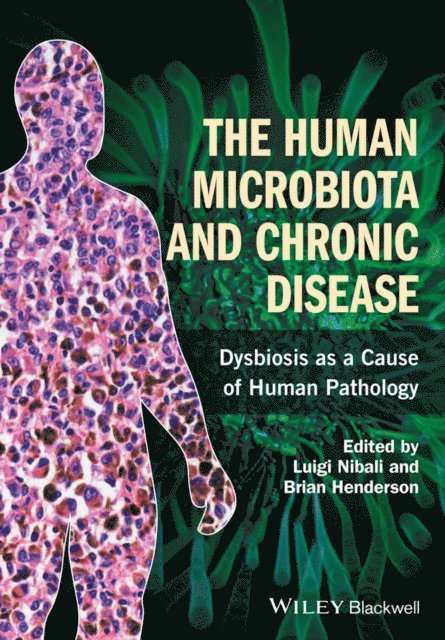
    Human Microbiota and Chronic Disease

    Dysbiosis as a Cause of Human Pathology

    AvLuigi Nibali,Brian Henderson

    Inbunden, Engelska, 2016

    1 869 kr

    Beställningsvara. Skickas inom 11-20 vardagar. Fri frakt över 249 kr.

    Beskrivning

    Microbiota-associated pathology can be a direct result of changes in general bacterial composition, such as might be found in periodontitis and bacterial vaginosis, and/or as the result of colonization and/or overgrowth of so called keystone species. The disruption in the composition of the normal human microbiota, or dysbiosis, plays an integral role in human health and human disease.The Human Microbiota and Human Chronic Disease: Dysbioses as a Cause of Human Pathology discusses the role of the microbiota in maintaining human health. The text introduces the reader to the biology of microbial dysbiosis and its potential role in both bacterial disease and in idiopathic chronic disease states.Divided into five sections, the text delineates the concept of the human bacterial microbiota with particular attention being paid to the microbiotae of the gut, oral cavity and skin. A key methodology for exploring the microbiota, metagenomics, is also described. The book then shows the reader the cellular, molecular and genetic complexities of the bacterial microbiota, its myriad connections with the host and how these can maintain tissue homeostasis. Chapters then consider the role of dysbioses in human disease states, dealing with two of the commonest bacterial diseases of humanity – periodontitis and bacterial vaginosis. The composition of some, if not all microbiotas can be controlled by the diet and this is also dealt with in this section.  The discussion moves on to the major ‘idiopathic’ diseases afflicting humans, and the potential role that dysbiosis could play in their induction and chronicity. The book then concludes with the therapeutic potential of manipulating the microbiota, introducing the concepts of probiotics, prebiotics and the administration of healthy human faeces (faecal microbiota transplantation), and then hypothesizes as to the future of medical treatment viewed from a microbiota-centric position. Provides an introduction to dysbiosis, or a disruption in the composition of the normal human microbiotaExplains how microbiota-associated pathology and other chronic diseases can result from changes in general bacterial compositionExplores the relationship humans have with their microbiota, and its significance in human health and diseaseCovers host genetic variants and their role in the composition of human microbial biofilms, integral to the relationship between human health and human diseaseAuthored and edited by leaders in the field, The Human Microbiota and Human Chronic Disease will be an invaluable resource for clinicians, pathologists, immunologists, cell and molecular biologists, biochemists, and system biologists studying cellular and molecular bases of human diseases.

    Produktinformation

    • Utgivningsdatum:2016-09-30
    • Mått:173 x 246 x 31 mm
    • Vikt:1 089 g
    • Format:Inbunden
    • Språk:Engelska
    • Antal sidor:544
    • Förlag:John Wiley and Sons Ltd
    • ISBN:9781118982877

    Utforska kategorier

    • Patologi inom Medicin
    • Sjukdomar och rubbningar inom Medicin

    Mer om författaren

    Luigi Nibali is a Senior Clinical Lecturer in the Clinical Oral Research Centre, Institute of Dentistry, Queen Mary University London in London, UK. Brian Henderson is a Professor of Microbial Diseases in the School of Life and Medical Sciences at University College London in London, UK.

    Innehållsförteckning

    • List of contributors xviiPreface xxiSection 1 An introduction to the human tissue microbiome 11 The human microbiota: an historical perspective 3Michael Wilson1.1 Introduction: the discovery of the human microbiota: why do we care? 31.2 The importance of the indigenous microbiota in health and disease 31.3 The development of technologies for characterising the indigenous microbiota 81.4 Culture‐independent approaches to microbial community analysis 291.5 Determination of microbial community functions 311.6 Closing remarks 32Take‐home message 32References 332 An introduction to microbial dysbiosis 37Mike Curtis2.1 Definition of dysbiosis 372.2 The ‘normal’ microbiota 382.3 Main features of dysbiosis 452.4 Conclusions 49Take‐home message 53Acknowledgment 53References 533 The gut microbiota: an integrated interactive system 55Hervé M. Blottière and Joël Doré3.1 Introduction 553.2 Who is there how is it composed? 563.3 A system in interaction with food 583.4 A system highly impacted by the host 613.5 A system in interaction with human cells 623.6 Conclusion: an intriguing integrated interactive system deserving further study 63Take‐home message 63References 634 The oral microbiota 67William G. Wade4.1 Introduction 674.2 Composition of the oral microbiome 684.3 The oral microbiota in health 714.4 Role of oral microbiome in disease 734.5 Future outlook 75Take‐home message 75References 765 The skin microbiota 81Patrick L.J.M. Zeeuwen and Joost Schalkwijk5.1 Normal skin 815.2 Skin diseases 835.3 Experimental studies 875.4 Dynamics of the skin microbiome 875.5 Axillary skin microbiome transplantation 895.6 Mouse skin microbiome studies 895.7 Concluding remarks 90Take‐home message 90References 906 Metagenomic analysis of the human microbiome 95Luis G. Bermúdez‐Humarán6.1 Introduction 956.2 The human microbiome 966.3 Changes in microbiota composition during host life cycles 976.4 The human microbiome and the environment 986.5 Disease and health implications of microbiome 996.6 Conclusions 105Take‐home message 105References 106Section 2 Microbiota-microbiota and microbiota-host interactions in health and disease 1137 Systems biology of bacteria‐host interactions 115Almut Heinken Dmitry A. Ravcheev and Ines Thiele7.1 Introduction 1157.2 Computational analysis of host‐microbe interactions 1187.3 Network‐based modeling 1217.4 Other computational modeling approaches 1277.5 Conclusion 129Take‐home message 130Acknowledgments 130References 1318 Bacterial biofilm formation and immune evasion mechanisms 139Jessica Snowden8.1 Introduction 1398.2 Biofilms in human disease 1398.3 Biofilm formation 1418.4 Immune responses to biofilms 1438.5 Biofilm immune evasion strategies 1478.6 Vaccines and biofilm therapeutics 1488.7 Conclusions 149Take‐home message 149References 1509 Co‐evolution of microbes and immunity and its consequences for modern‐day life 155Markus B. Geuking9.1 Introduction 1559.2 Symbiosis in eukaryotic evolution 1569.3 Evolution of the (innate and adaptive) immune system 1579.4 Hygiene hypothesis 1599.5 What drives the composition of the microbiota? 1609.6 The pace of evolution 161Take‐home message 162References 16210 How viruses and bacteria have shaped the human genome: the implications for disease 165Frank Ryan10.1 Genetic symbiosis 16510.2 Mitochondria: symbiogenesis in the human 16710.3 Viral symbiogenesis 16910.4 HERV proteins 172Take‐home message 174References 17411 The microbiota as an epigenetic control mechanism 179Boris A. Shenderov11.1 Introduction 17911.2 Background on epigenetics and epigenomic programming/ reprograming 18011.3 Epigenomics and link with energy metabolism 18411.4 The microbiota as a potential epigenetic modifier 18511.5 Epigenetic control of the host genes by pathogenic and opportunistic microorganisms 18811.6 Epigenetic control of the host genes by indigenous (probiotic) microorganisms 18911.7 Concluding remarks and future directions 191Take‐home message 193References 19312 The emerging role of propionibacteria in human health and disease 199Holger Brüggemann12.1 Introduction 19912.2 Microbiological features of propionibacteria 19912.3 Population structure of P. acnes 20112.4 Propionibacteria as indigenous probiotics of the skin 20212.5 Propionibacteria as opportunistic pathogens 20312.6 Host interacting traits and factors of propionibacteria 20512.7 Host responses to P. acnes 20612.8 Propionibacterium‐specific bacteriophages 20812.9 Concluding remarks 209Take‐home message 210References 210Section 3 Dysbioses and bacterial diseases: Metchnikoff’s legacy 21513 The periodontal diseases: microbial diseases or diseases of the host response? 217Luigi Nibali13.1 The tooth: a potential breach in the mucosal barrier 21713.2 The periodontium from health to disease 21713.3 Periodontitis: one of the most common human diseases 21913.4 Periodontal treatment: a non‐specific biofilm disruption 22013.5 Microbial etiology 22013.6 The host response in periodontitis 22113.7 Conclusions 223Take‐home message 223References 22314 The polymicrobial synergy and dysbiosis model of periodontal disease pathogenesis 227George Hajishengallis and Richard J. Lamont14.1 Introduction 22714.2 A (very) polymicrobial etiology of periodontitis 22914.3 Synergism among periodontal bacteria 23014.4 Interactions between bacterial communities and epithelial cells 23214.5 Manipulation of host immunity 23314.6 Conclusions 237Take‐home message 238References 23915 New paradigm in the relationship between periodontal disease and systemic diseases: effects of oral bacteria on the gut microbiota and metabolism 243Kazuhisa Yamazaki15.1 Introduction 24315.2 Association between periodontal and systemic diseases 24415.3 Issues in causal mechanisms of periodontal disease for systemic disease 24915.4 New insights into the mechanisms linking periodontal disease and s ystemic disease 25215.5 Effect of oral administration of P. gingivalis on metabolic change and gut microbiota 25215.6 Conclusions 254Take‐home message 255References 25516 The vaginal microbiota in health and disease 263S. Tariq Sadiq and Phillip Hay16.1 What makes a healthy microbiota 26316.2 The vaginal microbiota in disease 26516.3 Conclusions 269Take‐home message 269References 270Section 4 Dysbioses and chronic diseases: is there a connection? 27317 Reactive arthritis: the hidden bacterial connection 275John D. Carter17.1 Introduction 27517.2 Reactive arthritis 27617.3 Pathophysiology of ReA 27717.4 Questions remain 27917.5 Conclusion 280Take‐home message 280References 28018 Rheumatoid arthritis: the bacterial connection 283Jacqueline Detert18.1 Preclinical rheumatoid arthritis 28318.2 Predisposition to RA 28418.3 MCH‐HLA and genetic predisposition to RA 28418.4 Molecular mimicry in RA 28518.5 Innate immune system and RA 28518.6 Bystander activation and pattern recognition receptors 28618.7 Antibodies and neoepitopes 28718.8 Superantigens 28718.9 Lps 28718.10 Bacterial DNA and peptidoglycans 28818.11 Heat‐shock proteins 28818.12 Toll‐like and bacterial infections 28818.13 Proteus mirabilis 28818.14 Porphyromonas gingivalis and RA 28918.15 Gastrointestinal flora and RA 29018.16 Smoking lung infection and RA 29118.17 Where to go from here? 291Take‐home message 291References 29219 Inflammatory bowel disease and the gut microbiota 301Nik Ding and Ailsa Hart19.1 The microbiota in inflammatory bowel disease 30119.2 Dysbiosis and IBD pathogenesis 30119.3 Environmental factors affecting microbiome composition 30219.4 Genetics and application to the immune system and dysbiosis in IBD 30319.5 An overview of gut microbiota studies in IBD 30519.6 Specific bacterial changes in IBD 30619.7 Functional composition of microbiota in IBD 30819.8 Challenges 31019.9 Conclusion 310Take‐home message 310References 31020 Ankylosing spondylitis klebsiella and the low‐starch diet 317Alan Ebringer, Taha Rashid and Clyde Wilson20.1 Introduction 31720.2 Clinical features of AS 31720.3 Gut bacteria and total serum IgA 31820.4 Molecular mimicry in AS 31920.5 Pullulanase system and collagens 32020.6 Specific antibodies to Klebsiella in AS patients 32120.7 The low‐starch diet in AS 32220.8 Conclusions 324Take‐home message 325References 32521 Microbiome of chronic plaque psoriasis 327Lionel Fry21.1 Introduction 32721.2 Microbiota in psoriasis 32921.3 Variation of microbiota with site 33121.4 Swabs versus biopsies 33121.5 Psoriatic arthritis 33121.6 Microbiome and immunity 33221.7 Evidence that the skin microbiome may be involved in the pathogenesis of psoriasis 33221.8 New hypothesis on the pathogenesis of psoriasis 334Take‐home message 334References 33522 Liver disease: interactions with the intestinal microbiota 339Katharina Brandl and Bernd Schnabl22.1 Introduction 33922.2 Non‐alcoholic fatty liver disease 33922.3 Qualitative and quantitative changes in the intestinal microbiota 34022.4 Endotoxin 34122.5 Ethanol 34222.6 Choline 34222.7 Alcoholic liver disease 343Take‐home message 346References 34623 The gut microbiota: a predisposing factor in obesity diabetes and atherosclerosis 351Frida Fåk23.1 Introduction 35123.2 The “obesogenic” microbiota: evidence from animal models 35123.3 The “obesogenic” microbiota in humans 35223.4 A leaky gut contributing to inflammation and adiposity 35223.5 Obesity‐proneness: mediated by the gut microbiota? 35323.6 Bacterial metabolites provide a link between bacteria and host metabolism 35323.7 Fecal microbiota transplants: can we change our gut bacterial profiles? 35423.8 What happens with the gut microbiota during weight loss? 35423.9 The “diabetic” microbiota 35523.10 The “atherosclerotic” microbiota 35623.11 Conclusions 357Take‐home message 357References 35724 The microbiota and susceptibility to asthma 361Olawale Salami and Benjamin J. Marsland24.1 Introduction 36124.2 The microenvironment of the lower airways 36124.3 Development of the airway microbiota in the neonate 36224.4 Upper airway microbiota 36424.5 What constitutes a healthy airway microbiota 36524.6 Microbiota and asthma 36524.7 Dietary metabolites and asthma 36624.8 Conclusion future perspectives and clinical implications 367Take‐home message 367References 36725 Microbiome and cancer 371Ralph Francescone and Débora B. Vendramini‐Costa25.1 Introduction 37125.2 Microbiome and cancer: where is the link? 37425.3 Microbiome and barrier disruption 37625.4 Microbiome and different types of cancer 37725.5 Microbiota and metabolism: the good and the bad sides 38225.6 Chemotherapy the microbiome and the immune system 38425.7 Therapeutic avenues 38525.8 Unresolved questions and future work 387Take‐home message 387References 38726 Colorectal cancer and the microbiota 391Iradj Sobhani and Séverine Couffin26.1 Introduction 39126.2 Colon carcinogenesis and epidemiological data 39226.3 The microbiota 39426.4 Bacteria and CRCs links 39526.5 Hypotheses and perspectives 402Take‐home message 405References 40527 The gut microbiota and the CNS: an old story with a new beginning 409Aadil Bharwani and Paul Forsythe27.1 Introduction 40927.2 The microbiota‐gut‐brain axis: a historical framework 41027.3 The microbiota‐gut‐brain axis: an evolutionary perspective 41127.4 The gut microbiota influence on brain and behavior 41327.5 Microbes and the hardwired gut brain axis 41527.6 Hormonal pathways to the brain 41827.7 Microbes and immune pathways to the brain 42027.8 Metabolites of the microbiota: short‐chain fatty acids 42127.9 Clinical implications of the microbiota‐gut‐brain axis 42227.10 Conclusion 422Take‐home message 423References 42328 Genetic dysbiosis: how host genetic variants may affect microbial b iofilms 431Luigi Nibali28.1 The holobiont: humans as supra‐organisms 43128.2 Genetic variants in the host response to microbes 43228.3 Genetic dysbiosis 43428.4 Summary and conclusions 438Take‐home message 438References 438Section 5 Mirroring the future: dysbiosis therapy 44329 Diet and dysbiosis 445Mehrbod Estaki, Candice Quin and Deanna L. Gibson29.1 Introduction 44529.2 Coevolution of the host‐microbiota super‐organism 44529.3 Gut microbiota in personalized diets 44629.4 The evolution of diet 44729.5 Plasticity of the microbiota and diet 44729.6 Interaction among gut microbiota host and food 44829.7 Consequences of diet‐induced dysbiosis for host health 45029.8 The role of gut microbes on the digestion of macronutrients 45129.9 Diet induces dysbiosis in the host 45229.10 The effect of maternal diet on offspring microbiota 45629.11 The effects of post‐natal diet on the developing microbiota of neonates 45729.12 Conclusion 459Take‐home message 459Host-food 460References 46030 Probiotics and prebiotics: what are they and what can they do for us? 467Marie‐José Butel Anne‐Judith Waligora‐Dupriet30.1 The gut microbiota a partnership with the host 46730.2 Probiotics 46730.3 Prebiotics 47030.4 Synbiotics 47130.5 Pro‐ pre‐ and synbiotics in human medicine today 47130.6 Concluding remarks 477Take-home message 478References 47831 The microbiota as target for therapeutic intervention in pediatric intestinal diseases 483Andrea Lo Vecchio and Alfredo Guarino31.1 Introduction 48331.2 Use of probiotics in pediatric intestinal diseases 48431.3 Fecal microbiota transplantation for treatment of intestinal diseases 48831.4 Conclusion 492Take‐home message 493References 49332 Microbial therapy for cystic fibrosis 497Eugenia Bruzzese, Vittoria Buccigrossi, Giusy Ranucci and Alfredo Guarino32.1 Introduction: pathophysiology of cystic fibrosis 49732.2 Intestinal inflammation in CF 49832.3 Dysbiosis in CF 49932.4 Microbial therapy in CF 50232.5 Conclusion 504Take‐home message 504References 504Index 507