• Fri frakt över 249 kr
  • •
  • Snabba leveranser
  • •
  • Billiga böcker
Kundservice

Du är på sajten för privatpersoner.

Företag, bibliotek eller offentlig verksamhet?

Du handlar på classic.bokus.com, där alla dina funktioner finns intakta.
Till classic.bokus.com
Bokus logotyp. Gå till startsidan.
  • Erbjudanden
  • Nyheter
  • Student
  • Topplistor
  • Barn & ungdom
  • Bokus Play
  • E-böcker
  • Pocketböcker
  • Spel & pussel

10% rabatt på allt med kod NYSTART10 →

Sidfot

Mina sidor

    Hjälp

    • Kundservice
    • Vanliga frågor och svar
    • Frakt och leverans
    • Retur vid ångerrätt
    • Reklamera vara
    • Betalning
    • Köpvillkor
    • Allmänna villkor
    • Information om webbplatsens tillgänglighet

    Om Bokus

    • Om oss
    • Pressrum
    • För studenter
    • För företag
    • För bibliotek och offentlig verksamhet
    • För leverantörer
    • Hållbarhet

    Populärt

    • Aktuella erbjudanden
    • Presentkort
    • Studentlitteratur
    • Nya böcker
    • Topplistor
    • Signerade böcker
    • Engelska böcker

    Inspiration

    • Boktips
    • BookTok
    • Populära bokserier
    • Barnbokskaraktärer
    • Populära författare
    Logotyp för Bokus
    Följ oss på Facebook (extern länk)Följ oss på Instagram (extern länk)Följ oss på YouTube (extern länk)Följ oss på TikTok (extern länk)
    bokus @ CookiesAnpassa cookiesIntegritetspolicyKöpvillkor
    Till Citymail hemsida (extern länk)Till Budbee hemsida (extern länk)Till Postnord hemsida (extern länk)Till Schenker hemsida (extern länk)Till Early Bird hemsida (extern länk)Till Walleys hemsida (extern länk)
    1. Ekonomi och Ledarskap
    2. Företagsekonomi
    3. Redovisning och finansiering
    4. Finansiering

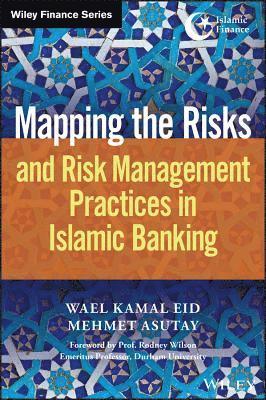
    Mapping the Risks and Risk Management Practices in Islamic Banking

    AvWael Kamal Eid,Mehmet Asutay

    Inbunden, Engelska, 2019

    Del i serien Wiley Finance

    1 056 kr

    Beställningsvara. Skickas inom 5-8 vardagar. Fri frakt över 249 kr.

    Beskrivning

    Deep, insightful analysis of controversial risk management issues in Islamic banking Mapping the Risks And Risk Management Practices In Islamic Banking is a comprehensive analysis of the current state of risk management practices within the Islamic banking industry, with recommendations for policy makers, bankers, and industry stakeholders. Going beyond the academic, this book presents the opinions and perceptions of industry financiers and bankers, alongside primary information and data collected by Islamic finance professionals to deconstruct and analyze the sector's current risk management practices. You'll get up to date on the latest attitudes and trends, and delve into the current issues surrounding risk management in Islamic banks. With a focus on practical applications, this authoritative guide discusses the unique risks facing Islamic banks, from the perspective of a wide range of practitioners.Risk management is one of the biggest, most controversial issues in Islamic finance, yet it remains under-researched. Many uncertainties exist for which the answers are still unclear, yet will play a large role in shaping the industry's future. This book digs deep into current ideas and practices to discover what's being done, what needs to be done, and what needs to stop happening to keep the future of Islamic finance strong. Explore both Islamic and traditional attitudes toward riskExamine current Islamic risk management practicesUnderstand the latest industry issues and trendsConsider the diverse range of risks unique to the Islamic banking sectorEffective risk management in Islamic banking deserves priority attention. Unless the industry develops its own genuine risk management architecture, it cannot achieve its full potential and the viability needed for a more resilient financial system than the debunked Wall Street model. Mapping the Risks and Risk Management Practices in Islamic Banking provides a deep, authoritative analysis of where the industry is today and where it needs to develop.

    Produktinformation

    • Utgivningsdatum:2019-08-27
    • Mått:155 x 231 x 31 mm
    • Vikt:771 g
    • Format:Inbunden
    • Språk:Engelska
    • Serie:Wiley Finance
    • Antal sidor:500
    • Upplaga:1
    • Förlag:John Wiley & Sons Inc
    • ISBN:9781119077817

    Utforska kategorier

    • Finansiering inom Ekonomi och Ledarskap

    Mer om författaren

    DR. WAEL KAMAL EID is the Chief Risk Officer at SEDCO Holding, the Chairman of the Board Audit and Risk Committee of Al Nahdi Medical Company and a Member of Auto World Audit Committee. He is a risk specialist in Islamic banking who holds an MBA with Distinction from Warwick Business School, and a PhD in risk management from Durham University. He has extensive experience in Risk Management and Islamic banking in the Middle East and Europe. He is also a guest lecturer on Risk Management and Islamic Finance at distinguished universities and speaks regularly at international Risk Management events and conferences. Dr. Eid is the winner of the 2015 Golden Peacock Award for Risk Management by the prestigious Institute of Directors (IoD). DR. MEHMET ASUTAY is a Professor of Middle Eastern and Islamic Political Economy and Finance at the Durham University Business School; the Director of the Durham Centre in Islamic Economics and Finance; the Programme Director for MSc in Islamic Finance and MSc in Islamic Finance and Management programmes, and is also the Director of the Durham Islamic Finance Summer School. His teaching, research, publication, and supervision of research all falls within Islamic moral economy/Islamic economics, Islamic political economy, Islamic finance and banking, Islamic governance and management, and the Middle Eastern political economies. His articles on his research interest have been published in various international academic journals and professional magazines. Dr. Asutay has also published and edited books on aspects of Islamic moral economy and Islamic finance.

    Innehållsförteckning

    • Foreword xiAbout the Authors xiiiChapter 1 Introduction: Research Background and Motivation 1Systemic Importance of Islamic Banking and Finance 3Research Aims, Objectives and Questions 5Research Hypotheses 6Significance of the Study 7Overview of the Research Methodology 9Overview of the Research 10Chapter 2 Principles of Islamic Banking and Finance 13Historical Background of Islamic Banking and Finance 14Size of the Industry 17Principles of Islamic Banking and Finance 20Basic Islamic Financing Contracts 20Sukuk: A Step Toward Securitisation 25Islamic Banking Versus Conventional Banking 31Institutional Developments in Islamic Banking and Finance Industry 33Conclusion 39Chapter 3 Risk Management in Islamic Banks: A Theoretical Perspective 41Risk Management: Basic Concepts and Techniques 44Risk Management and the Credit Crunch 51Classification of Risks 51Risks Common to Both Islamic and Conventional Banks 54Further Risk Areas Specific to Islamic Banks 93Risk Categories are Entangled 106Risk Management Issues in Sukuk 107Risk Mitigation in Islamic Banking 110Surveying Risk Management Practices in Islamic Banks: A Review of Empirical Research 120Conclusion 123Chapter 4 Capital Adequacy for Islamic Banks: A Survey 127Significance of Capital in Banking 128Classification of Capital 129Steps in the Basel Accord 130Basel II and Islamic Banks 138Basel III 142IFSB Principles on Capital Adequacy 143Capital Adequacy as a Tool for Risk Mitigation 150Conclusion 151Chapter 5 Islamic Banking and the Financial Crisis 153Understanding the Credit Crisis 156The Financial Crisis and the Need for an Alternative System 163The Financial Crisis and Islamic Finance and Banking as an Alternative Option 163Deviations from the Foundational Shari’ah Principles: Evaluating the Operations of Islamic Finance 173How to Achieve the Full Potential of Islamic Finance 177Conclusion 181Chapter 6 Research Framework and Methodology 183Research Questions and Objectives 183Research Hypotheses 185Research Methodology 191Research Design 191Research Strategy 193Research Method 194Difficulties and Limitations 210Conclusion 211Chapter 7 Profiling Perspectives of Risk Dimensions in Islamic Finance: Descriptive Questionnaire Data Analysis 213Data Analysis and Results 213Conclusion 250Chapter 8 Analysing Perceptions of Risk and Risk Management Dimensions and Issues: Inferential Statistical Analysis 253Risk Perception 254Risk Management and Reporting 295Risk Measurement 301Risk Mitigation 303Islamic Banking in Practice 304The Next Chapter in Islamic Banking 306Conclusion 307Chapter 9 Exploring Perceptions of Risk and Risk Management Practices in Islamic Banking: Interview Data Analysis 309Interview Analysis 309Forming the Main Interview Themes 310Interview Questions 310Results and Data Analysis 311Conclusion 335Chapter 10 Contextualising the Findings: An Interpretative Discussion 337Risk Perception in Islamic Banking 337Islamic Finance Contracts 345Additional Risk Issues Facing Islamic Financial Institutions 351Capital Adequacy for Islamic Banks 353Islamic Banking and the Global Credit Crisis 356Risk Management and Reporting 363Risk Measurement 365Risk Mitigation 367Islamic Banking in Practice 370The Future of Islamic Banking 372Conclusion and Summary 378Chapter 11 Conclusion and Research Recommendations 381Summary of the Research 381Reflecting on the Research Findings 382Research Implications and Recommendations 386Limitations of the Study 389Suggestions for Future Research 390Appendix 1: Questionnaire 393List of Acronyms 401Epilogue 403Bibliography 405Index 415