• Fri frakt över 249 kr
  • •
  • Snabba leveranser
  • •
  • Billiga böcker
Kundservice

Du är på sajten för privatpersoner.

Företag, bibliotek eller offentlig verksamhet?

Du handlar på classic.bokus.com, där alla dina funktioner finns intakta.
Till classic.bokus.com
Bokus logotyp. Gå till startsidan.
  • Erbjudanden
  • Nyheter
  • Student
  • Topplistor
  • Barn & ungdom
  • Bokus Play
  • E-böcker
  • Pocketböcker
  • Spel & pussel

Må bättre, för mindre! Upp till 50% rabatt på hälsoböcker

Sidfot

Mina sidor

    Hjälp

    • Kundservice
    • Vanliga frågor och svar
    • Frakt och leverans
    • Retur vid ångerrätt
    • Reklamera vara
    • Betalning
    • Köpvillkor
    • Allmänna villkor
    • Information om webbplatsens tillgänglighet

    Om Bokus

    • Om oss
    • Pressrum
    • För studenter
    • För företag
    • För bibliotek och offentlig verksamhet
    • För leverantörer
    • Hållbarhet

    Populärt

    • Aktuella erbjudanden
    • Presentkort
    • Studentlitteratur
    • Nya böcker
    • Topplistor
    • Signerade böcker
    • Engelska böcker

    Inspiration

    • Boktips
    • BookTok
    • Populära bokserier
    • Barnbokskaraktärer
    • Populära författare
    Logotyp för Bokus
    Följ oss på Facebook (extern länk)Följ oss på Instagram (extern länk)Följ oss på YouTube (extern länk)Följ oss på TikTok (extern länk)
    bokus @ CookiesAnpassa cookiesIntegritetspolicyKöpvillkor
    Till Citymail hemsida (extern länk)Till Budbee hemsida (extern länk)Till Postnord hemsida (extern länk)Till Schenker hemsida (extern länk)Till Early Bird hemsida (extern länk)Till Walleys hemsida (extern länk)
    1. Ekonomi och Ledarskap
    2. Företagsekonomi
    3. Redovisning och finansiering
    4. Finansiering

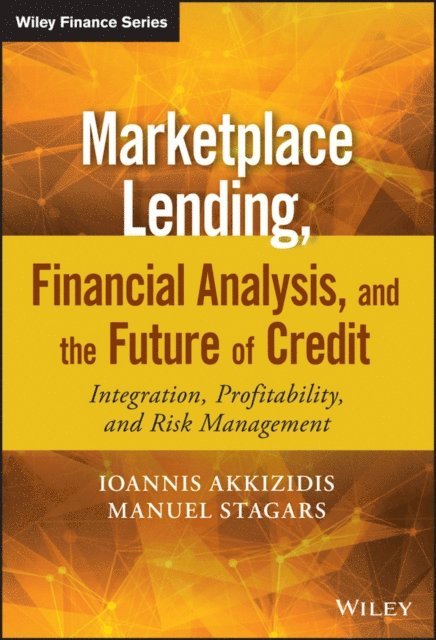
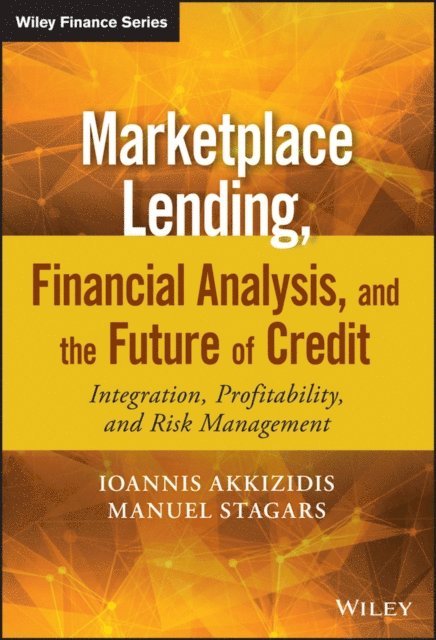
    Marketplace Lending, Financial Analysis, and the Future of Credit

    Integration, Profitability, and Risk Management

    AvIoannis Akkizidis,Manuel Stagars

    Inbunden, Engelska, 2016

    Del i serien Wiley Finance Series

    895 kr

    Beställningsvara. Skickas inom 5-8 vardagar. Fri frakt över 249 kr.

    Beskrivning

    The time for financial technology innovation is now Marketplace Lending, Financial Analysis, and the Future of Credit clearly explains why financial credit institutions need to further innovate within the financial technology arena. Through this text, you access a framework for applying innovative strategies in credit services. Provided and supported by financial institutions and entrepreneurs, the information in this engaging book encompasses printed guidance and digital ancillaries. Peer-to-peer lenders are steadily growing within the financial market. Integrating peer-to-peer lending into established credit institutions could strengthen the financial sector as a whole, and could lead to the incorporation of stronger risk and profitability management strategies. Explain (or Explore) approaches and challenges in financial analysis applied to credit risk and profitabilityExplore additional information provided via digital ancillaries, which will further support your understanding and application of key conceptsNavigate the information organised into three subject areas: describing a new business model, knowledge integration, and proposing a new model for the Hybrid Financial SectorUnderstand how the rise of fintech fits into context within the current financial systemFollow discussion of the current status quo and role of innovation in the financial industry, and consider the financial technology innovation landscape from the perspective of an entrepreneurMarketplace Lending, Financial Analysis, and the Future of Credit is a critical text that bridges the gap in understanding between financial technology entrepreneurs and credit institutions.

    Produktinformation

    • Utgivningsdatum:2016-01-01
    • Mått:178 x 252 x 23 mm
    • Vikt:753 g
    • Format:Inbunden
    • Språk:Engelska
    • Serie:Wiley Finance Series
    • Antal sidor:344
    • Förlag:John Wiley & Sons Inc
    • ISBN:9781119099161

    Utforska kategorier

    • Finansiering inom Ekonomi och Ledarskap

    Mer om författaren

    IOANNIS AKKIZIDIS, MSc, PHD, is global product manager on financial risk management systems for Wolters Kluwer in Zurich, Switzerland. He has experience in designing and implementing advanced solutions in risk-management and profitability analysis fields for the financial industry all around the world. MANUEL STAGARS, CFA, CAIA, ERP, consults private clients on entrepreneurship, business models and financial strategy, and he is serial entrepreneur and founder of seven companies in Switzerland, the United States and Japan.

    Innehållsförteckning

    • Preface xviiAcknowledgments xixAbout the Authors xxiAbout the Website xxiiiIntroduction 1I.1 Who is this Book For? 2I.2 What is Fintech? 2I.2.1 Distinction between Financial Technology Innovation and Financial Innovation 3I.3 Why Does this Book Focus on Online Lending? 4I.4 The Hybrid Financial Sector: The Opportunity to Build a Healthier Financial System 5PART ONE Fintech and Online Lending Landscape—Where Are We Now? 11CHAPTER 1 Introduction to the Business Models in Financial Technology 151.1 Innovation Themes in Fintech 151.2 The Promises and Pitfalls of Fintech Business Models 201.3 The Pitfalls 221.4 Why is Financial Technology Innovation Important? 231.5 Challenges and Roadblocks for Fintech Companies 241.6 Fintech is a Long-Term Play 261.7 Concluding Remarks 27CHAPTER 2 How Does Online Lending Work? An Overview with a Focus on Marketplace Lending 292.1 Reliance on Technology and Data 292.2 How Do Online Lenders Differ From Banks? 302.3 Types of Online Lenders 312.4 Some Background on Peer-to-Peer Networks 362.5 The Business Model of Marketplace Lending Platforms 402.6 Onboarding Process 412.7 Comparing Marketplace Loans with Bank Credit or Credit Card Debt 442.8 Who are the Alternative Borrowers? 472.9 Who Are Investors in Marketplace Loans? 482.10 Underwriting and Credit Scoring 482.11 Regulation 492.12 The Response of Banks to Online Lending 512.13 Concluding Remarks 52CHAPTER 3 What Made the Rise of Online Lending Possible? 573.1 Technological Factors 573.2 Social Factors 623.3 Structural Factors 633.4 The Perfect Storm 653.5 A Divergence of Trends 663.6 Concluding Remarks 67CHAPTER 4 Why Fintech Lives Outside of Banks 694.1 The Technology Mudslide Hypothesis: Sustaining Innovation vs. Disruptive Innovation 704.2 Will Banks Notice the Next Fintech Breakthrough? 734.3 Why Do Banks Have Difficulty in Innovating? 764.4 Developing Core Competence in Financial Technology Innovation 794.5 Concluding Remarks 81PART TWO The Status Quo of Analytics in the Financial Industry—The Perspective of Banks 83P2.1 Banking is Innovation 84P2.2 Banking Goes Mobile 84P2.3 Banks Are Far From Dead 85P2.4 How to Read This Part of the Book 85P2.5 What We Discuss in This Part 86CHAPTER 5 Financial Contracts 895.1 Contract Elements 895.2 Time in Financial Contracts 905.3 Contract Mechanisms Producing Financial Events 925.4 Concluding Remarks 106CHAPTER 6 Markets 1076.1 Real-world and Risk-neutral Expectations of Markets 1086.2 Economic Scenarios Based on Real-world Probabilities 1096.3 The Risk-neutral Expectations 1106.4 Beyond Market Risk-Free Rates 1136.5 Discounting Cash Flows 1166.6 Considering Market Elements in P2P Finance 1176.7 Concluding Remarks 118CHAPTER 7 Counterparties 1217.1 Types and Roles of Counterparties 1217.2 Descriptive Characteristics 1237.3 Default Probability 1247.4 Credit Ratings 1297.5 Credit Spreads Based on Real-world Probabilities 1307.6 Link of Counterparties via Markets 1317.7 Concluding Remarks 137CHAPTER 8 Behavior Risk 1398.1 Prepayments 1408.2 Draw-downs/Remaining Principle/Facilities and Credit Lines 1418.3 Withdrawals 1438.4 Selling 1438.5 Default and Downgrading 1448.6 Use at Default 1458.7 Recoveries 1468.8 Concluding Remarks 147CHAPTER 9 Credit Exposures 1519.1 Gross Exposure 1519.2 Net Exposure 1529.3 Evolution of the Gross and Net Exposures 1529.4 Exposure Distribution 1559.5 Credit Losses 1569.6 Link of Counterparties via Credit Exposures 1579.7 Concluding Remarks 158CHAPTER 10 Credit Enhancements 16110.1 What are Credit Enhancements? Types and Structure 16210.2 Asset-based Credit Enhancements 16210.3 Counterparty-based Credit Enhancements 16510.4 Additional Elements Considered in Credit Enhancements 16810.5 Extending Credit Enhancements in Marketplace Lending 17010.6 Concluding Remarks 175CHAPTER 11 Systemic and Concentration Risks 17711.1 Credit Exposure Systemic Risk 17711.2 Counterparty Systemic Risk 18011.3 Systemic Risk Exposures and Losses 18311.4 Credit Exposure Concentration Risk 18411.5 Counterparty Concentration Risk 18511.6 Systemic Risk and Portfolio Diversification 18711.7 Concluding Remarks 187CHAPTER 12 Liquidity, Value, Income, Risk and New Production 18912.1 Liquidity 19012.2 Value and Income 19712.3 New Production 20312.4 Treasury and Funds Transfer Pricing (FTP) 205PART THREE Toward the Future of the Hybrid Financial Sector 215P3.1 Dangers of a Big Bang Approach to Catch up with Technology Innovation 216P3.2 The Need to Collaborate in a Hybrid Financial System 217CHAPTER 13 Profitability and Risk of Marketplace Loans 21913.1 Underlying Assumptions of the Analysis 22013.2 Risk Factors 22213.3 Portfolio Construction 22413.4 Modeling Portfolio Performance 22613.5 Risk Management 23613.6 The Road Forward 24613.7 Concluding Remarks 247CHAPTER 14 Digital Competencies and Digital Dilemmas 25114.1 Digital Competencies 25214.2 Digital Dilemmas 25514.3 Concluding Remarks 260CHAPTER 15 Digital Strategy 26315.1 Who Needs Digital Strategy? 26315.2 Frameworks to Analyze the Impact of Innovation 26415.3 Spotting Signs of Trouble on the Horizon 26715.4 How Banks Can Overcome the Innovator’s Dilemma 26915.5 From Producer to Supplier and Moving to a New Singularity 27115.6 From Closed Innovation to Open Services Innovation 27215.7 The Role of Leadership in Driving Emergent Strategy 27315.8 Concluding Remarks 274CHAPTER 16 The Hybrid Financial Sector 27716.1 Forces of Competition in the Digital Age 27716.2 The Dangers of Knife Fights 27916.3 Good Ideas in Marketplace Lending That Might Be Here to Stay 28016.4 The Alternative to the Hybrid Financial Sector: A Doomsday Scenario for Established Banks? 28616.5 Concluding Remarks 286CHAPTER 17 Unified Analytics 28917.1 Why Do Marketplace Lending Platforms Need Unified Financial Analytics? 29017.2 An Overview of a Unified Analytics Platform 29617.3 Concluding Remarks 301Bibliography 303