• Fri frakt över 249 kr
  • •
  • Snabba leveranser
  • •
  • Billiga böcker
Kundservice

Du är på sajten för privatpersoner.

Företag, bibliotek eller offentlig verksamhet?

Du handlar på classic.bokus.com, där alla dina funktioner finns intakta.
Till classic.bokus.com
Bokus logotyp. Gå till startsidan.
  • Erbjudanden
  • Nyheter
  • Student
  • Topplistor
  • Barn & ungdom
  • Bokus Play
  • E-böcker
  • Pocketböcker
  • Spel & pussel

10% rabatt på allt med kod NYSTART10 →

Sidfot

Mina sidor

    Hjälp

    • Kundservice
    • Vanliga frågor och svar
    • Frakt och leverans
    • Retur vid ångerrätt
    • Reklamera vara
    • Betalning
    • Köpvillkor
    • Allmänna villkor
    • Information om webbplatsens tillgänglighet

    Om Bokus

    • Om oss
    • Pressrum
    • För studenter
    • För företag
    • För bibliotek och offentlig verksamhet
    • För leverantörer
    • Hållbarhet

    Populärt

    • Aktuella erbjudanden
    • Presentkort
    • Studentlitteratur
    • Nya böcker
    • Topplistor
    • Signerade böcker
    • Engelska böcker

    Inspiration

    • Boktips
    • BookTok
    • Populära bokserier
    • Barnbokskaraktärer
    • Populära författare
    Logotyp för Bokus
    Följ oss på Facebook (extern länk)Följ oss på Instagram (extern länk)Följ oss på YouTube (extern länk)Följ oss på TikTok (extern länk)
    bokus @ CookiesAnpassa cookiesIntegritetspolicyKöpvillkor
    Till Citymail hemsida (extern länk)Till Budbee hemsida (extern länk)Till Postnord hemsida (extern länk)Till Schenker hemsida (extern länk)Till Early Bird hemsida (extern länk)Till Walleys hemsida (extern länk)
    1. Medicin
    2. Omvårdnad och medicinska stödfunktioner

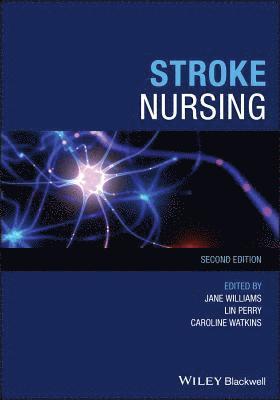
    Stroke Nursing

    AvJane Williams,Lin Perry

    Häftad, Engelska, 2019

    641 kr

    Beställningsvara. Skickas inom 5-8 vardagar. Fri frakt över 249 kr.

    Beskrivning

    Stroke Nursing is the leading guide for optimal stroke care, facilitating the provision of evidence-based practice across the stroke journey, and covering the sixteen elements of care outlined in the UK's Stroke-Specific Education Framework (SSEF).Drawing from years of clinical and research experience, the authors provide practical guidance on the essential areas of stroke nursing, including stroke classification, stabilisation, thrombolysis and thrombectomy, rehabilitation and recovery, nutrition and oral care, palliative and long-term care, physical impairment management, and more.Now in its second edition, this indispensable guide helps practitioners expand their knowledge, skills and competence in all areas of stroke nursing services. Adopts a practical and evidence-based approach to stroke management, exploring UK and international perspectivesAuthored by expert clinicians and leaders in the field of nursing practice, research and educationIncludes updated case studies and practice examples, expanded coverage of clinical application in practice, and new discussions of the knowledge and skills required by nursesStroke Nursing is essential reading for students of nursing and neuroscience, and is the definitive reference for practicing nurses and healthcare professionals caring for stroke patients.

    Produktinformation

    • Utgivningsdatum:2019-04-26
    • Mått:178 x 254 x 18 mm
    • Vikt:658 g
    • Format:Häftad
    • Språk:Engelska
    • Antal sidor:400
    • Upplaga:2
    • Förlag:John Wiley and Sons Ltd
    • ISBN:9781119111450

    Utforska kategorier

    • Omvårdnad och medicinska stödfunktioner inom Medicin

    Mer om författaren

    Jane Williams is Divisional Director for Transformation, based in Southern Health Foundation Trust, Southampton, UK.Lin Perry is Professor of Nursing Research & Practice Development, South Eastern Sydney Local Health District and University of Technology Sydney, Sydney, Australia.Dame Caroline Watkins is Professor of Stroke and Older Peoples' Care, University of Central Lancashire, Preston, UK.

    Innehållsförteckning

    • Editors and Contributors ixForeword: Stroke Nursing xiiiForeword: Stroke Services In Australia xvForeword: Stroke Care In Hong Kong xixAcknowledgements xxiii1 Setting the Scene 1Caroline Watkins and Dominique Cadilhac1.1 Introduction 11.2 Stroke Epidemiology 21.3 Cost Burden 31.4 Stroke Policy 41.5 Stroke Management Strategies 81.6 Research and Education 111.7 Conclusion 13References 132 What Is a Stroke? 19Anne W. Alexandrov2.1 Introduction 192.2 Stroke Classification 202.3 Risk Factors for Stroke 222.4 Anatomy, Physiology, and Related Stroke Clinical Findings 232.5 Standardised Instruments for Acute Neurological Assessment 412.6 Conclusion 44References 503 Reducing the Risk of Stroke 53Josephine Gibson and Stephanie Jones3.1 Introduction 543.2 Primary Prevention 553.3 Primary Prevention – Medical Considerations 563.4 Secondary Medical Prevention After TIA or Stroke 593.5 Interventions for Secondary Prevention After TIA or Recovered Stroke 633.6 Conclusion 68References 684 Acute Stroke Nursing Management 75Anne W. Alexandrov4.1 Introduction 764.2 Priorities in Acute Stroke Management 764.3 Hyper-acute Stroke Management 774.4 Hyper-acute Treatment of Haemorrhagic Stroke 904.5 Acute Stroke Management 934.6 Conclusion 96References 965 Nutritional Aspects of Stroke Care 103Lin Perry and Elizabeth Boaden5.1 Introduction 1045.2 Do Stroke Patients Experience Nutritional Problems Pre-Stroke? 1065.3 How Does Stroke Affect Dietary Intake? 1075.4 How Can Stroke Patients Be Helped to Maintain Adequate Dietary Intake? 1195.5 Conclusion 132References 1336 Oral Care After Stroke 143Mary Lyons6.1 Introduction 1446.2 Oral Assessment 1456.3 Management and Care 1466.4 Patient and Carer Perspective 1476.5 Conclusion 148References 1487 Communication 153Jane Marshall, Katerina Hilari, Madeline Cruice, and Kirsty Harrison7.1 Introduction 1547.2 Aphasia 1557.3 Dysarthria and Apraxia of Speech 1607.4 Right-Hemisphere Damage (RHD) Communication Deficit 1637.5 Language Minorities 1657.6 What Can SLTs Contribute in Acute Stroke Care? 1667.7 Psychological Issues and Quality of Life 1697.8 Conclusion 171References 1718 Management of Physical Impairments Post-Stroke 177Cherry Kilbride, Rosie Kneafsey, and Vicky Kean8.1 Introduction 1788.2 Movement 1798.3 Promoting Physical Activity and Movement After Stroke 1808.4 Promoting Early Rehabilitation 1848.5 Re-education of Movement 1888.6 Management of the Upper Limb 1928.7 Patients’ Perspectives on Early Physical Rehabilitation 1958.8 Conclusion 195References 1969 Rehabilitation and Recovery Processes 203Jane Williams and Julie Pryor9.1 Introduction 2049.2 Understanding Rehabilitation 2049.3 Initiation of Rehabilitation 2079.4 Nursing’s Rehabilitation Role 2089.5 Outcomes of Rehabilitation 2109.6 Goal–Directed Rehabilitation 2109.7 Recovery Processes 2129.8 Transfer to Rehabilitation 2149.9 Rehabilitation Provision 2169.10 Length of Rehabilitation 2199.11 Adjustment to Life After Stroke 2209.12 Conclusion 221References 22210 Promoting Continence 229Kathryn Getliffe and Lois Thomas10.1 Introduction 23010.2 Prevalence and Causes of Continence Problems Post-Stroke 23010.3 Importance of Continence Care 23110.4 Bladder Function and Dysfunction 23310.5 Main Types of UI 23410.6 Transient Causes of UI 23610.7 Assessment of UI and Bladder Dysfunction 23610.8 Treatment Strategies and Care Planning for UI 24210.9 Management and Containment of Incontinence 24710.10 Bowel Problems and Care 24910.11 Conclusion 254References 25511 Emotional and Cognitive Changes Following a Stroke 259Peter Knapp and Elizabeth Lightbody11.1 Introduction 26011.2 Psychological Reactions to the Onset of Stroke 26011.3 Coping with Stroke 26111.4 Depression 26111.5 Conclusion 274References 27412 Stroke and Palliative Care 281Clare Thetford, Munirah Bangee, Elizabeth Lightbody, and Caroline Watkins12.1 Introduction 28212.2 Specific Challenges in Stroke 28312.3 Tools to Support Palliative Care 28612.4 Case Studies 29112.5 Discussion 29412.6 Conclusion 296References 29613 Minimally Responsive Stroke Patients 301Elaine Pierce13.1 Introduction 30213.2 Definitions 30213.3 Assessment and Diagnosis 30313.4 Management and Care 30813.5 Locked-In Syndrome 31413.6 Conclusion 318References 31914 Longer-Term Support for Survivors of Stroke and Their Carers 323Judith Redfern, Clare Gordon, and Dominique Cadilhac14.1 Introduction 32414.2 Longer-Term Consequences of Stroke, Informal Care and Costs 32514.3 The Need for Support 32514.4 Responsibilities of Health and Social Care Professionals 33014.5 Identifying Those at Risk 33114.6 Interventions to Support Stroke Survivors and Carers 33414.7 Supporting Working-Age Survivors of Stroke 33814.8 Conclusion 339References 340Appendix A: The stroke-specific education framework (ssef) 347Index 349