• Fri frakt över 249 kr
  • •
  • Snabba leveranser
  • •
  • Billiga böcker
Kundservice

Du är på sajten för privatpersoner.

Företag, bibliotek eller offentlig verksamhet?

Du handlar på classic.bokus.com, där alla dina funktioner finns intakta.
Till classic.bokus.com
Bokus logotyp. Gå till startsidan.
  • Erbjudanden
  • Student
  • Topplistor
  • Barn & ungdom
  • Bokus Play
  • E-böcker
  • Ljudböcker
  • Pocketböcker
  • Spel & pussel

10% rabatt på allt med kod NYSTART10 →

Sidfot

Mina sidor

    Hjälp

    • Kundservice
    • Vanliga frågor och svar
    • Frakt och leverans
    • Retur vid ångerrätt
    • Reklamera vara
    • Betalning
    • Köpvillkor
    • Allmänna villkor
    • Information om webbplatsens tillgänglighet

    Om Bokus

    • Om oss
    • Pressrum
    • För studenter
    • För företag
    • För bibliotek och offentlig verksamhet
    • För leverantörer
    • Hållbarhet

    Populärt

    • Aktuella erbjudanden
    • Presentkort
    • Studentlitteratur
    • Nya böcker
    • Topplistor
    • Signerade böcker
    • Engelska böcker

    Inspiration

    • Boktips
    • BookTok
    • Populära bokserier
    • Barnbokskaraktärer
    • Populära författare
    Logotyp för Bokus
    Följ oss på Facebook (extern länk)Följ oss på Instagram (extern länk)Följ oss på YouTube (extern länk)Följ oss på TikTok (extern länk)
    bokus @ CookiesAnpassa cookiesIntegritetspolicyKöpvillkor
    Till Citymail hemsida (extern länk)Till Budbee hemsida (extern länk)Till Postnord hemsida (extern länk)Till Schenker hemsida (extern länk)Till Early Bird hemsida (extern länk)Till Walleys hemsida (extern länk)
    1. Ekonomi och Ledarskap
    2. Ledarskapsböcker
    3. Projektledning

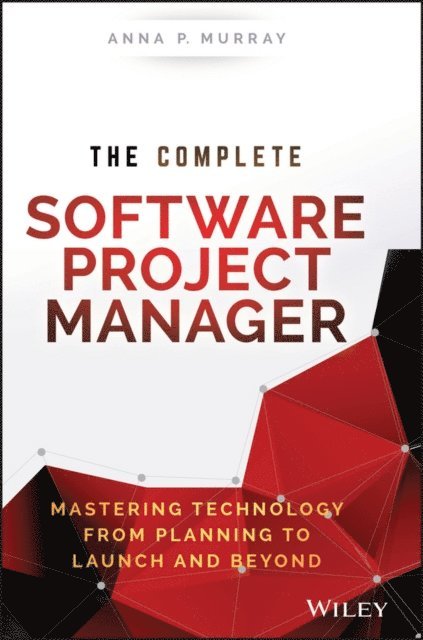
    Complete Software Project Manager

    Mastering Technology from Planning to Launch and Beyond

    AvAnna P. Murray

    Inbunden, Engelska, 2016

    Del i serien Wiley CIO

    308 kr

    Beställningsvara. Skickas inom 5-8 vardagar. Fri frakt över 249 kr.

    Fler format och utgåvor

    E-bok

    390 kr

    E-bok

    390 kr

    Beskrivning

    Your answer to the software project management gap The Complete Software Project Manager: From Planning to Launch and Beyond addresses an interesting problem experienced by today's project managers: they are often leading software projects, but have no background in technology. To close this gap in experience and help you improve your software project management skills, this essential text covers key topics, including: how to understand software development and why it is so difficult, how to plan a project, choose technology platforms, and develop project specifications, how to staff a project, how to develop a budget, test software development progress, and troubleshoot problems, and what to do when it all goes wrong. Real-life examples, hints, and management tools help you apply these new ideas, and lists of red flags, danger signals, and things to avoid at all costs assist in keeping your project on track. Companies have, due to the nature of the competitive environment, been somewhat forced to adopt new technologies. Oftentimes, the professionals leading the development of these technologies do not have any experience in the tech field—and this can cause problems. To improve efficiency and effectiveness, this groundbreaking book offers guidance to professionals who need a crash course in software project management. Review the basics of software project management, and dig into the more complicated topics that guide you in developing an effective management approachAvoid common pitfalls by perusing red flags, danger signals, and things to avoid at all costsLeverage practical roadmaps, charts, and step-by-step processesExplore real-world examples to see effective software project management in actionThe Complete Software Project Manager: From Planning to Launch and Beyond is a fundamental resource for professionals who are leading software projects but do not have a background in technology.

    Produktinformation

    • Utgivningsdatum:2016-02-26
    • Mått:160 x 239 x 23 mm
    • Vikt:435 g
    • Format:Inbunden
    • Språk:Engelska
    • Serie:Wiley CIO
    • Antal sidor:256
    • Förlag:John Wiley & Sons Inc
    • ISBN:9781119161837

    Utforska kategorier

    • Projektledning inom Ekonomi och Ledarskap
    • Affärsapplikationer inom Data och IT

    Mer om författaren

    ANNA P. MURRAY, a nationally recognized technology consultant, speaker, and blogger, is president of emedia, a provider of software development, high-level technology consulting, and project and program management. She is a double winner of the Stevie Award for Women in Business, a recipient of a Mobile Marketing Association award for mobile app development, and Folio's Top Women in Media award.

    Innehållsförteckning

    • FOREWORD xviiACKNOWLEDGMENTS xixABOUT THE AUTHOR xxiINTRODUCTION xxiiiCHAPTER 1 Software Development Explained: Creativity Meets Complexity 1A Definition of Software Development 1Why Is Software Development So Difficult? Hint: It’s Not Like Building a House 1The Simple, the Complicated, and the Complex 2Metaphor #1: Piles of Snow 3Metaphor #2: The Ikea Desk 4Metaphor #3: Heart Surgery 5Using the Three Metaphors in Project Management 6CHAPTER 2 Agile, Waterfall, and the Key to Modern Project Management 7Agile and Waterfall 7Waterfall 7Waterfall’s Problems 8The Requirements Requirement 9Inflexibility 9Loss of Opportunity and Time to Market 9Customer Dissatisfaction 10Agile 10Lack of Up-Front Planning 12Lack of Up-Front Costs 12Stakeholder Involvement 13Extensive Training 13Where Agile Works Best 14The Need for Up-Front Requirements in Many Projects 14The Real World 15Agile Enough 15The Software Development Life Cycle 15CHAPTER 3 Project Approaches; Off-the-Shelf and Custom Development; One Comprehensive Tool and Specialized Tools; Phased Launches and Pilots 17The Custom vs. Off-the-Shelf Approach 18History 18The Benefit of Off-the-Shelf 19Off-the-Shelf Examples 19Thinking You’re Editing When You’re Actually Creating 20Common Challenges with Off-the-Shelf Software 20Business Compromise 21Discovering You Made the Wrong Choice with Packaged Software 21Breaking the Upgrade Path 21Locked into a Partnership and the Product Roadmap 22Expense of Off-the-Shelf 22Where Packaged Software Works Well 23Frameworks and the Blurring Worlds of Custom and Packaged Software 23Integrations vs. One Tool for the Job 24To Phase or Not to Phase 25Bigger Is Not Always Better 26The Pilot Approach 26Why Not Pilot? 27CHAPTER 4 Teams and Team Roles and Responsibilities Defined 29Teams and the Roles on Teams 29Project Leadership 30The Key Business Stakeholder 31The Project Sponsor 31The Program Manager 32Project Manager 32Multiple Project Managers 33Confusion About the Project Manager Role; It’s More Limited than You Think 34Project Team 34The Business Analyst 35User Experience 35Designer 35The Programmers 35Architect 36Systems Administrator 36Team Member Choice and Blending Roles 37Getting All the Roles Covered 37Real-World Examples for Role-Blending 38Project Sponsor as Program Manager 38Program Manager as Business Analyst 39Front-End Programmer as User Experience 39Design, UX, and Business Analysis 40Back-End Programmer as Architect 40SysAdmin as Architect 40Professionals and Personalities 40Programmers 40Project Managers 41Business Analysts and User Experience People 42Architects and Systems Administrators 42Insource or Outsource: Whether to Staff Roles with Internal People or Get Outside Help 43The Myth that Insourcing Programming Is Better 43Inexperience with Projects 44How Knowledge Goes Stale 44Outsourced Teams 44When to Use Internal or External Teams 45Roles Easiest to Outsource 46Roles “in the Middle” 46Roles that Are Usually Internal 47Vendors and Hiring External Resources 47Some Tech-Types to Avoid: Dot Communists and Shamans 47The Shamans 48Boundaries, Responsibilities, and Driving in Your Lane 49Techies Who Don’t Drive in Their Lane 50Business Stakeholders Who Shirk Responsibilities 50Business Stakeholders, Step Up! 51Have a Trusted Technology Partner 52How Best (and Worst) to Work with Your Technology Partner 52Too Many Cooks 53CHAPTER 5 Project Research and Technology Choice; Conflicts at the Start of Projects; Four Additional Project Delays; Initial Pitfalls 55Choice of Technology, a Definition 56The Project’s Research Phase 56Current State 56Integrations and Current State 57Data and Current State 57Business Needs 58Possible Technology Solutions 58Demos 59Comparison Grids 59Talk to Other People, a Journalistic Exercise 60How Do You Know When Your Research Is Done? 61Research Reality Check 62You Can’t Run the Control 62Religious Wars 63Passion over Reason 64Business Stakeholders and Controlling Ego 64How to Stop a Technology Religious War 65Not So Easy 65Preventing a Technology Religious War 65Being Right 66Stopping a War in Its Tracks 66Détente and Finally Ending a Technology Religious War 67Clarity 67The Role of the CIO 68Two Most Important Factors in Core Technology Decisions 69Budget Constraints 69The Team 69Choosing Technology and What NOT to Consider: The Future 70Other Conflicts that Delay the Start of Projects 71Business Strategy and Organizational Authority 71Design 73Blue Sky 73Overanalysis 74The Project Charter, a Key Document 74CHAPTER 6 Final Discovery; Project Definition, Scope, and Documentation 77Budgeting and Ongoing Discovery; Discovery Work Is Real Work 78Budgeting Final Discovery 78What Discovery Costs 79What Comes Out of Final Discovery: A Plan 79Getting to a Plan 80The Murk 80Getting Out of the Murk 81The Plan for the Plan—Company A 82Hosting 82Content Entry 82Search 82Content Pages and Features 83Integrations 83Back-end System 83Data Migration 84How Anyone Can Make a Plan for the Plan 84Different Approaches to Elicit the Plan for the Plan 85Exception to the Murk 86Breakout Sessions 87The Weeds Are Where the Flowers Grow 87Not All Questions Will Be Answered 88Agile, Waterfall, and Project Documentation 89The Scope Document 90Project Summary 90Project Deliverables 90Out of Scope 90Constraints 91Assumptions 91Risks 91Timeline 92Budget, Scope, Timelining, and Horse-Trading 93Metrics 93What About “the List”? 94Defining and Visualizing and Project Scope 94What Usually Happens 95The Chicken and the Egg 95Common Questions 97Where Does Design Fit In? 97Working with Marketing Stakeholders 98How You Know You’re On the Wrong Track 98A Word About Ongoing Discovery 99CHAPTER 7 Budgeting: The Budgeting Methods; Comparative, Bottom-Up, Top-Down, and Blends; Accurate Estimating 101An Unpleasant Picture 102What Goes on Behind the Scenes; a Scene 102Budgeting Type 1: Comparative Budgeting 103Gotchas with Comparative Budgeting 104Budgeting Type 2: Bottom-Up Budgeting 104The Rub in Bottom-Up Budgeting 105Budgeting Type 3: Top-Down and Blends 105Why RFPs Don’t Work 106Accurate Estimating and Comparison Budgeting 107Effective Estimating in Top-Down and Bottom-Up Budgeting 108Establish a Base Budget for Programming, Ongoing Discovery, Unit Testing, Debugging, and Project Management 108Percentages of Each 108Programming Hours—Raw and Final 109The Math Part 109Additional Items to Consider 111Budgeting and Conflicts 112CHAPTER 8 Project Risks: The Five Most Common Project Hazards and What to Do About Them; Budgeting and Risk 115Five Always-Risky Activities 116Integration 116Data Migration 117Customization 118Unproven Technology/Unproven Team 119Too-Large Project 119Want Versus Need 119Want Versus Need: Programmers 120Want Versus Need: Business Stakeholders 120Optimism Is Not Your Friend in Software Development 120Beware the Panacea Claim 121Facing Risks 121A Few Words About Fault 121Identifying Risks Up Front 122Embrace the Snow 122Talking to Your Boss 123Hidden Infections 124Bad Technology Team; Wrong Technology Choice 124Too Many Opinions and Lack of Leadership 124The Contingency Factor 125The Cost of Consequences 125Contingency Percentage Factors 126In the Real World 126The Good News 127A Common Question 127Long-Term Working Relationships and Contingency 127CHAPTER 9 Communication; Project Communication Strategy; from Project Kickoff to Daily Meetings 129Project Kickoff 130Project Kickoff Cast 130Project Leadership 130Company Leadership 131Who Gives the Kickoff? 131Kickoff Presentation 131High-Level Project Definition 132Business Case and Metrics 132Project Approach 133Team Members and Roles 133Project Scope 134Out-of-Scope 134Timeline 134Budget 135Risks, Cautions, and Disclaimers 136Monthly Steering Committee 137Monthly Steering Committee Attendees 137Monthly Steering Committee Agenda 137Weekly Project Management Meeting 139Weekly Project Management Attendees 139Weekly Project Management Agenda 139Daily Standup Meeting 140Well-Run Meetings 140Insist on Attention 140Timeliness 140Getting “into the Weeds” 141Needs to Be Kicked Upstairs 141Poor Quality Sound—Speakerphones and Cell Phones 142Too Much Talk 142Agenda and Notes 143CHAPTER 10 The Project Execution Phase: Diagnosing Project Health; Scope Compromises 145What Should Be Going on Behind the Scenes 145The Best Thing You Can Ever Hear: “Wait. What Was It Supposed to Do?” 146Neutral Corners 147What If Things Aren’t Quiet? 147Making Decisions 148How to Listen to the Programmers 149The Programmer’s Prejudice 149SneakerNet and the Fred Operating System 150SneakerNet Integrations 150The Fred Operating System 151The Hidden Benefits 151Demos and Iterative Deliverables 151Why Iterative Deliverables Are Important 151Why Iterative Deliverables Are Hard 152What You Can Do to Achieve Iterative Deliverables Even if It’s Hard 153Demos 154Scope Creep 154Dealing with Scope Creep; Early Is Better 155Scope Creep and Budgeting 155Scope Creep and Governance 155Types of Scope Creep 156Scope Creep and the Team 157CHAPTER 11 First Deliverables: Testing, QA, and Project Health Continued 159The Project’s First Third 159The Second Third 159A First Real Look at the Software 160The Trough of FUD 161Distinguishing a Good Mess from a Bad Mess 163An Important Checkpoint 163Getting to Stability 164First Testing and the Happy Path 164Quality Assurance 165Bug Reporting 165Regression Testing 166Bugs: Too Many, Too Few 166Testing: The Right Amount for the Job 166Too Much Testing? 167Bug Cleanup Period 167Timeline So Far 168CHAPTER 12 Problems: Identifying and Troubleshooting the Three Most Serious Project Problems; Criteria for Cancellation 169A Rule About Problems 169Additional Resources 170Fault—A Review 172Common Late-Stage Problems 172Business User Revolt: “We Talked About It in a Meeting Once” 172Managing Business User Revolt 173What If No or Little Documentation Exists? 174Risk Chickens Come Home to Roost 175Managing the Risk Chickens 176When Programmers Ask for More Time 178Lurking Infections 178Bad Technology Team 179How to Manage a Bad Technology Team 179Wrong Technology Choice 180Managing a Wrong Technology Choice 180The Sunk-Cost Bias 181Lack of Leadership 181Managing Lack of Leadership 181CHAPTER 13 Launch and Post-Launch: UAT, Security Testing, Performance Testing, Go Live, Rollback Criteria, and Support Mode 183User Acceptance Testing: What It Is and When It Happens 183Controlling UAT and “We Talked About It in a Meeting Once,” Part Deux 185Classifying UAT Feedback 185Bugs 186Not Working as Expected—The Trickiest Category 186Request for Improvement 187Feature Request 188Conflict Resolution and Final Launch List 188Load Testing 189Performance Testing 189Security Testing 189Sign-Off 194Questions to Ask Regarding Launch Readiness 195Not Knowing Is Not Acceptable 195Criteria for Rollback 196Singing the Post-Launch Blues 196Was It All a Big Mistake? 198Metrics 198Ongoing Development 198Surviving the Next One 199APPENDIX 201GLOSSARY 215INDEX 223