• Fri frakt över 249 kr
  • •
  • Snabba leveranser
  • •
  • Billiga böcker
Kundservice

Du är på sajten för privatpersoner.

Företag, bibliotek eller offentlig verksamhet?

Du handlar på classic.bokus.com, där alla dina funktioner finns intakta.
Till classic.bokus.com
Bokus logotyp. Gå till startsidan.
  • Erbjudanden
  • Nyheter
  • Student
  • Topplistor
  • Barn & ungdom
  • Bokus Play
  • E-böcker
  • Pocketböcker
  • Spel & pussel

10% rabatt på allt med kod: NYSTART10 →

Sidfot

Mina sidor

    Hjälp

    • Kundservice
    • Vanliga frågor och svar
    • Frakt och leverans
    • Retur vid ångerrätt
    • Reklamera vara
    • Betalning
    • Köpvillkor
    • Allmänna villkor
    • Information om webbplatsens tillgänglighet

    Om Bokus

    • Om oss
    • Pressrum
    • För studenter
    • För företag
    • För bibliotek och offentlig verksamhet
    • För leverantörer
    • Hållbarhet

    Populärt

    • Aktuella erbjudanden
    • Presentkort
    • Studentlitteratur
    • Nya böcker
    • Topplistor
    • Signerade böcker
    • Engelska böcker

    Inspiration

    • Boktips
    • BookTok
    • Populära bokserier
    • Barnbokskaraktärer
    • Populära författare
    Logotyp för Bokus
    Följ oss på Facebook (extern länk)Följ oss på Instagram (extern länk)Följ oss på YouTube (extern länk)Följ oss på TikTok (extern länk)
    bokus @ CookiesAnpassa cookiesIntegritetspolicyKöpvillkor
    Till Citymail hemsida (extern länk)Till Budbee hemsida (extern länk)Till Postnord hemsida (extern länk)Till Schenker hemsida (extern länk)Till Early Bird hemsida (extern länk)Till Walleys hemsida (extern länk)
    1. Kultur
    2. Arkitektur

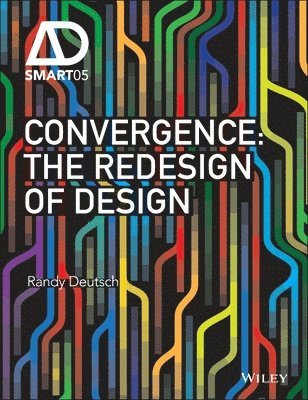
    Convergence

    The Redesign of Design

    AvRandy Deutsch

    Inbunden, Engelska, 2017

    Del i serien AD Smart

    502 kr

    Tillfälligt slut

    Fler format och utgåvor

    E-bok

    731 kr

    E-bok

    731 kr

    Beskrivning

    "There is today a pronounced and accelerated convergence in architecture. This convergence is occurring by doers not thinkers; in practice not academia; in building design, fabrication, and construction. It is about solution-centric individuals engaged in real time problem solving, not in abstractions. The nature of this convergence, where things are converging and what that means for architecture, is the subject of this book."—from the IntroductionThose working in architecture and engineering feel pressure to work faster, at lower cost, while maintaining a high level of innovation and quality. At the same time, emergent tools and processes make this possible. Convergence is about the firms, teams and people who thrive in this environment as a result of their ability to creatively combine and innovate. It seeks to answer several timely questions: What are the tools and work processes that are converging? How are individuals and organizations converging their tools and work processes? What challenges and benefits are they seeing? What is the ultimate endgame of this convergence? What skillsets and mindsets would someone need to develop to work effectively in this changing environment? What are the implications of convergence on the role of the designer, and on design? On how we design, build, fabricate, and construct? On how we work?The book explains how convergence relates to, but ultimately differs from integration, consolidation, multi-tasking, automation, and other forms of optimization. The practice-based research builds upon the author’s research in BIM and in the collaborative leveraging of data in design and fabrication. As an investigation and meditation on the impact of technology on the education and making of design professionals Convergence explains what is happening in the world of design, and discusses the implications for the future of education, training and practice.

    Produktinformation

    • Utgivningsdatum:2017-05-05
    • Mått:193 x 249 x 20 mm
    • Vikt:953 g
    • Format:Inbunden
    • Språk:Engelska
    • Serie:AD Smart
    • Antal sidor:240
    • Förlag:John Wiley & Sons Inc
    • ISBN:9781119256212

    Utforska kategorier

    • Arkitektur inom Kultur

    Mer om författaren

    Randy Deutsch AIA, LEED AP is a Clinical Associate Professor at the University of Illinois at Urbana-Champaign, where he teaches Design, Professional Practice, Construction Management, & Building- and Digital-Technology. He is a BIM Strategist, IPD Advocate and architect responsible for over 100 large, complex sustainable projects. His designs and writing have appeared in Architectural Record, Architect Magazine, DesignIntelligence and other periodicals. Randy is the author of BIM and Integrated Design: Strategies for Architectural Practice (Wiley, 2011) and Data Driven Design and Construction: Strategies for Capturing, Analyzing and Applying Building Data (Wiley, 2015.) Randy leads an annual executive education program at Harvard GSD.

    Innehållsförteckning

    • ACKNOWLEDGMENTS 7INTRODUCTION: DESIGN IN A TIME OF SIMULTANEITY, SUPERINTEGRATION, AND CONVERGENCE 8-19Convergence Defined 8Convergence Paradigms 13Convergence Questions 18CHAPTER 1 10 FACTORS LEADING TOWARD CONVERGENCE 20-39Convergence and Integration 21Convergence and Consolidation 21Convergence and Automation 22Convergence and Efficiency 23Convergence Triggers 2510 Factors Bringing About Convergence 25Challenges to Convergence 36CHAPTER 2 DATA AND INTUITION 40-63A Look Back at the Data 41Quantitative vs. Qualitative Data 47Architecture Starts with Intuition 49The Limits of Data in Architecture 51The Convergence of Everything 53What Convergence Works Against 55Data and Intuition in Design Tools 60CHAPTER 3 ANALYTICS AND MODELS 64-91Integrated Analytics 64Modeling and Simulation 71Energy Modeling 72Compliance Modeling 74Geodesign, GIS, and BIM 77Does Technology Facilitate Convergence? 79Data, Accessibility, and Convergence 85The Point Where All of the Intelligence Converges 85CHAPTER 4 PARAMETRICS AND COMPUTATION 92-117BIM Tools 93Challenges to the Convergence 98Computational Tools 99On the Evolution of a Parametric/Computational Convergence 103Simulation and Automation 107The Algorithm of Everything 109Algorithms and Machine Learning 112CHAPTER 5 VIRTUAL AND PHYSICAL 118-141Advances in Virtual Reality 119VR and Reality Capture 121Reality Computing 125Uses for VR in Architecture 125VR and AR in Architecture, Engineering, and Construction 126Leveraging Video Games in AEC 129Implementing Encapsulated Knowledge 130BIM and Gaming 132Artificial Intelligence, Machine Learning, andMachine Vision for BIM 133Nature Abhors a Convergence 134CHAPTER 6 CONCEPTION AND CONSTRUCTION 142-165"When Does Design End and Construction Begin?" 143Buildings as Documents 153Fusing the Computational and Material 154Convergence of Technology and Construction 154CHAPTER 7 DESIGN AND FABRICATION 166-191Your Next Building Will Be Manufactured 167Reasons for a Design/Fabrication Convergence 168Drones and Robots 169Cross-Discipline Knowledge of Engineering, Architecture, Computer Science, and Management 173Toward an Architecture of Everything 177CHAPTER 8 PRACTICAL AND INEFFABLE 192-215Ideation Is Almost Antithetical to Automation 192Between Firmness, Commodity, and Delight 195Start with Utter Practicality 211EPILOGUE: AN IMPENDING PERIOD OF INTENSE CHANGE THE SOFTWARE OF EVERYTHING 216-225INDEX 226-232