• Fri frakt över 249 kr
  • •
  • Snabba leveranser
  • •
  • Billiga böcker
Kundservice

Du är på sajten för privatpersoner.

Företag, bibliotek eller offentlig verksamhet?

Du handlar på classic.bokus.com, där alla dina funktioner finns intakta.
Till classic.bokus.com
Bokus logotyp. Gå till startsidan.
  • Erbjudanden
  • Nyheter
  • Student
  • Topplistor
  • Barn & ungdom
  • Bokus Play
  • E-böcker
  • Pocketböcker
  • Spel & pussel

10% rabatt på allt med kod: NYSTART10 →

Sidfot

Mina sidor

    Hjälp

    • Kundservice
    • Vanliga frågor och svar
    • Frakt och leverans
    • Retur vid ångerrätt
    • Reklamera vara
    • Betalning
    • Köpvillkor
    • Allmänna villkor
    • Information om webbplatsens tillgänglighet

    Om Bokus

    • Om oss
    • Pressrum
    • För studenter
    • För företag
    • För bibliotek och offentlig verksamhet
    • För leverantörer
    • Hållbarhet

    Populärt

    • Aktuella erbjudanden
    • Presentkort
    • Studentlitteratur
    • Nya böcker
    • Topplistor
    • Signerade böcker
    • Engelska böcker

    Inspiration

    • Boktips
    • BookTok
    • Populära bokserier
    • Barnbokskaraktärer
    • Populära författare
    Logotyp för Bokus
    Följ oss på Facebook (extern länk)Följ oss på Instagram (extern länk)Följ oss på YouTube (extern länk)Följ oss på TikTok (extern länk)
    bokus @ CookiesAnpassa cookiesIntegritetspolicyKöpvillkor
    Till Citymail hemsida (extern länk)Till Budbee hemsida (extern länk)Till Postnord hemsida (extern länk)Till Schenker hemsida (extern länk)Till Early Bird hemsida (extern länk)Till Walleys hemsida (extern länk)
    1. Medicin
    2. Andra medicinska specialiteter
    3. Farmakologi

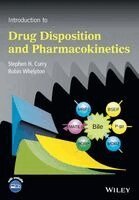
    Introduction to Drug Disposition and Pharmacokinetics

    AvStephen H. Curry,Robin Whelpton

    Häftad, Engelska, 2017

    866 kr

    Beställningsvara. Skickas inom 5-8 vardagar. Fri frakt över 249 kr.

    Beskrivning

    The application of knowledge of drug disposition, and skills in pharmacokinetics, are crucial to the development of new drugs and to a better understanding of how to achieve maximum benefit from existing ones. The book takes the reader from basic concepts to a point where those who wish to will be able to perform pharmacokinetic calculations and be ready to read more advanced texts and research papers.The book will be of benefit to students of medicine, pharmacy, pharmacology, biomedical sciences and veterinary science, including those who have elected to study the topic in more detail, such as via electives and special study modules. It will be of benefit to those involved in drug discovery and development, pharmaceutical and medicinal chemists, as well as budding toxicologists and forensic scientists who require the appropriate knowledge to interpret their findings and as an introductory text for clinical pharmacologists. Early chapters describe the basic principles of the topic while the later ones illustrate the application of those principles to modern approaches to drug development and clinical use. Full colour illustrations facilitate the learning experience and supporting material for course leaders and students can be found on the Companion Web Site"Another book on PK? Yes and there should be and it should be DD & PK. It is good, unique, and does fill a currently unmet need for those working in the xenobiotic arena. DD & PK is just like the perfect mystery novel—the one “you just can’t put down.” However, unlike a mystery novel which requires only one reading to find the answer, the reader of DD & PK will learn more than an answer to a single question. The reader will find many solutions to a wide variety of mysterious problems associated with the time course and actions of xenobiotics."—International Journal of Toxicology, John A. Budny, PhD, President, PharmaCal, Ltd, 2018"This book has many innovations that make a welcome addition to the bookshelves of a wide range of pharmaceutical scientists. The effective use of figures and tables to summarize and clarify a wide range of issues is to be commended, as are the learning objectives at the start of the chapter coupled with the summary at the end providing a succinct way in understanding the objectives of the chapter and together with links to a website provides accessibility for all from the neophyte pharmacokineticist to the consultant physician. A book all in the Pharma industry should be aware of."—Int. J. of Pharmacokinetics, Howard M. Hill, ResolvPharma, 2018"Overall, Introduction to Drug Disposition and Pharmacokinetics offers its readership an in-depth view of classic pharmacokinetic concepts. This book would be an excellent choice for a pharmacokinetics elective or as an adjunctive text for an introductory course. This book reviews a wide array of clinically relevant topics and encourages the reader to apply the knowledge gained to all medi-cations. A robust and varied amount of online material is provided to enhance understanding and encourage discussion. It is likely that all readers, novice or experienced pharmacists, would find value in this textbook."— Currents in Pharmacy Teaching and Learning, Milena McLaughlin, Midwestern University Chicago College of Pharmacy, 2018"In summary, this is an excellent textbook for students new to the field of pharmaceutics and medical, pharmacy, and veterinary students, particularly those who envision a career in drug development research in either academia or industry."—Veterinary Pathology Review, John K. Amory, University of Washington, 2018

    Produktinformation

    • Utgivningsdatum:2017-01-13
    • Mått:168 x 241 x 15 mm
    • Vikt:635 g
    • Format:Häftad
    • Språk:Engelska
    • Antal sidor:336
    • Förlag:John Wiley & Sons Inc
    • ISBN:9781119261049

    Utforska kategorier

    • Farmakologi inom Medicin
    • Tillverkningsteknik inom Naturvetenskap och teknik

    Mer om författaren

    Stephen Curry was Professor of Pharmacology at The London Hospital Medical College, Professor of Pharmaceutical Sciences at the University of Florida, and Professor of Pharmacology and Physiology at the University of Rochester before founding ADispell. He also spent ten years with AstraZeneca and predecessor companies. A graduate of De Montfort University and King's College London, he was honoured by the Faculty of Medicine of London University with the award of the Doctor of Medical Science Degree and is a Fellow of the Royal Pharmaceutical Society. As CEO of ADispell, he currently works in the field of technology transfer and translational science with early stage companies based on discoveries at The University of Rochester  and Cornell University.Robin Whelpton, after obtaining his first degree in Applied Chemistry, joined the Department of Pharmacology and Therapeutics, The London Hospital Medical College, University of London as research assist to Professor Curry. Having obtained his PhD in Pharmacology, he became Lecturer and then Senior Lecturer before transferring to Queen Mary University of London to teach pharmacology to preclinical medical and dental students. His last post before retiring was Senior Lecturer in Pharmaceutical Chemistry in the School of Biological and Chemical Sciences. He has wealth of experience teaching drug distribution and pharmacokinetics to undergraduate and postgraduate students of medicine, dentistry, pharmacology, pharmacy, biomedical sciences, pharmaceutical chemistry and forensic science.

    Recensioner i media

    "Another book on PK? Yes and there should be and it should be DD & PK. It is good, unique, and does fill a currently unmet need for those working in the xenobiotic arena. DD & PK is just like the perfect mystery novel—the one “you just can’t put down.” However, unlike a mystery novel which requires only one reading to find the answer, the reader of DD & PK will learn more than an answer to a single question. The reader will find many solutions to a wide variety of mysterious problems associated with the time course and actions of xenobiotics." International Journal of Toxicology, September 2018, Reviewed by John A. Budny, PhD, President, PharmaCal, Ltd"This book has many innovations that make a welcome addition to the bookshelves of a wide range of pharmaceutical scientists. The effective use of figures and tables to summarize and clarify a wide range of issues is to be commended, as are the learning objectives at the start of the chapter coupled with the summary at the end providing a succinct way in understanding the objectives of the chapter and together with links to a website provides accessibility for all from the neophyte pharmacokineticist to the consultant physician. A book all in the Pharma industry should be aware of." Int. J. of Pharmacokinetics"Overall, the book is written in a professional manner, the explanations are clear and simple, and the authors use drug-specific PK data to reinforce the critical concepts of each chapter..." One particular strength of this book is its excellent use of full color figures/pictures, as well as clinically relevant drug examples, both of which reinforce the concepts described throughout"...."In conclusion, the principles reviewed in this book and companion website provide a strong introductory knowledge base in PK, which should prepare readers to perform PK calculations, interpret PK literature, and consider PK properties when studying the clinical use of drugs." CPT, Aug 17"In summary, this is an excellent textbook for students new to the field of pharmaceutics and medical, pharmacy, and veterinary students, particularly those who envision a career in drug development research in either academia or industry." Veterinary Pathology Review, 2018

    Innehållsförteckning

    • Preface ixCompanion Website Directions xii1. Introduction: Basic Concepts 11.1 Introduction 11.2 Drugs and drug nomenclature 31.3 Law of mass action 41.4 Ionization 91.5 Partition coefficients 121.6 Further reading 142. Drug Administration and Distribution 152.1 Introduction 152.2 Drug transfer across biological membranes 162.3 Drug administration 222.4 Drug distribution 312.5 Plasma protein binding 382.6 Further reading 432.7 References 433. Drug Metabolism and Excretion 453.1 Introduction 453.2 Metabolism 463.3 Excretion 583.4 Further reading 693.5 References 694. Single‐compartment Pharmacokinetic Models 714.1 Introduction 724.2 Systemic clearance 744.3 Intravenous administration 764.4 Absorption 794.5 Infusions 874.6 Multiple doses 904.7 Non‐linear kinetics 944.8 Relationship between dose, and onset and duration of effect 984.9 Limitations of single‐compartment models 994.10 Further reading 1004.11 References 1005. Multiple‐compartment and Non‐compartment Pharmacokinetic Models 1025.1 Multiple‐compartment models 1025.2 Non‐compartmental models 1175.3 Population pharmacokinetics 1215.4 Curve fitting and the choice of most appropriate model 1225.5 Further reading 1245.6 References 1246. Kinetics of Metabolism and Excretion 1266.1 Introduction 1266.2 Metabolite kinetics 1276.3 Renal excretion 1376.4 Excretion in faeces 1426.5 Further reading 1436.6 References 1447. Clearance, Protein Binding and Physiological Modelling 1457.1 Introduction 1457.2 Clearance 1467.3 Physiological modelling 1587.4 Further reading 1617.5 References 1618. Quantitative Pharmacological Relationships 1628.1 Pharmacokinetics and pharmacodynamics 1628.2 Concentration–effect relationships (dose–response curves) 1638.3 Time‐dependent models 1698.4 PK‐PD modelling 1738.5 Further reading 1778.6 References 1779. Pharmacokinetics of Large Molecules 1789.1 Introduction 1789.2 Pharmacokinetics 1799.3 Plasma kinetics and pharmacodynamics 1849.4 Examples of particular interest 1859.5 Further reading 1919.6 References 19110. Pharmacogenetics and Pharmacogenomics 19210.1 Introduction 19210.2 Methods for the study of pharmacogenetics 19310.3 N‐Acetyltransferase 19410.4 Plasma cholinesterase 19710.5 Cytochrome P450 polymorphisms 19910.6 Alcohol dehydrogenase and acetaldehyde dehydrogenase 20210.7 Thiopurine methyltransferase 20210.8 Phase 2 enzymes 20210.9 Transporters 20410.10 Ethnicity 20610.11 Pharmacodynamic differences 20610.12 Personalized medicine 20810.13 Further reading 20910.14 References 20911. Additional Factors Affecting Plasma Concentrations 21111.1 Introduction 21111.2 Pharmaceutical factors 21311.3 Sex 21411.4 Pregnancy 21811.5 Weight and obesity 22011.6 Food, diet and nutrition 22511.7 Time of day 22611.8 Posture and exercise 22811.9 Further reading 23111.10 References 23112. Effects of Age and Disease on Drug Disposition 23312.1 Introduction 23312.2 Age and development 23412.3 Effects of disease on drug disposition 24212.4 Assessing pharmacokinetics in special populations 25612.5 Further reading 25712.6 References 25813. Drug Interactions and Toxicity 26013.1 Introduction 26013.2 Drug interactions 26113.3 Toxicity 27313.4 Further reading 28213.5 References 28214. Perspectives and Prospects: Reflections on the Past, Present and Future of Drug Disposition and Pharmacokinetics 28414.1 Drug disposition and fate 28414.2 Pharmacodynamics 28614.3 Quantification of drugs and pharmacokinetics 28614.4 The future 28914.5 Postscript 29114.6 Further reading 29214.7 References 292Appendices1 Mathematical Concepts and the Trapezoidal Method 2932 Dye Models to Teach Pharmacokinetics 3003 Curve Fitting 3034 Pharmacokinetic Simulations 307Index 312