• Fri frakt över 249 kr
  • •
  • Snabba leveranser
  • •
  • Billiga böcker
Kundservice

Du är på sajten för privatpersoner.

Företag, bibliotek eller offentlig verksamhet?

Du handlar på classic.bokus.com, där alla dina funktioner finns intakta.
Till classic.bokus.com
Bokus logotyp. Gå till startsidan.
  • Erbjudanden
  • Nyheter
  • Student
  • Topplistor
  • Barn & ungdom
  • Bokus Play
  • E-böcker
  • Pocketböcker
  • Spel & pussel

10% rabatt på allt med kod NYSTART10 →

Sidfot

Mina sidor

    Hjälp

    • Kundservice
    • Vanliga frågor och svar
    • Frakt och leverans
    • Retur vid ångerrätt
    • Reklamera vara
    • Betalning
    • Köpvillkor
    • Allmänna villkor
    • Information om webbplatsens tillgänglighet

    Om Bokus

    • Om oss
    • Pressrum
    • För studenter
    • För företag
    • För bibliotek och offentlig verksamhet
    • För leverantörer
    • Hållbarhet

    Populärt

    • Aktuella erbjudanden
    • Presentkort
    • Studentlitteratur
    • Nya böcker
    • Topplistor
    • Signerade böcker
    • Engelska böcker

    Inspiration

    • Boktips
    • BookTok
    • Populära bokserier
    • Barnbokskaraktärer
    • Populära författare
    Logotyp för Bokus
    Följ oss på Facebook (extern länk)Följ oss på Instagram (extern länk)Följ oss på YouTube (extern länk)Följ oss på TikTok (extern länk)
    bokus @ CookiesAnpassa cookiesIntegritetspolicyKöpvillkor
    Till Citymail hemsida (extern länk)Till Budbee hemsida (extern länk)Till Postnord hemsida (extern länk)Till Schenker hemsida (extern länk)Till Early Bird hemsida (extern länk)Till Walleys hemsida (extern länk)
    1. Naturvetenskap och teknik
    2. Teknik och industri
    3. Byggnadsteknik

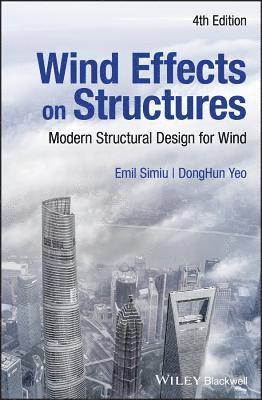
    Wind Effects on Structures

    Modern Structural Design for Wind

    AvEmil Simiu,DongHun Yeo

    Inbunden, Engelska, 2019

    1 463 kr

    Beställningsvara. Skickas inom 5-8 vardagar. Fri frakt över 249 kr.

    Beskrivning

    Provides structural engineers with the knowledge and practical tools needed to perform structural designs for wind that incorporate major technological, conceptual, analytical and computational advances achieved in the last two decades. With clear explanations and documentation of the concepts, methods, algorithms, and software available for accounting for wind loads in structural design, it also describes the wind engineer's contributions in sufficient detail that they can be effectively scrutinized by the structural engineer in charge of the design.Wind Effects on Structures: Modern Structural Design for Wind, 4th Edition is organized in four sections. The first covers atmospheric flows, extreme wind speeds, and bluff body aerodynamics. The second examines the design of buildings, and includes chapters on aerodynamic loads; dynamic and effective wind-induced loads; wind effects with specified MRIs; low-rise buildings; tall buildings; and more. The third part is devoted to aeroelastic effects, and covers both fundamentals and applications. The last part considers other structures and special topics such as trussed frameworks; offshore structures; and tornado effects.Offering readers the knowledge and practical tools needed to develop structural designs for wind loadings, this book: Points out significant limitations in the design of buildings based on such techniques as the high-frequency force balanceDiscusses powerful algorithms, tools, and software needed for the effective design for wind, and provides numerous examples of application  Discusses techniques applicable to structures other than buildings, including stacks and suspended-span bridges  Features several appendices on Elements of Probability and Statistics; Peaks-over-Threshold Poisson-Process Procedure for Estimating Peaks; estimates of the WTC Towers’ Response to Wind and their shortcomings; and moreWind Effects on Structures: Modern Structural Design for Wind, 4th Edition is an excellent text for structural engineers, wind engineers, and structural engineering students and faculty.

    Produktinformation

    • Utgivningsdatum:2019-03-01
    • Mått:173 x 244 x 31 mm
    • Vikt:1 134 g
    • Format:Inbunden
    • Språk:Engelska
    • Antal sidor:528
    • Upplaga:4
    • Förlag:John Wiley and Sons Ltd
    • ISBN:9781119375883

    Utforska kategorier

    • Byggnadsteknik inom Naturvetenskap och teknik

    Mer om författaren

    Emil Simiu, PhD (Princeton Univ.) is a registered professional engineer in the states of New York and New Jersey, and a NIST Fellow in the National Windstorm Impact Reduction Program, National Institute of Standards and Technology (NIST). He served as senior structural engineer with Ammann and Whitney Inc., New York, and Severud & Assoc., New York; consultant with the U.S. Nuclear Regulatory Commission, the World Bank, and Zetlin-Argo, a forensic engineering firm; and distinguished research professor and professor of practice at Florida International University. He is a Fellow of the American Society of Civil Engineers and served as Chair of the ASCE Committees on Wind Effects, Dynamic Effects, and the Reliability of Offshore Structures. He is the recipient of numerous awards, including the 2006 Japan Association for Wind Engineering Prize for the outstanding wind engineering publication of the year, and the U.S. Federal Engineer of the Year award from the National Society of Professional Engineers. DongHun Yeo, PhD (Univ. of Illinois) is a registered professional engineer in the state of Virginia, and a research structural engineer in the National Windstorm Impact Reduction Program, National Institute of Standards and Technology (NIST). He served as a structural engineer with Hyundai Construction and Engineering Company. He teaches Wind Engineering in the Engineering Professionals program, Johns Hopkins University, where he also taught Structural Dynamics. He is a member of the American Society of Civil Engineers, the ASCE 7 Standard Subcommittee on Wind Loads, the ASCE 49 Standard Committee on Wind Tunnel Testing for Buildings and Other Structures, the ASCE Technical Subcommittee on Computer-Aided Wind Engineering, the ASCE Subcommittee on the Design of Non-Residential Structures Subject to Tornadoes, and the ASCE Committee on Fluid Dynamics.

    Recensioner i media

    "This is an excellent book following the tradition of the previous three editions in 1978, 1986 and 1996. The 4th edition is quite expanded and includes the most recent development in the field of wind engineering, making the book an excellent choice for any university graduate course in this area. (...) The 496-page book is clearly written, includes plenty of examples and utilizes suitable software, so it becomes indispensable for all researchers and graduate students in the wind engineering field. Practicing engineers, architects and other building design professionals will find this book very interesting and useful."Journal of Wind Engineering & Industrial Aerodynamics 212 (2021) 104635 “(The book) is a fundamental resource for both the experienced researcher and the practicing structural engineer.”Luca Caracoglia, F.ASCE, Journal of Structural Engineering, Volume 147, Issue 3 - March 2021, American Society of Civil Engineers

    Innehållsförteckning

    • Preface to the Fourth Edition xixIntroduction xxiPart I Atmospheric Flows, Extreme Wind Speeds, Bluff Body Aerodynamics 11 Atmospheric Circulations 32 The Atmospheric Boundary Layer 173 Extreme Wind Speeds 554 Bluff Body Aerodynamics 735 Aerodynamic Testing 1056 Computational Wind Engineering 1357 Uncertainties in Wind Engineering Data 157Part II Design of Buildings 1678 Structural Design for Wind 1699 Stiffness Matrices, Second-Order Effects, and Influence Coefficients 17910 Aerodynamic Loads 18311 Dynamic and Effective Wind-Induced Loads 19512 Wind Load Factors and Design Mean Recurrence Intervals 20313 Wind Effects with Specified MRIs: DCIs, Inter-Story Drift, and Accelerations 21114 Equivalent Static Wind Loads 21915 Wind-Induced Discomfort in and Around Buildings 22516 Mitigation of Building Motions 25117 Rigid Portal Frames 25918 Tall Buildings 267Part III Aeroelastic Effects 28319 Vortex-Induced Vibrations 28720 Galloping and Torsional Divergence 29721 Flutter 30522 Slender Chimneys and Towers 31523 Suspended-Span Bridges 331Part IV Other Structures and Special Topics 34724 Trussed Frameworks and Plate Girders 34925 Offshore Structures 36726 Tensile Membrane Structures 38527 Tornado Wind and Atmospheric Pressure Change Effects 38928 Tornado- and Hurricane-Borne Missile Speeds 399Appendices 409Appendix A Elements of Probability and Statistics 411A.1 Introduction 411A.2 Fundamental Relations 412A.3 Random Variables and Probability Distributions 415A.4 Descriptors of Random Variable Behavior 419A.5 Geometric, Poisson, Normal, and Lognormal Distributions 420A.6 Extreme Value Distributions 422A.7 Statistical Estimates 425A.8 Monte Carlo Methods 427A.9 Non-Parametric Statistical Estimates 428Appendix B Random Processes 433B.1 Fourier Series and Fourier Integrals 433B.2 Parseval’s Equality 435B.3 Spectral Density Function of a Random Stationary Signal 435B.4 Autocorrelation Function of a Random Stationary Signal 437B.5 Cross-Covariance Function, Co-Spectrum, Quadrature Spectrum, Coherence 438B.6 Mean Upcrossing and Outcrossing Rate for a Gaussian Process 439B.7 Probability Distribution of the Peak Value of a Random Signal with Gaussian Marginal Distribution 441Appendix C Peaks-Over-Threshold Poisson-Process Procedure for Estimating Peaks 443C.1 Introduction 443C.2 Peak Estimation by Peaks-Over-Threshold Poisson-Process Procedure 444C.3 Dependence of Peak Estimates by BLUE Upon Number of Partitions 451C.4 Summary 451Appendix D Structural Dynamics 455D.1 Introduction 455D.2 The Single-Degree-of-Freedom Linear System 455D.3 Continuously Distributed Linear Systems 458D.4 Example: Along-Wind Response 463Appendix E Structural Reliability 467E.1 Introduction 467E.2 The Basic Problem of Structural Safety 468E.3 First-Order Second-Moment Approach: Load and Resistance Factors 469E.4 Structural Strength Reserve 475E.5 Design Criteria for Multi-Hazard Regions 477Appendix F World Trade Center Response to Wind 481F.1 Overview 481F.2 NIST-Supplied Documents 482F.3 Discussion and Comments 482Index 487