• Fri frakt över 249 kr
  • •
  • Snabba leveranser
  • •
  • Billiga böcker
Kundservice

Du är på sajten för privatpersoner.

Företag, bibliotek eller offentlig verksamhet?

Du handlar på classic.bokus.com, där alla dina funktioner finns intakta.
Till classic.bokus.com
Bokus logotyp. Gå till startsidan.
  • Erbjudanden
  • Student
  • Topplistor
  • Barn & ungdom
  • Bokus Play
  • E-böcker
  • Ljudböcker
  • Pocketböcker
  • Spel och pussel

Pocketfynda! Hundratals böcker för 49 kr/st →

Sidfot

Mina sidor

    Hjälp

    • Kundservice
    • Vanliga frågor och svar
    • Frakt och leverans
    • Retur vid ångerrätt
    • Reklamera vara
    • Betalning
    • Köpvillkor
    • Allmänna villkor
    • Information om webbplatsens tillgänglighet

    Om Bokus

    • Om oss
    • Pressrum
    • För studenter
    • För företag
    • För bibliotek och offentlig verksamhet
    • För leverantörer
    • Hållbarhet

    Populärt

    • Aktuella erbjudanden
    • Presentkort
    • Studentlitteratur
    • Nya böcker
    • Topplistor
    • Signerade böcker
    • Engelska böcker

    Inspiration

    • Boktips
    • BookTok
    • Barnbokskaraktärer
    • Populära författare
    Logotyp för Bokus
    Följ oss på Facebook (extern länk)Följ oss på Instagram (extern länk)Följ oss på YouTube (extern länk)Följ oss på TikTok (extern länk)
    bokus @ CookiesAnpassa cookiesIntegritetspolicyKöpvillkor
    Till Citymail hemsida (extern länk)Till Budbee hemsida (extern länk)Till Postnord hemsida (extern länk)Till Schenker hemsida (extern länk)Till Early Bird hemsida (extern länk)Till Walleys hemsida (extern länk)
    1. Naturvetenskap och teknik
    2. Matematik och naturvetenskap
    3. Matematik
    4. Beräkning och matematisk analys

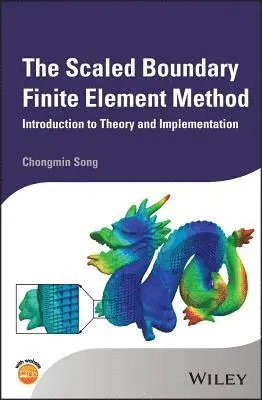
    Scaled Boundary Finite Element Method

    Introduction to Theory and Implementation

    AvChongmin Song

    Inbunden, Engelska, 2018

    1 553 kr

    Beställningsvara. Skickas inom 11-20 vardagar. Fri frakt över 249 kr.

    Fler format och utgåvor

    E-bok

    1 814 kr

    E-bok

    1 814 kr

    Beskrivning

    An informative look at the theory, computer implementation, and application of the scaled boundary finite element method This reliable resource, complete with MATLAB, is an easy-to-understand introduction to the fundamental principles of the scaled boundary finite element method. It establishes the theory of the scaled boundary finite element method systematically as a general numerical procedure, providing the reader with a sound knowledge to expand the applications of this method to a broader scope. The book also presents the applications of the scaled boundary finite element to illustrate its salient features and potentials. The Scaled Boundary Finite Element Method: Introduction to Theory and Implementation covers the static and dynamic stress analysis of solids in two and three dimensions. The relevant concepts, theory and modelling issues of the scaled boundary finite element method are discussed and the unique features of the method are highlighted. The applications in computational fracture mechanics are detailed with numerical examples. A unified mesh generation procedure based on quadtree/octree algorithm is described. It also presents examples of fully automatic stress analysis of geometric models in NURBS, STL and digital images. Written in lucid and easy to understand language by the co-inventor of the scaled boundary element methodProvides MATLAB as an integral part of the book with the code cross-referenced in the text and the use of the code illustrated by examplesPresents new developments in the scaled boundary finite element method with illustrative examples so that readers can appreciate the significant features and potentials of this novel method—especially in emerging technologies such as 3D printing, virtual reality, and digital image-based analysisThe Scaled Boundary Finite Element Method: Introduction to Theory and Implementation is an ideal book for researchers, software developers, numerical analysts, and postgraduate students in many fields of engineering and science.

    Produktinformation

    • Utgivningsdatum:2018-08-24
    • Mått:178 x 246 x 31 mm
    • Vikt:907 g
    • Format:Inbunden
    • Språk:Engelska
    • Antal sidor:504
    • Förlag:John Wiley & Sons Inc
    • ISBN:9781119388159

    Utforska kategorier

    • Beräkning och matematisk analys inom Naturvetenskap och teknik
    • Maskinteknik och material inom Naturvetenskap och teknik

    Mer om författaren

    Chongmin Song, PhD, is a Professor of Civil Engineering and the Acting Director of the Centre for Infrastructure Engineering and Safety at the University of New South Wales, Australia. He is a Member of the General Council of the Asia-Pacific Association of Computational Mechanics (APCOM) and an Executive Member of the Australian Association for Computational Mechanics (AACM). Professor Song is also the co-author of Finite-Element Modelling of Unbounded Media.

    Innehållsförteckning

    • Preface xvAcknowledgements xixAbout the Companion Website xxi1 Introduction 11.1 Numerical Modelling 11.2 Overview of the Scaled Boundary Finite Element Method 61.3 Features and Example Applications of the Scaled Boundary Finite Element Method 101.3.1 Linear Elastic Fracture Mechanics: Crack Terminating at Material Interface 111.3.2 Automatic Mesh Generation Based on Quadtree/Octree 131.3.3 Treatment of Non-matching Meshes 141.3.4 Crack Propagation 171.3.5 Adaptive Analysis 171.3.6 TransientWave Scattering in an Alluvial Basin 191.3.7 Automatic Image-based Analysis 191.3.7.1 Two-dimensional Elastoplastic Analysis of Cast Iron 201.3.7.2 Three-dimensional Concrete Specimen 221.3.8 Automatic Analysis of STL Models 241.4 Summary 26Part I Basic Concepts and MATLAB Implementation of the Scaled Boundary Finite Element Method in Two Dimensions 272 Basic Formulations of the Scaled Boundary Finite Element Method 312.1 Introduction 312.2 Modelling of Geometry in Scaled Boundary Coordinates 312.2.1 S-domains: Scaling Requirement on Geometry, Scaling Centre and Scaling of Boundary 312.2.2 S-elements: Boundary Discretization of S-domains 372.2.3 Scaled Boundary Transformation 402.2.3.1 Scaled Boundary Coordinates 402.2.3.2 Coordinate Transformation of Partial Derivatives 422.2.3.3 Geometrical Properties in Scaled Boundary Coordinates 442.3 Governing Equations of Linear Elasticity in Scaled Boundary Coordinates 502.4 Semi-analytical Representation of Displacement and Strain Fields 512.5 Derivation of the Scaled Boundary Finite Element Equation by the Virtual Work Principle 532.5.1 Virtual Displacement and Strain Fields in Scaled Boundary Coordinates 542.5.2 Nodal Force Functions 542.5.3 The Scaled Boundary Finite Element Equation 552.6 Computer Program Platypus: Coefficient Matrices of an S-element 632.6.1 Element Coefficient Matrices of a 2-node Line Element 632.6.2 Assembly of Coefficient Matrices of an S-element 673 Solution of the Scaled Boundary Finite Element Equation by Eigenvalue Decomposition 733.1 Solution Procedure for the Scaled Boundary Finite Element Equations in Displacement 733.2 Pre-conditioning of Eigenvalue Problems 773.3 Computer Program Platypus: Solution of the Scaled Boundary Finite Element Equation of a Bounded S-element by the Eigenvalue Method 783.4 Assembly of S-elements and Solution of Global System of Equations 843.4.1 Assembly of S-elements 843.4.2 Surface Tractions 853.4.3 Enforcing Displacement Boundary Conditions 873.5 Computer Program Platypus: Assembly and Solution 873.5.1 Assembly of Global Stiffness Matrix 873.5.2 Assembly of Load Vector 953.5.3 Solution of Global System of Equations 963.5.4 Utility Functions 973.6 Examples of Static Analysis Using Platypus 1023.7 Evaluation of Internal Displacements and Stresses of an S-element 1113.7.1 Integration Constants and Internal Displacements 1113.7.2 Strain/Stress Modes and Strain/Stress Fields 1123.7.3 Shape Functions of Polygon Elements Modelled as S-elements 1143.8 Computer Program Platypus: Internal Displacements and Strains 1143.9 Body Loads 1323.10 Dynamics and Vibration Analysis 1353.10.1 Mass Matrix and Equation of Motion 1353.10.2 Natural Frequencies and Mode Shapes 1403.10.3 Response History Analysis Using the Newmark Method 1434 Automatic Polygon Mesh Generation for Scaled Boundary Finite Element Analysis 1494.1 Introduction 1494.2 Basics of Geometrical Representation by Signed Distance Functions 1504.3 Computer Program Platypus: Generation of Polygon S-elementMesh 1544.3.1 Mesh Data Structure 1574.3.2 Centroid of a Polygon 1654.3.3 Converting a TriangularMesh to an S-elementMesh 1664.3.4 Use of Polygon Meshes Generated by PolyMesher in a Scaled Boundary Finite Element Analysis 1714.3.5 Dividing Edges of Polygons into Multiple Elements 1724.4 Examples of Scaled Boundary Finite Element Analysis Using Platypus 1754.4.1 A Deep Beam 1784.4.1.1 Static Analysis 1864.4.1.2 Modal Analysis 1894.4.1.3 Response History Analysis 1904.4.1.4 Pure Bending of a Beam: 2 Line Elements on an Edge of Polygons 1904.4.2 A Circular Hole in an Infinite Plane Under Remote Uniaxial Tension 1934.4.3 An L-shaped Panel 1974.4.3.1 Static Analysis 2034.4.3.2 Modal Analysis 2044.4.3.3 Response History Analysis 2075 Modelling Considerations in the Scaled Boundary Finite Element Analysis 2095.1 Effect of Location of Scaling Centre on Accuracy 2095.2 Mesh Transition 2125.2.1 Local Mesh Refinement 2125.2.2 Rapid Mesh Transition 2145.2.3 Effect of Nonuniformity of Line Element Length on the Boundary of S-elements 2165.3 Connecting Non-matching Meshes of Multiple Domains 2185.3.1 Computer Program Platypus: Combining Two Non-matching Meshes 2205.3.2 Computer Program Platypus: Modelling of a Problem by Multiple Domains with Non-matching Meshes 2235.3.3 Examples 2255.4 Modelling of Stress Singularities 234Part II Theory and Applications of the Scaled Boundary Finite Element Method 2376 Derivation of the Scaled Boundary Finite Element Equation in Three Dimensions 2396.1 Introduction 2396.2 Scaling of Boundary 2396.3 Boundary Discretization of an S-domain 2426.3.1 Isoparametric Quadrilateral Elements 2436.3.1.1 Four-node Quadrilateral Element 2436.3.1.2 Quadrilateral Element of Variable Number of Nodes 2456.3.2 Isoparametric Triangular Elements 2466.3.2.1 Three-node Triangular Elements 2476.3.2.2 Six-node Triangular Elements 2486.4 Scaled Boundary Transformation of Geometry 2496.5 Geometrical Properties in Scaled Boundary Coordinates 2536.6 Governing Equations of Elastodynamics with Geometry in Scaled Boundary Coordinates 2576.7 Derivation of the Scaled Boundary Finite Element Equation by the Galerkin’s Weighted Residual Technique 2596.7.1 Displacement, Strain Fields and Nodal Force Functions in Scaled Boundary Coordinates 2596.7.2 The Scaled Boundary Finite Element Equation 2626.8 Unified Formulations in Two andThree Dimensions 2676.9 Formulation of the Scaled Boundary Finite Element Equation as a System of First-order Differential Equations 2686.10 Properties of Coefficient Matrices 2696.10.1 Coefficient Matrices [E0] and [M0] 2706.10.2 Coefficient Matrix [E2] 2706.10.3 Matrix [Zp] 2716.11 Linear Completeness of the Scaled Boundary Finite Element Solution 2726.11.1 Constant Displacement Field 2726.11.2 Linear Displacement Field 2736.12 Scaled Boundary Finite Element Equation in Stiffness 2787 Solution of the Scaled Boundary Finite Element Equation in Statics by Schur Decomposition 2817.1 Introduction 2817.2 Basics of Matrix Exponential Function 2837.3 Schur Decomposition 2877.3.1 Introduction 2877.3.2 Treatment of the Diagonal Block of Eigenvalues of 0 2887.4 Solution Procedure for a Bounded S-element by Schur Decomposition 2917.4.1 Transformation of the Scaled Boundary Finite Element Equation 2917.4.2 Enforcing the Boundary Condition at the Scaling Centre 2927.4.3 Determining the Solution for Displacement and Nodal Force Functions 2947.4.4 Determining the Static Stiffness Matrix 2957.5 Solution of Displacement and Stress Fields of an S-element 2957.5.1 Integration Constants 2957.5.2 Stress Modes and Stresses on the Boundary 2967.6 Block-diagonal Schur Decomposition 2977.7 Solution Procedure by Block-diagonal Schur Decomposition 3037.7.1 General Solution of the Scaled Boundary Finite Element Equation 3037.7.1.1 [Zp] Having No Eigenvalues of Zero 3047.7.1.2 [Zp] Having Eigenvalues of Zero 3047.7.2 Solution for Bounded S-elements 3057.7.3 Solution for Unbounded S-elements 3077.7.3.1 [Zp] Having No Eigenvalues of Zero 3077.7.3.2 [Zp] Having Eigenvalues of Zero 3087.8 Displacements and Stresses of an S-element by Block-diagonal Schur Decomposition 3107.8.1 Integration Constants and Displacement Fields 3107.8.2 Stress Modes and Stress Fields 3117.8.3 Shape Functions of Polytope Elements 3127.9 Body Loads 3137.10 Mass Matrix 3157.11 Remarks 3177.12 Examples 3197.12.1 Circular Cavity in Full-plane 3197.12.2 Bi-materialWedge 3227.12.3 Interface Crack in Anisotropic Bi-material Full-plane 3257.13 Summary 3278 High-order Elements 3298.1 Lagrange Interpolation 3308.2 One-dimensional Spectral Elements 3338.2.1 Shape Functions 3348.2.2 Numerical Integration of Element Coefficient Matrices 3378.2.2.1 Gauss-Legendre Quadrature 3378.2.2.2 Gauss-Lobatto-Legendre Quadrature 3388.3 Two-dimensional Quadrilateral Spectral Elements 3418.3.1 Shape Functions 3418.3.2 Integration of Element Coefficient Matrices by Gauss-Lobatto-Legendre Quadrature 3428.4 Examples 3448.4.1 A Cantilever Beam Subject to End Loading 3458.4.2 A Circular Hole in an Infinite Plate 3478.4.3 An L-shaped Panel 3498.4.4 A 3D Cantilever Beam Subject to End-shear Loading 3518.4.5 A Pressurized Hollow Sphere 3529 Quadtree/Octree Algorithm of Mesh Generation for Scaled Boundary Finite Element Analysis 3559.1 Introduction 3559.1.1 Mesh Generation 3559.1.2 The Quadtree/Octree Algorithm 3579.2 Data Structure of S-element Meshes 3609.3 Quadtree/Octree Mesh Generation of Digital Images 3619.3.1 Illustration of Quadtree Decomposition of Two-dimensional Images by an Example 3619.3.2 Octree Decomposition 3669.4 Solutions of S-elements with the Same Pattern of Node Configuration 3709.4.1 Two-dimensional S-elements 3709.4.2 Three-dimensional S-elements 3729.5 Examples of Image-based Analysis 3749.5.1 A 2D Concrete Specimen 3749.5.2 A 3D Concrete Specimen 3769.6 Quadtree/Octree Mesh Generation for CAD Models 3789.6.1 Quadtree/Octree Grid 3809.6.2 Trimming of Boundary Cells 3819.7 Examples Using Quadtree/Octree Meshes of CAD Models 3839.7.1 Square Body with Multiple Holes 3849.7.2 An Evolving Void in a Square Body 3859.7.3 Adaptive Analysis of an L-shaped Panel 3869.7.4 A Mechanical Part 3879.7.5 STL Models 3899.8 Remarks 39410 Linear Elastic Fracture Mechanics 39510.1 Introduction 39510.2 Basics of Fracture Analysis: Asymptotic Solutions, Stress Intensity Factors, and the T-stress 39710.2.1 Crack in Homogeneous Isotropic Material 39710.2.2 Interfacial Cracks between Two Isotropic Materials 40110.2.3 Interfacial Cracks between Two AnisotropicMaterials 40210.2.4 Multi-materialWedges 40510.3 Modelling of Singular Stress Fields by the Scaled Boundary Finite Element Method 40610.4 Stress Intensity Factors and the T-stress of a Cracked Homogeneous Body 40710.5 Definition and Evaluation of Generalized Stress Intensity Factors 41610.6 Examples of Highly Accurate Stress Intensity Factors and T-stress 43210.6.1 A Single Edge-cracked Rectangular Body Under Tension 43310.6.2 A Single Edge-cracked Rectangular Body Under Bending 43510.6.3 A Centre-cracked Rectangular Body Under Tension 43710.6.4 A Double Edge-cracked Rectangular Body Under Tension 43810.6.5 A Single Edge-cracked Rectangular Body Under End Shearing 43910.7 Modelling of Crack Propagation 44010.7.1 Modelling of Crack Paths by Polygon Meshes 44210.7.2 Modelling of Crack Paths by Quadtree Meshes 44310.7.3 Examples of Crack PropagationModelling 44410.7.3.1 Fatigue Crack Propagation Using Polygon Mesh 44410.7.3.2 Crack Propagation in a Beam with Three Holes 447Appendix A Governing Equations of Linear Elasticity 449A.1 Three-dimensional Problems 449A.1.1 Strain 449A.1.2 Stress and Equilibrium Equation 450A.1.3 Stress-strain Relationship and Material Elasticity Matrix 451A.1.4 Boundary Conditions 453A.2 Two-dimensional Problems 454A.2.1 Elasticity Matrix in Plane Stress 455A.2.2 Elasticity Matrix in Plane Strain 456A.3 Unified Expressions of Governing Equations 457Appendix B Matrix Power Function 459B.1 Definition of Matrix Power Function 459B.2 Application to Solution of System of Ordinary Differential Equations 460B.3 Computation of Matrix Power Function by Eigenvalue Method 461Bibliography 463Index 475