• Fri frakt över 249 kr
  • •
  • Snabba leveranser
  • •
  • Billiga böcker
Kundservice

Du är på sajten för privatpersoner.

Företag, bibliotek eller offentlig verksamhet?

Du handlar på classic.bokus.com, där alla dina funktioner finns intakta.
Till classic.bokus.com
Bokus logotyp. Gå till startsidan.
  • Erbjudanden
  • Nyheter
  • Student
  • Topplistor
  • Barn & ungdom
  • Bokus Play
  • E-böcker
  • Pocketböcker
  • Spel & pussel

10% rabatt på allt med kod: NYSTART10 →

Sidfot

Mina sidor

    Hjälp

    • Kundservice
    • Vanliga frågor och svar
    • Frakt och leverans
    • Retur vid ångerrätt
    • Reklamera vara
    • Betalning
    • Köpvillkor
    • Allmänna villkor
    • Information om webbplatsens tillgänglighet

    Om Bokus

    • Om oss
    • Pressrum
    • För studenter
    • För företag
    • För bibliotek och offentlig verksamhet
    • För leverantörer
    • Hållbarhet

    Populärt

    • Aktuella erbjudanden
    • Presentkort
    • Studentlitteratur
    • Nya böcker
    • Topplistor
    • Signerade böcker
    • Engelska böcker

    Inspiration

    • Boktips
    • BookTok
    • Populära bokserier
    • Barnbokskaraktärer
    • Populära författare
    Logotyp för Bokus
    Följ oss på Facebook (extern länk)Följ oss på Instagram (extern länk)Följ oss på YouTube (extern länk)Följ oss på TikTok (extern länk)
    bokus @ CookiesAnpassa cookiesIntegritetspolicyKöpvillkor
    Till Citymail hemsida (extern länk)Till Budbee hemsida (extern länk)Till Postnord hemsida (extern länk)Till Schenker hemsida (extern länk)Till Early Bird hemsida (extern länk)Till Walleys hemsida (extern länk)
    1. Medicin
    2. Andra medicinska specialiteter
    3. Klinisk psykologi

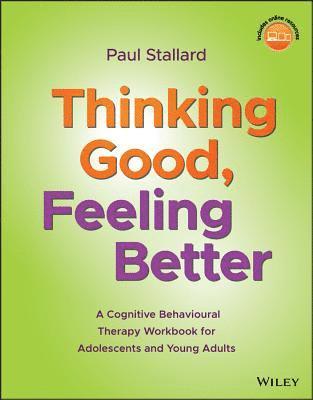
    Thinking Good, Feeling Better

    A Cognitive Behavioural Therapy Workbook for Adolescents and Young Adults

    AvPaul Stallard

    Häftad, Engelska, 2018

    295 kr

    Beställningsvara. Skickas inom 5-8 vardagar. Fri frakt över 249 kr.

    Fler format och utgåvor

    E-bok

    617 kr

    E-bok

    617 kr

    Beskrivning

    Instructional resource for mental health clinicians on using cognitive behavioural therapy with adolescents and young adultsThis book complements author Paul Stallard’s Think Good, Feel Good and provides a range of Cognitive Behaviour Therapy resources that can be used with adolescents and young adults. Building upon that book’s core strengths, it provides psycho-educational materials specifically designed for adolescents and young people. The materials, which have been used in the author’s clinical practice, can also be utilized in schools to help adolescents develop better cognitive, emotional and behavioural skills.Thinking Good, Feeling Better includes traditional CBT ideas and also draws on ideas from the third wave approaches of mindfulness, compassion focused therapy and acceptance and commitment therapy. It includes practical exercises and worksheets that can be used to introduce and develop the key concepts of CBT. The book starts by introducing readers to the origin, basic theory, and rationale behind CBT and explains how the workbook should be used. Chapters cover techniques used in CBT; the process of CBT; valuing oneself; learning to be kind to oneself; mindfulness; controlling feelings; thinking traps; solving problems; facing fears; and more.  Written by an experienced professional with all clinically tested materialSpecifically developed for older adolescents and young adultsReflects current developments in clinical practiceWide range of downloadable materialsIncludes ideas from third wave CBT, Mindfulness, Compassion Focused Therapy and Acceptance and Commitment Therapy Thinking Good, Feeling Better: A CBT Workbook for Adolescents and Young Adults is a "must have" resource for clinical psychologists, adolescent and young adult psychiatrists, community psychiatric nurses, educational psychologists, and occupational therapists. It is also a valuable resource for those who work with adolescents and young adults including social workers, nurses, practice counsellors, health visitors, teachers and special educational needs coordinators.

    Produktinformation

    • Utgivningsdatum:2018-12-21
    • Mått:216 x 277 x 13 mm
    • Vikt:694 g
    • Format:Häftad
    • Språk:Engelska
    • Antal sidor:240
    • Förlag:John Wiley & Sons Inc
    • ISBN:9781119396291

    Utforska kategorier

    • Klinisk psykologi inom Medicin

    Mer om författaren

    Paul Stallard is Professor of Child and Family Mental Health at the University of Bath and Head of Psychological Therapies (CAMHS) for Oxford Health NHS Foundation Trust. He has contributed to the development of CBT in many countries and has provided workshops for clinicians around the world.

    Recensioner i media

    "One of the most useful aspects of the book is the accompanying online resources. Wiley, the publisher, have made all of the worksheets in the book available as electronic versions online, to anyone who buys the book. This means there is no need to stuff it into a photocopier and run off second-rate copies, or to buy a new book for each client. Instead, you can legally and straightforwardly print out pristine colour copies for those worksheets you want." -James Murray"As a fairly experienced CBT practitioner working with adolescents, this list feels pretty comprehensive, and certainly covers the most commonly used areas of psychoeducation, behavioural activation, graduated exposure, cognitive restructuring and problem solving, and emotional regulation" -James Murray

    Innehållsförteckning

    • About the author xiiiAcknowledgement xvOnline resources xvii1 Cognitive behaviour therapy: theoretical origins, rationale, and techniques 1The foundations of CBT 2First wave: behaviour therapy 2Second wave: cognitive therapy 3The cognitive model 4Third wave: acceptance, compassion, and mindfulness 5Core characteristics of CBT 7CBT is theoretically determined 7CBT is based on a collaborative model 8CBT is time-limited 8CBT is objective and structured 8CBT has a here-and-now focus 8CBT is based on a process of guided self-discovery and experimentation 8CBT is a skill-based approach 8The goal of cognitive behaviour therapy 9The core components of CBT 9Psycho-education 10Values, goals, and targets 10Acceptance and acknowledgement of strengths 10Thought monitoring 10Identification of cognitive distortions and deficits 10Thought evaluation and developing alternative cognitive processes 10Development of new cognitive skills 11Mindfulness 11Affective education 11Affective monitoring 11Affective management 11Activity monitoring 11Behaviour activation 12Activity rescheduling 12Skills development 12Behavioural experiments 12Fear hierarchy and exposure 12Role play, modelling, exposure, and rehearsal 12Self-reinforcement and reward 12The clinician’s toolbox 132 The process of cognitive behaviour therapy 15Therapeutic process 15Phases of CBT 16Relationship building and engagement 16Psycho-education 17Promoting self-awareness and understanding 17Enhancing skills and development 18Consolidation 18Relapse prevention 19Adapting CBT for young people 19Cognitive vs behavioural focus 20Therapeutic partnership 20Language 20Dichotomous thinking 21Verbal vs non-verbal materials 21Technology 21Common problems when undertaking CBT with young people 22Limited verbal skills 22Limited cognitive skills 22Lack of engagement 23No responsibility for securing change 23Difficulty accessing thoughts 23Failure to undertake home assignments 24Focus shifting 24Working with egocentricity 24Significant family dysfunction 25‘I get it, but I don’t believe it’ 253 Thinking good, feeling better: overview of materials 27Value yourself 29Summary 29Worksheets 29Be kind to yourself 29Summary 29Worksheets 30Be mindful 30Summary 30Worksheets 31Getting ready to change 31Summary 31Worksheets 31Thoughts, feelings, and what you do 31Summary 31Worksheets 32The way you think 32Summary 32Worksheets 32Thinking traps 33Summary 33Worksheets 33Change your thinking 33Summary 33Worksheets 34Core beliefs 34Summary 34Worksheets 34Understand how you feel 35Summary 35Worksheets 35Control your feelings 35Summary 35Worksheets 36Problem-solving 36Summary 36Worksheets 37Check it out 37Summary 37Worksheets 37Face your fears 38Summary 38Worksheets 38Get busy 38Summary 38Worksheets 39Keeping well 39Summary 39Worksheets 394 Value yourself 41How does self-esteem develop? 42Can you change self-esteem? 42Find your strengths 43Use your strengths 44Find and celebrate the positive 45Look after yourself 46Diet 46How much sleep do I need? 47I’m not getting enough sleep 48I can’t get off to sleep 48Alcohol 49Physical activity 505 Be kind to yourself 57Eight helpful habits 58Treat yourself like you would treat a friend 58Don’t kick yourself when you are down 59Forgive mistakes 59Celebrate what you achieve 60Accept who you are 61Speak kindly to yourself 61Find the good in others 62Be kind to others 636 Be mindful 69Mindfulness 70Focus, observe, be curious, and use your senses 70Mindful breathing 71Mindful eating 72Mindful activity 73Mindful observation 74Suspend judgement 75Mindful thinking 757 Getting ready to change 81What you think 82How you feel 83What you do 83The negative trap 83Good news 84Are you ready to try? 85My goals 85The miracle question 868 Thoughts, feelings, and what you do 93How does the negative trap happen? 94Core beliefs 94Assumptions 94Unhelpful beliefs 95Beliefs are strong 96Turning your beliefs on 96Automatic thoughts 96How you feel 97What you do 98The negative trap 989 The way you think 103Hot thoughts 104Helpful thoughts 104Unhelpful thoughts 105Automatic thoughts 105The negative trap 10610 Thinking traps 111Negative filter 112Negative glasses 112Positive doesn’t count 112Blowing things up 113Magnifying the negative 113All-or-nothing thinking 113Disaster thinking 113Predicting failure 114The fortune teller 114Mind reading 114Being down on yourself 115Dustbin labels 115Blame me 115Setting yourself to fail 115Should and must 116Expecting to be perfect 11611 Change your thinking 121Catch it 121Check it 121Challenge it 122Change it 123What would someone else say? 124Dealing with worries 125Why do we worry? 126Keep worries under control 126Make worry time 127Delay worry 127Solve the worries you can do something about 127Accept the worries you can do nothing about 12712 Core beliefs 133Core beliefs 133Finding core beliefs 134Challenging core beliefs 137Is it always true? 137If it doesn’t work? 13813 Understand how you feel 143Body signals 143Feelings 144How do your feelings change? 145Why me? 14614 Control your feelings 153Relaxation exercises 153Quick relaxation 155Physical activity 1554-5-6 breathing 156Calming images 157Mind games 158Change the feeling 158Soothe yourself 159Talk to someone 15915 Problem-solving 167Why do problems happen? 168Problem-solving 169Break it down 17116 Check it out 177Experiments 178Be open-minded and curious 180Surveys and searches 181Responsibility pies 18217 Face your fears 189Small steps 190Make a fear ladder 191Face your fears 19218 Get busy 197Getting busy 198What you do and how you feel 198Change what and when you do things 200Have more fun 20119 Keeping well 207What helped? 207Build them into your life 208Practice 209Expect setbacks 210Know your warning signs 210Watch out for difficult times 211Be kind to yourself 212Stay positive 212When do I need to get help? 213References 217Index 221