• Fri frakt över 249 kr
  • •
  • Snabba leveranser
  • •
  • Billiga böcker
Kundservice

Du är på sajten för privatpersoner.

Företag, bibliotek eller offentlig verksamhet?

Du handlar på classic.bokus.com, där alla dina funktioner finns intakta.
Till classic.bokus.com
Bokus logotyp. Gå till startsidan.
  • Erbjudanden
  • Student
  • Topplistor
  • Barn & ungdom
  • Bokus Play
  • E-böcker
  • Ljudböcker
  • Pocketböcker
  • Spel och pussel

Pocketfynda! Hundratals böcker för 49 kr/st →

Sidfot

Mina sidor

    Hjälp

    • Kundservice
    • Vanliga frågor och svar
    • Frakt och leverans
    • Retur vid ångerrätt
    • Reklamera vara
    • Betalning
    • Köpvillkor
    • Allmänna villkor
    • Information om webbplatsens tillgänglighet

    Om Bokus

    • Om oss
    • Pressrum
    • För studenter
    • För företag
    • För bibliotek och offentlig verksamhet
    • För leverantörer
    • Hållbarhet

    Populärt

    • Aktuella erbjudanden
    • Presentkort
    • Studentlitteratur
    • Nya böcker
    • Topplistor
    • Signerade böcker
    • Engelska böcker

    Inspiration

    • Boktips
    • BookTok
    • Barnbokskaraktärer
    • Populära författare
    Logotyp för Bokus
    Följ oss på Facebook (extern länk)Följ oss på Instagram (extern länk)Följ oss på YouTube (extern länk)Följ oss på TikTok (extern länk)
    bokus @ CookiesAnpassa cookiesIntegritetspolicyKöpvillkor
    Till Citymail hemsida (extern länk)Till Budbee hemsida (extern länk)Till Postnord hemsida (extern länk)Till Schenker hemsida (extern länk)Till Early Bird hemsida (extern länk)Till Walleys hemsida (extern länk)
    1. Data och IT
    2. Nätverk och kommunikation

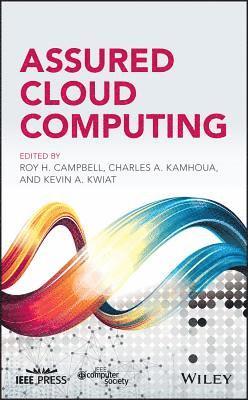
    Assured Cloud Computing

    AvRoy H. Campbell,Charles A. Kamhoua

    Inbunden, Engelska, 2018

    1 620 kr

    Beställningsvara. Skickas inom 5-8 vardagar. Fri frakt över 249 kr.

    Beskrivning

    Explores key challenges and solutions to assured cloud computing today and provides a provocative look at the face of cloud computing tomorrowThis book offers readers a comprehensive suite of solutions for resolving many of the key challenges to achieving high levels of assurance in cloud computing. The distillation of critical research findings generated by the Assured Cloud Computing Center of Excellence (ACC-UCoE) of the University of Illinois, Urbana-Champaign, it provides unique insights into the current and future shape of robust, dependable, and secure cloud-based computing and data cyberinfrastructures.A survivable and distributed cloud-computing-based infrastructure can enable the configuration of any dynamic systems-of-systems that contain both trusted and partially trusted resources and services sourced from multiple organizations. To assure mission-critical computations and workflows that rely on such systems-of-systems it is necessary to ensure that a given configuration does not violate any security or reliability requirements. Furthermore, it is necessary to model the trustworthiness of a workflow or computation fulfillment to a high level of assurance. In presenting the substance of the work done by the ACC-UCoE, this book provides a vision for assured cloud computing illustrating how individual research contributions relate to each other and to the big picture of assured cloud computing. In addition, the book: Explores dominant themes in cloud-based systems, including design correctness, support for big data and analytics, monitoring and detection, network considerations, and performanceSynthesizes heavily cited earlier work on topics such as DARE, trust mechanisms, and elastic graphs, as well as newer research findings on topics, including R-Storm, and RAMP transactionsAddresses assured cloud computing concerns such as game theory, stream processing, storage, algorithms, workflow, scheduling, access control, formal analysis of safety, and streamingBringing together the freshest thinking and applications in one of today’s most important topics, Assured Cloud Computing is a must-read for researchers and professionals in the fields of computer science and engineering, especially those working within industrial, military, and governmental contexts. It is also a valuable reference for advanced students of computer science.

    Produktinformation

    • Utgivningsdatum:2018-12-04
    • Mått:152 x 230 x 24 mm
    • Vikt:703 g
    • Format:Inbunden
    • Språk:Engelska
    • Antal sidor:368
    • Förlag:John Wiley and Sons Ltd
    • ISBN:9781119428633

    Utforska kategorier

    • Nätverk och kommunikation inom Data och IT

    Mer om författaren

    ROY H. CAMPBELL, PHD, is Associate Dean for Information Technology in the College of Engineering, and Sohaib and Sara Abbasi Professor of Computer Science, at the University of Illinois at Urbana-Champaign. He was formerly Director of the Assured Cloud Computing- University Center of Excellence at the University of Illinois. CHARLES A. KAMHOUA, PHD, is a researcher at the U.S. Army Research Laboratory's Network Security Branch. He managed the U.S. Air Force's Assured Cloud Computing-University Center of Excellence at the University of Illinois at Urbana-Champaign. KEVIN A. KWIAT, PHD, following over 34 years as Principal Computer Engineer with the U.S. Air Force Research Laboratory, is now leading Haloed Sun TEK, LLC, in Sarasota, Florida and has joined forces with the Commercial Applications for Early Stage Advanced Research (CAESAR) Group.

    Innehållsförteckning

    • Preface xiiiEditors’ Biographies xviiList of Contributors xix1 Introduction 1Roy H. Campbell1.1 Introduction 11.1.1 Mission-Critical Cloud Solutions for the Military 21.2 Overview of the Book 32 Survivability: Design, Formal Modeling, and Validation of Cloud Storage Systems Using Maude 10Rakesh Bobba, Jon Grov, Indranil Gupta, Si Liu, José Meseguer,Peter Csaba Ölveczky, and Stephen Skeirik2.1 Introduction 102.1.1 State of the Art 112.1.2 Vision: Formal Methods for Cloud Storage Systems 122.1.3 The Rewriting Logic Framework 132.1.4 Summary: Using Formal Methods on Cloud Storage Systems 152.2 Apache Cassandra 172.3 Formalizing, Analyzing, and Extending Google’s Megastore 232.3.1 Specifying Megastore 232.3.2 Analyzing Megastore 252.3.2.1 Megastore-CGC 292.4 RAMP Transaction Systems 302.5 Group Key Management via ZooKeeper 312.5.1 ZooKeeper Background 322.5.2 System Design 332.5.3 Maude Model 342.5.4 Analysis and Discussion 352.6 How Amazon Web Services Uses Formal Methods 372.6.1 Use of Formal Methods 372.6.2 Outcomes and Experiences 382.6.3 Limitations 392.7 Related Work 402.8 Concluding Remarks 422.8.1 The Future 433 Risks and Benefits: Game-Theoretical Analysis and Algorithm for Virtual Machine Security Management in the Cloud 49Luke Kwiat, Charles A. Kamhoua, Kevin A. Kwiat, and Jian Tang3.1 Introduction 493.2 Vision: Using Cloud Technology in Missions 513.3 State of the Art 543.4 System Model 573.5 Game Model 593.6 Game Analysis 613.7 Model Extension and Discussion 673.8 Numerical Results and Analysis 713.8.1 Changes in User 2’s Payoff with Respect to L2 713.8.2 Changes in User 2’s Payoff with Respect to e 723.8.3 Changes in User 2’s Payoff with Respect to π 733.8.4 Changes in User 2’s Payoff with Respect to qI 743.8.5 Model Extension to n = 10 Users 753.9 The Future 784 Detection and Security: Achieving Resiliency by Dynamic and Passive System Monitoring and Smart Access Control 81Zbigniew Kalbarczyk4.1 Introduction 824.2 Vision: Using Cloud Technology in Missions 834.3 State of the Art 844.4 Dynamic VM Monitoring Using Hypervisor Probes 854.4.1 Design 864.4.2 Prototype Implementation 884.4.3 Example Detectors 904.4.3.1 Emergency Exploit Detector 904.4.3.2 Application Heartbeat Detector 914.4.4 Performance 934.4.4.1 Microbenchmarks 934.4.4.2 Detector Performance 944.4.5 Summary 954.5 Hypervisor Introspection: A Technique for Evading Passive Virtual Machine Monitoring 964.5.1 Hypervisor Introspection 974.5.1.1 VMI Monitor 974.5.1.2 VM Suspend Side-Channel 974.5.1.3 Limitations of Hypervisor Introspection 984.5.2 Evading VMI with Hypervisor Introspection 984.5.2.1 Insider Attack Model and Assumptions 984.5.2.2 Large File Transfer 994.5.3 Defenses against Hypervisor Introspection 1014.5.3.1 Introducing Noise to VM Clocks 1014.5.3.2 Scheduler-Based Defenses 1014.5.3.3 Randomized Monitoring Interval 1024.5.4 Summary 1034.6 Identifying Compromised Users in Shared Computing Infrastructures 1034.6.1 Target System and Security Data 1044.6.1.1 Data and Alerts 1054.6.1.2 Automating the Analysis of Alerts 1064.6.2 Overview of the Data 1074.6.3 Approach 1094.6.3.1 The Model: Bayesian Network 1094.6.3.2 Training of the Bayesian Network 1104.6.4 Analysis of the Incidents 1124.6.4.1 Sample Incident 1124.6.4.2 Discussion 1134.6.5 Supporting Decisions with the Bayesian Network Approach 1144.6.5.1 Analysis of the Incidents 1144.6.5.2 Analysis of the Borderline Cases 1164.6.6 Conclusion 1184.7 Integrating Attribute-Based Policies into Role-Based Access Control 1184.7.1 Framework Description 1194.7.2 Aboveground Level: Tables 1194.7.2.1 Environment 1204.7.2.2 User-Role Assignments 1204.7.2.3 Role-Permission Assignments 1214.7.3 Underground Level: Policies 1214.7.3.1 Role-Permission Assignment Policy 1224.7.3.2 User-Role Assignment Policy 1234.7.4 Case Study: Large-Scale ICS 1234.7.4.1 RBAC Model-Building Process 1244.7.4.2 Discussion of Case Study 1274.7.5 Concluding Remarks 1284.8 The Future 1285 Scalability, Workloads, and Performance: Replication, Popularity, Modeling, and Geo-Distributed File Stores 133Roy H. Campbell, Shadi A. Noghabi, and Cristina L. Abad5.1 Introduction 1335.2 Vision: Using Cloud Technology in Missions 1345.3 State of the Art 1365.4 Data Replication in a Cloud File System 1375.4.1 MapReduce Clusters 1385.4.1.1 File Popularity, Temporal Locality, and Arrival Patterns 1425.4.1.2 Synthetic Workloads for Big Data 1445.4.2 Related Work 1475.4.3 Contribution from Our Approach to Generating Big Data Request Streams Using Clustered Renewal Processes 1495.4.3.1 Scalable Geo-Distributed Storage 1495.4.4 Related Work 1515.4.5 Summary of Ambry 1525.5 Summary 1535.6 The Future 1536 Resource Management: Performance Assuredness in Distributed Cloud Computing via Online Reconfigurations 160Mainak Ghosh, Le Xu, and Indranil Gupta6.1 Introduction 1616.2 Vision: Using Cloud Technology in Missions 1636.3 State of the Art 1646.3.1 State of the Art: Reconfigurations in Sharded Databases/Storage 1646.3.1.1 Database Reconfigurations 1646.3.1.2 Live Migration 1646.3.1.3 Network Flow Scheduling 1646.3.2 State of the Art: Scale-Out/Scale-In in Distributed Stream Processing Systems 1656.3.2.1 Real-Time Reconfigurations 1656.3.2.2 Live Migration 1656.3.2.3 Real-Time Elasticity 1656.3.3 State of the Art: Scale-Out/Scale-In in Distributed Graph Processing Systems 1666.3.3.1 Data Centers 1666.3.3.2 Cloud and Storage Systems 1666.3.3.3 Data Processing Frameworks 1666.3.3.4 Partitioning in Graph Processing 1666.3.3.5 Dynamic Repartitioning in Graph Processing 1676.3.4 State of the Art: Priorities and Deadlines in Batch Processing Systems 1676.3.4.1 OS Mechanisms 1676.3.4.2 Preemption 1676.3.4.3 Real-Time Scheduling 1686.3.4.4 Fairness 1686.3.4.5 Cluster Management with SLOs 1686.4 Reconfigurations in NoSQL and Key-Value Storage/Databases 1696.4.1 Motivation 1696.4.2 Morphus: Reconfigurations in Sharded Databases/Storage 1706.4.2.1 Assumptions 1706.4.2.2 MongoDB System Model 1706.4.2.3 Reconfiguration Phases in Morphus 1716.4.2.4 Algorithms for Efficient Shard Key Reconfigurations 1726.4.2.5 Network Awareness 1756.4.2.6 Evaluation 1756.4.3 Parqua: Reconfigurations in Distributed Key-Value Stores 1796.4.3.1 System Model 1806.4.3.2 System Design and Implementation 1816.4.3.3 Experimental Evaluation 1836.5 Scale-Out and Scale-In Operations 1856.5.1 Stela: Scale-Out/Scale-In in Distributed Stream Processing Systems 1866.5.1.1 Motivation 1866.5.1.2 Data Stream Processing Model and Assumptions 1876.5.1.3 Stela: Scale-Out Overview 1876.5.1.4 Effective Throughput Percentage (ETP) 1886.5.1.5 Iterative Assignment and Intuition 1906.5.1.6 Stela: Scale-In 1916.5.1.7 Core Architecture 1916.5.1.8 Evaluation 1936.5.1.9 Experimental Setup 1936.5.1.10 Yahoo! Storm Topologies and Network Monitoring Topology 1936.5.1.11 Convergence Time 1956.5.1.12 Scale-In Experiments 1966.5.2 Scale-Out/Scale-In in Distributed Graph Processing Systems 1976.5.2.1 Motivation 1976.5.2.2 What to Migrate, and How? 1996.5.2.3 When to Migrate? 2016.5.2.4 Evaluation 2036.6 Priorities and Deadlines in Batch Processing Systems 2046.6.1 Natjam: Supporting Priorities and Deadlines in Hadoop 2046.6.1.1 Motivation 2046.6.1.2 Eviction Policies for a Dual-Priority Setting 2066.6.1.3 Natjam Architecture 2096.6.1.4 Natjam-R: Deadline-Based Eviction 2156.6.1.5 Microbenchmarks 2166.6.1.6 Natjam-R Evaluation 2216.7 Summary 2236.8 The Future 2247 Theoretical Considerations: Inferring and Enforcing Use Patterns for Mobile Cloud Assurance 237Gul Agha, Minas Charalambides, Kirill Mechitov, Karl Palmskog,Atul Sandur, and Reza Shiftehfar7.1 Introduction 2377.2 Vision 2397.3 State of the Art 2407.3.1 Code Offloading 2417.3.2 Coordination Constraints 2417.3.3 Session Types 2427.4 Code Offloading and the IMCM Framework 2437.4.1 IMCM Framework: Overview 2447.4.2 Cloud Application and Infrastructure Models 2447.4.3 Cloud Application Model 2457.4.4 Defining Privacy for Mobile Hybrid Cloud Applications 2477.4.5 A Face Recognition Application 2477.4.6 The Design of an Authorization System 2497.4.7 Mobile Hybrid Cloud Authorization Language 2507.4.7.1 Grouping, Selection, and Binding 2527.4.7.2 Policy Description 2527.4.7.3 Policy Evaluation 2537.4.8 Performance- and Energy-Usage-Based Code Offloading 2547.4.8.1 Offloading for Sequential Execution on a Single Server 2547.4.8.2 Offloading for Parallel Execution on Hybrid Clouds 2557.4.8.3 Maximizing Performance 2557.4.8.4 Minimizing Energy Consumption 2567.4.8.5 Energy Monitoring 2577.4.8.6 Security Policies and Energy Monitoring 2587.5 Coordinating Actors 2597.5.1 Expressing Coordination 2597.5.1.1 Synchronizers 2607.5.1.2 Security Issues in Synchronizers 2607.6 Session Types 2647.6.1 Session Types for Actors 2657.6.1.1 Example: Sliding Window Protocol 2657.6.2 Global Types 2667.6.3 Programming Language 2687.6.4 Local Types and Type Checking 2697.6.5 Realization of Global Types 2707.7 The Future 271Acknowledgments 2728 Certifications Past and Future: A Future Model for Assigning Certifications that Incorporate Lessons Learned from Past Practices 277Masooda Bashir, Carlo Di Giulio, and Charles A. Kamhoua8.1 Introduction 2778.1.1 What Is a Standard? 2798.1.2 Standards and Cloud Computing 2818.2 Vision: Using Cloud Technology in Missions 2838.3 State of the Art 2848.3.1 The Federal Risk Authorization Management Program 2868.3.2 SOC Reports and TSPC 2888.3.3 ISO/IEC 27001 2918.3.4 Main Differences among the Standards 2928.3.5 Other Existing Frameworks 2938.3.5.1 PCI-DSS 2938.3.5.2 C5 2948.3.5.3 STAR 2948.3.6 What Protections Do Standards Offer against Vulnerabilities in the Cloud? 2948.4 Comparison among Standards 2968.4.1 Strategy for Comparing Standards 2988.4.2 Patterns, Anomalies, and Discoveries 2998.5 The Future 3028.5.1 Current Challenges 3048.5.2 Opportunities 3059 Summary and Future Work 312Roy H. Campbell9.1 Survivability 3129.2 Risks and Benefits 3139.3 Detection and Security 3149.4 Scalability, Workloads, and Performance 3169.5 Resource Management 3199.6 Theoretical Considerations: Inferring and Enforcing Use Patterns for Mobile Cloud Assurance 3219.7 Certifications 322Index 327