• Fri frakt över 249 kr
  • •
  • Snabba leveranser
  • •
  • Billiga böcker
Kundservice

Du är på sajten för privatpersoner.

Företag, bibliotek eller offentlig verksamhet?

Du handlar på classic.bokus.com, där alla dina funktioner finns intakta.
Till classic.bokus.com
Bokus logotyp. Gå till startsidan.
  • Erbjudanden
  • Nyheter
  • Student
  • Topplistor
  • Barn & ungdom
  • Bokus Play
  • E-böcker
  • Pocketböcker
  • Spel & pussel

10% studentrabatt med kod TERM26

Sidfot

Mina sidor

    Hjälp

    • Kundservice
    • Vanliga frågor och svar
    • Frakt och leverans
    • Retur vid ångerrätt
    • Reklamera vara
    • Betalning
    • Köpvillkor
    • Allmänna villkor
    • Information om webbplatsens tillgänglighet

    Om Bokus

    • Om oss
    • Pressrum
    • För studenter
    • För företag
    • För bibliotek och offentlig verksamhet
    • För leverantörer
    • Hållbarhet

    Populärt

    • Aktuella erbjudanden
    • Presentkort
    • Studentlitteratur
    • Nya böcker
    • Topplistor
    • Signerade böcker
    • Engelska böcker

    Inspiration

    • Boktips
    • BookTok
    • Populära bokserier
    • Barnbokskaraktärer
    • Populära författare
    Logotyp för Bokus
    Följ oss på Facebook (extern länk)Följ oss på Instagram (extern länk)Följ oss på YouTube (extern länk)Följ oss på TikTok (extern länk)
    bokus @ CookiesAnpassa cookiesIntegritetspolicyKöpvillkor
    Till Citymail hemsida (extern länk)Till Budbee hemsida (extern länk)Till Postnord hemsida (extern länk)Till Schenker hemsida (extern länk)Till Early Bird hemsida (extern länk)Till Walleys hemsida (extern länk)
    1. Naturvetenskap och teknik
    2. Teknik och industri
    3. Agronomi och lantbruk

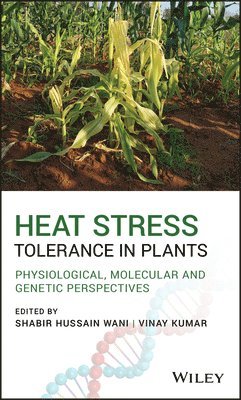
    Heat Stress Tolerance in Plants

    Physiological, Molecular and Genetic Perspectives

    AvShabir H. Wani,Vinay Kumar

    Inbunden, Engelska, 2020

    2 619 kr

    Beställningsvara. Skickas inom 3-6 vardagar. Fri frakt över 249 kr.

    Beskrivning

    Demystifies the genetic, biochemical, physiological, and molecular mechanisms underlying heat stress tolerance in plantsHeat stress—when high temperatures cause irreversible damage to plant function or development—severely impairs the growth and yield of agriculturally important crops. As the global population mounts and temperatures continue to rise, it is crucial to understand the biochemical, physiological, and molecular mechanisms of thermotolerance to develop ‘climate-smart’ crops. Heat Stress Tolerance in Plants provides a holistic, cross-disciplinary survey of the latest science in this important field. Presenting contributions from an international team of plant scientists and researchers, this text examines heat stress, its impact on crop plants, and various mechanisms to modulate tolerance levels. Topics include recent advances in molecular genetic approaches to increasing heat tolerance, the potential role of biochemical and molecular markers in screening germplasm for thermotolerance, and the use of next-generation sequencing to unravel the novel genes associated with defense and metabolite pathways. This insightful book: Places contemporary research on heat stress in plants within the context of global climate change and population growthIncludes diverse analyses from physiological, biochemical, molecular, and genetic perspectivesExplores various approaches to increasing heat tolerance in crops of high commercial value, such as cottonDiscusses the applications of plant genomics in the development of thermotolerant ‘designer crops’ An important contribution to the field, Heat Stress Tolerance in Plants is an invaluable resource for scientists, academics, students, and researchers working in fields of pulse crop biochemistry, physiology, genetics, breeding, and biotechnology.

    Produktinformation

    • Utgivningsdatum:2020-02-13
    • Mått:142 x 218 x 20 mm
    • Vikt:544 g
    • Format:Inbunden
    • Språk:Engelska
    • Antal sidor:315
    • Förlag:John Wiley & Sons Inc
    • ISBN:9781119432364

    Utforska kategorier

    • Agronomi och lantbruk inom Naturvetenskap och teknik

    Mer om författaren

    DR. SHABIR HUSSAIN WANI is Senior Assistant Professor, Department of Genetics and Plant Breeding, Mountain Research Centre for Field Crops, Sher-e-Kashmir University of Agricultural Sciences and Technology of Kashmir, Jammu and Kashmir, India. DR. VINAY KUMAR is Assistant Professor, Department of Biotechnology, Modern College of Arts, Science and Commerce, Ganeshkhind, Pune, India, and a Visiting Faculty, Department of Environmental Sciences, Savitribai Phule University, Pune, India.

    Innehållsförteckning

    • List of Contributors xiiiForeword xixAbout the Book xxiAbout the Editor xxiii1 Heat Tolerance in Cotton: Morphological, Physiological, and Genetic Perspectives 1Muhammad Tehseen Azhar, Shabir Hussain Wani, Muhammad Tanees Chaudhary, Tariq Jameel, Parwinder Kaur, and Xiongming Du1.1 Introduction 11.1.1 Morphological and Physiological Traits 21.1.1.1 Seedling and Root Growth 31.1.1.2 Stomatal Conductance 31.1.1.3 Cell Membrane Thermostability 41.1.1.4 Canopy Temperature 51.1.1.5 Chlorophyll Content 61.1.2 Genetics and Molecular Basis of Heat Tolerance in Cotton 81.1.3 Conventional Breeding Approaches 91.1.4 Modern Molecular Breeding Approaches 101.2 Conclusion and Future Prospects 12References 122 Seed Priming as a Method to Generate Heat-stress Tolerance in Plants: A Minireview 23Aditya Banerjee and Aryadeep Roychoudhury2.1 Introduction 232.2 Mechanism of Heat Stress Injury in Plants 242.3 Seed Priming Generating Heat-stress Tolerance 262.4 Conclusion 272.5 Future Perspectives 27Acknowledgments 28References 283 How Effective are Stress-associated Proteins in Augmenting Thermotolerance? 33Inès Karmous and Sandeep Kumar Verma3.1 Introduction 333.1.1 Heat Shock Proteins (HSPs) 343.1.2 Proline 363.1.3 Dehydrins (DHNs) 373.1.4 Role of Metabolic Proteins in Thermotolerance 373.2 Conclusion 40References 404 Biochemical and Molecular Markers: Unraveling Their Potential Role in Screening Germplasm for Thermotolerance 47Ahmed Ismail, Kareem A. Mosa, Muna A. Ali, and Mohamed Helmy4.1 Introduction 474.2 Types of Markers 484.3 Morphological Markers 494.4 Molecular Markers 494.5 Biochemical Markers 534.6 Quantitative Trait Loci for Plant Thermotolerance 544.7 Plant Metabolites Under Heat Stress 614.8 Antioxidant Enzymes and Heat Stress 634.9 Conclusion 68References 705 Alteration in Carbohydrate Metabolism Modulates Thermotolerance of Plant under Heat Stress 77Roseline Xalxo, Bhumika Yadu, Jipsi Chandra, Vibhuti Chandrakar, and S. Keshavkant5.1 Introduction 775.1.1 Heat Stress and Thermotolerance 795.1.1.1 Morphological Alterations 805.1.1.2 Anatomical Alterations 805.1.1.3 Physiological and Biochemical Modifications 815.1.1.4 Cell Membrane Integrity 825.2 Carbohydrate as Protectives Molecules 835.2.1 Osmolyte 835.2.2 Thermoprotectant 845.3 Carbohydrates as Signaling Molecules 855.3.1 Reproductive Cell Development 855.3.2 Seed Development 865.3.3 Seed Germination and Yield Loss 875.4 Adverse Impacts of Heat Stress 875.4.1 Photosynthesis 875.4.1.1 Altered Carbon Assimilation 885.4.1.2 Chlorophyll Breakdown 885.4.2 Major and Minor Carbohydrate Metabolism 895.4.3 Expression of Regulatory Genes 895.4.4 Enzyme Activity 905.5 Mechanisms Involved in Thermotolerance 935.5.1 Glucose and Heat-stress Tolerance 935.5.2 Sucrose and Heat-stress Tolerance 945.5.3 Fructan and Heat-stress Tolerance 955.5.4 Trehalose and Heat-stress Tolerance 965.5.5 Raffinose and Heat-stress Tolerance 975.6 Genetic Approaches/Strategies for Improving Thermotolerance 975.6.1 Genetically Modified Crop Production 975.6.2 Transgenic Strategies 995.7 Conclusions and Future Perspectives 102References 1036 Transcriptomics to Dissect Plant Responses to Heat Stress 117Sagar Satish Datir6.1 Introduction 1176.1.1 Transcriptome Sequencing and Expression Profiling of Genes Involved in Heat Stress Response 1196.1.1.1 Rice (Oryza sativa L.) 1196.1.1.2 Wheat (Triticum aestivum L.) 1236.1.1.3 Maize (Zea mays L.) 1256.1.1.4 Switchgrass (Panicum virgatum L.) and Ryegrass (Lolium perenne L.) 1266.1.1.5 Spinach (Spinacia oleracea L.) 1286.1.1.6 Brassica rapa L. 1296.1.1.7 Banana (Musa acuminate Colla) 1306.2 Conclusions 131References 1327 Proteomics as a Tool for Characterizing the Alteration in Pathways Associated with Defense and Metabolite Synthesis 141Reetika Mahajan and Sajad Majeed Zargar7.1 Introduction 1417.2 What Is Proteomics? 1427.3 Need of Proteomics in Post-genomic Era 1437.4 Different Branches of Proteomics 1437.5 Techniques Used in Quantitative Proteomics 1457.5.1 Gel-based and Gel-free Methods 1467.5.2 Label-based and Label-free Methods 1497.6 Role of Proteomics in Studying Alteration in Pathways Associated with Defense and Metabolite Synthesis 1507.7 Conclusion and Future Perspective 156References 1568 RNA World and Heat Stress Tolerance in Plants 167Usman Ijaz, Muhammad Amjad Ali, Habibullah Nadeem, Lin Tan, and Farrukh Azeem8.1 Introduction 1678.2 Plant microRNAs 1688.3 Small Interfering RNA (siRNA) 1778.4 Long Noncoding RNAs (lncRNAs) 1788.5 Circular RNAs (circRNAs) 1798.6 Conclusions and Future Perspectives 180References 1809 Heat Shock Proteins: Master Players for Heat-stress Tolerance in Plants during Climate Change 189Annu Yadav, Jitender Singh, Koushlesh Ranjan, Pankaj Kumar, Shivani Khanna, Madhuri Gupta, Vinay Kumar, Shabir Hussain Wani, and Anil Sirohi9.1 Introduction 1899.2 Classification of HSPs 1929.2.1 HSP100 1929.2.1.1 Structure of HSP100 1929.2.1.2 Mode of Action: The HSP100 Chaperone Cycle 1929.2.2 HSP90 1959.2.2.1 Structure of HSP90 1979.2.2.2 Mode of Action: The HSP90 Chaperone Cycle 1979.2.3 HSP70 1989.2.3.1 Structure of HSP70 1989.2.3.2 Mode of Action: The Hsp70 Chaperone Cycle 1989.2.4 HSP60 1999.2.4.1 Structure of HSP60 2019.2.4.2 Mode of Action: The Hsp60 Chaperone Cycle 2019.2.5 The Small Heat Shock Protein Family (sHSPs) 2029.2.5.1 Structure of sHSP 2029.2.5.2 Mode of Action: Small Heat Shock Proteins 2039.3 HSPs Expression Under Heat Stress Condition 2039.4 Conclusion and Future Prospects 205References 20510 The Contribution of Phytohormones in Plant Thermotolerance 213Sonal Mishra, Mansi Bhardwaj, Shakti Mehrotra, Aksar Ali Chowdhary, and Vikas Srivastava10.1 Introduction 21310.2 Protectants in Heat Stress Alleviation 21510.2.1 Osmolytes 21510.2.2 Nutrients 21510.2.3 Signaling Molecules 21710.2.4 Polyamines 21710.2.5 Phytohormones 21810.3 Application of Hormones in HT Management 21810.3.1 Auxin 21910.3.2 Gibberellin 22110.3.3 Cytokinin 22210.3.4 Abscisic Acid 22410.3.5 Ethylene 22510.3.6 Salicylic Acid 22510.3.7 Jasmonic Acid 22710.3.8 Brassinosteroid 22810.4 Conclusion and Prospects 229Acknowledgements 229References 23011 Exploring In-built Defense Mechanisms in Plants under Heat Stress 239Giridara Kumar Surabhi and Jatindra Kumar Seth11.1 Introduction 23911.2 Effect of Heat Stress on Crop Plants 24011.2.1 Heat Stress Effects on Physiology and Cell Structures 24111.2.2 Heat Stress Effects on Vegetative Stages 24211.2.3 Heat Stress Effects on Reproductive Stage 24311.2.4 Heat Stress Effects on Yield 24311.3 Threshold Temperature 24411.4 In-built Defense System in Plants to Overcome High Temperature Stress 24511.4.1 Accumulation of Thermoprotectants 24511.4.1.1 Heat Shock Proteins (HSPs) 24511.4.1.2 Proline 24611.4.1.3 Glycinebetaine (GB) 24811.4.1.4 Abscisic Acid (ABA) 24911.4.1.5 Salicylic Acid (SA) 25011.4.1.6 Heat Stress Effects on Secondary Metabolism 25511.4.2 Transcriptional Regulation 25611.4.3 Role of Small RNAs (miRNAs) in Heat-stress Tolerance 25811.5 Conclusion 261Acknowledgement 262References 263Index 283