• Fri frakt över 249 kr
  • •
  • Snabba leveranser
  • •
  • Billiga böcker
Kundservice

Du är på sajten för privatpersoner.

Företag, bibliotek eller offentlig verksamhet?

Du handlar på classic.bokus.com, där alla dina funktioner finns intakta.
Till classic.bokus.com
Bokus logotyp. Gå till startsidan.
  • Erbjudanden
  • Nyheter
  • Student
  • Topplistor
  • Barn & ungdom
  • Bokus Play
  • E-böcker
  • Pocketböcker
  • Spel & pussel

10% rabatt på allt med kod: NYSTART10 →

Sidfot

Mina sidor

    Hjälp

    • Kundservice
    • Vanliga frågor och svar
    • Frakt och leverans
    • Retur vid ångerrätt
    • Reklamera vara
    • Betalning
    • Köpvillkor
    • Allmänna villkor
    • Information om webbplatsens tillgänglighet

    Om Bokus

    • Om oss
    • Pressrum
    • För studenter
    • För företag
    • För bibliotek och offentlig verksamhet
    • För leverantörer
    • Hållbarhet

    Populärt

    • Aktuella erbjudanden
    • Presentkort
    • Studentlitteratur
    • Nya böcker
    • Topplistor
    • Signerade böcker
    • Engelska böcker

    Inspiration

    • Boktips
    • BookTok
    • Populära bokserier
    • Barnbokskaraktärer
    • Populära författare
    Logotyp för Bokus
    Följ oss på Facebook (extern länk)Följ oss på Instagram (extern länk)Följ oss på YouTube (extern länk)Följ oss på TikTok (extern länk)
    bokus @ CookiesAnpassa cookiesIntegritetspolicyKöpvillkor
    Till Citymail hemsida (extern länk)Till Budbee hemsida (extern länk)Till Postnord hemsida (extern länk)Till Schenker hemsida (extern länk)Till Early Bird hemsida (extern länk)Till Walleys hemsida (extern länk)
    1. Ekonomi och Ledarskap
    2. Företagsekonomi
    3. Organisation och ägarskap

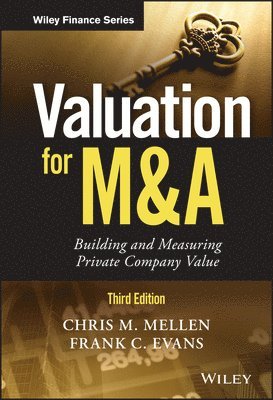
    Valuation for M&A

    Building and Measuring Private Company Value

    AvChris M. Mellen,Frank C. Evans

    Inbunden, Engelska, 2018

    Del i serien Wiley Finance

    979 kr

    Beställningsvara. Skickas inom 5-8 vardagar. Fri frakt över 249 kr.

    Beskrivning

    Determine a company's value, what drives it, and how to enhance value during a M&AValuation for M&A lays out the steps for measuring and managing value creation in non-publicly traded entities, and helps investors, executives, and their advisors determine the optimum strategy to enhance both market value and strategic value and maximize return on investment.As a starting point in planning for a transaction, it is helpful to compute fair market value, which represents a “floor” value for the seller since it by definition represents a value agreed upon by any hypothetical willing and able buyer and seller.  But for M&A, it is more important to compute investment value, which is the value of the target company to a strategic buyer (and which can vary with each prospective buyer).  Prepare for the sale and acquisition of a firmIdentify, quantify, and qualify the synergies that increase value to strategic buyersGet access to new chapters on fairness opinions and professional service firmsFind a discussion of Roger Grabowski's writings on cost of capital, cross-border M&A, private cost of capital, intangible capital, and asset vs. stock transactionsInside, all the necessary tools you need to build and measure private company value is just a page away!

    Produktinformation

    • Utgivningsdatum:2018-06-22
    • Mått:142 x 231 x 41 mm
    • Vikt:726 g
    • Format:Inbunden
    • Språk:Engelska
    • Serie:Wiley Finance
    • Antal sidor:496
    • Upplaga:3
    • Förlag:John Wiley & Sons Inc
    • ISBN:9781119433835

    Utforska kategorier

    • Organisation och ägarskap inom Ekonomi och Ledarskap
    • Finansiering inom Ekonomi och Ledarskap

    Mer om författaren

    CHRIS M. MELLEN is a managing director with Valuation Research Corporation who leads its Boston office. Previously, he was president of Delphi Valuation Advisors, Inc., which he founded in 2000 and sold to VRC in 2015. Mellen is the author of numerous articles on valuation-related topics and coauthor of the second edition and author of the third edition of Valuation for M&A. FRANK C. EVANS is the founder of Evans and Associates Valuation Advisory Services. A prolific educator and speaker, he is coauthor of the first and second editions of Valuation for M&A.

    Innehållsförteckning

    • Preface xiDedication and Acknowledgments xvPART I Introduction 1Chapter 1 Winning through Mergers and Acquisitions 3Critical Values Shareholders Overlook 5Stand-Alone Fair Market Value 6Investment Value to Strategic Buyers 8Win–Win Benefits of Merger and Acquisition 10Computation of Cavendish’s Stand-Alone, Fair Market Value 11Investment Value to Strategic Buyer 12PART II Building Value 15Chapter 2 Building Value and Measuring Return on Investment in a Private Company 17Public Company Value Creation Model 17Computing Private Company Value Creation and ROI 19Analyzing Value Creation Strategies 35Chapter 3 Market and Competitive Analysis 41Linking Strategic Planning to Building Value 43Assessing Specific Company Risk 48Competitive Factors Frequently Encountered in Nonpublic Entities 53Financial Analysis 54Conclusion 59Chapter 4 Merger and Acquisition Market and Planning Process 61Common Seller and Buyer Motivations 64Why Mergers and Acquisitions Fail 65Sales Strategy and Process 67Acquisition Strategy and Process 78Due Diligence Preparation 86Chapter 5 Measuring Synergies 91Synergy Measurement Process 92Key Variables in Assessing Synergies 95Synergy and Advance Planning 96PART III Measuring Value 99Chapter 6 Valuation Approaches and Fundamentals 101Business Valuation Approaches 101Using the Invested Capital Model to Define the Investment Being Appraised 103Why Net Cash Flow Measures Value Most Accurately 104Frequent Need to Negotiate from Earnings Measures 106Financial Statement Adjustments 109Managing Investment Risk in Merger and Acquisition 112Conclusion 117Chapter 7 Income Approach: Using Expected Future Returns to Establish Value 119Why Values for Merger and Acquisition Should Be Driven by the Income Approach 119Two Methods within the Income Approach 121Three-Stage DCF Model 128Establishing Defendable Long-Term Growth Rates and Terminal Values 131DCF Challenges and Applications 133Chapter 8 Cost of Capital Essentials 135Cost of Debt Capital 136Cost of Preferred Stock 138Cost of Common Stock 138Fundamentals and Limitations of the Capital Asset Pricing Model 139Modified Capital Asset Pricing Model 142Build-Up Model 143Summary of Rate of Return Data 151Private Cost of Capital 153International Cost of Capital 156How to Develop an Equity Cost for a Target Company 157Reconciling Discount Rates and P/E Multiples 159Conclusion 161Appendix 8A Using Specific Company Risk Strategically 162Chapter 9 Weighted Average Cost of Capital 169Iterative Weighted Average Cost of Capital Process 170Shortcut Weighted Average Cost of Capital Formula 174Common Errors in Computing Cost of Capital 176Chapter 10 Market Approach: Using Guideline Public Companies and M&A Transactions 181Transaction Multiple Method 182Guideline Public Company Method 186Selection of Valuation Multiples 190Commonly Used Market Multiples 191Chapter 11 Asset Approach 199Book Value versus Market Value 200Premises of Value 201Use of the Asset Approach to Value Noncontrolling Interests 201Adjusted Book Value Method 202Specific Steps in Computing Adjusted Book Value 207Chapter 12 Adjusting Value through Premiums and Discounts 209Applicability of Premiums and Discounts 210Application and Derivation of Premiums and Discounts 211Apply Discretion in the Size of the Adjustment 213Control versus Lack of Control in Income-Driven Methods 215Fair Market Value versus Investment Value 215Chapter 13 Reconciling Initial Value Estimates and Determining Value Conclusion 217Essential Need for Broad Perspective 217Income Approach Review 220Market Approach Review 225Asset Approach Review 226Value Reconciliation and Conclusion 228Checks to Value 231Candidly Assess Valuation Capabilities 232Valuation Scenarios – Platform for M&A 232Appendix 13A Disciplined and Thorough Valuation Analysis Key to Avoiding Failed M&A Deals 235Analysis of a Hypothetical Synergistic Deal 235Establishing the Value of an Acquisition Target 236Establishing Value for the Acquirer 238Considerations of Other Impacts on Value 239PART IV Specialty Issues 241Chapter 14 Exit Planning 243Why Is Exit Planning So Difficult? 244What Makes Planning for Your Private Company Investment Unique? 247Why Should Exit Planning for Your Private Company Begin Now? 249Exit Planning Process 250Step 1: Setting Exit Goals 252Step 2: Owner Readiness 254Step 3: Type of Exiting Owner 256Step 4: Exit Options 258Step 5: Range of Values 263Step 6: Execution of Exit Plan 265Chapter 15 Art of the Deal 269Unique Negotiation Challenges 269Deal Structure: Stock versus Assets 271Asset Transaction 276Terms of Sale: Cash versus Stock 279Personal Goodwill 282Bridging the Gap 283See the Deal from the Other Side 286Chapter 16 Fairness Opinions 289Why Are Fairness Opinions Obtained? 291The Use of Fairness Opinions by Private Companies 294Parties Who Prepare Fairness Opinions 295Components of a Fairness Opinion 297What Fairness Opinions Are Not 301Conclusion 302Appendix 16A Sample Fairness Opinion Letter 303Chapter 17 M&A and Financial Reporting 309U.S. GAAP and IFRS 310Relevant FASB and IFRS Statements 311Reviews by the Audit Firm 312ASC 820: Fair Value Measurements 313ASC 805: Business Combinations 315ASC 350: Goodwill and Other Intangible Assets 325Incorporating ASC 805 into the Due Diligence Process 326References 329Chapter 18 Intangible Asset Valuation 331Approaches to Valuing Intangible Assets 332Key Components to Intangible Asset Valuation 334Intangible Asset Valuation Methods 343Conclusion 352Chapter 19 Measuring and Managing Value in High-Tech Start-Ups 353Why Appraisals of High-Tech Start-Ups Are Essential 353Key Differences in High-Tech Start-Ups 355Value Management Begins with Competitive Analysis 356Stages of Development 358Risk and Discount Rates 360Start-Ups and Traditional Valuation Methods 361QED Survey of Valuation Methods Used by Venture Capitalists 367A Probability-Weighted Scenario Method to Value Start-Ups 372Equity Allocation Methods 377Conclusion 380Chapter 20 Cross-Border M&A 381Strategic Buy-Side Considerations 381Due Diligence 390Sell-Side Considerations 395PART V Case Studies 397Chapter 21 Merger and Acquisition Valuation Case Study – Distribution Company 399History and Competitive Conditions 400Potential Buyers 401General Economic Conditions 402Specific Industry Conditions 403Growth 404Computation of the Stand-Alone Fair Market Value 404Risk and Value Drivers 409Summary and Conclusion of Stand-Alone Fair Market Value 418Computation of Investment Value 420Suggested Considerations to Case Conclusion 427Chapter 22 Merger and Acquisition Valuation Case Study –Professional Services Firm 429Characteristics 429Valuation Methods 433Case Study Introduction 435Potential Buyer 435Historic Financial Performance 436Future Expectations 439Risk and Value Drivers 443Discounted Cash Flow Method 445Other Valuation Methods to Consider 445Suggested Considerations to Case Conclusion 451About the Authors 453Glossary 455Index 465