• Fri frakt över 249 kr
  • •
  • Snabba leveranser
  • •
  • Billiga böcker
Kundservice

Du är på sajten för privatpersoner.

Företag, bibliotek eller offentlig verksamhet?

Du handlar på classic.bokus.com, där alla dina funktioner finns intakta.
Till classic.bokus.com
Bokus logotyp. Gå till startsidan.
  • Erbjudanden
  • Nyheter
  • Student
  • Topplistor
  • Barn & ungdom
  • Bokus Play
  • E-böcker
  • Pocketböcker
  • Spel & pussel

10% rabatt på allt med kod NYSTART10 →

Sidfot

Mina sidor

    Hjälp

    • Kundservice
    • Vanliga frågor och svar
    • Frakt och leverans
    • Retur vid ångerrätt
    • Reklamera vara
    • Betalning
    • Köpvillkor
    • Allmänna villkor
    • Information om webbplatsens tillgänglighet

    Om Bokus

    • Om oss
    • Pressrum
    • För studenter
    • För företag
    • För bibliotek och offentlig verksamhet
    • För leverantörer
    • Hållbarhet

    Populärt

    • Aktuella erbjudanden
    • Presentkort
    • Studentlitteratur
    • Nya böcker
    • Topplistor
    • Signerade böcker
    • Engelska böcker

    Inspiration

    • Boktips
    • BookTok
    • Populära bokserier
    • Barnbokskaraktärer
    • Populära författare
    Logotyp för Bokus
    Följ oss på Facebook (extern länk)Följ oss på Instagram (extern länk)Följ oss på YouTube (extern länk)Följ oss på TikTok (extern länk)
    bokus @ CookiesAnpassa cookiesIntegritetspolicyKöpvillkor
    Till Citymail hemsida (extern länk)Till Budbee hemsida (extern länk)Till Postnord hemsida (extern länk)Till Schenker hemsida (extern länk)Till Early Bird hemsida (extern länk)Till Walleys hemsida (extern länk)
    1. Naturvetenskap och teknik
    2. Teknik och industri
    3. Energiteknik

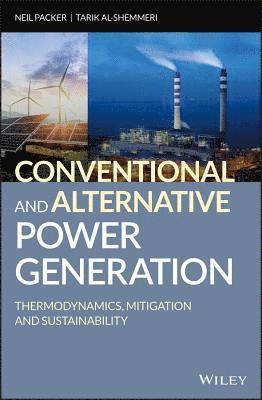
    Conventional and Alternative Power Generation

    Thermodynamics, Mitigation and Sustainability

    AvNeil Packer,Tarik Al-Shemmeri

    Inbunden, Engelska, 2018

    1 538 kr

    Beställningsvara. Skickas inom 5-8 vardagar. Fri frakt över 249 kr.

    Beskrivning

    A much-needed, up-to-date guide on conventional and alternative power generation This book goes beyond the traditional methods of power generation. It introduces the many recent innovations on the production of electricity and the way they play a major role in combating global warming and improving the efficiency of generation. It contains a strong analytical approach to underpin the theory of power plants—for those using conventional fuels, as well as those using renewable fuels—and looks at the problems from a unique environmental engineering perspective. The book also includes numerous worked examples and case studies to demonstrate the working principles of these systems.Conventional and Alternative Power Generation: Thermodynamics, Mitigation and Sustainability is divided into 8 chapters that comprehensively cover: thermodynamic systems; vapor power cycles, gas power cycles, combustion; control of particulates; carbon capture and storage; air pollution dispersal; and renewable energy and power plants. Features an abundance of worked examples and tutorialsExamines the problems of generating power from an environmental engineering perspectiveIncludes all of the latest information, technology, theories, and principles on power generationConventional and Alternative Power Generation: Thermodynamics, Mitigation and Sustainability is an ideal text for courses on mechanical, chemical, and electrical engineering.

    Produktinformation

    • Utgivningsdatum:2018-07-20
    • Mått:175 x 246 x 25 mm
    • Vikt:680 g
    • Format:Inbunden
    • Språk:Engelska
    • Antal sidor:304
    • Förlag:John Wiley & Sons Inc
    • ISBN:9781119479352

    Utforska kategorier

    • Energiteknik inom Naturvetenskap och teknik
    • Maskinteknik och material inom Naturvetenskap och teknik

    Mer om författaren

    NEIL PACKER is a Chartered engineer and Senior lecturer in Mechanical Engineering at Staffordshire University, UK. He has been teaching thermo-fluid and environmental engineering for over 20 years and has acted as an energy consultant in the UK, mainland Europe, and North Africa. TARIK AL-SHEMMERI, PHD, is Professor of Renewable Energy Technology at Staffordshire University, UK. He has lectured and researched extensively in the area of thermo-fluids, renewable energy, and power generation.

    Innehållsförteckning

    • Preface xiStructure of the Book xiiiNotation xvii1 Thermodynamic Systems 11.1 Overview 1Learning Outcomes 11.2 Thermodynamic System Definitions 11.3 Thermodynamic Properties 11.4 Thermodynamic Processes 31.5 Formation of Steam and the State Diagrams 41.5.1 Property Tables and Charts for Vapours 61.6 Ideal Gas Behaviour in Closed and Open Systems and Processes 71.7 First Law ofThermodynamics 91.7.1 First Law of Thermodynamics Applied to Open Systems 101.7.2 First Law of Thermodynamics Applied to Closed Systems 101.8 Worked Examples 111.9 Tutorial Problems 172 Vapour Power Cycles 192.1 Overview 19Learning Outcomes 192.2 Steam Power Plants 192.3 Vapour Power Cycles 202.3.1 The Carnot Cycle 212.3.2 The Simple Rankine Cycle 222.3.3 The Rankine Superheat Cycle 222.3.4 The Rankine Reheat Cycle 232.3.4.1 Analysis of the Rankine Reheat Cycle 242.3.5 Real Steam Processes 252.3.6 Regenerative Cycles 252.3.6.1 Single Feed Heater 262.3.6.2 Multiple Feed Heaters 272.3.7 Organic Rankine Cycle (ORc) 292.3.7.1 Choice of theWorking Fluid for ORc 292.4 Combined Heat and Power 302.4.1 Scenario One: Power Only 302.4.2 Scenario Two: Heat Only 312.4.3 ScenarioThree: Heat and Power 322.4.4 Cogeneration, Trigeneration and Quad Generation 332.5 Steam Generation Hardware 332.5.1 Steam Boiler Components 342.5.2 Types of Boiler 352.5.3 Fuel Preparation System 352.5.4 Methods of Superheat Control 362.5.5 Performance of Steam Boilers 362.5.5.1 Boiler Efficiency 362.5.5.2 Boiler Rating 372.5.5.3 Equivalent Evaporation 382.5.6 Steam Condensers 382.5.6.1 Condenser Calculations 382.5.7 Cooling Towers 392.5.8 Power-station Pumps 392.5.8.1 Pump Applications 392.5.9 Steam Turbines 412.6 Worked Examples 412.7 Tutorial Problems 543 Gas Power Cycles 573.1 Overview 57Learning Outcomes 573.2 Introduction to Gas Turbines 573.3 Gas Turbine Cycle 573.3.1 Irreversibilities in Gas Turbine Processes 583.3.2 The Compressor Unit 583.3.3 The Combustion Chamber 593.3.4 The Turbine Unit 603.3.5 Overall Performance of Gas Turbine Plants 603.4 Modifications to the Simple Gas Turbine Cycle 613.4.1 Heat Exchanger 613.4.2 Intercooling 613.4.3 Reheating 623.4.4 Compound System 633.4.5 Combined Gas Turbine/Steam Turbine Cycle 653.5 Gas Engines 683.5.1 Internal Combustion Engines 683.5.2 The Otto Cycle 683.5.2.1 Analysis of the Otto Cycle 693.5.3 The Diesel Cycle 693.5.3.1 Analysis of the Diesel Cycle 703.5.4 The Dual Combustion Cycle 713.5.4.1 Analysis of the Dual Cycle 723.5.5 Diesel Engine Power Plants 723.5.6 External Combustion Engines –The Stirling Engine 723.6 Worked Examples 753.7 Tutorial Problems 844 Combustion 874.1 Overview 87Learning Outcomes 874.2 Mass and Matter 874.2.1 Chemical Quantities 884.2.2 Chemical Reactions 884.2.3 Physical Quantities 884.3 Balancing Chemical Equations 894.3.1 Combustion Equations 904.4 Combustion Terminology 904.4.1 Oxidizer Provision 904.4.2 Combustion Product Analyses 914.4.3 Fuel mixtures 924.5 Energy Changes During Combustion 924.6 First Law ofThermodynamics Applied to Combustion 934.6.1 Steady-flow Systems (SFEE) [Applicable to Boilers, Furnaces] 934.6.2 Closed Systems (NFEE) [Applicable to Engines] 934.6.3 Flame Temperature 944.7 Oxidation of Nitrogen and Sulphur 944.7.1 Nitrogen and Sulphur 954.7.2 Formation of Nitrogen Oxides (NOx) 954.7.3 NOx Control 974.7.3.1 Modify the Combustion Process 974.7.3.2 Post-flame Treatment 974.7.4 Formation of Sulphur Oxides (SOx) 984.7.5 SOx Control 984.7.5.1 Flue Gas Sulphur Compounds from Fossil-fuel Consumption 984.7.5.2 Sulphur Compounds from Petroleum and Natural Gas Streams 1004.7.6 Acid Rain 1004.8 Worked Examples 1014.9 Tutorial Problems 1115 Control of Particulates 1155.1 Overview 115Learning Outcomes 1155.2 Some Particle Dynamics 1155.2.1 Nature of Particulates 1155.2.2 Stokes’s Law and Terminal Velocity 1165.3 Principles of Collection 1195.3.1 Collection Surfaces 1195.3.2 Collection Devices 1195.3.3 Fractional Collection Efficiency 1215.4 Control Technologies 1215.4.1 Gravity Settlers 1215.4.1.1 Model 1: Unmixed Flow Model 1225.4.1.2 Model 2:Well-mixed Flow Model 1235.4.2 Centrifugal Separators or Cyclones 1245.4.3 Electrostatic Precipitators (ESPs) 1285.4.4 Fabric Filters 1325.4.5 Spray Chambers and Scrubbers 1355.5 Worked Examples 1375.6 Tutorial Problems 1406 Carbon Capture and Storage 1456.1 Overview 145Learning Outcomes 1456.2 Thermodynamic Properties of CO2 1466.2.1 General Properties 1466.2.2 Equations of State 1486.2.2.1 The Ideal or Perfect Gas Law 1486.2.2.2 The Compressibility Factor 1486.2.2.3 Van derWaal Equation of State 1486.2.2.4 Beattie–Bridgeman Equation (1928) 1496.2.2.5 Benedict–Webb–Rubin Equation (1940) 1506.2.2.6 Peng–Robinson Equation of State (1976) 1506.3 Gas Mixtures 1506.3.1 Fundamental Mixture Laws 1516.3.2 PVT Behaviour of Gas Mixtures 1516.3.2.1 Dalton’s Law 1526.3.2.2 Amagat’s Law 1526.3.3 Thermodynamic Properties of Gas Mixtures 1536.3.4 Thermodynamics of Mixture Separation 1556.3.4.1 Minimum SeparationWork 1556.3.4.2 Separation of a Two-component Mixture 1566.4 Gas SeparationMethods 1576.4.1 Chemical Absorption by Liquids 1576.4.1.1 Aqueous Carbon Dioxide and Alkanolamine Chemistry 1586.4.1.2 Alternative Absorber Solutions 1596.4.2 Physical Absorption by Liquids 1606.4.3 Oxyfuel, Cryogenics and Chemical Looping 1616.4.4 Gas Membranes 1626.4.4.1 Membrane Flux 1636.4.4.2 Maximizing Flux 1636.4.4.3 Membrane Types 1636.5 Aspects of CO2 Conditioning and Transport 1646.5.1 Multi-stage Compression 1656.5.2 Pipework Design 1676.5.2.1 Pressure Drop 1676.5.2.2 Materials 1676.5.2.3 Maintenance and Control 1676.5.3 Carbon Dioxide Hazards 1686.5.3.1 Respiration 1686.5.3.2 Temperature 1686.5.3.3 Ventilation 1686.6 Aspects of CO2 Storage 1696.6.1 Biological Sequestration 1696.6.2 Mineral Carbonation 1716.6.3 Geological Storage Media 1726.6.4 Oceanic Storage 1746.7 Worked Examples 1766.8 Tutorial Problems 1827 Pollution Dispersal 1857.1 Overview 185Learning Outcomes 1857.2 Atmospheric Behaviour 1867.2.1 The Atmosphere 1867.2.2 Atmospheric Vertical Temperature Variation and Air Motion 1877.3 Atmospheric Stability 1897.3.1 Stability Classifications 1907.3.2 Stability and Stack Dispersal 1917.3.2.1 Non-inversion Conditions 1917.3.2.2 Inversion Conditions 1927.3.3 Variation inWind Velocity with Elevation 1927.4 Dispersion Modelling 1937.4.1 Point Source Modelling 1937.4.2 Plume Rise 1987.4.3 Effect of Non-uniform Terrain on Dispersal 1997.5 Alternative Expressions of Concentration 2007.6 Worked Examples 2007.7 Tutorial Problems 2038 Alternative Energy and Power Plants 2078.1 Overview 207Learning Outcomes 2078.2 Nuclear Power Plants 2088.2.1 Components of a Typical Nuclear Reactor 2088.2.2 Types of Nuclear Reactor 2098.2.3 Environmental Impact of Nuclear Reactors 2098.3 Solar Power Plants 2108.3.1 Photovoltaic Power Plants 2118.3.2 Solar Thermal Power Plants 2158.4 Biomass Power Plants 2168.4.1 Forestry, Agricultural and Municipal Biomass for Direct Combustion 2178.4.1.1 Bulk Density (kg/m3) 2178.4.1.2 Moisture Content (% by Mass) 2178.4.1.3 Ash Content (% by Mass) 2188.4.1.4 Calorific Value (kJ/kg) and Combustion 2188.4.2 Anaerobic Digestion 2208.4.3 Biofuels 2228.4.3.1 Biodiesel 2228.4.3.2 Bioethanol 2228.4.4 Gasification and Pyrolysis of Biomass 2238.5 Geothermal Power Plants 2248.6 Wind Energy 2268.6.1 Theory ofWind Energy 2278.6.1.1 Actual Power Output of the Turbine 2298.6.2 Wind Turbine Types and Components 2308.7 Hydropower 2308.7.1 Types of Hydraulic Power Plant 2318.7.1.1 Run-of-river Hydropower 2318.7.1.2 Storage Hydropower 2328.7.2 Estimation of Hydropower 2338.7.3 Types of Hydraulic Turbine 2338.8 Wave and Tidal (or Marine) Power 2338.8.1 Characteristics ofWaves 2348.8.2 Estimation ofWave Energy 2358.8.3 Types ofWave Power Device 2358.8.4 Tidal Power 2378.8.4.1 Tidal Barrage Energy 2388.8.4.2 Tidal Stream Energy 2398.9 Thermoelectric Energy 2398.9.1 DirectThermal Energy to Electrical Energy Conversion 2408.9.2 Thermoelectric Generators (TEGs) 2418.10 Fuel Cells 2428.10.1 Principles of Simple Fuel Cell Operation 2438.10.2 Fuel Cell Efficiency 2438.10.3 Fuel Cell Types 2448.11 Energy Storage Technologies 2448.11.1 Energy Storage Characteristics 2468.11.2 Energy Storage Technologies 2468.11.2.1 Hydraulic Energy 2468.11.2.2 Pneumatic Energy 2478.11.2.3 Ionic Energy 2478.11.2.4 Rotational Energy 2488.11.2.5 Electrostatic Energy 2498.11.2.6 Magnetic Energy 2498.12 Worked Examples 2508.13 Tutorial Problems 255A Properties ofWater and Steam 257B Thermodynamic Properties of Fuels and Combustion Products 263Bibliography 265Index 267