• Fri frakt över 249 kr
  • •
  • Snabba leveranser
  • •
  • Billiga böcker
Kundservice

Du är på sajten för privatpersoner.

Företag, bibliotek eller offentlig verksamhet?

Du handlar på classic.bokus.com, där alla dina funktioner finns intakta.
Till classic.bokus.com
Bokus logotyp. Gå till startsidan.
  • Erbjudanden
  • Nyheter
  • Student
  • Topplistor
  • Barn & ungdom
  • Bokus Play
  • E-böcker
  • Pocketböcker
  • Spel & pussel

10% rabatt på allt med kod NYSTART10 →

Sidfot

Mina sidor

    Hjälp

    • Kundservice
    • Vanliga frågor och svar
    • Frakt och leverans
    • Retur vid ångerrätt
    • Reklamera vara
    • Betalning
    • Köpvillkor
    • Allmänna villkor
    • Information om webbplatsens tillgänglighet

    Om Bokus

    • Om oss
    • Pressrum
    • För studenter
    • För företag
    • För bibliotek och offentlig verksamhet
    • För leverantörer
    • Hållbarhet

    Populärt

    • Aktuella erbjudanden
    • Presentkort
    • Studentlitteratur
    • Nya böcker
    • Topplistor
    • Signerade böcker
    • Engelska böcker

    Inspiration

    • Boktips
    • BookTok
    • Populära bokserier
    • Barnbokskaraktärer
    • Populära författare
    Logotyp för Bokus
    Följ oss på Facebook (extern länk)Följ oss på Instagram (extern länk)Följ oss på YouTube (extern länk)Följ oss på TikTok (extern länk)
    bokus @ CookiesAnpassa cookiesIntegritetspolicyKöpvillkor
    Till Citymail hemsida (extern länk)Till Budbee hemsida (extern länk)Till Postnord hemsida (extern länk)Till Schenker hemsida (extern länk)Till Early Bird hemsida (extern länk)Till Walleys hemsida (extern länk)
    1. Kultur
    2. Arkitektur

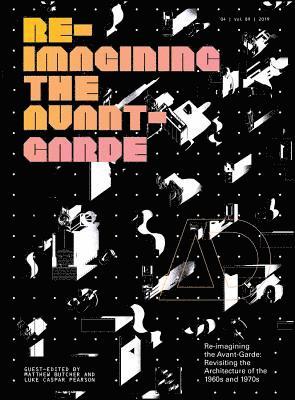
    Re-Imagining the Avant-Garde

    Revisiting the Architecture of the 1960s and 1970s

    Häftad, Engelska, 2019

    Del i serien Architectural Design

    458 kr

    Beställningsvara. Skickas inom 5-8 vardagar. Fri frakt över 249 kr.

    Beskrivning

    The 1960s and 1970s avant-garde has been likened to an ‘architectural Big Bang’, such was the intensity of energy and ambition in which it exploded into the postwar world. Marked out by architectural projects that redefined the discipline, it remains just as influential today. References to the likes of Archizoom, Peter Eisenman, John Hejduk and Superstudio abound. Highly diverse, the avant-garde cannot be defined as a single strand or tendency. It was divergent geographically – reaching from Europe to North America and Japan – and in its political, formal and cultural preoccupations. It was unified, though, as a critical and experimental force, critiquing contemporary society against the backdrop of extreme social and political upheaval: the Paris riots of May 1968, the anti-Vietnam war movement in America and the looming ecological crisis.Re-imagining the Avant-garde outlines how in contemporary architectural practice, avant-garde projects retain their power as historical precedents, as barometers of a particular design ethos, as critiques of society and instigators of new formal techniques. Given the far-reaching impact of the subsequent digital revolution, which has since reshaped every aspect of practice, the issue asks why this historical period continues to retain its undeniable grip on current architecture.Contributors: Pablo Bronstein and Sam Jacob, Sarah Deyong, Stylianos Giamarelos, Damjan Jovanovic, Andrew Kovacs, Perry Kulper, Igor Marjanovic, William Menking, Michael Sorkin, Neil Spiller and Mimi Zeiger.Featured architects: Archizoom, Andrea Branzi, Jimenez Lai, Luis Miguel (Koldo) Lus Arana (Klaus), NEMESTUDIO, Superstudio and UrbanLab.

    Produktinformation

    • Utgivningsdatum:2019-07-19
    • Mått:208 x 285 x 10 mm
    • Vikt:612 g
    • Format:Häftad
    • Språk:Engelska
    • Serie:Architectural Design
    • Antal sidor:144
    • Förlag:John Wiley & Sons Inc
    • ISBN:9781119506850

    Utforska kategorier

    • Arkitektur inom Kultur

    Mer om författaren

    Matthew Butcher is an academic, writer and designer. His work has been exhibited at the V&A Museum in London, the Storefront for Art and Architecture in New York and the Prague Quadrennial, Prague. Matthew is also the editor and founder of the architectural newspaper P.E.A.R.: Paper for Emerging Architectural Research. Senior Lecturer in Design at the Bartlett School of Architecture (UCL), he is Director of the Undergraduate Architecture Programme. He has contributed articles and papers to a wide selection of architectural journals and magazines.Luke Caspar Pearson is a designer and Lecturer in Architecture at the Bartlett School of Architecture (UCL), where he runs undergraduate and postgraduate design studios. He is the founding partner of You+Pea, a design research practice and the co-founder of Drawing Futures, an international conference. He has recently established REALMS, a new Bartlett funded initiative exploring the relationship between architecture and video-game design. Luke’s work and writing has featured in architectural journals and magazines.

    Innehållsförteckning

    • Chapter 1Enduring Experiments: How the Architectural Avant-Garde Lives OnChapter 2 Superstudio as Super-Office: The Labour of Radical DesignChapter 3 Function Follows Form: Some Affinities Between Pure Icons, Hardcore ArchitectureChapter 4 Avant-Garde in the Age of Identity: Alvin Boyarsky, the Architectural Association and the Impact of PedagogyChapter 5 The Little Big Planet of Architectural Imagination: An Interview with NEMESTUDIO's Neyran TuranChapter 6 Feedback Loops: Or, Past Futures Haunt Architecture's PresentChapter 7 ArChapterive of Affinities: Making Architecture from ArchitectureChapter 8 Avant-Garde Legacies: A Spirited FlâneurChapter 9 System Cities: Building a ‘Quantitative Utopia’Chapter 10 The Function of UtopiaChapter 11 Feverish Delirium: Surrealism, Deconstruction and Numinous PresencesChapter 12 Behind the Wheel: Charles Darwin and Superstudio Do the DrivingChapter 13 Play it Again: In Conversation with Architect Sam Jacob and Artist Pablo BronsteinChapter 14 Architecture Between the Panels: Comics, Cartoons and Graphic Narrative in the (New) Neo Avant-GardeChapter 15 Copying as Cultural IconoclasmChapter 16 Anticipating the Digital: The Game of SupersurfaceChapter 17 Counterpoint – What Comes After the Avant-Garde?