• Fri frakt över 249 kr
  • •
  • Snabba leveranser
  • •
  • Billiga böcker
Kundservice

Du är på sajten för privatpersoner.

Företag, bibliotek eller offentlig verksamhet?

Du handlar på classic.bokus.com, där alla dina funktioner finns intakta.
Till classic.bokus.com
Bokus logotyp. Gå till startsidan.
  • Erbjudanden
  • Nyheter
  • Student
  • Topplistor
  • Barn & ungdom
  • Bokus Play
  • E-böcker
  • Pocketböcker
  • Spel & pussel

10% rabatt på allt med kod: NYSTART10 →

Sidfot

Mina sidor

    Hjälp

    • Kundservice
    • Vanliga frågor och svar
    • Frakt och leverans
    • Retur vid ångerrätt
    • Reklamera vara
    • Betalning
    • Köpvillkor
    • Allmänna villkor
    • Information om webbplatsens tillgänglighet

    Om Bokus

    • Om oss
    • Pressrum
    • För studenter
    • För företag
    • För bibliotek och offentlig verksamhet
    • För leverantörer
    • Hållbarhet

    Populärt

    • Aktuella erbjudanden
    • Presentkort
    • Studentlitteratur
    • Nya böcker
    • Topplistor
    • Signerade böcker
    • Engelska böcker

    Inspiration

    • Boktips
    • BookTok
    • Populära bokserier
    • Barnbokskaraktärer
    • Populära författare
    Logotyp för Bokus
    Följ oss på Facebook (extern länk)Följ oss på Instagram (extern länk)Följ oss på YouTube (extern länk)Följ oss på TikTok (extern länk)
    bokus @ CookiesAnpassa cookiesIntegritetspolicyKöpvillkor
    Till Citymail hemsida (extern länk)Till Budbee hemsida (extern länk)Till Postnord hemsida (extern länk)Till Schenker hemsida (extern länk)Till Early Bird hemsida (extern länk)Till Walleys hemsida (extern länk)
    1. Psykologi och pedagogik
    2. Pedagogik

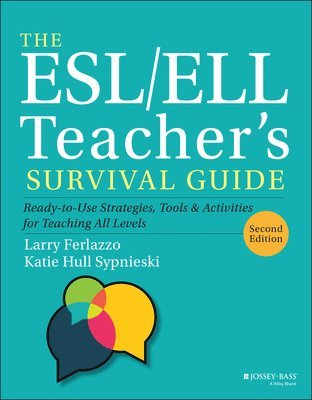
    ESL/ELL Teacher's Survival Guide

    Ready-to-Use Strategies, Tools, and Activities for Teaching All Levels

    AvLarry Ferlazzo,Katie Hull Sypnieski

    Häftad, Engelska, 2022

    Del i serien J-B Ed: Survival Guides

    258 kr

    Beställningsvara. Skickas inom 5-8 vardagar. Fri frakt över 249 kr.

    Beskrivning

    Maximize the educational potential of your ESL/ELL class with this singular resourceThe ESL/ELL Teacher's Survival Guide: Ready-to-Use Strategies, Tools, and Activities for Teaching English Language Learners of All Levels, 2nd Edition offers readers a comprehensive range of instructional strategies and educational resources for teaching English. The newly revised 2nd Edition includes brand new chapters on: Working with Long-Term English Language LearnersTeaching English internationallyTeaching Elementary Age ELLsTeaching Adult ELLsTeaching ELLs with learning challengesCulturally Responsive InstructionEffective online instructionWorking with co-teachers and para-professionalsIn addition to the new chapters, The ESL/ELL Teacher's Survival Guide contains updated material on topics including math, science, social studies, Common Core Standards, the Next Generation Science Standards and 150 pages of new, highly engaging content. An essential resource for anyone involved in teaching English as a Second Language to students of all ages, this book is perfect for general education teachers and ESL specialists for students in grades six through twelve. It’s also highly instructive for teachers of adult ESL classes, elementary and teacher educators, and resource specialists.

    Produktinformation

    • Utgivningsdatum:2022-05-23
    • Mått:213 x 272 x 33 mm
    • Vikt:1 293 g
    • Format:Häftad
    • Språk:Engelska
    • Serie:J-B Ed: Survival Guides
    • Antal sidor:576
    • Upplaga:2
    • Förlag:John Wiley & Sons Inc
    • ISBN:9781119550389

    Utforska kategorier

    • Pedagogik inom Psykologi och pedagogik

    Mer om författaren

    Larry Ferlazzo teaches English Language Learners and English-proficient students at Luther Burbank High School in Sacramento, California. He is the author or editor of twelve books on education, and writes a weekly teacher advice column for Education Week.Katie Hull Sypnieski teaches English Language Learners and English-proficient students at Arthur A. Benjamin Health Professions High School in Sacramento, California. She is a Teacher Consultant with the Area 3 Writing Project at the University of California, Davis and is a co-author of The ELL Teacher’s Toolbox and Navigating the Common Core with English Language Learners.

    Innehållsförteckning

    • About the Authors viiAcknowledgments xvAbout the Contributors xviiIntroduction xxiPART ONE: GETTING STARTED WITH ENGLISH LANGUAGE LEARNERS 11 ELL Instruction: The Big Picture 3ELL Population Growth 4How Are English Language Learners Described? 5Adolescent English Language Learners 7A Primer on ELL Research 8A Quick Tour of ELL Best Practices 122 ELL Classroom Basics: Building a Positive and Effective Learning Environment 17The First R: Building Relationships 18The Second R: Resources in the ELL Classroom 36The Third R: Establishing Routines 43PART TWO: TEACHING BEGINNING ENGLISH LANGUAGE LEARNERS 473 Key Elements of a Curriculum for Beginning ELLs 49Key Elements of a Curriculum 504 Daily Instruction for Beginning ELLs 115Picture Word Inductive Model Unit Plan 116PART THREE: TEACHING INTERMEDIATE ENGLISH LANGUAGE LEARNERS 1615 Key Elements of a Curriculum for Intermediate ELLs 163Key Elements of a Curriculum 1646 Daily Instruction for Intermediate ELLs 213Designing Thematic Genre Units 213A Sample Unit: Problem-Solution 215Sample Lesson Plans 245Inductive Lesson Plan 245Using Text to Generate Analytical Writing Lesson Plan 251A Sample Week in a Two-Period Intermediate ELL Class 258PART FOUR: TEACHING ENGLISH LANGUAGE LEARNERS IN THE CONTENT AREAS 2637 English Language Learners in the Mainstream Classroom 265What Is the Organizing Cycle? 2678 Teaching Social Studies 283Building Relationships with Students 2849 Teaching Science 301Introduction: Science and Language 30210 Teaching Math 315Introduction 316Challenge: Reading Mathematics Texts 317Challenge: Knowledge of Appropriate Academic Vocabulary 319Challenge: Participating in Mathematics Conversations 321Challenge: Understanding Abstract Concepts 324PART FIVE: WORKING WITH SPECIFIC GROUPS OF ENGLISH LANGUAGE LEARNERS 32711 Supporting Long-Term English Language Learners 329Who Are Long-TermEnglish Language Learners? 330How Can We Best Support LTELLs? 330How Did Larry and His School Try to Put These Recommendations into Action? 33112 Working with Elementary ELLs 339Who Are Elementary English Learners? 340Do Elementary English Language Learners Have Different Needs? Does Their Instruction Need to be Different from that of Older English Learners? 342Program Types in Elementary 342The Core Elements of Supportive Instruction for Elementary English Language Learners 345What Does a Model Classroom that is Highly Supportive of Elementary English Learners Look Like? 345What Does a Model Classroom that is Highly Supportive of Elementary English Learners Sound Like? 347What Does a Model Classroom that is Highly Supportive of Elementary ELLs Feel Like? 349Instructional Strategies that Support Elementary ELLs 35213 Teaching Adult Ells 355The Differences in Teaching English to Adults Versus Children 356How to Foster Success with Adult Learners 36214 Teaching ELLs with Learning Differences 371Considerations for Further Investigation 372Considerations for Determining Services 373Considerations for Placement/Scheduling 375Resources 376PART SIX: FURTHER STRATEGIES TO ENSURE SUCCESS 37715 Culturally Responsive and Sustaining Teaching 379What Is Culturally Responsive and Sustaining Teaching? 380The Organizing Cycle 38116 Addressing Additional Opportunities and Challenges 393Student Motivation 394The Advantages of Being Bilingual or Multilingual Lesson Plan 395Social Emotional Learning 408Textbook Integration 410Error Correction 412Limited Access to Educational Technology 414Multilevel Classes 415Co-Teaching and/or Working with an Aide/Paraprofessional 419Classroom Management 421Book Selection 422Supporting ELL Students with Limited or Interrupted Formal Education (SLIFEs) 42417 Home Language of ELLs 427Seeing Home Language as an Asset 429A Mini Lesson on the Value of Home Languages 430Research on Home Languages in the Classroom 431Turning Bloom’s Taxonomy into a Home-Language Framework 434Abandoning English-Only Policies 440Conclusion 44218 Using Learning Games in the ELL Classroom 445Research Support 445What Are the Qualities of a Good Learning Game? 44619 Assessing English Language Learners 461Assessing ELLs: Key Principles 46220 Reflective Teaching/Professional Development 487The Bread in the Pond 487Why Should We Have an Intentional, Formal Process for Reflecting? 488Why I Began Filming Myself and Why I Continued 489Adopting a Reflective Mindset 490Afterword 497Notes 499Index 539