• Fri frakt över 249 kr
  • •
  • Snabba leveranser
  • •
  • Billiga böcker
Kundservice

Du är på sajten för privatpersoner.

Företag, bibliotek eller offentlig verksamhet?

Du handlar på classic.bokus.com, där alla dina funktioner finns intakta.
Till classic.bokus.com
Bokus logotyp. Gå till startsidan.
  • Erbjudanden
  • Nyheter
  • Student
  • Topplistor
  • Barn & ungdom
  • Bokus Play
  • E-böcker
  • Pocketböcker
  • Spel & pussel

10% rabatt på allt med kod NYSTART10 →

Sidfot

Mina sidor

    Hjälp

    • Kundservice
    • Vanliga frågor och svar
    • Frakt och leverans
    • Retur vid ångerrätt
    • Reklamera vara
    • Betalning
    • Köpvillkor
    • Allmänna villkor
    • Information om webbplatsens tillgänglighet

    Om Bokus

    • Om oss
    • Pressrum
    • För studenter
    • För företag
    • För bibliotek och offentlig verksamhet
    • För leverantörer
    • Hållbarhet

    Populärt

    • Aktuella erbjudanden
    • Presentkort
    • Studentlitteratur
    • Nya böcker
    • Topplistor
    • Signerade böcker
    • Engelska böcker

    Inspiration

    • Boktips
    • BookTok
    • Populära bokserier
    • Barnbokskaraktärer
    • Populära författare
    Logotyp för Bokus
    Följ oss på Facebook (extern länk)Följ oss på Instagram (extern länk)Följ oss på YouTube (extern länk)Följ oss på TikTok (extern länk)
    bokus @ CookiesAnpassa cookiesIntegritetspolicyKöpvillkor
    Till Citymail hemsida (extern länk)Till Budbee hemsida (extern länk)Till Postnord hemsida (extern länk)Till Schenker hemsida (extern länk)Till Early Bird hemsida (extern länk)Till Walleys hemsida (extern länk)
    1. Data och IT
    2. Systemvetenskap och AI

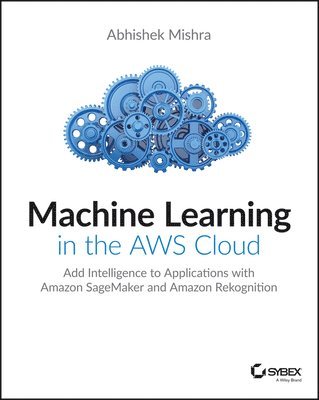
    Machine Learning in the AWS Cloud

    Add Intelligence to Applications with Amazon SageMaker and Amazon Rekognition

    AvAbhishek Mishra

    Häftad, Engelska, 2019

    522 kr

    Beställningsvara. Skickas inom 3-6 vardagar. Fri frakt över 249 kr.

    Fler format och utgåvor

    E-bok

    463 kr

    E-bok

    465 kr

    Beskrivning

    Put the power of AWS Cloud machine learning services to work in your business and commercial applications! Machine Learning in the AWS Cloud introduces readers to the machine learning (ML) capabilities of the Amazon Web Services ecosystem and provides practical examples to solve real-world regression and classification problems. While readers do not need prior ML experience, they are expected to have some knowledge of Python and a basic knowledge of Amazon Web Services.Part One introduces readers to fundamental machine learning concepts. You will learn about the types of ML systems, how they are used, and challenges you may face with ML solutions. Part Two focuses on machine learning services provided by Amazon Web Services. You’ll be introduced to the basics of cloud computing and AWS offerings in the cloud-based machine learning space. Then you’ll learn to use Amazon Machine Learning to solve a simpler class of machine learning problems, and Amazon SageMaker to solve more complex problems.•    Learn techniques that allow you to preprocess data, basic feature engineering, visualizing data, and model building•    Discover common neural network frameworks with Amazon SageMaker•    Solve computer vision problems with Amazon Rekognition•    Benefit from illustrations, source code examples, and sidebars in each chapterThe book appeals to both Python developers and technical/solution architects. Developers will find concrete examples that show them how to perform common ML tasks with Python on AWS. Technical/solution architects will find useful information on the machine learning capabilities of the AWS ecosystem.

    Produktinformation

    • Utgivningsdatum:2019-10-08
    • Mått:185 x 234 x 31 mm
    • Vikt:885 g
    • Format:Häftad
    • Språk:Engelska
    • Antal sidor:528
    • Förlag:John Wiley & Sons Inc
    • ISBN:9781119556718

    Utforska kategorier

    • Systemvetenskap och AI inom Data och IT

    Mer om författaren

    ABOUT THE AUTHOR ABHISHEK MISHRA has more than 19 years' experience across a broad range of enterprise technologies. He consults as a security and fraud solution architect with Lloyds Banking group PLC in London. He is the author of Amazon Web Services for Mobile Developers.

    Innehållsförteckning

    • Introduction xxiiiPart 1 Fundamentals of Machine Learning 1Chapter 1 Introduction to Machine Learning 3What is Machine Learning? 4Tools Commonly Used by Data Scientists 4Common Terminology 5Real-World Applications of Machine Learning 7Types of Machine Learning Systems 8Supervised Learning 8Unsupervised Learning 9Semi-Supervised Learning 10Reinforcement Learning 11Batch Learning 11Incremental Learning 12Instance-based Learning 12Model-based Learning 12The Traditional Versus the Machine Learning Approach 13A Rule-based Decision System 14A Machine Learning–based System 17Summary 25Chapter 2 Data Collection and Preprocessing 27Machine Learning Datasets 27Scikit-learn Datasets 27AWS Public Datasets 30Kaggle.com Datasets 30UCI Machine Learning Repository 30Data Preprocessing Techniques 31Obtaining an Overview of the Data 31Handling Missing Values 42Creating New Features 44Transforming Numeric Features 46One-Hot Encoding Categorical Features 47Summary 50Chapter 3 Data Visualization with Python 51Introducing Matplotlib 51Components of a Plot 54Figure 55Axes55Axis 56Axis Labels 56Grids 57Title 57Common Plots 58Histograms 58Bar Chart 62Grouped Bar Chart 63Stacked Bar Chart 65Stacked Percentage Bar Chart 67Pie Charts 69Box Plot 71Scatter Plots 73Summary 78Chapter 4 Creating Machine Learning Models with Scikit-learn 79Introducing Scikit-learn 79Creating a Training and Test Dataset 80K-Fold Cross Validation 84Creating Machine Learning Models 86Linear Regression 86Support Vector Machines 92Logistic Regression 101Decision Trees 109Summary 114Chapter 5 Evaluating Machine Learning Models 115Evaluating Regression Models 115RMSE Metric 117R2 Metric 119Evaluating Classification Models 119Binary Classification Models 119Multi-Class Classification Models 126Choosing Hyperparameter Values 131Summary 132Part 2 Machine Learning with Amazon Web Services 133Chapter 6 Introduction to Amazon Web Services 135What is Cloud Computing? 135Cloud Service Models 136Cloud Deployment Models 138The AWS Ecosystem 139Machine Learning Application Services 140Machine Learning Platform Services 141Support Services 142Sign Up for an AWS Free-Tier Account 142Step 1: Contact Information 143Step 2: Payment Information 145Step 3: Identity Verification 145Step 4: Support Plan Selection 147Step 5: Confirmation 148Summary 148Chapter 7 AWS Global Infrastructure 151Regions and Availability Zones 151Edge Locations 153Accessing AWS 154The AWS Management Console 156Summary 160Chapter 8 Identity and Access Management 161Key Concepts 161Root Account 161User 162Identity Federation 162Group 163Policy164Role 164Common Tasks 165Creating a User 167Modifying Permissions Associated with an Existing Group 172Creating a Role 173Securing the Root Account with MFA 176Setting Up an IAM Password Rotation Policy 179Summary 180Chapter 9 Amazon S3 181Key Concepts 181Bucket 181Object Key 182Object Value 182Version ID 182Storage Class 182Costs 183Subresources 183Object Metadata 184Common Tasks 185Creating a Bucket 185Uploading an Object 189Accessing an Object 191Changing the Storage Class of an Object 195Deleting an Object 196Amazon S3 Bucket Versioning 197Accessing Amazon S3 Using the AWS CLI 199Summary 200Chapter 10 Amazon Cognito 201Key Concepts 201Authentication 201Authorization 201Identity Provider 202Client 202OAuth 2.0 202OpenID Connect 202Amazon Cognito User Pool 202Identity Pool 203Amazon Cognito Federated Identities 203Common Tasks 204Creating a User Pool 204Retrieving the App Client Secret 213Creating an Identity Pool 214User Pools or Identity Pools: Which One Should You Use? 218Summary 219Chapter 11 Amazon DynamoDB 221Key Concepts 221Tables 222Global Tables 222Items 222Attributes 222Primary Keys 222Secondary Indexes 223Queries 223Scans 223Read Consistency 224Read/Write Capacity Modes 224Common Tasks 225Creating a Table 225Adding Items to a Table 228Creating an Index 231Performing a Scan 233Performing a Query 235Summary 236Chapter 12 AWS Lambda 237Common Use Cases for Lambda 237Key Concepts 238Supported Languages 238Lambda Functions 238Programming Model 239Execution Environment 243Service Limitations 244Pricing and Availability 244Common Tasks 244Creating a Simple Python Lambda Function Using the AWS Management Console 244Testing a Lambda Function Using the AWS Management Console 250Deleting an AWS Lambda Function Using the AWS Management Console 253Summary 255Chapter 13 Amazon Comprehend 257Key Concepts 257Natural Language Processing 257Topic Modeling 259Language Support 259Pricing and Availability 259Text Analysis Using the Amazon Comprehend Management Console 260Interactive Text Analysis with the AWS CLI 262Entity Detection with the AWS CLI 263Key Phrase Detection with the AWS CLI 264Sentiment Analysis with the AWS CLI 265Using Amazon Comprehend with AWS Lambda 266Summary 274Chapter 14 Amazon Lex 275Key Concepts 275Bot 275Client Application 276Intent 276Slot 276Utterance 277Programming Model 277Pricing and Availability 278Creating an Amazon Lex Bot 278Creating Amazon DynamoDB Tables 278Creating AWS Lambda Functions 285Creating the Chatbot 304Customizing the AccountOverview Intent 308Customizing the ViewTransactionList Intent 312Testing the Chatbot 314Summary 315Chapter 15 Amazon Machine Learning 317Key Concepts 317Datasources 318ML Model 318Regularization 319Training Parameters 319Descriptive Statistics 320Pricing and Availability 321Creating Datasources 321Creating the Training Datasource 324Creating the Test Datasource 330Viewing Data Insights 332Creating an ML Model 337Making Batch Predictions 341Creating a Real-Time Prediction Endpoint for Your Machine Learning Model 346Making Predictions Using the AWS CLI 347Using Real-Time Prediction Endpoints with Your Applications 349Summary 350Chapter 16 Amazon SageMaker 353Key Concepts 353Programming Model 354Amazon SageMaker Notebook Instances 354Training Jobs 354Prediction Instances 355Prediction Endpoint and Endpoint Configuration 355Amazon SageMaker Batch Transform 355Data Channels 355Data Sources and Formats 356Built-in Algorithms 356Pricing and Availability 357Creating an Amazon SageMaker Notebook Instance 357Preparing Test and Training Data 362Training a Scikit-learn Model on an Amazon SageMaker Notebook Instance 364Training a Scikit-learn Model on a Dedicated Training Instance 368Training a Model Using a Built-in Algorithm on a Dedicated Training Instance 379Summary 384Chapter 17 Using Google TensorFlow with Amazon SageMaker 387Introduction to Google TensorFlow 387Creating a Linear Regression Model with Google TensorFlow 390Training and Deploying a DNN Classifier Using the TensorFlow Estimators API and Amazon SageMaker 408Summary 419Chapter 18 Amazon Rekognition 421Key Concepts 421Object Detection 421Object Location 422Scene Detection 422Activity Detection 422Facial Recognition 422Face Collection 422API Sets 422Non-Storage and Storage-Based Operations 423Model Versioning 423Pricing and Availability 423Analyzing Images Using the Amazon Rekognition Management Console 423Interactive Image Analysis with the AWS CLI 428Using Amazon Rekognition with AWS Lambda 433Creating the Amazon DynamoDB Table 433Creating the AWS Lambda Function 435Summary 444Appendix A Anaconda and Jupyter Notebook Setup 445Installing the Anaconda Distribution 445Creating a Conda Python Environment 447Installing Python Packages 449Installing Jupyter Notebook 451Summary 454Appendix B AWS Resources Needed to Use This Book 455Creating an IAM User for Development 455Creating S3 Buckets 458Appendix C Installing and Configuring the AWS CLI 461Mac OS Users 461Installing the AWS CLI 461Configuring the AWS CLI 462Windows Users 464Installing the AWS CLI4 64Configuring the AWS CLI 465Appendix D Introduction to NumPy and Pandas 467NumPy 467Creating NumPy Arrays 467Modifying Arrays 471Indexing and Slicing 474Pandas 475Creating Series and Dataframes 476Getting Dataframe Information 478Selecting Data 481Index 485