• Fri frakt över 249 kr
  • •
  • Snabba leveranser
  • •
  • Billiga böcker
Kundservice

Du är på sajten för privatpersoner.

Företag, bibliotek eller offentlig verksamhet?

Du handlar på classic.bokus.com, där alla dina funktioner finns intakta.
Till classic.bokus.com
Bokus logotyp. Gå till startsidan.
  • Erbjudanden
  • Nyheter
  • Student
  • Topplistor
  • Barn & ungdom
  • Bokus Play
  • E-böcker
  • Pocketböcker
  • Spel & pussel

10% rabatt på allt med kod: NYSTART10 →

Sidfot

Mina sidor

    Hjälp

    • Kundservice
    • Vanliga frågor och svar
    • Frakt och leverans
    • Retur vid ångerrätt
    • Reklamera vara
    • Betalning
    • Köpvillkor
    • Allmänna villkor
    • Information om webbplatsens tillgänglighet

    Om Bokus

    • Om oss
    • Pressrum
    • För studenter
    • För företag
    • För bibliotek och offentlig verksamhet
    • För leverantörer
    • Hållbarhet

    Populärt

    • Aktuella erbjudanden
    • Presentkort
    • Studentlitteratur
    • Nya böcker
    • Topplistor
    • Signerade böcker
    • Engelska böcker

    Inspiration

    • Boktips
    • BookTok
    • Populära bokserier
    • Barnbokskaraktärer
    • Populära författare
    Logotyp för Bokus
    Följ oss på Facebook (extern länk)Följ oss på Instagram (extern länk)Följ oss på YouTube (extern länk)Följ oss på TikTok (extern länk)
    bokus @ CookiesAnpassa cookiesIntegritetspolicyKöpvillkor
    Till Citymail hemsida (extern länk)Till Budbee hemsida (extern länk)Till Postnord hemsida (extern länk)Till Schenker hemsida (extern länk)Till Early Bird hemsida (extern länk)Till Walleys hemsida (extern länk)
    1. Psykologi och pedagogik
    2. Pedagogik

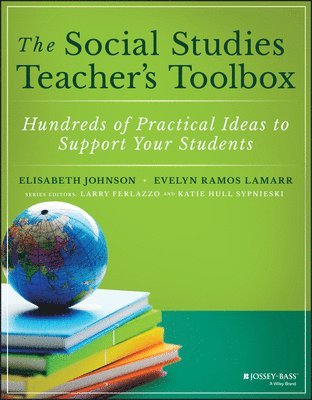
    Social Studies Teacher's Toolbox

    Hundreds of Practical Ideas to Support Your Students

    AvElisabeth Johnson,Evelyn Ramos

    Häftad, Engelska, 2020

    Del i serien Teacher's Toolbox Series

    265 kr

    Beställningsvara. Skickas inom 5-8 vardagar. Fri frakt över 249 kr.

    Beskrivning

    Social studies teachers will find classroom-tested lessons and strategies that can be easily implemented in the classroomThe Teacher’s Toolbox series is an innovative, research-based resource providing teachers with instructional strategies for students of all levels and abilities. Each book in the collection focuses on a specific content area. Clear, concise guidance enables teachers to quickly integrate low-prep, high-value lessons and strategies in their middle school and high school classrooms. Every strategy follows a practical, how-to format established by the series editors.The Social Studies Teacher's Toolbox contains hundreds of student-friendly classroom lessons and teaching strategies. Clear and concise chapters, fully aligned to Common Core Social Studies standards and National Council for the Social Studies standards, cover the underlying research, technology based options, practical classroom use, and modification of each high-value lesson and strategy. This book employs a hands-on approach to help educators quickly learn and apply proven methods and techniques in their social studies courses. Topics range from reading and writing in social studies and tools for analysis, to conducting formative and summative assessments, differentiating instruction, motivating students, incorporating social and emotional learning and culturally responsive teaching. Easy-to-read content shows how and why social studies should be taught and how to make connections across history, geography, political science, and beyond. Designed to reduce instructor preparation time and increase relevance, student engagement, and comprehension, this book:  Explains the usefulness, application, and potential drawbacks of each instructional strategyProvides fresh activities applicable to all classroomsHelps social studies teachers work with ELLs, advanced students, and students with learning differencesOffers real-world guidance for addressing current events while covering standards and working with textbooksThe Social Studies Teacher's Toolbox is an invaluable source of real-world lessons, strategies, and techniques for general education teachers and social studies specialists, as well as resource specialists/special education teachers, elementary and secondary educators, and teacher educators.

    Produktinformation

    • Utgivningsdatum:2020-08-03
    • Mått:216 x 274 x 25 mm
    • Vikt:1 134 g
    • Format:Häftad
    • Språk:Engelska
    • Serie:Teacher's Toolbox Series
    • Antal sidor:496
    • Förlag:John Wiley & Sons Inc
    • ISBN:9781119572053

    Utforska kategorier

    • Pedagogik inom Psykologi och pedagogik

    Mer om författaren

    ELISABETH JOHNSON teaches Social Studies to both mainstream and English language learners at Luther Burbank High School, in Sacramento, California. She is a National Board Certified Teacher (NBCT), a teacher consultant with the Area 3 Writing Project at the University of California, Davis, and has led teacher development trainings at the San Joaquin County Office of Education. She has taught at the secondary level for 13 years. EVELYN RAMOS LAMARR teaches Social Studies to mainstream and International Baccalaureate students at Luther Burbank High School in Sacramento, California, and is a teaching consultant with the Area 3 Writing Project at the University of California, Davis. She has taught mainstream and English language learners at the secondary level for 12 years, and helped create curriculum for, and pilot, the Ethnic Studies course in the Sacramento City Unified School District. LARRY FERLAZZO teaches English, Social Studies, and International Baccalaureate classes to English language learners and others at Luther Burbank High School in Sacramento, California. He is the author and co-author of nine books, including The ELL Teacher's Toolbox, and writes a weekly teacher advice column for Education Week Teacher. He is the recipient of the Ford Foundation's Leadership for a Changing World Award and winner of the International Reading Association Award for Technology and Reading. KATIE HULL SYPNIESKI has taught English language learners and others at the secondary level for over twenty years. She teaches middle school English Language Arts and Social Studies at Fern Bacon Middle School in Sacramento, California, and leads professional development for educators as a consultant with the Area 3 Writing Project at the University of California, Davis. She is co-author of several books including The ELL Teacher's Toolbox.

    Innehållsförteckning

    • About the Authors xxiAbout the Editors of the Toolbox Series xxiiiAcknowledgments xxvLetter from the Editors xxviiIntroduction xxixI Reading and Writing 11A Fresh Look at Vocabulary 3What is It? 3Why We Like It 3Supporting Research 4Common Core Connections 4Social Studies Connections 4Application 5Building a Word List 5Accessing Prior Knowledge 6Building Understanding 10Revising and Formalizing Definitions 11Differentiation 13Advanced Extensions 14Student Handouts and Examples 15What Could Go Wrong? 15Technology Connections 15Figures 162 Reading Strategies 19What is It? 19Why We Like It 19Supporting Research 20Common Core Connections 20Social Studies Connections 20Application 21Text Selection 22Pre-reading 22Predicting 22Connecting 23Key Ideas 24Summarizing 24Questioning 25Visualizing 26Clarifying 27Differentiation 28Advanced Extensions 29Student Handouts and Examples 29What Could Go Wrong? 29Technology Connections 30Attribution 31Figures 323 Read-Aloud Protocol 37What is It? 37Why We Like It 37Supporting Research 37Common Core Connections 38Social Studies Connections 38Application 38Finding and Preparing Authentic Texts 39Read-Aloud Protocol 41Student-Created Read-Alouds 45Differentiation 48Advanced Extensions 48Student Handouts and Examples 49What Could Go Wrong? 49Technology Connections 49Attribution 49Figures 504 Thematic Data Sets 55What is It? 55Why We Like It 55Supporting Research 56Common Core Connections 56Social Studies Connections 56Application 57Building a Data Set 57Teaching Protocol for Using Data Sets 59Differentiation 64Advanced Extensions 65Student Handouts and Examples 65What Could Go Wrong? 66Technology Connections 66Attribution 66Figures 675 Writing in Social Studies 79What is It? 79Why We Like It 79Supporting Research 79Common Core Connections 80Social Studies Connections 80Application 80Golden Lines – Kick-Starting Writing 81Writing Frames 82Writing Structures 84Extended Argument Writing 88Other Social Studies Writing Activities 89Differentiation 90Advanced Extensions 91Student Handouts and Examples 92What Could Go Wrong? 92Technology Connections 92Attribution 93Figures 946 Mnemonics 105What is It? 105Why We Like It 105Supporting Research 106Common Core Connections 106Social Studies Connections 106Application 107Story Mnemonics 107Differentiation 111Advanced Extensions 111Student Handouts and Examples 112What Could Go Wrong? 112Technology Connections 112Attribution 113Figures 1147 Timelines Revisited 117What is It? 117Why We Like It 117Supporting Research 118Common Core Connections 118Social Studies Connections 118Application 118Identity Timelines 119Additional Timeline Activities 128Differentiation 129Advanced Extensions 130Student Handouts and Examples 130What Could Go Wrong? 131Technology Connections 131Attribution 131Figures 1328 Current Event Case Study 135What is It? 135Why We Like It 135Supporting Research 136Common Core Connections 136Social Studies Connections 136Application 136Sequencing of Events 137Developing Questions 139Bias Awareness and Research 141Written Analysis 145Additional Ideas for Including Current Events in the Classroom 146Differentiation 147Advanced Extensions 148Student Handouts and Examples 148What Could Go Wrong? 148Technology Connections 149Figures 1509 Genre Study 151What is It? 151Why We Like It 151Supporting Research 152Common Core Connections 152Social Studies Connections 152Application 152Student Choice Genre Project 159Differentiation 164Advanced Extensions 165Student Handouts and Examples 165What Could Go Wrong? 165Technology Connections 166Attribution 166Figures 16710 Concept Attainment 175What is It? 175Why We Like It 176Supporting Research 176Common Core Connections 176Social Studies Connections 176Application 176Democracy Concept Attainment 177Concept Attainment to Improve Writing 180Differentiation 183Advanced Extensions 183Student Handouts and Examples 184What Could Go Wrong? 184Technology Connections 184Figures 184II Analysis Tools 18511 Questions for Learning 187What is It? 187Why We Like It 187Supporting Research 188Common Core Connections 188Social Studies Connections 188Application 189Teacher-Generated Questions 190Student-Generated Questions 194Differentiation 197Advanced Extensions 197Student Handouts and Examples 198What Could Go Wrong? 198Technology Connections 19812 Image Analysis 199What is It? 199Why We Like It 199Supporting Research 200Common Core Connections 200Social Studies Connections 200Application 201Photographs 201Paintings 207Political Cartoons 210Video 213Differentiation 218Advanced Extensions 219Student Handouts and Examples 219What Could Go Wrong? 219Technology Connections 220Figures 22113 Analysis of Primary Sources 229What is It? 229Why We Like It 229Supporting Research 230Common Core Connections 230Social Studies Connections 230Application 230Primary Source Engagement Activity 230At a Glance Primary Source Analysis 232In-Depth Analysis of Source 234Additional Key Strategies 238Differentiation 243Advanced Extensions 243Student Handouts and Examples 244What Could Go Wrong? 244Technology Connections 245Attribution 245Figures 24614 Synthesis Charts 257What is It? 257Why We Like It 257Supporting Research 258Common Core Connections 258Social Studies Connections 258Application 258Creating a Synthesis Chart 259Implementing Synthesis Charts with Students 266Differentiation 273Advanced Extensions 273Student Handouts and Examples 274What Could Go Wrong? 274Technology Connections 274Attribution 274III Speaking and Listening 27515 Listening and Speaking Activities 277What is It? 277Why We Like It 277Supporting Research 278Common Core Connections 278Social Studies Connections 278Application 278Active Listening Mini-Lesson 278Guest Speakers 280Podcasts 283Student Presentations 285Differentiation 288Advanced Extensions 288Student Handouts and Examples 288What Could Go Wrong? 289Technology Connections 289Attribution 290Figures 29116 Discussions 295What is It? 295Why We Like It 295Supporting Research 296Common Core Connections 296Social Studies Connections 296Application 296Informal Discussion Strategies 297Formal Discussion Strategies 300Additional Key Strategies 313Differentiation 315Advanced Extensions 315Student Handouts and Examples 316What Could Go Wrong? 316Technology Connections 316Attribution 317Figures 317IV Additional Key Strategies 32117 Project-Based Learning 323What is It? 323Why We Like It 323Supporting Research 324Common Core Connections 324Social Studies Connections 324Application 324Key Steps in PBL 325Textbook Insert Project 334Other Ideas for Project-Based Learning 344Differentiation 345Advanced Extensions 346Student Handouts and Examples 346What Could Go Wrong? 347Technology Connections 347Figures 34818 Culturally Responsive Teaching 353What is It? 353Why We like It 353Supporting Research 354Common Core Connections 354Social Studies Connections 354Application 354Reflective Questions 355Differentiation 369Advanced Modifications 370Student Handouts and Examples 370What Could Go Wrong? 370Technology Connections 371Attribution 371Figures 37219 Social and Emotional Learning 375What is It? 375Why We Like It 375Supporting Research 376Common Core Connections 376Social Studies Connections 376Application 377Growth Mindset Mini-Lesson 377Empathy Mini-Lesson 380Tips for Reinforcing SEL 383Differentiation 385Advanced Extensions 385Student Handouts and Examples 386What Could Go Wrong? 386Technology Connections 386Attribution 387Figures 38820 Assessment 397What is It? 397Why We Like It 397Supporting Research 398Common Core Connections 398Social Studies Connections 398Application 398Diagnostic 399Formative 403Summative 406Student Self-Assessment 411Differentiation 412Advanced Extensions 413Student Handouts and Examples 413What Could Go Wrong? 413Technology Connections 414Figures 41621 Getting the Most from Your Textbook 417What is It? 417Why We Like It 417Supporting Research 418Common Core Connections 418Social Studies Connections 418Application 418Using Images 418Using Textbook Excerpts 419Discussions 420Timelines 421Vocabulary 422Reading Strategies 423Student-Created Tests 423Primary Sources 423Mnemonics 424Anticipatory Sets 425Scavenger Hunts 425Jigsaws 425Analyzing What’s Missing in the Textbook 427Differentiation 427Advanced Extensions 427Student Handouts and Examples 427What Could Go Wrong? 428Technology Connections 428References 429Index 455