• Fri frakt över 249 kr
  • •
  • Snabba leveranser
  • •
  • Billiga böcker
Kundservice

Du är på sajten för privatpersoner.

Företag, bibliotek eller offentlig verksamhet?

Du handlar på classic.bokus.com, där alla dina funktioner finns intakta.
Till classic.bokus.com
Bokus logotyp. Gå till startsidan.
  • Erbjudanden
  • Nyheter
  • Student
  • Topplistor
  • Barn & ungdom
  • Bokus Play
  • E-böcker
  • Pocketböcker
  • Spel & pussel

10% rabatt på allt med kod NYSTART10 →

Sidfot

Mina sidor

    Hjälp

    • Kundservice
    • Vanliga frågor och svar
    • Frakt och leverans
    • Retur vid ångerrätt
    • Reklamera vara
    • Betalning
    • Köpvillkor
    • Allmänna villkor
    • Information om webbplatsens tillgänglighet

    Om Bokus

    • Om oss
    • Pressrum
    • För studenter
    • För företag
    • För bibliotek och offentlig verksamhet
    • För leverantörer
    • Hållbarhet

    Populärt

    • Aktuella erbjudanden
    • Presentkort
    • Studentlitteratur
    • Nya böcker
    • Topplistor
    • Signerade böcker
    • Engelska böcker

    Inspiration

    • Boktips
    • BookTok
    • Populära bokserier
    • Barnbokskaraktärer
    • Populära författare
    Logotyp för Bokus
    Följ oss på Facebook (extern länk)Följ oss på Instagram (extern länk)Följ oss på YouTube (extern länk)Följ oss på TikTok (extern länk)
    bokus @ CookiesAnpassa cookiesIntegritetspolicyKöpvillkor
    Till Citymail hemsida (extern länk)Till Budbee hemsida (extern länk)Till Postnord hemsida (extern länk)Till Schenker hemsida (extern länk)Till Early Bird hemsida (extern länk)Till Walleys hemsida (extern länk)
    1. Data och IT
    2. Systemvetenskap och AI

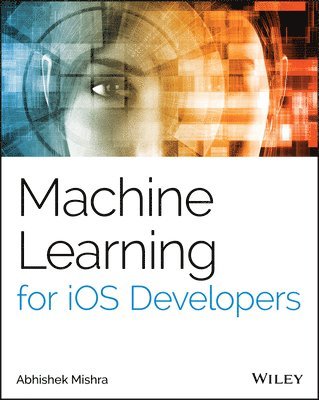
    Machine Learning for iOS Developers

    AvAbhishek Mishra

    Häftad, Engelska, 2020

    367 kr

    Beställningsvara. Skickas inom 5-8 vardagar. Fri frakt över 249 kr.

    Fler format och utgåvor

    E-bok

    463 kr

    E-bok

    463 kr

    Beskrivning

    Harness the power of Apple iOS machine learning (ML) capabilities and learn the concepts and techniques necessary to be a successful Apple iOS machine learning practitioner!Machine earning (ML) is the science of getting computers to act without being explicitly programmed. A branch of Artificial Intelligence (AI), machine learning techniques offer ways to identify trends, forecast behavior, and make recommendations. The Apple iOS Software Development Kit (SDK) allows developers to integrate ML services, such as speech recognition and language translation, into mobile devices, most of which can be used in multi-cloud settings. Focusing on Apple’s ML services, Machine Learning for iOS Developers is an up-to-date introduction to the field, instructing readers to implement machine learning in iOS applications.Assuming no prior experience with machine learning, this reader-friendly guide offers expert instruction and practical examples of ML integration in iOS. Organized into two sections, the book’s clearly-written chapters first cover fundamental ML concepts, the different types of ML systems, their practical uses, and the potential challenges of ML solutions. The second section teaches readers to use models—both pre-trained and user-built—with Apple’s CoreML framework. Source code examples are provided for readers to download and use in their own projects. This book helps readers: Understand the theoretical concepts and practical applications of machine learning used in predictive data analyticsBuild, deploy, and maintain ML systems for tasks such as model validation, optimization, scalability, and real-time streamingDevelop skills in data acquisition and modeling, classification, and regression.Compare traditional vs. ML approaches, and machine learning on handsets vs. machine learning as a service (MLaaS)Implement decision tree based models, an instance-based machine learning system, and integrate Scikit-learn & Keras models with CoreMLMachine Learning for iOS Developers is a must-have resource software engineers and mobile solutions architects wishing to learn ML concepts and implement machine learning on iOS Apps.

    Produktinformation

    • Utgivningsdatum:2020-04-09
    • Mått:185 x 229 x 20 mm
    • Vikt:567 g
    • Format:Häftad
    • Språk:Engelska
    • Antal sidor:336
    • Förlag:John Wiley & Sons Inc
    • ISBN:9781119602873

    Utforska kategorier

    • Systemvetenskap och AI inom Data och IT

    Mer om författaren

    Abhishek Mishra has more than 19 years of experience across a broad range of mobile and enterprise technologies. He consults as a security and fraud solution architect with Lloyds Banking group PLC in London. He is the author of Machine Learning on the AWS Cloud, Amazon Web Services for Mobile Developers, iOS Code Testing, and Swift iOS: 24-Hour Trainer.

    Innehållsförteckning

    • Introduction xixPart 1 Fundamentals of Machine Learning 1Chapter 1 Introduction to Machine Learning 3What is Machine Learning? 4Tools Commonly Used by Data Scientists 4Common Terminology 5Real-World Applications of Machine Learning 7Types of Machine Learning Systems 8Supervised Learning 9Unsupervised Learning 10Semisupervised Learning 11Reinforcement Learning 11Batch Learning 12Incremental Learning 12Instance-Based Learning 13Model-Based Learning 13Common Machine Learning Algorithms 13Linear Regression 14Support Vector Machines 15Logistic Regression 19Decision Trees 21Artificial Neural Networks 23Sources of Machine Learning Datasets 24Scikit-learn Datasets 24AWS Public Datasets 27Kaggle.com Datasets 27UCI Machine Learning Repository 27Summary 28Chapter 2 The Machine-Learning Approach 29The Traditional Rule-Based Approach 29A Machine-Learning System 33Picking Input Features 34Preparing the Training and Test Set 39Picking a Machine-Learning Algorithm 40Evaluating Model Performance 41The Machine-Learning Process 44Data Collection and Preprocessing 44Preparation of Training, Test, and Validation Datasets 44Model Building 45Model Evaluation 45Model Tuning 45Model Deployment 46Summary 46Chapter 3 Data Exploration and Preprocessing 47Data Preprocessing Techniques 47Obtaining an Overview of the Data 47Handling Missing Values 57Creating New Features 60Transforming Numeric Features 62One-Hot Encoding Categorical Features 64Selecting Training Features 65Correlation 65Principal Component Analysis 68Recursive Feature Elimination 70Summary 71Chapter 4 Implementing Machine Learning on Mobile Apps 73Device-Based vs Server-Based Approaches 73Apple’s Machine Learning Frameworks and Tools 75Task-Level Frameworks 75Model-Level Frameworks 76Format Converters 76Transfer Learning Tools 77Third-Party Machine-Learning Frameworks and Tools 78Summary 79Part 2 Machine Learning with CoreML, CreateML, and TuriCreate 81Chapter 5 Object Detection Using Pre- trained Models 83What is Object Detection? 83A Brief Introduction to Artificial Neural Networks 86Downloading the ResNet50 Model 92Creating the iOS Project 92Creating the User Interface 95Updating Privacy Settings 100Using the Resnet50 Model in the iOS Project 100Summary 109Chapter 6 Creating an Image Classifier with the Create ML App 111Introduction to the Create ML App 112Creating the Image Classification Model with the Create ML App 113Creating the iOS Project 117Creating the User Interface 118Updating Privacy Settings 122Using the Core ML Model in the iOS Project 123Summary 132Chapter 7 Creating a Tabular Classifier with Create ML 135Preparing the Dataset for the Create ML App 135Creating the Tabular Classification Model with the Create ML App 143Creating the iOS Project 147Creating the User Interface 148Using the Classification Model in the iOS Project 156Testing the App 172Summary 173Chapter 8 Creating a Decision Tree Classifier r 175Decision Tree Recap 175Examining the Dataset 176Creating Training and Test Datasets 180Creating the Decision Tree Classification Model with Scikit-learn 181Using Core ML Tools to Convert the Scikit-learn Model to the Core ML Format 186Creating the iOS Project 187Creating the User Interface 188Using the Scikit-learn Decision Tree Classifier Model in the iOS Project 193Testing the App 201Summary 202Chapter 9 Creating a Logistic Regression Model Using Scikit-learn and Core ML 203Examining the Dataset 203Creating a Training and Test Dataset 208Creating the Logistic Regression Model with Scikit-learn 210Using Core ML Tools to Convert the Scikit-learn Model to the Core ML Format 216Creating the iOS Project 218Creating the User Interface 219Using the Scikit-learn Model in the iOS Project 225Testing the App 232Summary 233Chapter 10 Building a Deep Convolutional Neural Network with Keras 235Introduction to the Inception Family of Deep Convolutional Neural Networks 236GoogLeNet (aka Inception-v1) 236Inception-v2 and Inception-v3 238Inception-v4 and Inception-ResNet 239A Brief Introduction to Keras 244Implementing Inception-v4 with the Keras Functional API 246Training the Inception-v4 Model 259Exporting the Keras Inception-v4 Model to the Core ML Format 269Creating the iOS Project 270Creating the User Interface 271Updating Privacy Settings 276Using the Inception-v4 Model in the iOS Project 277Summary 286Appendix A Anaconda and Jupyter Notebook Setup 287Installing the Anaconda Distribution 287Creating a Conda Python Environment 288Installing Python Packages 291Installing Jupyter Notebook 293Summary 296Appendix B Introduction to NumPy and Pandas 297NumPy 297Creating NumPy Arrays 297Modifying Arrays 301Indexing and Slicing 304Pandas 305Creating Series and Dataframes 305Getting Dataframe Information 307Selecting Data 311Summary 313Index 315