• Fri frakt över 249 kr
  • •
  • Snabba leveranser
  • •
  • Billiga böcker
Kundservice

Du är på sajten för privatpersoner.

Företag, bibliotek eller offentlig verksamhet?

Du handlar på classic.bokus.com, där alla dina funktioner finns intakta.
Till classic.bokus.com
Bokus logotyp. Gå till startsidan.
  • Erbjudanden
  • Nyheter
  • Student
  • Topplistor
  • Barn & ungdom
  • Bokus Play
  • E-böcker
  • Pocketböcker
  • Spel & pussel

10% rabatt på allt med kod NYSTART10 →

Sidfot

Mina sidor

    Hjälp

    • Kundservice
    • Vanliga frågor och svar
    • Frakt och leverans
    • Retur vid ångerrätt
    • Reklamera vara
    • Betalning
    • Köpvillkor
    • Allmänna villkor
    • Information om webbplatsens tillgänglighet

    Om Bokus

    • Om oss
    • Pressrum
    • För studenter
    • För företag
    • För bibliotek och offentlig verksamhet
    • För leverantörer
    • Hållbarhet

    Populärt

    • Aktuella erbjudanden
    • Presentkort
    • Studentlitteratur
    • Nya böcker
    • Topplistor
    • Signerade böcker
    • Engelska böcker

    Inspiration

    • Boktips
    • BookTok
    • Populära bokserier
    • Barnbokskaraktärer
    • Populära författare
    Logotyp för Bokus
    Följ oss på Facebook (extern länk)Följ oss på Instagram (extern länk)Följ oss på YouTube (extern länk)Följ oss på TikTok (extern länk)
    bokus @ CookiesAnpassa cookiesIntegritetspolicyKöpvillkor
    Till Citymail hemsida (extern länk)Till Budbee hemsida (extern länk)Till Postnord hemsida (extern länk)Till Schenker hemsida (extern länk)Till Early Bird hemsida (extern länk)Till Walleys hemsida (extern länk)
    1. Ekonomi och Ledarskap
    2. Företagsekonomi

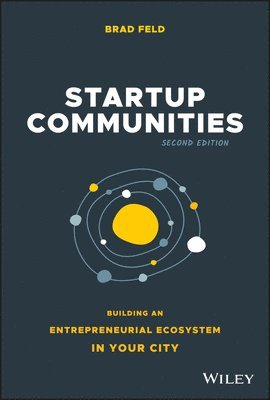
    Startup Communities

    Building an Entrepreneurial Ecosystem in Your City

    AvBrad Feld

    Inbunden, Engelska, 2020

    222 kr

    Beställningsvara. Skickas inom 5-8 vardagar. Fri frakt över 249 kr.

    Fler format och utgåvor

    E-bok

    269 kr

    E-bok

    269 kr

    Beskrivning

    First published in 2012, Startup Communities became a blueprint for what it takes to build a supportive entrepreneurial community. Now regarded as a classic, the "Boulder Thesis" created and popularized by Feld within the book generated enormous media attention nearly a decade ago.At that time, Boulder was an emerging startup laboratory—a hub of innovation building new tech businesses. It quickly accelerated into a world class ecosystem for entrepreneurs. Boulder's entrepreneurial density, combined with the geographic concentration of entrepreneurial activity around the Boulder downtown core, made it a hotbed of startup activity. Feld was and is still there, as a keen observer and one of its leaders. As he notes simply in the new edition, humans are wired to start things.In a sense, that short Feld-ism accurately describes the startup revolution still taking hold throughout the world. Boulder is proof that innovation can happen anywhere, in any city. Thanks in part to the book, what happens in Boulder now leaves Boulder. Rapidly growing startup communities in Atlanta, Detroit, Denver, Kansas City, Nashville, and Indianapolis are just a few examples. Over the last decade, Feld has dispelled the myth that startups can only thrive in Silicon Valley.Startup communities continue to pop up across the U.S. and around the world, prompting fresh new revelations and stories from Feld about what's happened over the last decade. Startup Communities 2e describes what makes a startup community ecosystem first click, then hum, and in time, excel. From Boulder to Beijing and beyond, entrepreneurial ecosystems are driving innovation. Startup Communities 2e discusses and the necessary dynamics and pre-conditions of building communities of entrepreneurs who can feed off each other's talent, creativity, and support.In Startup Communities 2e, Feld will help you understand: The core principles of a vibrant startup community, re-examining his Boulder Thesis and exploring other historical frameworks.The attributes of leadership in a startup community that can help it thrive along with the classical problems any community will face during development.The importance of a university in a startup community, and how large companies can engage effectively with entrepreneurs.The importance of continuous improvement so growth does not stagnate.The common myths about startup communities.The opportunities to build startup communities in non-urban, or rural, places that are much less populated.

    Produktinformation

    • Utgivningsdatum:2020-09-07
    • Mått:152 x 226 x 28 mm
    • Vikt:454 g
    • Format:Inbunden
    • Språk:Engelska
    • Antal sidor:256
    • Upplaga:2
    • Förlag:John Wiley & Sons Inc
    • ISBN:9781119617655

    Utforska kategorier

    • Företagsekonomi inom Ekonomi och Ledarskap

    Mer om författaren

    BRAD FELD has been an early-stage investor and entrepreneur for over 30 years. He is currently a partner at Foundry Group and is a co-founder of Techstars. In addition to his investing efforts, Brad runs the Anchor Point Foundation with his wife Amy Batchelor. Brad is a nationally recognized speaker on the topics of venture capital investing and entrepreneurship.

    Innehållsförteckning

    • Foreword xiiiIntroduction to the Second Edition xviiPreface xxiChapter One Introduction 1The Example of Boulder 2How This Book Works 3Chapter Two The Boulder Startup Community 5Boulder as a Laboratory 6Before the Internet (1970–1994) 7Pre-Internet Bubble (1995–2000) 9The Collapse of the Internet Bubble (2001–2002) 11The Beginning of the Next Wave (2003–2011) 14An Outsider’s View of Boulder in 2012 16The Next Wave (2012–2020) 19Chapter Three Principles of a Vibrant Startup Community 21Historical Frameworks 21The Boulder Thesis 25Led by Entrepreneurs 25Long-Term Commitment 26Foster a Philosophy of Inclusiveness 27Engage the Entire Entrepreneurial Stack 28Chapter Four Participants in a Startup Community 31Entrepreneurs 34Government 36Universities 38Investors 42Mentors 43Service Providers 45Large Companies 46The Importance of Leaders, Feeders, and Instigators 47Chapter Five Attributes of Leadership in a Startup Community 49Be Inclusive 49Play a Non-Zero-Sum or Positive-Sum Game 51Be Mentorship Driven 52Have Porous Boundaries 55Give People Assignments 56Experiment and Fail Fast 58Chapter Six Classical Problems 61The Patriarch Problem 61Complaining About Capital 63Being Too Reliant on Government 66Making Short-Term Commitments 67Having a Bias Against Newcomers 68Attempt by a Feeder to Control the Community 69Creating Artificial Geographic Boundaries 71Playing a Zero-Sum Game 72Having a Culture of Risk Aversion 73Avoiding People Because of Past Failures 74Chapter Seven Activities and Events 77Young Entrepreneurs Organization 78Office Hours 80Boulder Denver New Tech Meetup 82Boulder Open Coffee Club 87Startup Weekend 90Ignite Boulder 92Boulder Beta 95Boulder Startup Digest 97CU New Venture Challenge 100Entrepreneurs Foundation of Colorado 103Chapter Eight The Power of Accelerators 107The Spread of Techstars to Boston and Seattle 109Techstars Expands to New York 111Techstars Today 113Accelerators Are Different than Incubators 114University Accelerators 115Chapter Nine University Involvement 119Silicon Flatirons’ Networked Approach 120Organizing the Components of University Entrepreneurship 124Other Campus Initiatives That Affect Startup Communities 126The Real Value—Fresh Blood into the System 129Challenges and Responses for UniversityEntrepreneurship Programs 137The Power of Alumni 141Chapter Ten Contrasts between Entrepreneurs and Government 143Self-Aware versus Not Self-Aware 144Bottom Up versus Top Down 145Micro versus Macro 146Action versus Policy 147Impact versus Control 147Chapter Eleven How Large Corporations Can Help 149Start by Linking to Corporate Innovation Initiatives 150Support, Convene, Consume, and Engage 151Self-interest is Good 153Think About Talent Appropriately 154Reinvestment in Your Community 155Chapter Twelve The Power of the Community 161Give Before You Get (#GiveFirst) 161Everyone is a Mentor 163Embrace Weirdness 163Be Open to Any Idea 164Be Honest 164Go for a Walk 166The Value and Cost of an After-Party 168Chapter Thirteen Broadening a Successful Startup Community 171Parallel Universes 171Integration with the Rest of Colorado 173Lack of Diversity 175Physical Space 179Chapter Fourteen Rural Startup Communities 181Definition of a Rural Startup Community 182A Broader Definition of Entrepreneurship 183Entrepreneurs Before Capital 184Beyond Traditional Capital Models 186Rural + Urban, Not Rural versus Urban 188Chapter Fifteen Myths about Startup Communities 191We Need to Be Like Silicon Valley 192We Need More Local Venture Capital 193Angel Investors Must Be Organized 195Chapter Sixteen Getting Started 199Getting Startup Iceland Started 199Big Omaha 203Startup America Partnership 204Do or Do Not, There is No Try 209About the author 211Acknowledgments 213Foreword—First edition (2012) 217Index 219