• Fri frakt över 249 kr
  • •
  • Snabba leveranser
  • •
  • Billiga böcker
Kundservice

Du är på sajten för privatpersoner.

Företag, bibliotek eller offentlig verksamhet?

Du handlar på classic.bokus.com, där alla dina funktioner finns intakta.
Till classic.bokus.com
Bokus logotyp. Gå till startsidan.
  • Erbjudanden
  • Nyheter
  • Student
  • Topplistor
  • Barn & ungdom
  • Bokus Play
  • E-böcker
  • Pocketböcker
  • Spel & pussel

10% rabatt på allt med kod: NYSTART10 →

Sidfot

Mina sidor

    Hjälp

    • Kundservice
    • Vanliga frågor och svar
    • Frakt och leverans
    • Retur vid ångerrätt
    • Reklamera vara
    • Betalning
    • Köpvillkor
    • Allmänna villkor
    • Information om webbplatsens tillgänglighet

    Om Bokus

    • Om oss
    • Pressrum
    • För studenter
    • För företag
    • För bibliotek och offentlig verksamhet
    • För leverantörer
    • Hållbarhet

    Populärt

    • Aktuella erbjudanden
    • Presentkort
    • Studentlitteratur
    • Nya böcker
    • Topplistor
    • Signerade böcker
    • Engelska böcker

    Inspiration

    • Boktips
    • BookTok
    • Populära bokserier
    • Barnbokskaraktärer
    • Populära författare
    Logotyp för Bokus
    Följ oss på Facebook (extern länk)Följ oss på Instagram (extern länk)Följ oss på YouTube (extern länk)Följ oss på TikTok (extern länk)
    bokus @ CookiesAnpassa cookiesIntegritetspolicyKöpvillkor
    Till Citymail hemsida (extern länk)Till Budbee hemsida (extern länk)Till Postnord hemsida (extern länk)Till Schenker hemsida (extern länk)Till Early Bird hemsida (extern länk)Till Walleys hemsida (extern länk)
    1. Naturvetenskap och teknik
    2. Teknik och industri
    3. Elektronik och kommunikationer

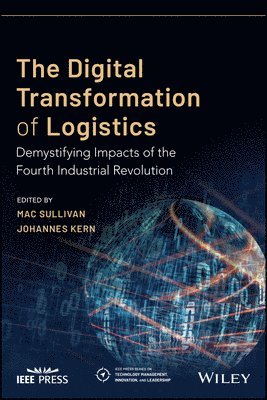
    Digital Transformation of Logistics

    Demystifying Impacts of the Fourth Industrial Revolution

    AvMac Sullivan,Johannes Kern

    Häftad, Engelska, 2021

    Del i serien IEEE Press Series on Technology Management, Innovation, and Leadership

    1 197 kr

    Beställningsvara. Skickas inom 5-8 vardagar. Fri frakt över 249 kr.

    Beskrivning

    The digital transformation is in full swing and fundamentally changes how we live, work, and communicate with each other. From retail to finance, many industries see an inflow of new technologies, disruption through innovative platform business models, and employees struggling to cope with the significant shifts occurring. This Fourth Industrial Revolution is predicted to also transform Logistics and Supply Chain Management, with delivery systems becoming automated, smart networks created everywhere, and data being collected and analyzed universally. The Digital Transformation of Logistics: Demystifying Impacts of the Fourth Industrial Revolution provides a holistic overview of this vital subject clouded by buzz, hype, and misinformation.The book is divided into three themed-sections: Technologies such as self-driving cars or virtual reality are not only electrifying science fiction lovers anymore, but are also increasingly presented as cure-all remedies to supply chain challenges. In The Digital Transformation of Logistics: Demystifying Impacts of the Fourth Industrial Revolution, the authors peel back the layers of excitement that have grown around new technologies such as the Internet of Things (IoT), 3D printing, Robotic Process Automation (RPA), Blockchain or Cloud computing, and show use cases that give a glimpse about the fascinating future we can expect.Platforms that allow businesses to centrally acquire and manage their logistics services disrupt an industry that has been relationship-based for centuries. The authors discuss smart contracts, which are one of the most exciting applications of Blockchain, Software as a Service (SaaS) offerings for freight procurement, where numerous data sources can be integrated and decision-making processes automated, and marine terminal operating systems as an integral node for shipments. In The Digital Transformation of Logistics: Demystifying Impacts of the Fourth Industrial Revolution, insights are shared into the cold chain industry where companies respond to increasing quality demands, and how European governments are innovatively responding to challenges of cross-border eCommerce.People are a vital element of the digital transformation and must be on board to drive change. The Digital Transformation of Logistics: Demystifying Impacts of the Fourth Industrial Revolution explains how executives can create sustainable impact and how competencies can be managed in the digital age - especially for sales executives who require urgent upskilling to remain relevant. Best practices are shared for organizational culture change, drawing on studies among senior leaders from the US, Singapore, Thailand, and Australia, and for managing strategic alliances with logistics service providers to offset risks and create cross-functional, cross-company transparency.The Digital Transformation of Logistics: Demystifying Impacts of the Fourth Industrial Revolution provides realistic insights, a ready-to-use knowledge base, and a working vocabulary about current activities and emerging trends of the Logistics industry. Intended readers are supply chain professionals working for manufacturing, trading, and freight forwarding companies as well as students and all interested parties.

    Produktinformation

    • Utgivningsdatum:2021-04-30
    • Mått:10 x 10 x 10 mm
    • Vikt:907 g
    • Format:Häftad
    • Språk:Engelska
    • Serie:IEEE Press Series on Technology Management, Innovation, and Leadership
    • Antal sidor:480
    • Förlag:John Wiley & Sons Inc
    • ISBN:9781119646396

    Utforska kategorier

    • Elektronik och kommunikationer inom Naturvetenskap och teknik

    Mer om författaren

    MAC SULLIVAN is the Head of Technology and Digital Promotion at NNR Global Logistics, where he leads the global team facilitating a digital transformation. A frequent lecturer of university courses and speaker at numerous international logistics events around the world, Mac is an expert from both policy and industry’s point of view. Mac is pursuing his Ph.D. in Political Theory from East China Normal University and has an EMBA degree from Hult Business School. JOHANNES KERN is an affiliated professor at Tongji University, where he researches buyer-supplier relationships and the digital transformation of logistics. As the General Manager of Xiezhi Consulting, he enables international companies in China to optimize their entire supply chain, including sourcing, transportation, warehousing, and production. Johannes holds a Ph.D. from Technische Universität Darmstadt in Germany.

    Innehållsförteckning

    • List of Contributors xixAuthor Biographies xxiForeword xxixAcknowledgments xxxiiiA Note from the Series Editor xxxvSection I Introduction 11 Demystifying the Impacts of the Fourth Industrial Revolution on Logistics: An Introduction 3Mac SullivanIntroduction 3Future of Work in the Fourth Industrial Revolution 3The Role of Digital Transformation 4Hub Economy Companies Leading the Way 5Current State of the Logistics Industry 5Effects of the Second and Third Industrial Revolutions on Logistics 5Technology Is Easy; But People Are Hard 6The Role of Startups in the Logistics Community 6Logistics Companies Under Pressure 7Technology Investments by Logistics on the Rise 7New Entrants Threaten Status Quo 8Disintermediation Threat Looming 8Navigating a Digital Transformation 9Budget Considerations for Technological Upgrades 9Lessons Learned from Other B2B Industries 10Automation Leading in Terms of Return on Investment 10Winners and Losers of a Digital Transformation 11The Necessity of Economies of Scale 11Foundations of a Digital Transformation 12Prioritization of Technology Exploration 12Connectivity Standardization in Logistics 12New Business Models Emerging 13Participation in Platforms and Marketplaces 14Zoom Out/Zoom In Approach 14The Time Is Now 15Conclusion 16Key Takeaways 17References 17Section II Technologies 212 Technologies Driving Digital Transformation 23Mac SullivanReferences 253 Logistics Management in an IoT World 27Axel NeherIntroduction 27Logistics Management in an IoT World 29Get Connected 29Criteria for Defining the Right Things 30Sensors and Identification 30Means of Connection 31Triggers 31Standards 31Security 32Get Decisions 33Get Prepared 34Data Quality 34Organization 35Skills 35Ecosystem 36Conclusion 36Key Takeaways 38References 394 Additive Manufacturing: Shaping the Supply Chain Revolution? 41Johannes KernIntroduction 41AM Supply Chain 42Evaluation 43Advantages 43Bottlenecks 44Technologies and Materials 46Technologies 46Materials 47Application Scenarios 50Market and Trends 51Market 51Trends 52Conclusion 53Key Takeaways 55References 555 The Role of Robotic Process Automation (RPA) in Logistics 61Mac Sullivan, Walter Simpson, and Wesley LiIntroduction 61Companies Under Pressure 61RPA as a Solution 62Evaluating Heavyweight IT to Lightweight IT Automation 62Achieving Operational Excellence 63Process Improvement on the Rise 63Outsourcing Versus Automation 64Center of Excellence as a Leader of RPA 64RPA: Hype or Realistic Solution 65The Facts 65Rote, Repetitive Tasks Ripe for Automation 65Process Considerations of Implementing RPA 66Motivating Example: Konica Minolta Using RPA 67Konica Minolta’s RPA Roadmap 68Use Cases for RPA in Logistics 70Track and Trace 70RPA Adoption at DHL 71Navigating Your RPA Journey 71Who Should Own This RPA Journey? 71Process Mining and Process Mapping 72Choosing the Right RPA Provider 72Change Management Considerations 73RPA Implementation Announcement 73Liberated Knowledge Workers 74Interacting with RPA 74Training the Bot 74Next Evolution of RPA Training 75Conclusion 75Key Takeaways 76References 766 Blockchain Will Animate Tomorrow’s Integrated Global Logistics Systems 79Nicholas KrapelsIntroduction 79The Origins of Blockchain Technology 81The Potential of Blockchain Technology 84Revolution via Protocol 84Essential Properties of Blockchain 85Blockchain Applications in Logistics 88Public Blockchain Applications in Logistics 88Private Blockchain Applications in Logistics 89Conclusion 92From Trusted Actors to Trustless Networks 92Key Takeaways 94References 947 Digitalization Solutions in the Competitive CEP Industry – Experiences from a Global Player in China 97Scott Wang and Johannes KernIntroduction 97Challenges in Key Logistics Segments 97Digitalization Solutions Today 98E-Commerce in China and Its CEP Market 100A New Competitive Environment 101Digitalization Solutions of the Future 102Internet of Things (IoT) 102Artificial Intelligence (AI) 103Blockchain 104Case Study: Enhanced Address Translation Through AI 106Conclusion 109Key Takeaways 109Acknowledgements 110References 1108 Understanding the Impacts of Autonomous Vehicles in Logistics 113Lionel WillemsIntroduction 113Evolution of AGVs 114Intelligent Logistics 116The Automation of Indoor Transport Systems 116Opportunities for AGVs 117Challenges of Adopting AGVs 118The Automation of Outdoor Transport Systems 119History of the Automation of Outdoor Transport Systems 119Opportunities and Challenges in Logistics 120Drones and Their Use in Logistics 122Conclusion 124Key Takeaways 124References 1259 Logistics in the Cloud-Powered Workplace 129John BerryThe Cloud Revolution 129Growing Dominance of Cloud Computing 130Infrastructure as a Service (IaaS) 130Platform as a Service (PaaS) 131Software as a Service (SaaS) 132Enabling New Business Models 132How Software Drives Logistics 133Warehouse Management Systems (WMS) 134Transportation Management Systems (TMS) 134Shortcomings of Conventional Logistics Software 135Complexity 135Difficult Data Integration 135The Impact of SaaS on Logistics 136A New Technology Delivery Model 136SaaS Warehouse Management Systems 137SaaS Transportation Management Systems 138APIs 138SaaS-Enabled Value Creation 139Automation 139Integration 141Analytics and Artificial Intelligence 141Conclusion 142Key Takeaways 143References 143Section III Platforms 14710 Platforms Enabling Digital Transformation 149Mac SullivanReferences 15111 The Digital Transformation of Freight Forwarders: Key Trends in the Future 153Ruben HuberIntroduction 153The Specter of the Digital Transformation 153Actors in the Shipment Cycle 153Key Trends That Will Shape the Future 154Technology 154Specialization 156Omnichannel 157Virtualization 158Reshaping Logistics Service 159Collaboration Is Key 160Digitalization Impact for White-Collar Workers 162The Regulatory Environment 163Conclusion 163Key Takeaways 164References 16512 International Trade Revolution with Smart Contracts 169Matías Aránguiz, Andrea Margheri, Duoqi Xu, and Bill TranThe Blockchain Revolution 169Smart Contracts 171Smart Legal Contracts 171Service Level Agreements 171Smart Contracts in International Trade 172Paperless Trade 172Trade Finance 173Bill of Lading 173Letter of Credit 174Trade Facilitation 174Smart Import Declaration 175Trusted Payment 176we.trade Case Study 177Information Distribution 178Information Transmission 178Tradelens Case Study 178Information Symmetry 178Smart Contract Initiatives 179Government Initiatives 179Chinese Central Bank 179South Korea 179Private Initiatives 180Mizuho Bank Using IBM 180Marco Polo Trade Initiative 180Risks and Challenges of the Implementation 180Technological Challenges 180Scalability 180Sustainability 181Security 181Interoperability Challenges 181Compatibility 181Data Standardization 182Legal Issues 182Validity 182Privacy 182Conclusion 182Key Takeaways 183References 18313 Exploring China’s Digital Silk Road 185Andre WheelerIntroduction 185Digital Integration and Supply Chain Along China’s BRI 186Challenges of Digitization for the Freight Industry Along the BRI 189Challenges in China 190System Connectivity Challenges 191Digital Silk Road as an Answer to the Digitalization Deadlock 191Summary 193Key Takeaways 194References 19514 Marine Terminal Operating Systems: Connecting Ports into the Digital World 197Ira Breskin and Ayush PandeyIntroduction 197Terminal Operating Systems 198Ports and Local Governments Recognizing the Value of Modern TOS 198An Increasingly Competitive TOS Software Market 199Navis as a Terminal Operating System 200Breaking Down the Costs of Implementing a TOS 202What to Consider When Selecting a TOS? 202Importance of Visibility at the Terminal 203Digital Communication is Key 204The Future of Terminal Operating Systems 204Conclusion 206Key Takeaways 207References 20715 Improving Cross-Border eCommerce Through Digitalization: The Case of Compliance in B2C Shipments 209Simon de Raadt and Jiao XuIntroduction 209Customs Clearance as a Barrier Constraining Growth 210Lack of Integration as the Root Cause of Customs Misdeclaration 212How the Digitalization Can Revolutionize Cross-Border ECommerce 214Increased Customer Satisfaction 215Supply Chain Visibility 215Speed of Customs Clearance 216Technology as Enabler for a Cooperative Model 217Technical Requirements 219Conclusion 219Key Takeaways 220References 22016 Enabling Platform Business Models for International Logistics 223Sam Heuck and Cory MargandIntroduction 223Current International Logistics Technology Landscape 225The BCO’s Perspective 230The Future 232SimpliShip: Deeper Dive into an Existing Logistics Marketplace 233The Era of Data and the Impact on the Workforce 235Conclusion 238Key Takeaways 238References 23817 The Evolution of the Cold Chain: A Story of Increasing Complexity Amidst a Sea of Traditional Thinking 243Alex von StempelIntroduction 243Cold Chain Transportation 243Cold Chain Transportation Modes 244Ocean Freight 244Airfreight 246Technological Differentiation Between Air and Ocean Cold Chain Transportation 246Cold Chain Transportation Considerations 247Condition Monitoring 247Controlled Atmosphere (CA) 248Modified Atmosphere Packaging (MAP) 249Evolution of Cold Chain Transportation 249Technology Solutions 251Blockchain 251IoT and AI 252Gaps to be Addressed 252Food Safety as the Key 253Conclusion 253Key Takeaways 254References 254Section IV People 25718 People Navigating Digital Transformation 259Johannes KernReferences 26119 Change Management Falling Short – the Call for Business Transformation 263Michael TeubenbacherIntroduction 263Change Management and Business Transformation – Two Sides of the Same Coin? 264Business Transformation in the Context of “Digital” 265Change Management in the Context of “Digital” 267Business Transformation and Change Management in the Context of the Fourth Industrial Revolution in Logistics 271Conclusion 274Key Takeaways 275References 27520 Organizational Culture Change: Process to Sustainably Improve Performance 277Robert Mostert and Johannes KernIntroduction 277OCC Business Practices 279Strategic Matching 279Purpose, Vision, and Mission 281Values and Beliefs 281Recruitment and Placement 283Training and Development 283Rewards and Recognition 284Performance Management and Feedback 285Artifacts 286OCC at Toll 287Background 287New Purpose, Values, and the Case for Change 288Changing the Way to Manage Performance 291Tone from the Top (Leadership) 292Next Steps 292Conclusion 293Key Takeaways 294References 29521 Competence Management as an Enabler for the Digital Transformation of the Supply Chain 299Jiayu SunIntroduction 299Competence Management in Supply Chain Functions 300Fundamentals of Competence Management 300Bosch Case Study: A Competence Model Example 300Current Competencies Required 301Future Competences Needed 301Digital Transformation Competence Management: A Learning Transformation 303Fundamentals of Learning 303Transitioning from Passive Learning to Active Learning 304Transitioning from Classroom Training to Digital Learning 305Future Learning Trends 305Micro-learning 305Mobile Learning 306AR/VR 306Blended Learning 307Conclusion 307Key Takeaways 308References 30822 Impacts of Digitalization on Traceability: A Case Study of the Carbon Fiber Supply Chain 311Cameron JohnsonIntroduction 311Carbon Fiber, The Material of the Future 312Global Supply Chains: A Fragmented Picture 312Several Constraints Characterize the Global Supply Chain 313Case Studies on Lack of Material Traceability and Digitalization 314Case Study 1: An Aerospace Company Losing a Qualified Supplier 314Quality Management 315Quality Control 315Standards 315Case Study 2: Traceability, Which Affects Efficiency and Compliance 315Case Study 3: A Global Carbon Fiber Converter’s Internal Waste System Could Use an Upgrade 318Tracking Waste 319Compliance 320Digitalization Benefits in the Global Carbon Industry 320Implementation Challenges 320Manual Entry 320Cost 321Training and staffing 321Motivation 321Digitization Opportunities 321Conclusion 322Key Takeaways 322References 32323 The Evolution of Freight Forwarding Sales 329Mac Sullivan, Dennis Wong, and Zheyuan TangIntroduction 329The Rise of the Digital Freight Forwarder as a New Entrant 329Market Shifts 330Amazon Effect 330Instant Visibility and Pricing 331Redefining Customer Service 332The Evolution of Freight Forwarding Sales 332The Traditional Sales Representative 332Traditional Sales Reps Evolving 333Rise of Technology and Its Effects on Sales 333Connectivity 334Freight Forwarding Sales Executives at Risk of Losing Their Jobs? 335Analytical and Creativity as Valued Skills 335Future Job Market 336Sales Enablement in a Digital Age 336Information 337Training 338Talent 338New Cultures and Skills 339Conclusion 340Key Takeaways 341References 34124 Managing and Selecting Logistics Service Suppliers 345Colin Cobb and Dyci SfregolaIntroduction 345Identifying Business Needs, Capacity, and Capabilities 346Motivational Example 347Background 347Current State Enterprise Network 348Services that Will Be Needed to Achieve the Goal 348Industry Vertical Experience 348Technology Solutions 348Forecasted and Desired Demand 348Previous Wins and Challenges 348Deconstructing the Issues 349Defining a Solution 349Choosing a Solution 350Sourcing and Managing Suppliers in the Continuum 350Strategies for Developing Strategic Alliance 351The Vested Outsourcing Model 351Pricing Considerations for Outsourcing 353The Roadmap for Success: Onboarding, Measurements, and Service Level Agreements 354Key Performance Metrics 355On-Time Delivery (Inbound) 355Order Accuracy 355Cost per Shipment 355Customer Order Cycle Time 356Carrier Scan Rate 356Inbound (Purchased) Order Cycle Time 356Inventory Accuracy 356Fill Rate 356Data or Document Transfer Error Rate 357Logistics Billing Accuracy 357Supplier Development and Managing the Supplier Relationship 357Conclusion 358Key Takeaways 358References 359Section V Conclusion 36125 The Digital Transformation of Logistics: A Review About Technologies and Their Implementation Status 363Johannes KernIntroduction 363State of Digitalization in Logistics and Supply Chain Management 365Logistics Infrastructure 365Seaports 365Airports 366Warehousing 368Logistics Execution 371Road Transport 371Sea Transport 376Air Transport 378Courier, Express, and Parcel Delivery (CEP) 381Logistics Services and Advisory 387Conclusion 391Key Takeaways 393Acknowledgments 394References 394Glossary 405Index 435