• Fri frakt över 249 kr
  • •
  • Snabba leveranser
  • •
  • Billiga böcker
Kundservice

Du är på sajten för privatpersoner.

Företag, bibliotek eller offentlig verksamhet?

Du handlar på classic.bokus.com, där alla dina funktioner finns intakta.
Till classic.bokus.com
Bokus logotyp. Gå till startsidan.
  • Erbjudanden
  • Nyheter
  • Student
  • Topplistor
  • Barn & ungdom
  • Bokus Play
  • E-böcker
  • Pocketböcker
  • Spel & pussel

Upp till 20% på populära nyheter →

Sidfot

Mina sidor

    Hjälp

    • Kundservice
    • Vanliga frågor och svar
    • Frakt och leverans
    • Retur vid ångerrätt
    • Reklamera vara
    • Betalning
    • Köpvillkor
    • Allmänna villkor
    • Information om webbplatsens tillgänglighet

    Om Bokus

    • Om oss
    • Pressrum
    • För studenter
    • För företag
    • För bibliotek och offentlig verksamhet
    • För leverantörer
    • Hållbarhet

    Populärt

    • Aktuella erbjudanden
    • Presentkort
    • Studentlitteratur
    • Nya böcker
    • Topplistor
    • Signerade böcker
    • Engelska böcker

    Inspiration

    • Boktips
    • BookTok
    • Populära bokserier
    • Barnbokskaraktärer
    • Populära författare

    Mina sidor

      Hjälp

      • Kundservice
      • Vanliga frågor och svar
      • Frakt och leverans
      • Retur vid ångerrätt
      • Reklamera vara
      • Betalning
      • Köpvillkor
      • Allmänna villkor
      • Information om webbplatsens tillgänglighet

      Om Bokus

      • Om oss
      • Pressrum
      • För studenter
      • För företag
      • För bibliotek och offentlig verksamhet
      • För leverantörer
      • Hållbarhet

      Populärt

      • Aktuella erbjudanden
      • Presentkort
      • Studentlitteratur
      • Nya böcker
      • Topplistor
      • Signerade böcker
      • Engelska böcker

      Inspiration

      • Boktips
      • BookTok
      • Populära bokserier
      • Barnbokskaraktärer
      • Populära författare
      Logotyp för Bokus
      Följ oss på Facebook (extern länk)Följ oss på Instagram (extern länk)Följ oss på YouTube (extern länk)Följ oss på TikTok (extern länk)
      bokus @ CookiesIntegritetspolicyKöpvillkor
      Till Citymail hemsida (extern länk)Till Budbee hemsida (extern länk)Till Postnord hemsida (extern länk)Till Schenker hemsida (extern länk)Till Early Bird hemsida (extern länk)Till Walleys hemsida (extern länk)
      1. Språk och ordböcker
      2. Språkvetenskap och lingvistik

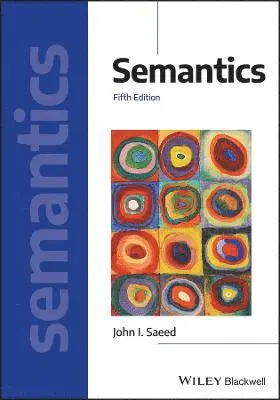
      Semantics

      AvJohn I. Saeed

      Häftad, Engelska, 2022

      Del i serien Introducing Linguistics

      626 kr

      Beställningsvara. Skickas inom 5-8 vardagar. Fri frakt över 249 kr.

      Fler format och utgåvor

      E-bok

      715 kr

      E-bok

      715 kr

      Beskrivning

      The latest edition of the bestselling introduction to the field of linguistic semantics, updated throughout and featuring a wholly new chapter on inferential pragmatics Semantics, Fifth Edition, is a comprehensive and well-balanced introduction to the study of the communication of meaning in language. Assuming no previous background in semantics and limited familiarity with formal linguistics, this student-friendly textbook describes the concepts, theory, and study of semantics in an accessible and clear style. Concise chapters describe the role of semantics within contemporary linguistics, cover key topics in the analysis of word and sentence meaning, and review major semantic theories such as componential theory, formal semantics, and cognitive semantics. The updated fifth edition incorporates recent theoretical developments and important research in linguistic semantics, featuring an entirely new chapter examining the overlap between inferential pragmatics and Relevance Theory, truth-conditional meaning, and other traditional areas of semantics. Revised and expanded sections discuss the continuing growth and consolidation of cognitive semantics, various contextual features of language, conceptualization and categorization, and construal and perspective. This edition includes new exercises with solutions, up-to-date references to relevant literature, and additional examples with data from a wide range of different languages. Covers basic concepts and methods as well as key theoretical models, current lines of research, and important writersExplains general concepts in semantics before gradually moving to more advanced topics in semantic description and theoretical approachesHighlights the relation between cross-linguistic variation and language universalsProvides students with the background necessary to understand more advanced and specialized primary semantics literatureIncludes a glossary of technical terms and numerous exercises arranged by level of difficulty Highlights the relationship between semantics and cross-linguistic variation, language universals, and pragmaticsWith detailed examples from a wide range of contexts and a wealth of practical exercises, Semantics, Fifth Edition, remains the perfect textbook for undergraduate students of linguistics, English language, applied linguistics, modern languages, and computer sciences.

      Produktinformation

      • Utgivningsdatum:2022-12-22
      • Mått:178 x 254 x 30 mm
      • Vikt:1 008 g
      • Format:Häftad
      • Språk:Engelska
      • Serie:Introducing Linguistics
      • Antal sidor:592
      • Upplaga:5
      • Förlag:John Wiley and Sons Ltd
      • ISBN:9781119709855

      Utforska kategorier

      • Språkvetenskap och lingvistik inom Språk och ordböcker

      Mer om författaren

      JOHN I. SAEED is a Senior Fellow of Trinity College, University of Dublin, Ireland, where he is a professor in linguistics. He has published studies on Cushitic linguistics, particularly Somali and related languages, as well as Irish Sign Language and linguistics. He is the author of several books, including Somali and Irish Sign Language: A Cognitive Linguistic Approach (with Lorraine Leeson).

      Innehållsförteckning

      • List of Figures and TablesPrefaceAbbreviations and SymbolsPart I Preliminaries1 Semantics in Linguistics1.1 Introduction1.2 Semantics and Semiotics1.3 Three Challenges in Doing Semantics1.4 Meeting the Challenges1.5 Semantics in a Model of Grammar1.5.1 Introduction1.5.2 Word meaning and sentence meaning1.6 Some Important Assumptions1.6.1 Reference and sense1.6.2 Utterances, sentences, and propositions1.6.3 Literal and non-literal meaning1.6.4 Semantics and pragmatics1.7 Summary2 Meaning, Thought, and Reality2.1 Introduction2.2 Reference2.2.1 Types of reference2.2.2 Names2.2.3 Nouns and noun phrases2.3 Reference as a Theory of Meaning2.4 Mental Representations2.4.1 Introduction2.4.2 Concepts2.4.3 Necessary and sufficient conditions2.4.4 Prototypes2.4.5 Relations between concepts2.4.6 Acquiring concepts2.5 Words, Concepts, and Thinking2.5.1 Linguistic relativity2.5.2 The language of thought hypothesis2.5.3 Thought and reality2.6 SummaryPart II Semantic Description3 Word Meaning3.1 Introduction3.2 Words and Grammatical Categories3.3 Words and Lexical Items3.4 Problems with Pinning Down Word Meaning3.5 Lexical Relations3.5.1 Homonymy3.5.2 Polysemy3.5.3 Synonymy3.5.4 Opposites (antonymy)3.5.5 Hyponymy3.5.6 Meronymy3.5.7 Member–collection3.5.8 Portion–mass3.6 Derivational Relations3.6.1 Causative verbs3.6.2 Agentive nouns3.7 Lexical Typology3.7.1 Polysemy3.7.2 Color terms3.7.3 Core vocabulary3.7.4 Universal lexemes3.8 Lexical Change3.8.1 Introduction3.8.2 Lexical shifts in meaning3.8.3 System shifts in meaning3.9 Summary4 Sentence Relations and Truth4.1 Introduction4.2 Logic and Truth4.3 Necessary Truth, A Priori Truth, and Analyticity4.4 Entailment4.5 Presupposition4.5.1 Introduction4.5.2 Two approaches to presupposition4.5.3 Presupposition failure4.5.4 Presupposition triggers4.5.5 Presuppositions and context4.5.6 Pragmatic theories of presupposition4.6 Summary5 Sentence Semantics 1: Situations5.1 Introduction5.2 Situation Types5.2.1 States5.2.2 Dynamic situation types5.2.3 A system of situation types5.2.4 Tests for situation types5.4 Aspect5.4.1 Aspect and tense5.4.2 Comparing aspect across languages5.4.3 Aspect and situation type5.5 Modality and Mood5.5.1 Modality5.5.2 Mood5.6 Evidentiality5.7 Negation5.7.1 Introduction5.7.2 Clausal negation5.7.3 Constituent negation5.7.4 Metalinguistic negation5.7.5 Polarity5.8 Summary6 Sentence Semantics 2: Participants6.1 Introduction: Classifying Participants6.2 Thematic Roles6.3 Grammatical Relations and Thematic Roles6.4 Verbs and Thematic Role Grids6.5 Problems with Thematic Roles6.6 The Motivation for Identifying Thematic Roles6.7 Causation6.8 Voice6.8.1 Passive voice6.8.2 Comparing passive constructions across languages6.8.3 Middle voice6.9 Classifiers and Noun Classes6.9.1 Classifiers6.9.2 Noun classes6.10 Summary7 Meaning and Context7.1 Introduction7.2 Deixis7.2.1 Spatial deixis7.2.2 Grammaticalization of context7.2.3 Extensions of spatial deixis7.2.4 Person deixis7.2.5 Social deixis7.3 Reference and Context7.4 Knowledge as Context7.4.1 Discourse as context7.4.2 Background knowledge as context7.4.3 Mutual knowledge7.4.4 Giving background knowledge to computers7.5 Information Structure7.5.1 The information status of nominals7.5.2 Focus and topic7.5.3 Information structure and comprehension7.6 Inference7.7 Speech Act Semantics7.7.1 Introduction7.7.2 Austin's Speech Act Theory7.7.3 Evaluating performative utterances7.7.4 Explicit and implicit performatives7.7.5 Statements as performatives7.7.6 Three facets of a speech act7.7.7 Indirect speech acts7.7.8 Understanding indirect speech acts7.7.9 Speech acts: a summary7.8 SummaryPart III Theoretical Approaches8 Meaning Components8.1 Introduction8.2 Lexical Relations in CA8.2.1 Binary features8.2.2 Redundancy rules8.3 Katz's Semantic Theory8.3.1 Introduction8.3.2 The Katzian dictionary8.3.3 Projection rules8.4 Grammatical Rules and Semantic Components8.4.1 The methodology8.4.2 Thematic roles and linking rules8.5 Talmy's Typology of Motion Events8.6 Jackendoff's Conceptual Structure8.6.1 Introduction8.6.2 The semantic components8.6.3 Localist semantic fields8.6.4 Complex events and states8.6.5 THINGS: Semantic classes of nominals8.6.6 Cross-category generalizations8.6.7 Processes of semantic combination8.7 Pustejovsky's Generative Lexicon8.7.1 Event structure8.7.2 Polysemy and Qualia Structure8.8 Problems with Components of Meaning8.9 Summary9 Formal Semantics9.1 Introduction9.2 Model-Theoretical Semantics9.3 Translating English into a Logical Metalanguage9.3.1 Introduction9.3.2 Simple statements in predicate logic9.3.3 Quantifiers in predicate logic9.3.4 Some advantages of predicate logic translation9.4 The Semantics of the Logical Metalanguage9.4.1 Introduction9.4.2 The semantic interpretation of predicate logic symbols9.4.3 The domain9.4.4 The denotation assignment function9.5 Checking the Truth-Value of Sentences9.5.1 Evaluating a simple statement9.5.2 Evaluating a compound sentence with ∧ “and”9.5.3 Evaluating sentences with the quantifiers ∀ and ∃9.6 Word Meaning: Meaning Postulates9.7 Natural Language Quantifiers and Higher-Order Logic9.7.1 Restricted quantifiers9.7.2 Generalized quantifiers9.7.3 The strong/weak distinction and existential there sentences9.7.4 Monotonicity and negative polarity items9.7.5 Section summary9.8 Intensionality9.8.1 Introduction9.8.2 Modality9.8.3 Tense and aspect9.9 Dynamic Approaches to Discourse9.9.1 Anaphora in and across sentences9.9.2 Donkey sentences9.9.3 DRT and discourse anaphora9.10 Summary10 Cognitive Semantics10.1 Introduction10.2 Categorization10.2.1 The rejection of classical categories10.2.2 Embodiment and image schemas10.2.3 Linguistic and encyclopedic knowledge10.3 Polysemy10.3.1 Prepositions10.3.2 Modal verbs10.4 Metaphor10.4.1 Introduction10.4.2 Conceptual Metaphor Theory10.4.3 Features of metaphor10.4.4 The influence of metaphor10.5 Metonymy10.6 Mental Spaces10.6.1 Connections between spaces10.6.2 Referential opacity10.6.3 Presupposition10.6.4 Conceptual integration theory10.6.5 Section summary10.7 Langacker's Cognitive Grammar10.7.1 Nouns, verbs, and clauses10.7.2 Construal10.8 Construction Grammar10.9 Summary11 Inferential Pragmatics11.1 Introduction11.2 Propositions11.3 Beyond propositions: Grice's conversational implicature11.3.1 Introduction11.3.2 Grice's maxims of conversational cooperation11.4 Generalizing the Gricean Maxims11.4.1 Horn's Q and R principles11.4.2 Levinson's Q, I and M principles11.5 Contextualism11.5.1 Sentence and proposition mismatches11.5.2 Gradable adjectives11.5.3 Unexpressed temporal reference11.5.4 Quantifier domain restriction11.5.5 Cardinal numbers11.5.6 Section summary11.6 Relevance Theory11.6.1 Introduction11.6.2 Explicatures11.6.3 Higher level explicatures11.6.4 Implicatures11.6.5 Implicature and explicature11.6.6 Implicated premises and implicated conclusions11.7 Lexical Pragmatics11.7.1 Introduction11.7.2 Polysemy and context11.7.3 Microsenses and contextual modulation11.7.4 Neo-Gricean lexical pragmatics11.7.5 Lexical pragmatics in Relevance Theory11.7.6 Section summary11.8 SummarySolutions to ExercisesGlossaryIndex
      Hoppa över listan

      Mer från samma serie

      Andrew Spencer - Phonology, Häftad
      Del 9

      Phonology

      Andrew Spencer

      Häftad, 1995

      683 kr

      Anne E. Baker, Kees Hengeveld - Linguistics, Inbunden
      Del 14

      Linguistics

      Anne E. Baker, Kees Hengeveld

      Inbunden, 2012

      1 260 kr

      Baker, Hengeveld, Anne E. Baker, Kees Hengeveld - Linguistics, Häftad
      Del 15

      Linguistics

      Baker, Hengeveld, Anne E. Baker, Kees Hengeveld

      Häftad, 2012

      500 kr

      Andrew Carnie - Syntax, Häftad

      Syntax

      Andrew Carnie

      Häftad, 2021

      598 kr

      Andrew Carnie - Syntax Workbook, Häftad

      Syntax Workbook

      Andrew Carnie

      Häftad, 2021

      514 kr

      Andrew Carnie - Syntax: A Generative Introduction 4e & The Syntax Workbook 2e Set, Häftad

      Syntax: A Generative Introduction 4e & The Syntax Workbook 2e Set

      Andrew Carnie

      Häftad, 2021

      1 021 kr

      Barbara Johnstone, Jennifer Andrus - Discourse Analysis, Häftad

      Discourse Analysis

      Barbara Johnstone, Jennifer Andrus

      Häftad, 2024

      443 kr

      Li Wei, Li Wei - Applied Linguistics, Häftad
      Del 3

      Applied Linguistics

      Li Wei, Li Wei

      Häftad, 2013

      415 kr

      Hoppa över listan

      Du kanske också är intresserad av

      John I. Saeed - Semantics, E-bok

      Semantics

      John I. Saeed

      E-bok
      2022

      715 kr

      John I. Saeed - Semantics, E-bok

      Semantics

      John I. Saeed

      E-bok
      2022

      715 kr

      Anne E. Baker, Kees Hengeveld - Linguistics, Inbunden
      Del 14

      Linguistics

      Anne E. Baker, Kees Hengeveld

      Inbunden, 2012

      1 260 kr

      Andrew Spencer - Phonology, Häftad
      Del 9

      Phonology

      Andrew Spencer

      Häftad, 1995

      683 kr

      Andrew Carnie - Syntax: A Generative Introduction 4e & The Syntax Workbook 2e Set, Häftad

      Syntax: A Generative Introduction 4e & The Syntax Workbook 2e Set

      Andrew Carnie

      Häftad, 2021

      1 021 kr

      Barbara Johnstone, Jennifer Andrus - Discourse Analysis, Häftad

      Discourse Analysis

      Barbara Johnstone, Jennifer Andrus

      Häftad, 2024

      443 kr

      Baker, Hengeveld, Anne E. Baker, Kees Hengeveld - Linguistics, Häftad
      Del 15

      Linguistics

      Baker, Hengeveld, Anne E. Baker, Kees Hengeveld

      Häftad, 2012

      500 kr

      Andrew Carnie - Syntax, Häftad

      Syntax

      Andrew Carnie

      Häftad, 2021

      598 kr

      Li Wei, Li Wei - Applied Linguistics, Häftad
      Del 3

      Applied Linguistics

      Li Wei, Li Wei

      Häftad, 2013

      415 kr

      Andrew Carnie - Syntax Workbook, Häftad

      Syntax Workbook

      Andrew Carnie

      Häftad, 2021

      514 kr