• Fri frakt över 249 kr
  • •
  • Snabba leveranser
  • •
  • Billiga böcker
Kundservice

Du är på sajten för privatpersoner.

Företag, bibliotek eller offentlig verksamhet?

Du handlar på classic.bokus.com, där alla dina funktioner finns intakta.
Till classic.bokus.com
Bokus logotyp. Gå till startsidan.
  • Erbjudanden
  • Nyheter
  • Student
  • Topplistor
  • Barn & ungdom
  • Bokus Play
  • E-böcker
  • Pocketböcker
  • Spel & pussel

10% rabatt på allt med kod: NYSTART10 →

Sidfot

Mina sidor

    Hjälp

    • Kundservice
    • Vanliga frågor och svar
    • Frakt och leverans
    • Retur vid ångerrätt
    • Reklamera vara
    • Betalning
    • Köpvillkor
    • Allmänna villkor
    • Information om webbplatsens tillgänglighet

    Om Bokus

    • Om oss
    • Pressrum
    • För studenter
    • För företag
    • För bibliotek och offentlig verksamhet
    • För leverantörer
    • Hållbarhet

    Populärt

    • Aktuella erbjudanden
    • Presentkort
    • Studentlitteratur
    • Nya böcker
    • Topplistor
    • Signerade böcker
    • Engelska böcker

    Inspiration

    • Boktips
    • BookTok
    • Populära bokserier
    • Barnbokskaraktärer
    • Populära författare
    Logotyp för Bokus
    Följ oss på Facebook (extern länk)Följ oss på Instagram (extern länk)Följ oss på YouTube (extern länk)Följ oss på TikTok (extern länk)
    bokus @ CookiesAnpassa cookiesIntegritetspolicyKöpvillkor
    Till Citymail hemsida (extern länk)Till Budbee hemsida (extern länk)Till Postnord hemsida (extern länk)Till Schenker hemsida (extern länk)Till Early Bird hemsida (extern länk)Till Walleys hemsida (extern länk)
    1. Naturvetenskap och teknik
    2. Teknik och industri
    3. Elektronik och kommunikationer

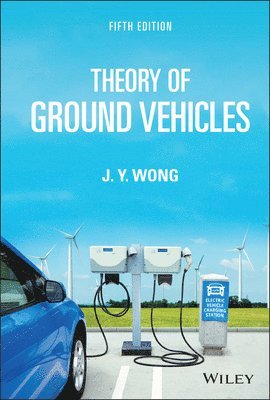
    Theory of Ground Vehicles

    AvJ. Y. Wong

    Inbunden, Engelska, 2022

    1 197 kr

    Beställningsvara. Skickas inom 5-8 vardagar. Fri frakt över 249 kr.

    Fler format och utgåvor

    E-bok

    1 372 kr

    E-bok

    1 372 kr

    Beskrivning

    THEORY OF GROUND VEHICLES A leading and authoritative text for advancing ground vehicle mobility Theory of Ground Vehicles, Fifth Edition presents updated and expanded coverage of the critical factors affecting the performance, handling, and ride essential to the development and design of road and off-road vehicles. Replacing internal combustion engines with zero-emission powerplants in ground vehicles to eliminate greenhouse gas emissions for curbing climate change has received worldwide attention by both the vehicle industry and governmental agencies. To enhance safety, traffic flow, and operating efficiency of road transport, automated driving systems have been under active development. With growing interest in the exploration of the Moon, Mars, and beyond, research in terramechanics for guiding the development of extraterrestrial rovers has been intensified. In this new edition, these and other topics of interest in the field of ground vehicle technology are explored, and technical data are updated. New features of this edition include: Expanded coverage of the fundamentals of electric drives, hybrid electric drives, and fuel cell technologyIntroduction to the classification and operating principles of the automated driving system and cooperative driving automationApplications of terramechanics to guiding the development of extraterrestrial roversElaboration on the approach to achieving the optimal operating efficiency of all-wheel drive off-road vehiclesIntroduction to updated ISO Standards for evaluating vehicle rideAn updated and comprehensive text and reference for both the educational and professional communities, Theory of Ground Vehicles, Fifth Edition will prove invaluable to aspiring and practicing engineers seeking to solve real-world road and off-road vehicle mobility problems.

    Produktinformation

    • Utgivningsdatum:2022-08-18
    • Mått:188 x 257 x 41 mm
    • Vikt:1 429 g
    • Format:Inbunden
    • Språk:Engelska
    • Antal sidor:608
    • Upplaga:5
    • Förlag:John Wiley & Sons Inc
    • ISBN:9781119719700

    Utforska kategorier

    • Elektronik och kommunikationer inom Naturvetenskap och teknik

    Mer om författaren

    J. Y. Wong is Professor Emeritus, Department of Mechanical and Aerospace Engineering, Carleton University, Ottawa, Canada. He received his PhD and DSc from the University of Newcastle upon Tyne, England. He is also the author of Terramechanics and Off-Road Vehicle Engineering. An internationally recognized leading expert in ground vehicle mobility, he is on the editorial/advisory boards of a number of international journals. He has received numerous awards from learned societies for his research accomplishments.

    Innehållsförteckning

    • Author Biography xiiiPreface to the Fifth Edition xvPreface to the Fourth Edition xviiPreface to the Third Edition xixPreface to the Second Edition xxiPreface to the First Edition xxiiiConversion Factors xxvAbbreviations and Acronyms xxviiList of Symbols xxixIntroduction xxxixAbout the Companion Website xli1 Mechanics of Pneumatic Tires 11.1 Tire Forces and Moments 61.2 Rolling Resistance of Tires 71.3 Tractive (Braking) Effort and Longitudinal Slip (Skid) 151.3.1 Tractive Effort and Longitudinal Slip 151.3.2 Braking Effort and Longitudinal Skid 221.4 Cornering Properties of Tires 271.4.1 Slip Angle and Cornering Force 271.4.2 Slip Angle and Aligning Torque 321.4.3 Camber and Camber Thrust 341.4.4 Characterization of Cornering Behavior of Tires 371.4.5 The Magic Formula 491.5 Performance of Tires on Wet Surfaces 551.6 Ride Properties of Tires 611.7 Tire/Road Noise 71References 74Problems 752 Mechanics of Vehicle–Terrain Interaction: Terramechanics 772.1 Applications of the Theory of Elasticity to Predicting Stress Distributions in the Terrain under Vehicular Loads 782.2 Applications of the Theory of Plastic Equilibrium to the Mechanics of Vehicle–Terrain Interaction 842.3 Empirically Based Models for Predicting Off-Road Vehicle Mobility 992.3.1 NATO Reference Mobility Model (NRMM) 992.3.2 Empirical Models for Predicting Single Wheel Performance 1062.3.3 Empirical Models Based on the Mean Maximum Pressure 1082.3.4 Limitations and Prospects for Empirically Based Models 1112.4 Measurement and Characterization of Terrain Response 1142.4.1 Characterization of Pressure–Sinkage Relationships 1162.4.2 Characterization of the Response to Repetitive Normal Loading 1242.4.3 Characterization of Shear Stress–Shear Displacement Relationships 1262.4.4 Characterization of the Response to Repetitive Shear Loading 1322.4.5 Bekker–Wong Terrain Parameters 1332.5 A Simplified Physics-Based Model for the Performance of Tracked Vehicles 1342.5.1 Motion Resistance of a Track 1352.5.2 Tractive Effort and Slip of a Track 1372.6 An Advanced Physics-Based Model for the Performance of Vehicles with Flexible Tracks 1422.6.1 Approach to the Prediction of Normal Pressure Distribution under a Track 1432.6.2 Approach to the Prediction of Shear Stress Distribution under a Track 1452.6.3 Prediction of Motion Resistance and Drawbar Pull as Functions of Track Slip 1462.6.4 Experimental Substantiation 1472.6.5 Applications to Parametric Analysis and Design Optimization 1482.7 An Advanced Physics-Based Model for the Performance of Vehicles with Long-Pitch Link Tracks 1572.7.1 Basic Approach 1572.7.2 Experimental Substantiation 1582.7.3 Applications to Parametric Analysis and Design Optimization 1602.8 Physics-Based Models for the Cross-Country Performance of Wheels (Tires) 1632.8.1 Motion Resistance of a Rigid Wheel 1632.8.2 Motion Resistance of a Pneumatic Tire 1662.8.3 Tractive Effort and Slip of a Wheel (Tire) 1712.9 A Physics-Based Model for the Performance of Off-Road Wheeled Vehicles 1752.9.1 Basic Approach 1752.9.2 Experimental Substantiation 1762.9.3 Applications to Parametric Analysis 1772.10 Slip Sinkage 1782.10.1 Physical Nature of Slip Sinkage 1782.10.2 Simplified Methods for Predicting Slip Sinkage 1802.11 Applications of Terramechanics to the Study of Mobility of Extraterrestrial Rovers and their Running Gears 1852.11.1 Predicting the Performance of Rigid Rover Wheels on Extraterrestrial Surfaces Based on Test Results Obtained on Earth 1852.11.2 Performances of Lunar Roving Vehicle Flexible Wheels Predicted Using the Model NWVPM and Correlations with Test Data 1982.12 Finite Element and Discrete Element Methods for the Study of Vehicle–Terrain Interaction 2022.12.1 The Finite Element Method 2032.12.2 The Discrete (Distinct) Element Method 207References 212Problems 2183 Performance Characteristics of Road Vehicles 2213.1 Equation of Motion and Maximum Tractive Effort 2213.2 Aerodynamic Forces and Moments 2253.3 Internal Combustion Engines 2393.3.1 Performance Characteristics of the Internal Combustion Engine 2403.3.2 Emissions of Internal Combustion Engines 2463.4 Electric Drives 2483.4.1 Elements of an Electric Drive 2513.4.2 Characteristics of Battery Electric Passenger Vehicles 2553.5 Hybrid Electric Drives 2563.5.1 Types of Hybrid Electric Drive 2573.5.2 Characteristics of Energy Consumption and Emissions of Hybrid Electric Vehicles 2703.6 Fuel Cells 2733.6.1 Polymer Electrolyte Membrane Fuel Cells 2743.6.2 Characteristics of Fuel Cell Vehicles 2773.7 Transmissions for Vehicles with Internal Combustion Engines 2783.7.1 Manual Gear Transmissions 2793.7.2 Automatic Transmissions 2873.7.3 Continuously Variable Transmissions 2943.7.4 Hydrostatic Transmissions 2963.8 Prediction of Vehicle Performance 2983.8.1 Acceleration Time and Distance 2993.8.2 Gradeability 3013.9 Operating Fuel Economy of Vehicles with Internal Comustion Engines 3023.10 Internal Combustion Engine and Transmission Matching 3163.11 Braking Performance 3193.11.1 Braking Characteristics of a Two-Axle Vehicle 3193.11.2 Braking Efficiency and Stopping Distance 3273.11.3 Braking Characteristics of a Tractor–Semitrailer 3293.11.4 Antilock Brake Systems 3323.11.5 Traction Control Systems 337References 338Problems 3424 Performance Characteristics of Off-Road Vehicles 3454.1 Drawbar Performance 3464.1.1 Drawbar Pull and Drawbar Power 3464.1.2 Drawbar (Tractive) Efficiency 3504.1.3 All-Wheel Drive 3544.1.4 Coefficient of Traction 3644.1.5 Weight-to-Power Ratio for Off-Road Vehicles 3644.2 Fuel Economy of Cross-Country Operations 3664.3 Transport Productivity and Transport Efficiency 3684.4 Mobility Map and Mobility Profile 3694.5 Selection of Vehicle Configurations for Off-Road Operations 3724.5.1 Wheeled Vehicles 3734.5.2 Tracked Vehicles 3734.5.3 Wheeled Vehicles versus Tracked Vehicles 374References 378Problems 3795 Handling Characteristics of Road Vehicles 3815.1 Steering Geometry 3815.2 Steady-State Handling Characteristics of a Two-Axle Vehicle 3845.2.1 Neutral Steer 3875.2.2 Understeer 3875.2.3 Oversteer 3885.3 Steady-State Response to Steering Input 3935.3.1 Yaw Velocity Response 3935.3.2 Lateral Acceleration Response 3945.3.3 Curvature Response 3945.4 Testing of Handling Characteristics 3975.4.1 Constant Radius Test 3975.4.2 Constant Speed Test 3985.4.3 Constant Steer Angle Test 3995.5 Transient Response Characteristics 4005.6 Directional Stability 4035.6.1 Criteria for Directional Stability 4035.6.2 Vehicle Stability Control 4065.7 Driving Automation 4125.7.1 Classification of Levels of Driving Automation 4135.7.2 Automated Driving Systems and Cooperative Driving Automation 4155.8 Steady-State Handling Characteristics of a Tractor–Semitrailer 4175.9 Simulation Models for the Directional Behavior of Articulated Road Vehicles 4215.9.1 The Linear Yaw Plane Model 4215.9.2 TBS Model 4215.9.3 Yaw/Roll Model 4225.9.4 The Phase 4 Model 4225.9.5 Summary 423References 428Problems 4306 Steering of Tracked Vehicles 4336.1 Simplified Analysis of the Kinetics of Skid-Steering 4356.2 Kinematics of Skid-Steering 4396.3 Skid-Steering at High Speeds 4416.4 A General Theory for Skid-Steering on Firm Ground 4446.4.1 Shear Displacement on the Track–Ground Interface 4456.4.2 Kinetics in a Steady-State Turning Maneuver 4496.4.3 Experimental Substantiation 4526.4.4 Coefficient of Lateral Resistance 4556.5 Power Consumption of Skid-Steering 4576.6 Skid Steering Systems for Tracked Vehicles 4586.6.1 Clutch/Brake Steering System 4586.6.2 Controlled Differential Steering System 4596.6.3 Planetary Gear Steering System 4606.7 Articulated Steering 462References 465Problems 4667 Vehicle Ride Characteristics 4697.1 Human Response to Vibration 4697.1.1 International Standard ISO 2631/1:1985 4727.1.2 International Standard ISO 2631-1 : 1997/Amd.1 : 2010 4747.1.3 Absorbed Power 4807.2 Vehicle Ride Models 4817.2.1 Two-Degrees-of-Freedom Vehicle Model for Vertical Vibrations of Sprung and Unsprung Mass 4827.2.2 Numerical Methods for Determining the Response of a Quarter-Car Model to Irregular Surface Profile Excitation 4947.2.3 Two-Degrees-of-Freedom Vehicle Model for Pitch and Bounce 4977.3 Introduction to Random Vibration 5017.3.1 Surface Elevation Profile as a Random Function 5017.3.2 Frequency Response Function 5077.3.3 Evaluation of Vehicle Vibration in Relation to Ride Comfort Criteria 5097.4 Active and Semi-Active Suspensions 5107.4.1 Active Suspensions 5117.4.2 Semi-Active Suspensions 512References 517Problems 5198 Introduction to Air-Cushion Vehicles 5218.1 Air-Cushion Systems and their Performances 5218.1.1 Plenum Chambers 5218.1.2 Peripheral Jets 5288.2 Resistances of Air-Cushion Vehicles 5318.2.1 Momentum Drag 5318.2.2 Trim Drag 5328.2.3 Skirt Contact Drag 5328.2.4 Total Overland Drag 5358.2.5 Wave-Making Drag 5378.2.6 Wetting Drag 5398.2.7 Drag Due to Waves 5408.2.8 Total Overwater Drag 5408.3 Suspension Characteristics of Air-Cushion Systems 5428.3.1 Heave (or Bounce) Stiffness 5428.3.2 Roll and Pitch Stiffness 5458.4 Directional Control of Air-Cushion Vehicles 546References 549Problems 550Index 553