• Fri frakt över 249 kr
  • •
  • Snabba leveranser
  • •
  • Billiga böcker
Kundservice

Du är på sajten för privatpersoner.

Företag, bibliotek eller offentlig verksamhet?

Du handlar på classic.bokus.com, där alla dina funktioner finns intakta.
Till classic.bokus.com
Bokus logotyp. Gå till startsidan.
  • Erbjudanden
  • Nyheter
  • Student
  • Topplistor
  • Barn & ungdom
  • Bokus Play
  • E-böcker
  • Pocketböcker
  • Spel & pussel

10% rabatt på allt med kod NYSTART10 →

Sidfot

Mina sidor

    Hjälp

    • Kundservice
    • Vanliga frågor och svar
    • Frakt och leverans
    • Retur vid ångerrätt
    • Reklamera vara
    • Betalning
    • Köpvillkor
    • Allmänna villkor
    • Information om webbplatsens tillgänglighet

    Om Bokus

    • Om oss
    • Pressrum
    • För studenter
    • För företag
    • För bibliotek och offentlig verksamhet
    • För leverantörer
    • Hållbarhet

    Populärt

    • Aktuella erbjudanden
    • Presentkort
    • Studentlitteratur
    • Nya böcker
    • Topplistor
    • Signerade böcker
    • Engelska böcker

    Inspiration

    • Boktips
    • BookTok
    • Populära bokserier
    • Barnbokskaraktärer
    • Populära författare
    Logotyp för Bokus
    Följ oss på Facebook (extern länk)Följ oss på Instagram (extern länk)Följ oss på YouTube (extern länk)Följ oss på TikTok (extern länk)
    bokus @ CookiesAnpassa cookiesIntegritetspolicyKöpvillkor
    Till Citymail hemsida (extern länk)Till Budbee hemsida (extern länk)Till Postnord hemsida (extern länk)Till Schenker hemsida (extern länk)Till Early Bird hemsida (extern länk)Till Walleys hemsida (extern länk)
    1. Naturvetenskap och teknik
    2. Teknik och industri
    3. Elektronik och kommunikationer

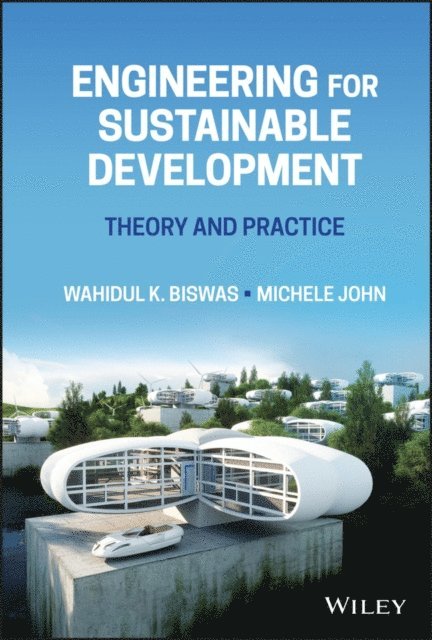
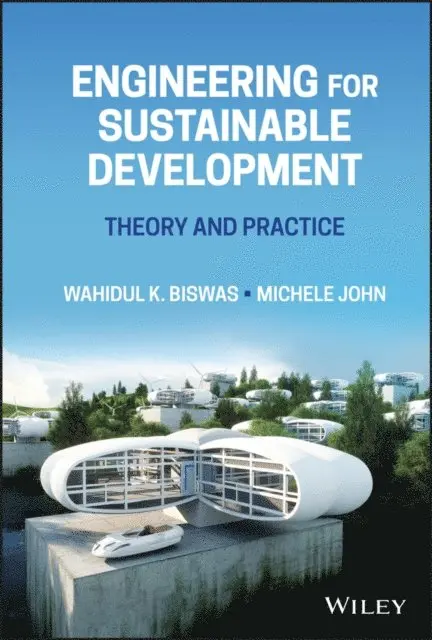
    Engineering for Sustainable Development

    Theory and Practice

    AvWahidul K. Biswas,Michele John

    Inbunden, Engelska, 2022

    1 292 kr

    Beställningsvara. Skickas inom 5-8 vardagar. Fri frakt över 249 kr.

    Beskrivning

    ENGINEERING FOR SUSTAINABLE DEVELOPMENT AN AUTHORITATIVE AND COMPLETE GUIDE TO SUSTAINABLE DEVELOPMENT ENGINEERINGIn Engineering for Sustainable Development: Theory and Practice, a team of distinguished academics deliver a comprehensive, education-focused discussion on sustainable engineering, bridging the gap between theory and practice by drawing upon illuminating case studies and the latest cutting-edge research. In the book, readers will find an introduction to the sustainable development agenda and sustainable technology development, as well as practical methods and tools for the development and implementation of sustainable engineering solutions. The book highlights the critical role of engineers and the engineering profession in providing sustainability leadership as well as important future-focused solutions to support engineering global sustainable development.The book offers a wide range of civil, mechanical, electrical, and chemical engineering industry applications. Readers will also benefit from: A thorough introduction to contemporary sustainability challenges in the engineering disciplineComprehensive discussions of sustainability assessment tools, including triple bottom line assessment (TBL) and the environmental life cycle assessment (LCA)In-depth examinations of sustainable engineering strategies, including cleaner production and eco-efficiency methods and environmental management systemsDetailed review of green engineering principles and industrial symbiosis in engineering application.A link between product stewardship and the design for the environmentPerfect for graduate and senior undergraduate students in any engineering discipline, Engineering for Sustainable Development: Theory and Practice will also earn a place in the libraries of consultants and engineers in industry and government with a personal or professional interest in sustainability management.

    Produktinformation

    • Utgivningsdatum:2022-11-03
    • Mått:152 x 229 x 25 mm
    • Vikt:652 g
    • Format:Inbunden
    • Språk:Engelska
    • Antal sidor:352
    • Förlag:John Wiley & Sons Inc
    • ISBN:9781119720980

    Utforska kategorier

    • Elektronik och kommunikationer inom Naturvetenskap och teknik
    • Byggnadsteknik inom Naturvetenskap och teknik

    Mer om författaren

    Wahidul K. Biswas is an Associate Professor in the Sustainable Engineering Group in the School of Civil and Mechanical Engineering at Curtin University in Australia. His teaching and research is focused on life cycle engineering, sustainability assessment of engineering solutions, green engineering, and industrial ecology. Michele John is the Director of the Sustainable Engineering Group at Curtin University in Australia. Her teaching and research is focused on the development of applied sustainable engineering research and the extension of sustainable engineering education.

    Innehållsförteckning

    • Preface xvPart I Challenges in Sustainable Engineering 11 Sustainability Challenges 31.1 Introduction 31.2 Weak Sustainability vs Strong Sustainability 61.3 Utility vs Throughput 81.4 Relative Scarcity vs Absolute Scarcity 101.5 Global/International Sustainability Agenda 101.6 Engineering Sustainability 121.7 IPAT 191.8 Environmental Kuznets Curves 201.9 Impact of Engineering Innovation on Earth’s Carrying Capacity 211.10 Engineering Challenges in Reducing Ecological Footprint 221.11 Sustainability Implications of Engineering Design 241.12 Engineering Catastrophes 271.13 Existential Risks from Engineering Activities in the Twenty-First Century 301.13.1 Artificial Intelligence (AI) 301.13.2 Green Technologies 321.14 TheWay Forward 34References 35Part II Sustainability Assessment Tools 412 Quantifying Sustainability – Triple Bottom Line Assessment 432.1 Introduction 432.2 Triple Bottom Line 442.2.1 The Economic Bottom Line 442.2.2 Environmental Bottom Line 442.2.3 The Social Bottom Line 452.3 Characteristics of Indicators 462.4 How Do You Develop an Indicator? 472.5 Selection of Indicators 482.6 Participatory Approaches in Indicator Development 482.7 Description of Steps for Indicator Development 492.7.1 Step 1: Preliminary Selection of Indicators 492.7.2 Step 2: Questionnaire Design and Development 492.7.3 Step 3: Online Survey Development 492.7.4 Step 4: Participant Selection 492.7.5 Step 5: Final Selection of Indicators and Calculation of Their Weights 502.8 Sustainability Assessment Framework 532.8.1 Expert Survey 542.8.2 Stakeholders Survey 582.9 TBL Assessment for Bench Marking Purposes 602.10 Conclusions 61References 623 Life Cycle Assessment for TBL Assessment – I 633.1 Life Cycle Thinking 633.2 Life Cycle Assessment 643.3 Environmental Life Cycle Assessment 653.3.1 Application of ELCA 663.3.2 ISO 14040-44 for Life Cycle Assessment 683.3.2.1 Step 1: Goal and Scope Definition 683.3.2.2 Step 2: Inventory Analysis 713.3.2.3 Step 3: Life Cycle Impact Assessment (LCIA) 723.3.2.4 Step 4: Interpretation 873.4 Allocation Method 873.5 Type of LCA 913.6 Uncertainty Analysis in LCA 923.7 Environmental Product Declaration 95References 1034 Economic and Social Life Cycle Assessment 1074.1 Economic and Social Life Cycle Assessment 1074.2 Life Cycle Costing 1084.2.1 Discounted Cash Flow Analysis 1104.2.2 Internalisation of External Costs 1174.3 Social Life Cycle Assessment 1204.3.1 Step 1: Goal and Scope Definition 1214.3.2 Step 2: Life Cycle Inventory 1234.3.3 Step 3: Life Cycle Social Impact 1234.3.4 Step 4: Interpretation 1244.4 Life Cycle Sustainability Assessment 128References 130Part III Sustainable Engineering Solutions 1315 Sustainable Engineering Strategies 1335.1 Engineering Strategies for Sustainable Development 1335.2 Cleaner Production Strategies 1345.2.1 Good Housekeeping 1355.2.2 Input Substitution 1365.2.3 Technology Modification 1375.2.4 Product Modification 1385.2.5 On Site Recovery/Recycling 1385.3 Fuji Xerox Case Study – Integration of Five CPS 1395.4 Business Case Benefits of Cleaner Production 1405.5 Cleaner Production Assessment 1405.5.1 Planning and Organisation 1405.5.2 Assessment 1415.5.3 Feasibility Studies 1445.5.4 Implementation and Continuation 1485.6 Eco-efficiency 1505.6.1 Key Outcomes of Eco-efficiency 1525.6.2 Eco-efficiency Portfolio Analysis in Choosing Eco-efficient Options 1525.7 Environmental Management Systems 1575.7.1 Aims of an EMS 1605.7.2 A Basic EMS Framework: Plan, Do Check, Review 1615.7.3 Interested Parties 1615.7.4 Benefits of an EMS 1625.8 Conclusions 164References 1656 Industrial Ecology 1676.1 What Is Industrial Ecology? 1676.2 Application of Industrial Ecology 1686.3 Regional Synergies/Industrial Symbiosis 1696.4 How Does It Happen? 1726.5 Types of Industrial Symbiosis 1736.6 Challenges in By-Product Reuse 1796.7 What Is an Eco Industrial Park? 1806.8 Practice Examples 1856.8.1 Development of an EIP 1856.8.2 Industrial Symbiosis in an Industrial Area 1866.9 Industrial Symbiosis in Kwinana Industrial Area 1876.9.1 Conclusions 187References 1897 Green Engineering 1917.1 What Is Green Engineering? 1917.1.1 Minimise 1927.1.2 Substitute 1927.1.3 Moderate 1937.1.4 Simplify 1937.2 Principles of Green Engineering 1947.2.1 Inherent Rather than Circumstantial 1947.2.2 Prevention Rather than Treatment 1947.2.3 Design for Separation 1947.2.4 Maximise Mass, Energy, Space, and Time Efficiency 1957.2.5 Output-Pulled vs Input-Pushed 1957.2.6 Conserve Complexity 1967.2.7 Durability Rather than Immortality 1967.2.8 Meet Need, Minimise Excess 1977.2.9 Minimise Material Diversity 1977.2.10 Integration and Interconnectivity 1977.2.11 Material and Energy Inputs Should Be Renewable Rather than Depleting 1987.2.12 Products, Processes, and Systems Should Be Designed for Performance in a Commercial ‘After Life’ 1987.3 Application of Green Engineering 1987.3.1 Chemical 1997.3.1.1 PreventWaste 1997.3.1.2 Maximise Atom Economy 2007.3.1.3 Design Safer Chemicals and Products 2017.3.1.4 Use Safer Solvents and Reaction Conditions 2017.3.1.5 Use Renewable Feedstocks 2027.3.1.6 Avoid Chemical Derivatives 2037.3.1.7 Use Catalysts 2037.3.1.8 Increase Energy Efficiency 2037.3.1.9 Design Less Hazardous Chemical Syntheses 2037.3.1.10 Design Chemicals and Products to Degrade After Use 2047.3.1.11 Analyse in Real Time to Prevent Pollution 2047.3.1.12 Minimise the Potential for Accidents 2047.3.2 Sustainable Materials 2067.3.2.1 Applications of Composite Materials 2087.3.2.2 The Positives and Negatives of Composite Materials 2097.3.2.3 Bio-Bricks 2097.3.3 Heat Recovery 2107.3.3.1 Temperature Classification 2117.3.3.2 Heat Recovery Technologies 2137.3.3.3 The Positives and Negatives ofWaste Heat Recovery 217References 2178 Design for the Environment 2218.1 Introduction 2218.2 Design for the Environment 2218.3 Benefits of Design for the Environment 2238.3.1 Economic Benefits 2238.3.2 Operational Benefits 2248.3.3 Marketing Benefits 2258.4 Challenges Associated with Design for the Environment 2258.5 Life Cycle Design Guidelines 2288.6 Practice Examples 2338.6.1 Design for Disassembly 2338.6.2 The Life Cycle Benefits of Remanufacturing Strategies 2368.7 ZeroWaste 2408.7.1 Waste Diversion Rate 2408.7.2 ZeroWaste Index 2418.8 Circular Economy 2438.8.1 Material Flow Analysis 2458.8.2 Practice Example 2478.9 Extended Producer Responsibilities 252References 2549 Sustainable Energy 2579.1 Introduction 2579.2 Energy, Environment, Economy, and Society 2589.2.1 Energy and the Economy 2589.2.2 Energy and the Environment 2609.3 Sustainable Energy 2619.4 Pathways Forward 2659.4.1 Deployment of Renewable Energy 2659.4.2 Improvements to Fossil Fuel Based Power Generation 2669.4.3 Plug in Electric Vehicles 2699.4.4 Green Hydrogen Economy 2719.4.5 Smart Grid 2739.4.6 Development of Efficient Energy Storage Technologies 2749.4.7 Energy Storage and the Californian “Duck Curve” 2799.4.8 Sustainability in Small-Scale Power Generation 2809.4.8.1 Types of Decentralised Electricity Generation System 2819.4.9 Blockchain for Sustainable Energy Solutions 2849.4.10 Waste Heat Recovery 2859.4.11 Carbon Capture Technologies 2869.4.11.1 Post Combustion Capture 2869.4.11.2 Pre-combustion Carbon Capture 2879.4.12 Demand-side Management 2889.4.12.1 National Perspective 2899.4.12.2 User Perspective 2909.4.12.3 CO2 Mitigation per Unit of Incremental Cost 2909.5 Practice Example 2919.5.1 Step 1 2919.5.2 Step 2 2949.5.3 Step 3 2949.5.4 Step 4 2959.5.5 Step 5 2969.5.6 Step 6 2969.5.7 Step 7 2979.6 Life Cycle Energy Assessment 2979.7 Reference Energy System 2989.8 Conclusions 301References 301Part IV Outcomes 30710 Engineering for Sustainable Development 30910.1 Introduction 30910.2 Sustainable Production and Consumption 30910.3 Factor X 31110.4 Climate Change Challenges 31410.5 Water Challenges 32010.6 Energy Challenges 32110.7 Circular Economy and Dematerialisation 32210.8 Engineering Ethics 32410.8.1 Engineers Australia’s Sustainability Policy – Practices 326References 327Index 331