• Fri frakt över 249 kr
  • •
  • Snabba leveranser
  • •
  • Billiga böcker
Kundservice

Du är på sajten för privatpersoner.

Företag, bibliotek eller offentlig verksamhet?

Du handlar på classic.bokus.com, där alla dina funktioner finns intakta.
Till classic.bokus.com
Bokus logotyp. Gå till startsidan.
  • Erbjudanden
  • Nyheter
  • Student
  • Topplistor
  • Barn & ungdom
  • Bokus Play
  • E-böcker
  • Pocketböcker
  • Spel & pussel

10% rabatt på allt med kod: NYSTART10 →

Sidfot

Mina sidor

    Hjälp

    • Kundservice
    • Vanliga frågor och svar
    • Frakt och leverans
    • Retur vid ångerrätt
    • Reklamera vara
    • Betalning
    • Köpvillkor
    • Allmänna villkor
    • Information om webbplatsens tillgänglighet

    Om Bokus

    • Om oss
    • Pressrum
    • För studenter
    • För företag
    • För bibliotek och offentlig verksamhet
    • För leverantörer
    • Hållbarhet

    Populärt

    • Aktuella erbjudanden
    • Presentkort
    • Studentlitteratur
    • Nya böcker
    • Topplistor
    • Signerade böcker
    • Engelska böcker

    Inspiration

    • Boktips
    • BookTok
    • Populära bokserier
    • Barnbokskaraktärer
    • Populära författare
    Logotyp för Bokus
    Följ oss på Facebook (extern länk)Följ oss på Instagram (extern länk)Följ oss på YouTube (extern länk)Följ oss på TikTok (extern länk)
    bokus @ CookiesAnpassa cookiesIntegritetspolicyKöpvillkor
    Till Citymail hemsida (extern länk)Till Budbee hemsida (extern länk)Till Postnord hemsida (extern länk)Till Schenker hemsida (extern länk)Till Early Bird hemsida (extern länk)Till Walleys hemsida (extern länk)
    1. Naturvetenskap och teknik
    2. Geovetenskap
    3. Geovetenskap

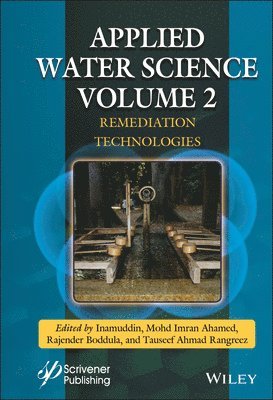
    Applied Water Science, Volume 2

    Remediation Technologies

    AvInamuddin,Mohd Imran Ahamed

    Inbunden, Engelska, 2021

    2 583 kr

    Beställningsvara. Skickas inom 5-8 vardagar. Fri frakt över 249 kr.

    Beskrivning

    APPLIED WATER SCIENCE VOLUME 2 The second volume in a new two-volume set on applied water science, this book provides understanding, occurrence, identification, toxic effects and control of water pollutants in an aquatic environment using green chemistry protocols. The high rate of industrialization around the world has led to an increase in the rate of anthropogenic activities which involve the release of different types of contaminants into the aquatic environment. This generates high environmental risks, which could affect health and socio-economic activities if not treated properly. There is no doubt that the rapid progress in improving water quality and management has been motivated by the latest developments in green chemistry. Over the past decade, sources of water pollutants and the conventional methods used for the treatment of industrial wastewater treatment have flourished. Water quality and its adequate availability have been a matter of concern worldwide particularly in developing countries. According to a World Health Organization (WHO) report, more than 80% of diseases are due to the consumption of contaminated water. Heavy metals are highly toxic and are a potential threat to water, soil, and air. Their consumption in higher concentrations gives hazardous outcomes. Water quality is usually measured in terms of chemical, physical, biological, and radiological standards. The discharge of effluent by industries contains heavy metals, hazardous chemicals, and a high amount of organic and inorganic impurities that can contaminate the water environment, and hence, human health. Therefore, it is our primary responsibility to maintain the water quality in our respective countries. This book provides understanding, occurrence, identification, toxic effects and control of water pollutants in an aquatic environment using green chemistry protocols. It focuses on water remediation properties and processes including industry-scale water remediation technologies. This book covers recent literature on remediation technologies in preventing water contamination and its treatment. Chapters in this book discuss remediation of emerging pollutants using nanomaterials, polymers, advanced oxidation processes, membranes, and microalgae bioremediation, etc. It also includes photochemical, electrochemical, piezoacoustic, and ultrasound techniques. It is a unique reference guide for graduate students, faculties, researchers and industrialists working in the area of water science, environmental science, analytical chemistry, and chemical engineering. This outstanding new volume: Provides an in-depth overview of remediation technologies in water scienceIs written by leading experts in the fieldContains excellent, well-drafted chapters for beginners, graduate students, veteran engineers, and other experts alikeDiscusses current challenges and future perspectives in the fieldAudience: This book is an invaluable guide to engineers, students, professors, scientists and R&D industrial specialists working in the fields of environmental science, geoscience, water science, physics and chemistry.

    Produktinformation

    • Utgivningsdatum:2021-12-14
    • Mått:10 x 10 x 10 mm
    • Vikt:454 g
    • Format:Inbunden
    • Språk:Engelska
    • Antal sidor:688
    • Förlag:John Wiley & Sons Inc
    • ISBN:9781119724735

    Utforska kategorier

    • Geovetenskap inom Naturvetenskap och teknik
    • Byggnadsteknik inom Naturvetenskap och teknik

    Mer om författaren

    Inamuddin, PhD, is an assistant professor in the Department of Applied Chemistry, Zakir Husain College of Engineering and Technology, Faculty of Engineering and Technology, Aligarh Muslim University, Aligarh, India. He has extensive research experience in analytical chemistry, materials chemistry, electrochemistry, renewable energy, and environmental science. He has worked on different research projects funded by various government agencies and universities and is the recipient of multiple awards, including the Fast Track Young Scientist Award and the Young Researcher of the Year Award for 2020, from Aligarh Muslim University. He has published almost 200 research articles in various international scientific journals, 18 book chapters, and 120 edited books with multiple well-known publishers.Mohd Imran Ahamed, PhD, is a research associate in the Department of Chemistry, Aligarh Muslim University, Aligarh, India. He has published several research and review articles in various international scientific journals and has co-edited multiple books. His research work includes ion-exchange chromatography, wastewater treatment, and analysis, bending actuator and electrospinning. Rajender Boddula, PhD, is currently working for the Chinese Academy of Sciences President’s International Fellowship Initiative (CAS-PIFI) at the National Center for Nanoscience and Technology (NCNST, Beijing). His academic honors include multiple fellowships and scholarships, and he has published many scientific articles in international peer-reviewed journals. He also serves as an editorial board member and a referee for several reputed international peer-reviewed journals. He has published edited books with numerous publishers and has authored over 20 book chapters. Tauseef Ahmad Rangreez, PhD, is a postdoctoral fellow at the National Institute of Technology, Srinagar, India. He completed his PhD in applied chemistry from Aligarh Muslim University, Aligarh, India, and worked as a project fellow under the University Grant Commission, India. He has published several research articles and co-edited books. His research interests include ion-exchange chromatography, development of nanocomposite sensors for heavy metals and biosensors.

    Innehållsförteckning

    • Preface xvii1 Insights of the Removal of Antibiotics From Water and Wastewater: A Review on Physical, Chemical, and Biological Techniques 1Ali Khadir, Amin M. Ramezanali, Shabnam Taghipour and Khadijeh Jafari1.1 Introduction 21.2 Antibiotic Removal Methods 41.3 Conclusion 32References 332 Adsorption on Alternative Low-Cost Materials-Derived Adsorbents in Water Treatment 49Wojciech Stawiñski and Katarzyna Wal2.1 Introduction 502.2 Water Treatment 502.3 Adsorption 512.4 Application of Low-Cost Waste-Based Adsorbents in Water Treatment 512.5 Disadvantages 842.6 Conclusions 86References 863 Mathematical Modeling of Reactor for Water Remediation 107Hamidreza Bagheri, Ali Mohebbi, Maryam Mirzaie and Vahab Ghalandari3.1 Introduction 1083.2 Water Remediation 1093.3 Reactor Modeling 1123.4 Conclusions 154References 1564 Environmental Remediation Using Integrated MicrobialElectrochemical Wetlands: iMETLands 171A. Biswas and S. Chakraborty4.1 Introduction 1724.2 Constructed Wetland–Microbial Fuel Cell (CW–MFC) System 1744.3 iMETLand State of the Art 1774.3.1 iMETLand as a Potential Treatment Unit for Industrial Wastewater 1844.4 Conclusion, Challenges and Future Directions 184References 1855 Forward Osmosis Membrane Technology for the Petroleum Industry Wastewater Treatment 191Shahryar Jafarinejad and Nader Vahdat5.1 Introduction 1915.2 Forward Osmosis Membrane Process 1925.3 FO Technology for the Petroleum Industry Wastewater Treatment 1945.4 Challenges Ahead and Future Perspectives 2065.5 Conclusions 207References 2086 UV/Periodate Advanced Oxidation Process: Fundamentals and Applications 215Slimane Merouani and Oualid Hamdaoui6.1 Introduction 2166.2 Periodate Speciation in Aqueous Solution 2176.3 Generation of Reactive Species Upon UV-Photolysis of Periodate 2186.4 Application of UV/IO-4 for Organics Degradation 2236.5 Scavenging of the Reactive Species Under Laboratory Conditions 2346.6 Factors Influencing the Degradation Process 2366.7 Advantages of UV/Periodate Process 2406.8 Conclusion 241Acknowledgements 242References 2427 Trends in Landfill Leachate Treatment Through Biological Biotechnology 249Ali Khadir, Arman N. Ardestani, Mika Sillanpää and Shreya Mahajan7.1 Introduction 2507.2 Landfill Leachate Characteristics 2527.3 Wastewater Treatment Techniques 2557.4 Comparison of Aerobic and Anaerobic Processes 2587.5 Different Biological Systems for Landfill Leachate Treatment 2607.6 Conclusion 276References 2778 Metal–Organic Framework Nanoparticle Technology for Water Remediation: Road to a Sustainable Ecosystem 289Rashmirekha Tripathy, Tejaswini Sahoo, Jagannath Panda, Madhuri Hembram, Saraswati Soren, C.K. Rath, Sunil Kumar Sahoo and Rojalin Sahu8.1 Introduction to MOF Nanoparticles 2908.2 MOFs for Decontamination of Water 2918.3 Impact of MOFs for Remediation of Water 2958.4 Removal of Organic Contaminant 3038.5 MOF Nanoparticle Magnetic Iron-Based Technology for Water Remediation 3078.5.1 Iron as a Remediation Tool 3088.5.2 Research Needs and Limitations 3108.6 Conclusions 311References 3119 Metal–Organic Frameworks for Heavy Metal Removal 321Anam Asghar, Mustapha Mohammed Bello and Abdul Aziz Abdul Raman9.1 Introduction 3229.2 Heavy Metals in Environment 3239.3 Heavy Metals Removal Technologies 3259.4 Applications of Metal–Organic Framework in Heavy Metals Removal 3309.5 Conclusion 344References 34510 Microalgae-Based Bioremediation 357Rosangela R. Dias, Mariany C. Deprá, Leila Q. Zepka and Eduardo Jacob-Lopes10.1 Introduction to Microalgae-Based Bioremediation 35710.2 Microalgae Bioremediation Mechanisms 35810.3 Inorganic Pollutants Bioremediation 36010.4 Organic Pollutants Bioremediation 36310.5 Emerging Pollutants Removal 36810.6 Bioremediation Associated with the Bioproducts Production 37010.7 Integrated Technology for Microalgae-Based Bioremediation 37210.8 Conclusion 372References 37311 Photocatalytic Water Disinfection 381Prachi Upadhyay and Sankar Chakma11.1 Introduction 38111.2 Techniques for Water Disinfection 38311.3 Conclusion 398References 39812 Phytoremediation and the Way Forward: Challenges and Opportunities 405Shinomol George K. and Bhanu Revathi K.12.1 Introduction 40512.2 Biosorbant for Phytoremediation 41012.3 Soil Amendments for Enhancement of Bioremediation 42312.4 Challenges & Future Prespectives 42412.4.1 Future Perspectives 42412.5 Conclusion 425References 42613 Sonochemistry for Water Remediation: Toward an Up-Scaled Continuous Technology 437Kaouther Kerboua and Oualid Hamdaoui13.1 Introduction 43813.2 Water Remediation Technologies: The Place of Ultrasound and Sonochemistry 43913.3 Continuous-Flow Sonochemistry: State-of-the-Art 45613.4 Perspectives for an Up-Scaled Continuous Sonochemical Technology for Water Remediation 460References 46114 Advanced Oxidation Technologies for the Treatment of Wastewater 469Pallavi Jain, Sapna Raghav and Dinesh Kumar14.1 Introduction 46914.2 Principle Involved 47114.3 Advanced Oxidation Process 47214.4 Perspectives and Recommendations 47814.5 Conclusions 479Acknowledgment 480References 48015 Application of Copper Oxide-Based Catalysts in Advanced Oxidation Processes 485D. Mohammady Maklavany, Z. Rouzitalab, S. Jafarinejad, Y. Mohammadpourderakhshi and A. Rashidi15.1 Introduction 48515.2 An Overview of Catalytic AOPs 48715.3 Recent Advances in Copper Oxide-Based Catalysts 49215.4 Literature Review of Application of Copper Oxide-Based Catalysts for AOPs 49915.5 Conclusion and Future Perspectives 514Acknowlegments 516References 51616 Biochar-Based Sorbents for Sequestration of Pharmaceutical Compounds: Considering the Main Parameters in the Adsorption Process 527Ali Khadir16.1 Introduction 52716.2 Adsorption Fundamentals 52916.3 Effect of Various Parameters on Adsorption of Pharmaceuticals 53016.4 Isotherm Models 54216.5 Adsorption Kinetics 54816.6 Conclusion 553References 55417 Bioremediation of Agricultural Wastewater 565Shivani Garg, Nelson Pynadathu Rumjit, Paul Thomas and Chin Wei LaiAbbreviations 56517.1 Introduction 56617.2 Sources of Agricultural Wastewater 56617.3 Bioremediation Processes for Agricultural Wastewater Treatment 56717.4 Conclusion and Future Outlook 575Acknowledgements 576References 57618 Remediation of Toxic Contaminants in Water Using Agricultural Waste 581Arti Jain and Ritu Payal18.1 Introduction 58218.2 Components in Wastewater and Their Negative Impact 58318.3 Techniques for Remediation of Wastewater 58318.4 Agricultural Waste Materials 58418.5 Agricultural Waste-Assisted Synthesis of Nanoparticles and Wastewater Remediation Through Nanoparticles 60818.6 Adsorption Models for Adsorbents 60918.7 Conclusions 611References 61119 Remediation of Emerging Pollutants by Using Advanced Biological Wastewater Treatments 623S. Ghosh and S. Chakraborty19.1 Introduction 62419.2 Pharmaceutical Wastewater 62619.3 Pesticide Contaminated Wastewater 62819.4 Surfactant Pollution 63219.5 Microplastic Pollution 63419.6 Endocrine Disrupters in Environment 63619.7 Remedies for Endocrine Disrupters 63719.8 Conclusion 637Acknowledgement 638References 638Index 645