• Fri frakt över 249 kr
  • •
  • Snabba leveranser
  • •
  • Billiga böcker
Kundservice

Du är på sajten för privatpersoner.

Företag, bibliotek eller offentlig verksamhet?

Du handlar på classic.bokus.com, där alla dina funktioner finns intakta.
Till classic.bokus.com
Bokus logotyp. Gå till startsidan.
  • Erbjudanden
  • Student
  • Topplistor
  • Barn & ungdom
  • Bokus Play
  • E-böcker
  • Ljudböcker
  • Pocketböcker
  • Spel & pussel

10% rabatt på allt med kod NYSTART10 →

Sidfot

Mina sidor

    Hjälp

    • Kundservice
    • Vanliga frågor och svar
    • Frakt och leverans
    • Retur vid ångerrätt
    • Reklamera vara
    • Betalning
    • Köpvillkor
    • Allmänna villkor
    • Information om webbplatsens tillgänglighet

    Om Bokus

    • Om oss
    • Pressrum
    • För studenter
    • För företag
    • För bibliotek och offentlig verksamhet
    • För leverantörer
    • Hållbarhet

    Populärt

    • Aktuella erbjudanden
    • Presentkort
    • Studentlitteratur
    • Nya böcker
    • Topplistor
    • Signerade böcker
    • Engelska böcker

    Inspiration

    • Boktips
    • BookTok
    • Populära bokserier
    • Barnbokskaraktärer
    • Populära författare
    Logotyp för Bokus
    Följ oss på Facebook (extern länk)Följ oss på Instagram (extern länk)Följ oss på YouTube (extern länk)Följ oss på TikTok (extern länk)
    bokus @ CookiesAnpassa cookiesIntegritetspolicyKöpvillkor
    Till Citymail hemsida (extern länk)Till Budbee hemsida (extern länk)Till Postnord hemsida (extern länk)Till Schenker hemsida (extern länk)Till Early Bird hemsida (extern länk)Till Walleys hemsida (extern länk)
    1. Psykologi och pedagogik
    2. Psykologi
    3. Psykologiska teorier och skolor

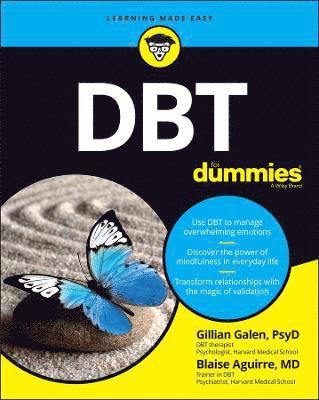
    DBT For Dummies

    AvGillian Galen,Blaise Aguirre

    Häftad, Engelska, 2021

    209 kr

    Beställningsvara. Skickas inom 5-8 vardagar. Fri frakt över 249 kr.

    Beskrivning

    Keep calm, be skillful—and take control!Dialectical Behavior Therapy (DBT) is one of the most popular—and most effective—treatments for mental health conditions that result from out-of-control emotions. Combining elements of Cognitive Behavior Therapy with Eastern mindfulness practice, DBT was initially used as a powerful treatment to address the suffering associated with borderline personality disorder. It has since proven to have positive effects on many other mental health conditions and is frequently found in non-clinical settings, such as schools. Whether you struggle with depression, anger, phobias, disordered eating, or want to have a better understanding of emotions and how to focus and calm your mind, DBT practice serves the needs of those facing anything from regular life challenges to severe psychological distress.Written in a no-jargon, friendly style by two of Harvard Medical School's finest, DBT For Dummies shows how DBT can teach new ways not just to reverse, but to actively take control of self-destructive behaviors and negative thought patterns, allowing you to transform a life of struggle into one full of promise and meaning. Used properly and persistently, the skills and strategies in this book will change your life: when you can better regulate emotions, interact effectively with people, deal with stressful situations, and use mindfulness on a daily basis, it's easier to appreciate what's good in yourself and the world, and then act accordingly. In reading this book, you will: Understand DBT theoryLearn more adaptive ways to control your emotionsImprove the quality of your relationshipsDeal better with uncertaintyMany of life's problems are not insurmountable even if they appear to be. Life can get better, if you are willing to live it differently. Get DBT For Dummies and discover the proven methods that will let you take back control—and build a brighter, more capable, and promising future!

    Produktinformation

    • Utgivningsdatum:2021-06-24
    • Mått:183 x 229 x 25 mm
    • Vikt:522 g
    • Format:Häftad
    • Språk:Engelska
    • Antal sidor:384
    • Förlag:John Wiley & Sons Inc
    • ISBN:9781119730125

    Utforska kategorier

    • Psykologiska teorier och skolor inom Psykologi och pedagogik

    Mer om författaren

    Gillian Galen, PsyD, is an instructor of psychology at Harvard Medical School and the Program Director of the 3East Girls Residential DBT Treatment Program at McLean Hospital in Belmont, Massachusetts. Blaise Aguirre, MD, is the Medical Director of 3East, a DBT continuum of care at McLean Hospital in Belmont Massachusetts, and a trainer in dialectical behavior therapy.

    Innehållsförteckning

    • Introduction 1About This Book 1Foolish Assumptions 3Icons Used in This Book 3Beyond the Book 4Where to Go from Here 4Part 1: The Nuts and Bolts of DBT 5Chapter 1: Entering the World of DBT 7Looking at the Main Pillars of DBT 8Getting an Overview of DBT’s Treatment Modes and Functions 8The four modes of therapy 9The five functions of treatment 9Focusing on the DBT Theoretical Framework 10Checking Out the DBT Stages of Treatment 11Surveying DBT Skills 12Walking through the Mechanics of DBT 12Treating Specific Conditions with DBT 13Chapter 2: Understanding Dialectical Behavior Therapy 15Beginning with the Biosocial Theory 16Types of dysregulation 16The invalidating environment 18Focusing on the Functions and Goals of a Comprehensive Treatment 20Motivating the patient and the therapist 20Teaching the patient new coping mechanisms 20Incorporating new skills into the patient’s daily life 21Supporting the therapist 21Structuring the patient’s environment 22Checking Out Modes of Treatment 22Skills training 22Individual therapy 23Phone/skills coaching 23A therapist consultation team 24Incorporating Dialectics 24Searching for multiple truths in any situation 25Moving from contradiction to synthesis 26Chapter 3: Accepting Multiple Points of View 29Questioning Your First Reaction 30Realizing your first reaction may be exaggerated 30Matching your reaction to what is in front of you 31Holding off on taking action 32Expanding Your Perception 32Considering your therapist’s point of view 33Coming to an agreement 34Moving forward with a purpose 35Looking at Yourself with Friendly Eyes 35Chapter 4: Moving from Impulsive to Spontaneous 37Distinguishing Impulsivity and Spontaneity 38Moving Beyond Your First Reaction 39Taking a breath 39Finding your emotional balance 40Opening Up 42Seeing different perspectives 42Widening your range of emotions 44Breaking free of rigid choices 45Transforming Negatives into Positives 47Setting new thinking patterns 48Switching self-destructive behaviors to healthy ones 49Increasing your trust in your responses 50Part 2: Gaining Understanding 53Chapter 5: Understanding Your Emotions 55Recognizing How You’re Feeling 56Distinguishing between primary and secondary emotions 56Paying attention to what you feel 58Confronting Disproportionate Reactions 60Realizing that your reaction may be overblown 61Getting from recognition to regulation 61Identifying and Handling Problem Areas 63Looking at what causes you distress 63Figuring out coping solutions 64Chapter 6: Understanding Your Behaviors 65Being Aware of How Your Emotions Manifest in Action 66Identifying and Handling Emotional Triggers 67Limiting their disruption 67Minimizing their power 68Tying Specific Behaviors to Specific Reactions 70Understanding physical responses and conscious feelings 71Establishing new pathways 72Chapter 7: Understanding How You Think 75Tapping into Your Self-Talk 75Practicing mindfulness of current thought 77Using cognitive reappraisal 78Checking the facts 79Looking at Your Reactions 81Recognizing what you feel about your feelings .81Assessing your assumptions 83Accounting for your self-judgments 84Chapter 8: Understanding Your Relationships 87Recognizing Relationship Dynamics 87Looking at what you bring 88Accepting another person’s perspective 90Enhancing Communication 91Checking in with your own dialogue 91Opening up to honest listening 92Accepting a range of perspectives 92Making Room for More Possibilities 93Being willing and able to create a new dynamic 93Enhancing good practices and letting go of hurtful ones 94Part 3: Exploring DBT Skills 95Chapter 9: Thinking about Mindfulness 97Exploring Your Own Mind 98Discovering mindfulness at its core 99Surveying the three states of mind 99Practicing mindfulness with the WHAT skills 100Using the HOW skills in mindfulness 103Making space and setting a routine 106Understanding Types of Mindfulness 107Concentrative mindfulness 107Generative mindfulness 108Receptive mindfulness 111Reflective mindfulness 111Realizing the Benefits of Mindfulness 112Enjoying greater focus 112Easing into relaxation 112Creating healthy space in your psyche 113Calming your emotions 114Chapter 10: Regulating Your Emotions 117Turning the Keys of Emotion Regulation 117Decreasing emotional vulnerability with ABC PLEASE 118Practicing opposite action 121Being kind to yourself 123Being Your Own Emotional Support 124Reappraising your feelings 124Adopting healthy self-soothing practices 125Chapter 11: Building Your Distress Tolerance 127Managing Difficult Moments with Crisis Survival Skills 128Distracting yourself 129Soothing yourself 131Recognizing That Everything Has a Cause 132Checking out a real-life example 132Changing your perspective 133Curbing Impulsive Behavior 134Foregoing short-term gratification 134Improving your situation 135Using pros and cons 137Doing Your Own Crisis Management 138Acceptance of your situation 138A quick TIPP 144Alternative rebellion 145Chapter 12: Increasing Your Interpersonal Effectiveness 147Before You Begin: Being Aware of Obstacles 148Mastering the DEAR MAN Skill 149Describe 150Express 150Assert 151Reinforce 151Mindful 151Appear confident 152Negotiate 152Practicing the Art of Validation 153Discovering different validation methods 154Validating when you disagree 156Problem-solving and validation 156Communicating with GIVE Skills 157Staying True to Yourself with the FAST Skill 158Combining GIVE and FAST 159Putting It All Together 159Chapter 13: Walking the Middle Path 161Finding the Balance 161Validation 162Behaviorism 162Dialectics 164Embracing Cooperation and Compromise 165There’s more than one point of view to each situation 166Change is the only constant 167Change is transactional 167Part 4: The Mechanics of DBT Therapy 169Chapter 14: Exploring Therapy Basics 171One on One: Individual Therapy 171Finding an individual therapist 172Setting a reachable goal 173Getting the most from individual sessions 174All Together: Group Therapy 175Joining a group 175Sharing strategies 176Gaining from the group 176Time to Connect: Phone Coaching 177Before you begin: Setting parameters 177Calling for help 178Asking for validation 179Repairing the relationship 179Sharing good news 180Chapter 15: Embracing Dialectics 181In the Beginning: Stumbling onto Dialectics 181Thinking Dialectically 182Looking at the Main Dialectical Dilemmas Tackled in Treatment 184Emotional vulnerability versus self-invalidation 185Active-passivity versus apparent competence 185Unrelenting crisis versus inhibited grieving .186The Dialectical Dilemmas of Parenting: Walking the Middle Path 186Making light of problem behavior versus making too much of typical behavior 186Fostering dependence versus forcing independence 187Being too strict versus being too loose 188Understanding Therapist Dialectical Interventions 189Irreverence versus reciprocity 189Environmental intervention versus consultation to the patient 189Problem-solving versus validation 190Chapter 16: Structuring the Environment 191Adding Structure to Two Different Environments 192Addressing a Problem in Five Ways 193Building a Framework 194Making commitments 194Holding true to your plan 196Structuring Individual Sessions 197Reviewing your diary card 198Paying attention to target hierarchy 198Doing a chain analysis on the highest target 199Weaving in solution analysis 201Moving down the hierarchy to discuss skills related to current life situations 202Putting Structure in Different Contexts 203Prison settings 203School settings 204Hospital settings 205Therapy for people with developmental disabilities 206Chapter 17: The Therapist Consultation Team 209Joining a Consultation Team 210Therapy for the therapists 210Consultation team agreements 213Sticking to the Agenda 215Structuring a meeting 215Understanding team roles 216Chapter 18: Tracking Your Experience 219Keeping a Daily Diary Card 219Recording your emotions 220Tracking your reactions 222Identifying the skills you use 224Analyzing Your Behavior 226Chain analysis 226Solution analysis 229Missing links analysis 231Chapter 19: Gaining and Keeping Motivation 233Having Motivation for Therapy 233Distinguishing motivation and ability 234Moving to acceptance 235Increasing Motivation 236Ideas from CBT .236The DBT approach 238Maintaining Motivation 240Your eyes on the prize 240When motivation fails 241Part 5: Putting DBT into Action for Specific Conditions 243Chapter 20: Building Mastery for Mood and Personality Disorders 245Addressing Borderline Personality Disorder 245The nine DSM criteria for BPD 246Dr Linehan’s five areas of dysregulation 249Managing Your Moods 253Dealing with depression 253Handling mania 255Alleviating Anxiety 256Understanding anxiety’s components 256Checking out anxiety’s common presentations and chemistry 258Tempering excessive anxiety 259Experiencing anxiety as a helpful signal 261Chapter 21: Taming Trauma 263Understanding the Basics of DBT PE 264Breaking down types of avoidance 265Seeing how DBT PE works 265Knowing when you’re ready to start 267DBT-PTSD: Exploring an Alternative Model 267Digging into the Dilemma of Dissociation 268Chapter 22: Tempering Addictions 271A Word about Dopamine 271Working through Substance Dependence 272Distinguishing substance use and substance-induced disorders 273Looking at DBT skills for substance use disorders 275Seeing how DBT for substance use disorders is different from standard DBT 278Knowing how DBT for substance use disorders is different from other therapies 279Considering DBT for SUD alone, without emotion regulation problems 280Overcoming Eating Disorders 281Binge eating disorder 281Other eating disorders 283The DBT model of treatment for eating disorders 284Gaining Ground on Body Dysmorphic Disorder 287Addressing perceived flaws 288Handling particular problems 291Getting a Grip on Behavioral Addictions 292Activities that may become addictions 293When to use DBT for behavioral addictions 295Chapter 23: Dealing with Counterproductive Behaviors 297Tackling Self-Invalidation 298Removing yourself from the cycle with self-validation 298Stepping away from shame 299Experiencing exposure 301Seeking reassurance 303Handling Self-Hatred 306Thinking of self-love as opposite action 307Looking at the elements needed to practice self-love 308Balancing Solitude and Connectedness 309Aloneness 310Loneliness 310Emptiness 312Part 6: The Part of Tens 315Chapter 24: Ten Mindful Practices 317Observe an Itch 317Observe the Urge to Swallow 318Observe Your Hands 318Observe Your Breath by Ladder Breathing 318Describe a Social Media Post 319Describe a Difficult or Painful Emotion 319Describe the Sounds around You 320Participate in Standing on One Foot 320Participate in Writing with Your Non-Dominant Hand 320Participate in Driving a Car 321Chapter 25: Ten Ways to Live an Antidepressant Life 323Engaging in Exercise 323Trying Meditation 324Eating a Less Refined Diet 324Being Careful with Alcohol and Various Drugs 325Getting Enough Sleep 325Maintaining Social Interaction and Connection 327Adding Recreation and Relaxation to Your Routine 327Accessing Green Space and the Environment 328Taking Care of Pets and Other Animals 328Making Time for Faith and Prayer 329Chapter 26: Ten Myths about DBT 331Myth: DBT Is Used Only with People with Borderline Personality Disorder 331Myth: DBT Therapists Teach Skills from a Manual; It’s Not a Real Therapy 332Myth: DBT Takes Years Before You Feel Better .332Myth: DBT Is a Suicide Prevention Therapy 333Myth: If No Other Therapy Has Helped, DBT Won’t Either 333Myth: Once You Start DBT, You Need to Continue It Forever 333Myth: You Have to Accept Buddhism to Do DBT 334Myth: DBT Is a Cult 334Myth: There Is Very Little Evidence That DBT Works 334Myth: DBT Isn’t Interested in “Root Causes” of Mental Illness 335Index 337