• Fri frakt över 249 kr
  • •
  • Snabba leveranser
  • •
  • Billiga böcker
Kundservice

Du är på sajten för privatpersoner.

Företag, bibliotek eller offentlig verksamhet?

Du handlar på classic.bokus.com, där alla dina funktioner finns intakta.
Till classic.bokus.com
Bokus logotyp. Gå till startsidan.
  • Erbjudanden
  • Nyheter
  • Student
  • Topplistor
  • Barn & ungdom
  • Bokus Play
  • E-böcker
  • Pocketböcker
  • Spel & pussel

10% rabatt på allt med kod: NYSTART10 →

Sidfot

Mina sidor

    Hjälp

    • Kundservice
    • Vanliga frågor och svar
    • Frakt och leverans
    • Retur vid ångerrätt
    • Reklamera vara
    • Betalning
    • Köpvillkor
    • Allmänna villkor
    • Information om webbplatsens tillgänglighet

    Om Bokus

    • Om oss
    • Pressrum
    • För studenter
    • För företag
    • För bibliotek och offentlig verksamhet
    • För leverantörer
    • Hållbarhet

    Populärt

    • Aktuella erbjudanden
    • Presentkort
    • Studentlitteratur
    • Nya böcker
    • Topplistor
    • Signerade böcker
    • Engelska böcker

    Inspiration

    • Boktips
    • BookTok
    • Populära bokserier
    • Barnbokskaraktärer
    • Populära författare
    Logotyp för Bokus
    Följ oss på Facebook (extern länk)Följ oss på Instagram (extern länk)Följ oss på YouTube (extern länk)Följ oss på TikTok (extern länk)
    bokus @ CookiesAnpassa cookiesIntegritetspolicyKöpvillkor
    Till Citymail hemsida (extern länk)Till Budbee hemsida (extern länk)Till Postnord hemsida (extern länk)Till Schenker hemsida (extern länk)Till Early Bird hemsida (extern länk)Till Walleys hemsida (extern länk)
    1. Naturvetenskap och teknik
    2. Teknik och industri
    3. Elektronik och kommunikationer

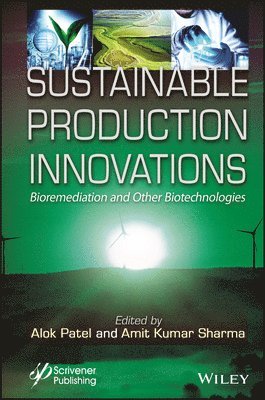
    Sustainable Production Innovations

    Bioremediation and Other Biotechnologies

    AvAlok Kumar Patel,Amit Kumar Sharma

    Inbunden, Engelska, 2023

    2 583 kr

    Beställningsvara. Skickas inom 5-8 vardagar. Fri frakt över 249 kr.

    Beskrivning

    SUSTAINABLE PRODUCTION INNOVATIONS Presenting the latest technologies and practices in this ever-changing field, this groundbreaking new volume covers the gambit for providing solutions and practical applications of smart and efficient energy systems. The global and climate changes we are witnessing are primarily driven by factors such as rising population, economic growth, and industrialization. These changes have led to an increase in atmospheric CO2, pollution, deforestation, water scarcity, and hunger, among other pressing issues. To ensure a green and sustainable future, it is crucial to harness renewable resources for the production of fuels, chemicals, and materials. The book, Sustainable Production Innovations, addresses several bioprocesses that are integral to our daily lives, tackling important topics such as biofuel production, energy and food security, and wastewater management. The commercial interest in biotechnological processes has grown significantly due to their ability to utilize biocatalysts such as enzymes, bacteria, plant cells, or animal cells in bioreactors for the production of medications, health supplements, foods, biofuels, and chemicals. Switching to bioproducts offers key benefits such as the sustainability of third-generation biofuels, CO2 sequestration, effective waste utilization, and meeting the increasing demand for clean water. The book explores various procedures used in biomass biorefineries and bioprocessing for the production of biofuels, biobased chemicals, and bioproducts. It also delves into advancements in utilizing oleaginous microorganisms for biofuels and nutraceuticals, biological wastewater treatment, and microplastic detection techniques in water. Additionally, the book covers topics such as biolubricant technologies, bioprocessing of agricultural and forest waste, biotechnological approaches in the cosmetic industry, and large-scale applications of nanomaterials for water treatment. Authored by experts from leading biotechnology research groups around the world, the book comprises 13 chapters featuring the latest research in each subject. It is a valuable resource for scholars in chemical engineering, applied microbiology, biotechnology, agricultural biotechnology, environmental biotechnology, and related fields, offering new insights into the sustainable use of renewable energy and biochemicals. Professionals, including biochemical engineers, phycologists, bioprocess engineers, chemical engineers, scientists, and researchers in the water, food, pharmaceutical, and renewable energy industries will find this book beneficial. Likewise, students and faculty in the chemical engineering and energy departments will gain valuable knowledge from its contents.

    Produktinformation

    • Utgivningsdatum:2023-08-15
    • Vikt:853 g
    • Format:Inbunden
    • Språk:Engelska
    • Antal sidor:464
    • Förlag:John Wiley & Sons Inc
    • ISBN:9781119791904

    Utforska kategorier

    • Elektronik och kommunikationer inom Naturvetenskap och teknik
    • Agronomi och lantbruk inom Naturvetenskap och teknik

    Mer om författaren

    Alok Patel, PhD, is an assistant professor in Biochemical Process Engineering, Lulea University of Technology, Lulea, Sweden and is the principal investigator of a project funded by the Swedish Research Council. He earned his PhD in biotechnology from IIT Roorkee in 2017, and his research interest is mainly focused on biofuels, biorefineries, and other biotechnologies. Amit Kumar Sharma, PhD, is an assistant professor in Applied Sciences Cluster, and Centre of Alternate Energy Research at the University of Petroleum and Energy Studies, Dehradun, Uttarakhand, India. He earned his PhD on microalgae-based fuels from UPES, and his research interest is mainly focused on biofuels, biorefineries, and other biotechnologies.

    Innehållsförteckning

    • 1 Biolubricant 1Danyang Cao, Leonidas Matsakas, Jie Zhang, Lisong Dong, Yijun Shi, Jiahua Zhu, Xin Feng, Xiaohua Lu and Liwen Mu1.1 Introduction 21.2 Biolubricant Base Oil 41.2.1 Edible and Non-Edible Oils 51.2.2 Waste Cooking Oils 71.2.3 Microbial Oils 91.2.4 Lignocellulose Base Oil 101.3 Upgrading Process for Biolubricant Base Oil 131.3.1 Esterification/Transesterification 141.3.2 Epoxidation, Ring Opening, and Acetylation 161.3.3 Selective Hydrogenation 191.4 Biolubricant Additive 211.4.1 Types of Lubricant Additives 221.4.1.1 Viscosity Index Improver 221.4.1.2 Antioxidant Agent 231.4.1.3 Extreme Pressure Anti-Wear Agent 241.4.1.4 Pour Point Depressant 251.4.1.5 Others Lubricant Additives 251.4.2 Green Lubricating Additive 261.4.2.1 Vegetable Oil Based Lubricant Additives 271.4.2.2 Lignin Additives for Lubricant Formulation 311.4.2.3 Cellulose Additives for Lubricant Formulation 351.4.2.4 Amino Acids for Green Lubricating Additive 371.5 Perspective 49References 512 Microbial Degradation of Plastics 57Cecil Antony, Praveen Kumar Ghodke, Saravanakumar Thiyagarajan, Tamilarasan Selvaraj, Sathiya Sivaprakasam and Amit Kumar Sharma2.1 Introduction 582.2 Plastic Polymers and Their Applications 592.2.1 Improved Consumer Health and Safety 602.2.2 Energy Savings 602.2.3 Material Conservation 612.2.4 Plastic Polymers and Their Future 612.3 Challenges in Plastic Waste Management 622.3.1 Problems Associated with Plastic Waste 622.3.2 Challenges Found in Plastic Waste Disposal 642.3.3 How Plastics Find Their Way into the Ecosystem 662.4 Environmental Hazards Caused by Plastics 672.4.1 Dissemination of Microplastics 682.4.2 Dissemination Route to Groundwater and Becoming Air Borne 682.4.3 Impacts of Microplastics on Soil Organisms 692.5 Microbial Plastic Degradation 692.5.1 Degradation of Plastics 702.5.2 Breakdown of Plastics by Microbes 712.5.3 Microbial Biomolecules and Plastic Degradation 722.5.4 Factors Affecting Plastic Biomineralization 732.6 Identification Methods of Microplastics 782.6.1 Visual Inspection Method 792.6.2 Detection Methods Based on Polymer Chemical Structure 802.6.2.1 Microplastic Identification with Artificial Intelligence Approach 842.7 Conclusion 88References 883 Biotechnological Advances in Cosmetic Industry 103Sneha Sawant Desai and Varsha Kelkar Mane3.1 Introduction 1043.2 Polysaccharides from Macroalgae 1053.2.1 Fucoidans 1053.2.2 Ulvan 1053.2.3 Alginate 1063.2.4 Carrageenan 1063.2.5 Porphyran 1063.3 Polysaccharides from Microalgae 1073.3.1 UV Protective Compounds 1073.4 Polyphenols 1093.5 Pigments 1113.5.1 Chlorophyll 1113.5.2 Carotenoids 1113.6 Vitamins 1133.7 Peptides and Amino Acids 1153.8 Current Scenario of Use of Algal Bio-Actives in Cosmetics 1153.9 Other Cosmetic Advances 1183.9.1 Growth Factors 1183.9.2 Enzymes 1193.9.3 Stem Cells 1193.9.4 Peptides 1203.9.5 miRNAs 1223.9.6 Personalized Skincare 1233.10 Conclusion 124References 1244 Large Scale Applications of Nanomaterials for Water Treatment: Challenges, Future Prospects, and the Visionary Future 137Sukanchan Palit and P.S. Ranjit4.1 Introduction 1384.2 Vast Scientific Doctrine and the March of Science in Nanomaterials and Engineered Nanomaterials 1394.3 The Scientific Vision of Bioremediation 1394.4 Applications of Nanomaterials for Water Treatment 1404.5 The Scientific Vision Behind Environmental Sustainability, Environmental Remediation, and the Road Ahead 1424.6 Recent Scientific Advancements in the Field of Nanomaterial Applications in Water Treatment 1434.7 Recent Scientific Advancements in the Field of Nanotechnology 1504.8 Arsenic and Heavy Metal Groundwater Remediation, Application of Nanomaterials, and the Road Ahead 1534.9 Conventional and Non-Conventional Environmental Engineering Techniques, the March of Engineering Science, and the Vast Vision for the Future 1564.10 The Status of Environmental Engineering Research in the Global Scenario and the Research Forays Ahead 1584.11 Future Scientific Recommendations and Future Flow of Scientific Thoughts 1594.12 Conclusion and Scientific and Engineering Perspectives 159References 1605 Green Technologies for Pesticide Contaminated Soil and Water 163Ahmad Rabbani, Akhilesh Kumar Mishra, Nishu Goyal and Smriti Arora5.1 Introduction 1645.2 Effect of Pesticides on Soil and Water Environment 1675.2.1 Deterioration of Water Quality Due to Pesticides 1685.2.2 Degradation of Soil Quality Due to Pesticides 1695.3 Bacterial Degradation and Bioremediation of Pesticides from Polluted and Contaminated Soil and Water 1705.3.1 Bioventing 1715.3.2 Biosparging 1715.3.3 Bioaugementation 1735.3.4 Land Farming 1745.3.5 Biopiling 1755.4 Phytoremediation: An Effective Alternative Method 1775.4.1 Phytotransformation 1795.4.2 Phytovolatilization 1805.4.3 Rhizoremediation 1815.5 Novel Approaches for More Effective Bioremediation 1825.5.1 Pesticides Biodegradation Using Recombinant Strains 1825.5.2 Microbial Enzymes and Pathways Involved in Pesticide Degradation 1835.6 Challenges and Future Prospects 1845.7 Conclusion 185References 1866 Microalgae as Source of High Value Compounds 193Dimitra Karageorgou and Petros Katapodis6.1 Introduction 1946.2 Produced Biocompounds and High-Value Products 1956.2.1 Lipids 1956.2.2 Protein and Amino Acids 1996.2.3 Carbohydrates 2016.2.4 Vitamins Production 2046.2.5 Pigments 2066.3 Conclusions 209Acknowledgements 210References 2107 Advance Biotechnological, Pharmaceutical, and Medicinal Applications of Chitinases 223Pradeep Kumar, Sangeta Saini, Mukesh Chand and Hari Om SharmaAbbreviation 2237.1 Introduction 2247.2 Classification of Chitinases 2257.3 Application of Chitinases 2257.3.1 Medicinal Importance of Chitinases 2257.3.2 Chitinase as Aging in COVID-19 2267.3.3 Role of Chitinases as Bioinsecticide 2267.3.4 Uses of AMCase for Asthma 2277.3.5 Chitinases as Diagnostic Biomarker 2277.3.6 CHI3L2 as Biochemical Marker for Osteoarthritis 2277.3.7 Chitinases as Antitumor Drugs 2287.3.8 Chitinase in Trichomoniasis Therapy 2287.4 Future Prospects 228Acknowledgements 229References 2298 Microbial Degradation of Plastics: Current Perspectives and Challenges 233Narasimhan Manoj Kumar, Govindasamy Sharmila and Chandrasekaran Muthukumaran8.1 Introduction 2348.2 Biodegradation of Natural Plastics 2358.2.1 Polyhydroxyalkanoates Biodegradation 2358.2.2 Polylactic Acid Biodegradation 2368.3 Biodegradation of Synthetic Plastics 2388.3.1 Polythene or Polyethylene Biodegradation 2388.3.2 Polyurethane Biodegradation 2418.3.3 Polyvinyl Chloride Biodegradation 2438.3.4 Polystyrene Biodegradation 2458.3.5 Polypropylene Biodegradation 2488.3.6 Polyethylene Terephthalate Biodegradation 2508.4 Conclusion and Prospects 264References 2659 Microbial Application in Food Industry 273Cecil Antony, Tamilarasam Selvaraj, Dinesh Mohanakrishnan, Praveen Kumar Ghodke, Sathiya Sivaprakasam and Amit Kumar Sharma9.1 Introduction 2749.1.1 Production of Enzymes 2749.1.2 Production of Organic Acids 2759.2 Production of Colouring Agents and Flavours in Food Industry 2789.3 Microbial Production of Flavour 2799.4 Production of Polyhydric Alcohols 2809.5 Production of Vitamins 2809.5.1 Fat-Soluble Vitamins 2819.5.2 Water Soluble Vitamins 2829.6 Production of Lipids and Glycolipids 2889.7 Microbes as Food 2899.8 Solid State Fermentation and Its Application in Food Industry 2929.9 Non-Beneficial or Food Borne Pathogens Detection 2939.9.1 Nucleic Acid-Based Pathogen Detection 2949.9.2 Immunological Based Methods 2949.9.3 Biosensor Based Methods 2959.9.3.1 Electrochemical Based Biosensors 2969.9.3.2 Optical-Based Biosensors 2979.9.3.3 Mass Based Biosensors 2989.10 Conclusions 299References 30010 Biotechnological Approaches of Algae 307Laxmi Mishra, Devvrat Pandey, Rahul Khan, Abhishek Singh, Nupur Gupta and Roshan Kumar10.1 Introduction 30810.2 Algal Biotechnology: Emerging Areas of Applications 30910.2.1 Bio-Energy 30910.2.1.1 Bio-Oil 30910.2.1.2 Bio-Diesel 31210.2.1.3 Bio-Gas 31310.2.2 Food Supplements 31410.2.3 Pigments 31510.2.4 Bioplastic: Alternatives to Petrochemical-Based Plastics 31610.2.5 Biocleanser 31710.3 Algal Biotechnology: Emerging Areas of Technology 31810.3.1 Algal Cultivation 31910.3.2 Harvesting and Downstream Processing 32010.3.3 Genetic Engineering 32110.3.4 Genetic Screening: Phenomics 32210.4 Conclusion 323References 32411 Cellulases: An Approach Towards Current Advances in Biofuel Conversion and Future Prospects 335Pradeep Kumar, Mukesh Chand, Sangeta Saini and Sandeep Kumar11.1 Introduction 33511.2 Source of Cellulases 33711.3 Cellulase Structure 33711.4 Cellulase Mechanism 33811.5 Production of Cellulases 33811.6 Application of Cellulases 33911.7 Production of Bioethanol from Lignocellulose 34011.8 Conclusion 34211.8.1 Future Prospects 342Acknowledgements 342References 34312 Extraction of Biofuels and Valuable Products (Essential Fatty Acids) from Microalgae: The Greenhouse Gas Emissions 345Sakshi Chaudhary, Pragya Chaturvedi, Deepti Chaudhary and Roshan Kumar12.1 Introduction 34612.2 Why is Biofuel Necessary? 34812.3 Biofuel Production Technology 35012.4 Conversion of Microalgae to Biofuel 35112.4.1 Cultivation of Microalgae 35112.4.2 Harvesting 35212.4.3 Drying and Dewatering 35212.4.4 Extraction of Oil 35212.5 Lipid Extraction Techniques 35212.6 Principal Products Acquired from Microalgae 35412.6.1 Bioactive Compounds 35512.6.1.1 Proteins from Microalgae 35512.6.1.2 Pigments Obtained from Microalgal Biomass: β-Carotene, Lycopene, Astaxanthin, and Phycobiliproteins 35612.6.1.3 Compounds with Antioxidant Function 35612.6.1.4 Compounds with Antimicrobial Activity 35712.6.1.5 Compounds with Anti-Inflammatory Action 35812.6.1.6 Compounds with Health Promoting Functions 35912.6.1.7 Compounds with Potential for Degenerative Diseases 36012.6.1.8 Secondary Metabolites with Potential Commercial Value 36012.7 Conclusion 361References 36113 Bioprocessing of Agricultural and Forest Waste 367Praveen Kumar Ghodke, Cecil Anthony and Amit Kumar Sharma13.1 Introduction 36813.2 Agricultural Residues 37113.3 Forest Waste 37313.4 Biomass Composition 37413.5 Anaerobic Digestion 37913.6 Dark Fermentation 38213.7 Photofermentation Bio-Processing Technologies 38613.8 Dark- and Photo-Fermentation Bioprocessing 38713.9 Conclusions 389References 390Index 395