• Fri frakt över 249 kr
  • •
  • Snabba leveranser
  • •
  • Billiga böcker
Kundservice

Du är på sajten för privatpersoner.

Företag, bibliotek eller offentlig verksamhet?

Du handlar på classic.bokus.com, där alla dina funktioner finns intakta.
Till classic.bokus.com
Bokus logotyp. Gå till startsidan.
  • Erbjudanden
  • Nyheter
  • Student
  • Topplistor
  • Barn & ungdom
  • Bokus Play
  • E-böcker
  • Pocketböcker
  • Spel & pussel

10% rabatt på allt med kod: NYSTART10 →

Sidfot

Mina sidor

    Hjälp

    • Kundservice
    • Vanliga frågor och svar
    • Frakt och leverans
    • Retur vid ångerrätt
    • Reklamera vara
    • Betalning
    • Köpvillkor
    • Allmänna villkor
    • Information om webbplatsens tillgänglighet

    Om Bokus

    • Om oss
    • Pressrum
    • För studenter
    • För företag
    • För bibliotek och offentlig verksamhet
    • För leverantörer
    • Hållbarhet

    Populärt

    • Aktuella erbjudanden
    • Presentkort
    • Studentlitteratur
    • Nya böcker
    • Topplistor
    • Signerade böcker
    • Engelska böcker

    Inspiration

    • Boktips
    • BookTok
    • Populära bokserier
    • Barnbokskaraktärer
    • Populära författare
    Logotyp för Bokus
    Följ oss på Facebook (extern länk)Följ oss på Instagram (extern länk)Följ oss på YouTube (extern länk)Följ oss på TikTok (extern länk)
    bokus @ CookiesAnpassa cookiesIntegritetspolicyKöpvillkor
    Till Citymail hemsida (extern länk)Till Budbee hemsida (extern länk)Till Postnord hemsida (extern länk)Till Schenker hemsida (extern länk)Till Early Bird hemsida (extern länk)Till Walleys hemsida (extern länk)
    1. Naturvetenskap och teknik
    2. Geovetenskap
    3. Geovetenskap

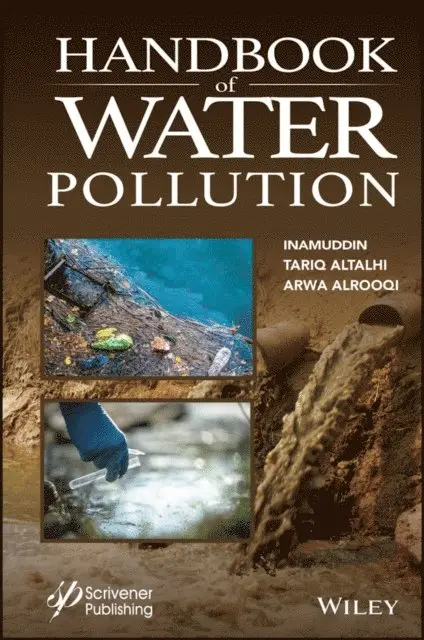
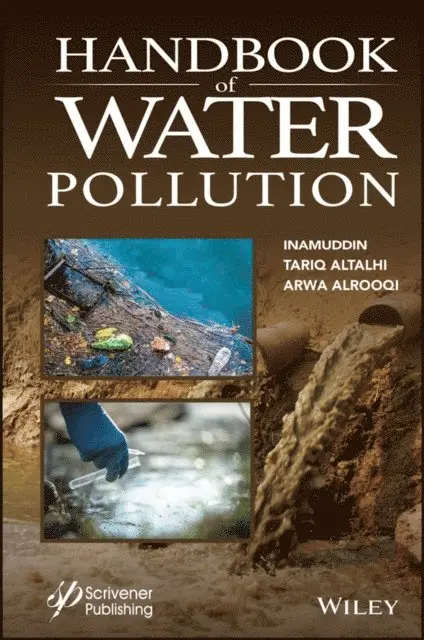
    Handbook of Water Pollution

    AvInamuddin,Tariq Altalhi

    Inbunden, Engelska, 2024

    2 644 kr

    Beställningsvara. Skickas inom 5-8 vardagar. Fri frakt över 249 kr.
    Beskrivning

    HANDBOOK of WATER POLLUTION Handbook of Water Pollution discusses a wide range of contaminants heavily affecting our environment and water bodies. The chapters discuss heavy metals, metalloids, pesticides, explosives, toxic chemicals, dyes, plastics, e-wastes, fertilizers, detergents, nitrates/nitrites, phosphates, hydrocarbons, and fecal wastes, along with their sources of action against our environment, their methods of analysis, and finally, their treatments are all presented in detail. Our environment is heavily affected due to extreme human activities. Environmental pollution is a major concern worldwide. Within this, water pollution is one of the major challenges that puts the total ecology at risk. Water pollution is alarming everywhere; many governing authorities believe it is also an unavoidable result of human activity. However, the economic cost of water pollution far outweighs the benefits of skimping on its cause. Water pollution is not just merely related to financial cost but related to all living beings. Toxic waste is getting into the water bodies in various regions, causing many illnesses in humans and poisoning other living things. The destruction of any single component of our ecosystem can have a devastating effect on our biodiversity. Therefore, it is necessary to understand the causes of pollution, their nature and mechanism, and, at the same time, study the remedies. The major causes of water pollution are industrial waste, sewage, plastics, oil leakage, biological organisms, toxic chemicals and radioactive waste, and so on. A tremendous amount of research work is going on around the world to understand the causes, their mechanism, and solutions. Many new works are published every day, therefore it’s important to gather some of the most relevant findings in one place. This will serve as a link between collected knowledge and current advancements, while also facilitating future thinking.

    Produktinformation

    • Utgivningsdatum:2024-03-11
    • Vikt:1 066 g
    • Format:Inbunden
    • Språk:Engelska
    • Antal sidor:560
    • Förlag:John Wiley & Sons Inc
    • ISBN:9781119904809

    Utforska kategorier

    • Geovetenskap inom Naturvetenskap och teknik
    • Byggnadsteknik inom Naturvetenskap och teknik

    Mer om författaren

    Inamuddin, PhD, is an assistant professor at the Department of Applied Chemistry, Zakir Husain College of Engineering and Technology, Faculty of Engineering and Technology, Aligarh Muslim University, Aligarh, India. He has extensive research experience in multidisciplinary fields of analytical chemistry, materials chemistry, electrochemistry, renewable energy, and environmental science. He has worked on different research projects funded by various government agencies and universities and is the recipient of awards, including the Department of Science and Technology, India, Fast-Track Young Scientist Award and Young Researcher of the Year Award 2020 from Aligarh Muslim University. He has published about 210 research articles in various international scientific journals, 18 book chapters, and 170 edited books with multiple well-known publishers. His current research interests include ion exchange materials, a sensor for heavy metal ions, biofuel cells, supercapacitors, and bending actuators. Tariq Altalhi, PhD, is working as an associate professor in the Department of Chemistry at Taif University, Saudi Arabia, where he has served as the head of the chemistry department and vice dean of the science college. He has co-edited various scientific books and established key contacts in major industries in Saudi Arabia. His group is involved in fundamental multidisciplinary research in nanomaterial synthesis and engineering, characterization, and application in molecular separation, desalination, membrane systems, drug delivery, and biosensing. Arwa Alrooqi is pursuing her PhD in appplied chemistry and working as lecturer at the Department of Chemistry, Faculty of Science, Al Baha University, Saudi Arabia. Her thesis title is “Smart Organic Semiconductors Materials”. She has published several research articles in the journals of international repute. She is actively involved in fundamental multidisciplinary research in the area of organic semiconductors and nanomaterials synthesis and engineering, characterization, and their application in smart windows.

    Innehållsförteckning

    • 1 Introduction to Water Pollution 1Hira Munir, Areeba Kashaf, Mahnoor Masood, Rabia Sajid, Hira Amjad, Tahreem Shehzadi and Jawayria Najeeb1.1 Pollution 21.2 What is Water Pollution? 21.3 Prevalence of Water Pollution 41.4 Categories of Water Pollution 41.5 Water Pollutants 71.6 Kinds of Water Pollution 111.7 Determination of Water Quality Parameters 131.8 Sources of Water Pollution 151.9 Effects of Water Pollution on Humans and Animals 171.10 Prevention of Water Pollution 191.11 Control and Prevention of Water Pollution by Biotechnology 221.12 Conclusion 232 Impact of Water Pollution & Perspective Techniques to Mitigate It: An Overview 29Ambika Sudan, Arpita Ghosh, Mehak Verma and Pushpachaudhary Tomar2.1 Introduction 302.2 Causes of Water Pollution 332.3 Effects of Water Pollution on Plant Growth 352.4 Techniques of Treating Water Pollution 372.5 Removal of Pollutants Through Different Nanomaterial 482.6 Discussion and Conclusion 563 Pollution of Ground and Surface Waters with Agrochemicals 65Aloo B. N.3.1 Introduction 653.2 A Recounting of the Global Production and Consumption of Agrochemicals 673.3 Characteristics of Agrochemicals 703.4 Occurrences and Levels of Pollution 703.5 Fates of Agrochemicals in Ground and Surface Waters 813.6 Emerging Views and Perspectives 853.7 Concluding Remarks 864 Fecal Waste Drives Antimicrobial Resistance: Source Tracking, Wastewater Discriminant Analysis and Management 97Eliezer Ladeia Gomes, Giovanna Velicka Monteiro Vallio, Laura Plazas Tovar, Lucas Bragança de Oliveira, Luiz Sidney Longo Junior, Sarah Isabel Pinto Monteiro do Nascimento Alves, Vinícius Matheus Silva Macedo and Romilda Fernandez-Felisbino4.1 Introduction 984.2 Antibiotics/ARB/ARGs: Source Tracking 1014.3 Fecal Pollution and the Public Health Risks 1044.4 Fecal Indicator Bacteria and Discriminant Analysis 1084.5 Management Strategies to Combat Antibiotic Resistance 1094.6 Conclusion 1125 Harmful Effects of Water Pollution 123C. Justin Dhanaraj5.1 Introduction 1235.2 Physical Factors 1245.3 Chemical Factors 1265.4 Biological Factors 1405.5 Conclusion 1466 Parasites: Sources, Method of Analysis and Treatment 149Gopikrishnan, T.6.1 Introduction 1496.2 Method of Analysis 1526.3 Methods to Find Concentration of Parasites 1546.4 Procedures for Enumeration of Parasites 1576.5 Waterborne Protozoan Parasites 1616.6 Protozoan Parasite Testing in Water 1626.7 Waterborne Helminths 1636.8 Water Treatment 1666.9 Nanotechnology 1706.10 Conclusions 1747 Oils: Source, Method of Analysis and Treatment 181Hüseyin Kara, Mustafa Talha Gönüllü, Ismail Tarhan, Fatih Erci, Aslan Tas and Fatih Durmaz7.1 Introduction 1827.2 Oils Causing Pollution and Their Sources 1847.3 Method of Analysis 1947.4 Treatment 1987.5 Conclusion 2248 Phosphate: Sources, Method of Analysis and Treatment 235S. Sathiyamurthi, S. Nalini and M. Sivasakthi8.1 Introduction 2358.2 Sources of Phosphate Pollution in Water 2368.3 Method of Analysis 2378.4 Phosphate Removal Treatment 2398.5 Conclusion 2649 Endocrine Disruptors: Sources, Method of Analysis and Treatment 281María-José Luján-Facundo, Eva Ferrer-Polonio, María-Amparo Bes Piá and J.A. Mendoza-Roca9.1 Introduction 2829.2 Parabens: Sources, Method of Analysis and Treatment 2879.3 Alkylphenol Ethoxylates: Sources, Method of Analysis and Treatment 2959.4 Bisphenols: Sources, Method of Analysis and Treatment 3019.5 Phthalates: Sources, Method of Analysis and Treatment 3099.6 Conclusions 31510 Water Pollution by Heavy Metals and Their Impact on Human Health 333Biplab Roy, Biswanath Bhunia, Tarun Kanti Bandyopadhyay, Shamim Ahmed Khan, Nishithendu Bikash Nandi and Pinku Chandra Nath10.1 Introduction 33410.2 Sources of Heavy Metals 33510.3 Heavy Metals in Water and Their Toxic Effect on Human Health 33710.4 Different Water Treatment Techniques for Removal of Heavy Metal from Polluted Water 34310.5 Conclusion 34811 Dyes: Sources, Method of Analysis and Treatment 353K. Ravichandran, N. Chidhambaram, M. Ayyanar, P. Kavitha, Arun Thirumurugan, S. Sriram and R. Shalini11.1 Introduction 35411.2 Classification of Dyes 35511.3 Analysis of Dye Pollution 35511.4 Treatments for Removing Dye Pollution from Water 35711.5 Conclusions 36612 Pharmaceutical Pollution of Water Bodies: Sources, Impacts, and Mitigation 371Suby Mon Benny, Sriparna Datta Gupta, Shahi P. Ismail and Dileep Francis12.1 Introduction 37212.2 Pharmaceutical Pollution: The Global Scenario 37412.3 Sources of Pharmaceutical Pollution 38212.4 Factors Affecting Pharmaceutical Pollution 38812.5 Impacts of Pharmaceutical Pollution 39012.6 Mitigation and Surveillance 39812.7 Conclusions and Perspectives 40513 Instrumental Testing of Quality of Water 417Amita Chaudhary and Ankur Dwivedi13.1 Introduction 41713.2 Conclusion 43714 Catalytic Membranes for Water Pollution 441J.E. Castanheiro, P.A. Mourão, I. Cansado and M.E. Lopes14.1 Introduction 44114.2 Configuration of Reactors 44214.3 Membrane Reactor for Water Treatment 44514.4 Conclusions 44815 LDH-Based Materials for Photocatalytic Dye Degradation 453Priyadharshini M., Bhuvaneswari K., Palanisamy G. and Pazhanivel T.15.1 Introduction 45315.2 Dye Degradation 45515.3 Factors Affecting Efficient Degradation 45715.4 Layered Double Hydroxide Materials (LDH) 45915.5 Polyoxometalates Metal-Based LDH Composite 45915.6 Carbon-Based LDH Composite 46115.7 Semiconductor-Based LDH Composite 46215.8 Conclusion and Future Perspectives 46516 Biomineralization as a Strategy for the Bioremediation of Toxic Metals--Contaminated Water 471Charles Rashama, Munashe Maposa, Knowledge Nyenyayi and Marko Chigondo16.1 Introduction 47216.2 Minerals Commonly Found in Water and their Effects 47316.3 Justification for Toxic Metal Detoxification 47416.4 Water-Based Metal Detoxification through Biomineralisation 47516.5 Concluding Remarks and Future Outlook 48617 Phytoremediation of Radioactive Pollutants 491Siratun Montaha. S. Shaikh, Puspita Barik, Smita S. Aditya, M. T. Jowin Joseph, M. Suresh Kumar and P. V. Nidheesh17.1 Introduction 49217.2 Advancement in Methodologies for Phytoremediation of Radionuclides: From Conventional to Novel Approaches 49317.3 Preliminary Assessment of the Contaminated Site for Phytoremediation 50117.4 Screening of Plants for Effective Uptake of Radionuclides 50217.5 Augmentation for Radionuclide Bioavailability 50617.6 Post-Phytoremediation Management of Radionuclides 50817.6.1 Pre-Treatment of Biomass 50817.6.2 Final Disposal Methods 51017.7 Conclusion 512Acknowledgment 513References 513Index 523