• Fri frakt över 249 kr
  • •
  • Snabba leveranser
  • •
  • Billiga böcker
Kundservice

Du är på sajten för privatpersoner.

Företag, bibliotek eller offentlig verksamhet?

Du handlar på classic.bokus.com, där alla dina funktioner finns intakta.
Till classic.bokus.com
Bokus logotyp. Gå till startsidan.
  • Erbjudanden
  • Nyheter
  • Student
  • Topplistor
  • Barn & ungdom
  • Bokus Play
  • E-böcker
  • Pocketböcker
  • Spel & pussel

10% studentrabatt med kod TERM26

Sidfot

Mina sidor

    Hjälp

    • Kundservice
    • Vanliga frågor och svar
    • Frakt och leverans
    • Retur vid ångerrätt
    • Reklamera vara
    • Betalning
    • Köpvillkor
    • Allmänna villkor
    • Information om webbplatsens tillgänglighet

    Om Bokus

    • Om oss
    • Pressrum
    • För studenter
    • För företag
    • För bibliotek och offentlig verksamhet
    • För leverantörer
    • Hållbarhet

    Populärt

    • Aktuella erbjudanden
    • Presentkort
    • Studentlitteratur
    • Nya böcker
    • Topplistor
    • Signerade böcker
    • Engelska böcker

    Inspiration

    • Boktips
    • BookTok
    • Populära bokserier
    • Barnbokskaraktärer
    • Populära författare
    Logotyp för Bokus
    Följ oss på Facebook (extern länk)Följ oss på Instagram (extern länk)Följ oss på YouTube (extern länk)Följ oss på TikTok (extern länk)
    bokus @ CookiesAnpassa cookiesIntegritetspolicyKöpvillkor
    Till Citymail hemsida (extern länk)Till Budbee hemsida (extern länk)Till Postnord hemsida (extern länk)Till Schenker hemsida (extern länk)Till Early Bird hemsida (extern länk)Till Walleys hemsida (extern länk)
    1. Naturvetenskap och teknik
    2. Geovetenskap
    3. Geovetenskap

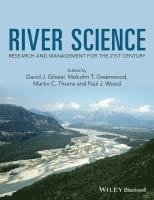
    River Science

    Research and Management for the 21st Century

    AvDavid J. Gilvear,Malcolm T. Greenwood

    Inbunden, Engelska, 2016

    1 290 kr

    Beställningsvara. Skickas inom 11-20 vardagar. Fri frakt över 249 kr.

    Beskrivning

    River Science is a rapidly developing interdisciplinary field at the interface of the natural sciences, engineering and socio-political sciences. It recognises that the sustainable management of contemporary rivers will increasingly require new ways of characterising them to enable engagement with the diverse range of stakeholders.This volume represents the outcome of research by many of the authors and their colleagues over the last 40 years and demonstrates the integral role that River Science now plays in underpinning our understanding of the functioning of natural ecosystems, and how societal demands and historic changes have affected these systems. The book will inform academics, policy makers and society in general of the benefits of healthy functioning riverine systems, and will increase awareness of the wide range of ecosystem goods and services they provide.

    Produktinformation

    • Utgivningsdatum:2016-05-06
    • Mått:191 x 249 x 25 mm
    • Vikt:1 043 g
    • Format:Inbunden
    • Språk:Engelska
    • Antal sidor:416
    • Förlag:John Wiley and Sons Ltd
    • ISBN:9781119994343

    Utforska kategorier

    • Geovetenskap inom Naturvetenskap och teknik

    Mer om författaren

    David Gilvear is a Professor of River Science at the University of Plymouth, UK. His river research has been at the hydrology, geomorphology and ecology interface within a geographically-led space-time framework - inspired by his PhD supervisor, Professor Petts. The majority of research has been in response to catchment specific, national or global issues in river management and as such he has worked with industry, environmental bodies and regulatory authorities.Malcolm Greenwood is an ecologist, with a special interest in entomology, and is now retired from Loughborough University. He has worked closely with Professor Petts over many years, bringing together the biological principles appropriate to our understanding of contemporary and palaeo river systems, including the changes brought about by river engineering and management practices.Martin Thoms is a Professor of River Science at the University of New England, Armidale, Australia. He believes the most exciting research is undertaken at boundaries – the boundaries between different disciplines, the science-management-policy boundary and the boundaries between rivers and their floodplains. His research in this domain has occurred in both national and international settings.Paul Wood is Professor of Ecohydrology at Loughborough University, UK. His research encompasses the disciplines of hydrology, ecology, geomorphology and environmental management to address contemporary questions in River Science. His research is centred on environmental flows and the effects of disturbances in surface and groundwater dominated systems.

    Innehållsförteckning

    • List of contributors, ix Preface, xiiiKen J. Gregory1 An introduction to river science: research and applications, 1Martin C. Thoms, David J. Gilvear, Malcolm T. Greenwood and Paul J. WoodPart 1 Fundamental principles of river science2 An ecosystem framework for river science and management, 15Michael D. Delong and Martin C. Thoms3 Fine sediment transport and management, 37Desmond E. Walling and Adrian L. Collins4 Linking the past to the present: the use of palaeoenvironmental data for establishing reference conditions for the Water Framework Directive, 61Ian Foster and Malcolm T. Greenwood5 Achieving the aquatic ecosystem perspective: integrating interdisciplinary approaches to describe instream ecohydraulic processes, 84John M. Nestler, Claudio Baigún and Ian Maddock6 Measuring spatial patterns in floodplains: A step towards understanding the complexity of floodplain ecosystems, 103Murray Scown, Martin C. Thoms and Nathan R. De Jager7 Trees, wood and river morphodynamics: results from 15 years research on the Tagliamento River, Italy, 132Angela M. Gurnell8 The Milner and Petts (1994) conceptual model of community structure within glacier-fed rivers: 20 years on, 156Alexander M. Milner9 Remote sensing: mapping natural and managed river corridors from the micro to the network scale, 171David J. Gilvear, Peter Hunter and Michael Stewardson10 Monitoring the resilience of rivers as social–ecological systems: a paradigm shift for river assessment in the twenty-first century, 197Melissa Parsons, Martin C. Thoms, Joseph Flotemersch and Michael ReidPart 2 Contemporary river science11 Faunal response to fine sediment deposition in urban rivers, 223Paul J. Wood, Patrick D. Armitage, Matthew J. Hill, Kate L. Mathers and Jonathan Millett12 Characterising riverine landscapes; history, application and future challenges, 239Victoria S. Milner, David J. Gilvear and Martin C. Thoms13 Thermal diversity and the phenology of floodplain aquatic biota, 259Jack A. Stanford, Michelle L. Anderson, Brian L. Reid, Samantha D. Chilcote and Thomas S. Bansak14 Microthermal variability in a Welsh upland stream, 279Laura Gangi, David M. Hannah and Markus Weiler15 River resource management and the effects of changing landscapes and climate, 295James A. Gore, James Banning and Andrew F. Casper16 River restoration: from site-specific rehabilitation design towards ecosystem-based approaches, 313Jenny Mant, Andy Large and Malcolm Newson17 Ecosystem services of streams and rivers, 335J. Alan Yeakley, David Ervin, Heejun Chang, Elise F. Granek, Veronica Dujon,Vivek Shandas and Darrell Brown18 Managing rivers in a changing climate, 353Robert L. Wilby19 Conclusion: The discipline of river science, 372David J. Gilvear, Malcolm T. Greenwood, Martin C. Thoms and Paul J. WoodIndex, 379