Role of Employer Associations and Labour Unions in the EMU
Franz Traxler, Gerhard Huemer, Michael Mesch
489 kr
AvGerhard Huemer,Franz Traxler
4 694 kr
Läs direkt i Bokus Reader – eller ladda ned till din enhet
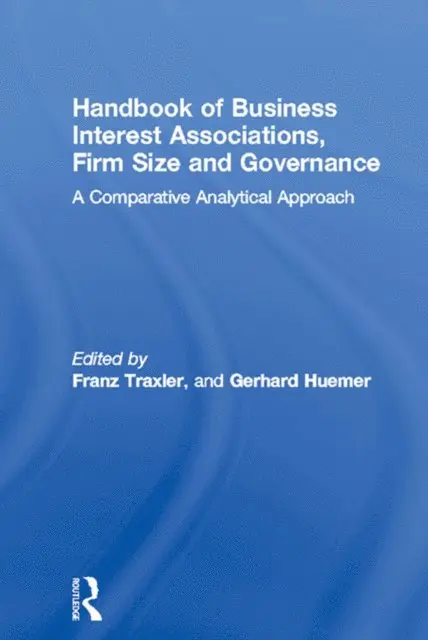
This Handbook presents a theory of Business Interest Associations and fifteen empirical country by country case studies in the EU.
The book is organized into three main parts. Part I develops a theory of business associations which centres on firm size as the key explanatory variable. Part II consists of country studies covering the EU-15, which are written along strictly comparable lines of analysis. Part III contains the cross-nationally comparative analysis.
The book will make essential reading for researchers working in organization studies, industrial relations, industrial sociology and political science, as well as practioners in related fields.
AvGerhard Huemer,Franz Traxler
4 694 kr
Läs direkt i Bokus Reader – eller ladda ned till din enhet
This Handbook presents a theory of Business Interest Associations and fifteen empirical country by country case studies in the EU.
The book is organized into three main parts. Part I develops a theory of business associations which centres on firm size as the key explanatory variable. Part II consists of country studies covering the EU-15, which are written along strictly comparable lines of analysis. Part III contains the cross-nationally comparative analysis.
The book will make essential reading for researchers working in organization studies, industrial relations, industrial sociology and political science, as well as practioners in related fields.
AvGerhard Huemer,Franz Traxler
4 694 kr
Läs direkt i Bokus Reader – eller ladda ned till din enhet
This Handbook presents a theory of Business Interest Associations and fifteen empirical country by country case studies in the EU.
The book is organized into three main parts. Part I develops a theory of business associations which centres on firm size as the key explanatory variable. Part II consists of country studies covering the EU-15, which are written along strictly comparable lines of analysis. Part III contains the cross-nationally comparative analysis.
The book will make essential reading for researchers working in organization studies, industrial relations, industrial sociology and political science, as well as practioners in related fields.