• Fri frakt över 249 kr
  • •
  • Snabba leveranser
  • •
  • Billiga böcker
Kundservice

Du är på sajten för privatpersoner.

Företag, bibliotek eller offentlig verksamhet?

Du handlar på classic.bokus.com, där alla dina funktioner finns intakta.
Till classic.bokus.com
Bokus logotyp. Gå till startsidan.
  • Erbjudanden
  • Nyheter
  • Student
  • Topplistor
  • Barn & ungdom
  • Bokus Play
  • E-böcker
  • Pocketböcker
  • Spel & pussel

10% rabatt på allt med kod NYSTART10 →

Sidfot

Mina sidor

    Hjälp

    • Kundservice
    • Vanliga frågor och svar
    • Frakt och leverans
    • Retur vid ångerrätt
    • Reklamera vara
    • Betalning
    • Köpvillkor
    • Allmänna villkor
    • Information om webbplatsens tillgänglighet

    Om Bokus

    • Om oss
    • Pressrum
    • För studenter
    • För företag
    • För bibliotek och offentlig verksamhet
    • För leverantörer
    • Hållbarhet

    Populärt

    • Aktuella erbjudanden
    • Presentkort
    • Studentlitteratur
    • Nya böcker
    • Topplistor
    • Signerade böcker
    • Engelska böcker

    Inspiration

    • Boktips
    • BookTok
    • Populära bokserier
    • Barnbokskaraktärer
    • Populära författare
    Logotyp för Bokus
    Följ oss på Facebook (extern länk)Följ oss på Instagram (extern länk)Följ oss på YouTube (extern länk)Följ oss på TikTok (extern länk)
    bokus @ CookiesAnpassa cookiesIntegritetspolicyKöpvillkor
    Till Citymail hemsida (extern länk)Till Budbee hemsida (extern länk)Till Postnord hemsida (extern länk)Till Schenker hemsida (extern länk)Till Early Bird hemsida (extern länk)Till Walleys hemsida (extern länk)
    1. Ekonomi och Ledarskap
    2. Nationalekonomi
    3. Mikroekonomi

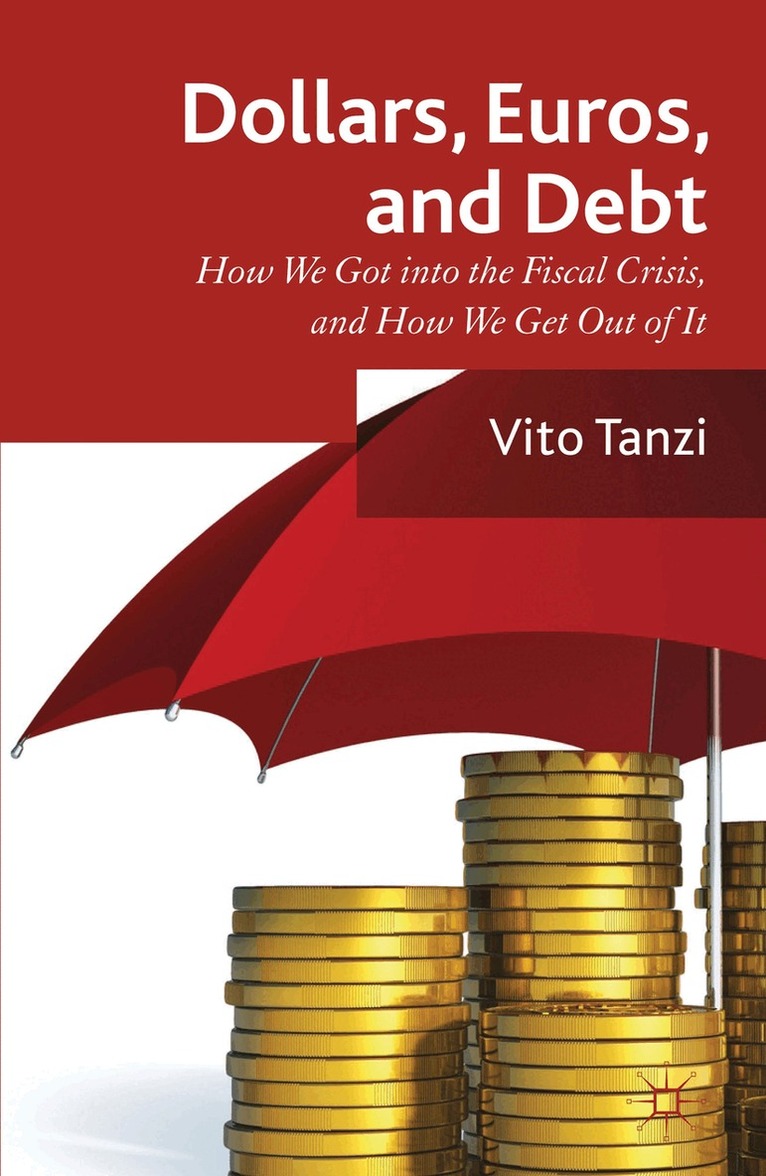
    Dollar, Euros and Debt

    How We Got into the Fiscal Crisis and How We Get Out of It

    AvVito Tanzi

    Inbunden, Engelska, 2013

    1 118 kr

    Beställningsvara. Skickas inom 10-15 vardagar. Fri frakt över 249 kr.

    Beskrivning

    Dollar, Euro's and Debt discusses the recent financial, economic, and fiscal crisis. It argues that the focus that has been put on cyclical aspects of the crisis has missed the fundamental point, that the crisis is largely structural, even though cyclical factors (the sub-prime problem) may have precipitated, or better anticipated, it.

    Produktinformation

    • Utgivningsdatum:2013-08-20
    • Mått:140 x 216 x 16 mm
    • Vikt:368 g
    • Format:Inbunden
    • Språk:Engelska
    • Antal sidor:189
    • Upplaga:2013
    • Förlag:Palgrave Macmillan
    • ISBN:9781137346469

    Utforska kategorier

    • Mikroekonomi inom Ekonomi och Ledarskap
    • Makroekonomi inom Ekonomi och Ledarskap
    • Finanskriser inom Ekonomi och Ledarskap

    Mer om författaren

    Vito Tanzi received his PhD in Economics from Harvard University in the USA. He was the Chief of Tax Policy (1974–1981) and Director of Fiscal Affairs Department (1981–2000) at the International Monetary Fund. He was the President of the International Institute of Public Finance (1990), and Undersecretary for Economy and Finance in the Italian Government (2001). He has worked as a consultant for severalinternational organizations and is the recipient of five honorary degrees. Tanzi haswritten and edited numerous publications. His most recent books are Governmentversus Markets (2011) and Recent Contributions to Public Economics, (in two volumes, 2011). He has published hundreds of articles in professional journals.

    Innehållsförteckning

    • Table of Contents 1. Introduction 2. The Crisis and the Calls for Policy Responses 3. Central Banks as Lenders of Last Resort 4. Pressures on Germany to Help Save the Euro 5. The Fiscal Situation before the Crisis 6. The EMU Rules and Goodhart Law 7. On Public Debts, Fiscal Deficits and The Maastricht Rules 8. Fiscal Policy during the Recent Recession 9. Fiscal Policy and the Fiction of Fungible Labor 10. The EMU and the USA: What Are the Differences? 11. Trade Balances within Monetary Unions 12. Central Banks' Payment Systems within Monetary Unions 13. Strategies to Get out of the Fiscal Crises 14. Is there a Fundamental Law of Public Expenditure Growth? 15. Concluding Remarks