• Fri frakt över 249 kr
  • •
  • Snabba leveranser
  • •
  • Billiga böcker
Kundservice

Du är på sajten för privatpersoner.

Företag, bibliotek eller offentlig verksamhet?

Du handlar på classic.bokus.com, där alla dina funktioner finns intakta.
Till classic.bokus.com
Bokus logotyp. Gå till startsidan.
  • Erbjudanden
  • Nyheter
  • Student
  • Topplistor
  • Barn & ungdom
  • Bokus Play
  • E-böcker
  • Pocketböcker
  • Spel & pussel

10% rabatt på allt med kod: NYSTART10 →

Sidfot

Mina sidor

    Hjälp

    • Kundservice
    • Vanliga frågor och svar
    • Frakt och leverans
    • Retur vid ångerrätt
    • Reklamera vara
    • Betalning
    • Köpvillkor
    • Allmänna villkor
    • Information om webbplatsens tillgänglighet

    Om Bokus

    • Om oss
    • Pressrum
    • För studenter
    • För företag
    • För bibliotek och offentlig verksamhet
    • För leverantörer
    • Hållbarhet

    Populärt

    • Aktuella erbjudanden
    • Presentkort
    • Studentlitteratur
    • Nya böcker
    • Topplistor
    • Signerade böcker
    • Engelska böcker

    Inspiration

    • Boktips
    • BookTok
    • Populära bokserier
    • Barnbokskaraktärer
    • Populära författare
    Logotyp för Bokus
    Följ oss på Facebook (extern länk)Följ oss på Instagram (extern länk)Följ oss på YouTube (extern länk)Följ oss på TikTok (extern länk)
    bokus @ CookiesAnpassa cookiesIntegritetspolicyKöpvillkor
    Till Citymail hemsida (extern länk)Till Budbee hemsida (extern länk)Till Postnord hemsida (extern länk)Till Schenker hemsida (extern länk)Till Early Bird hemsida (extern länk)Till Walleys hemsida (extern länk)
    1. Ekonomi och Ledarskap
    2. Nationalekonomi
    3. Internationell ekonomi

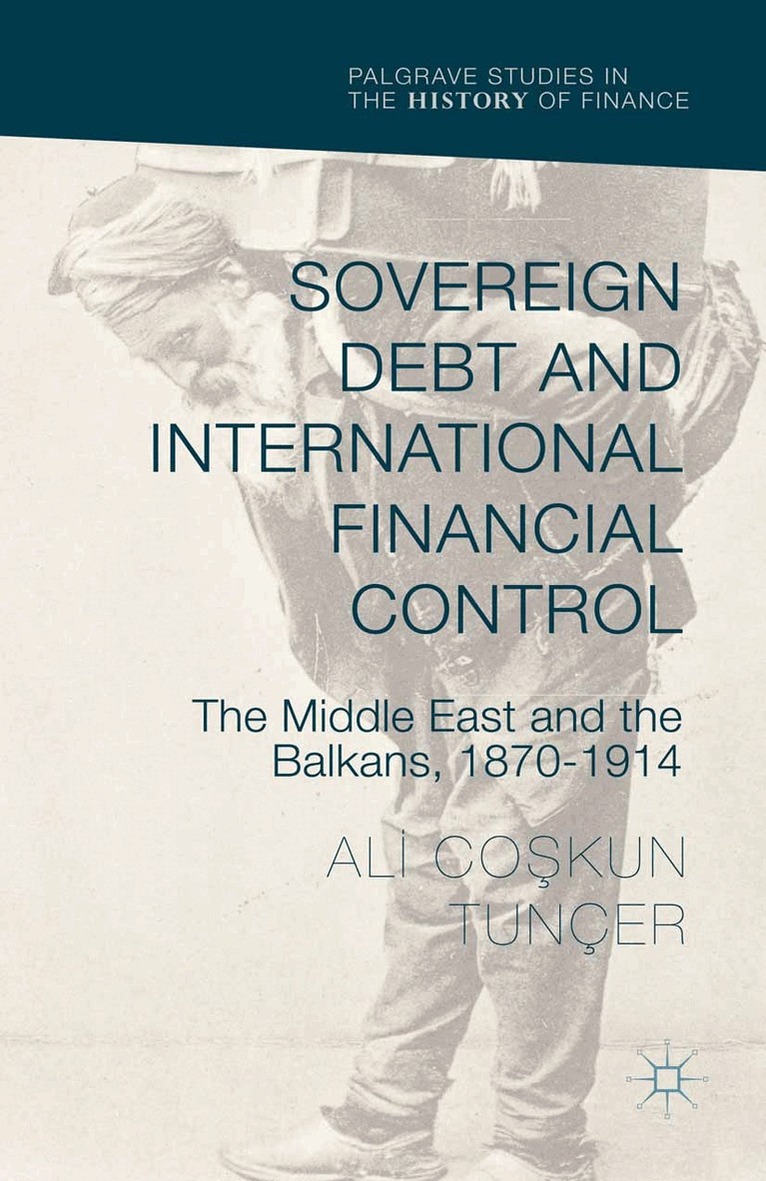
    Sovereign Debt and International Financial Control

    The Middle East and the Balkans, 1870–1914

    AvAli Co?kun Tunçer

    Inbunden, Engelska, 2015

    Del i serien Palgrave Studies in the History of Finance

    1 563 kr

    Beställningsvara. Skickas inom 10-15 vardagar. Fri frakt över 249 kr.

    Fler format och utgåvor

    E-bok

    2 064 kr

    Beskrivning

    This book revisits an important chapter of financial history in the Middle East and the Balkans from 1870 1914. During this period, capital flows in the form of sovereign debt increased rapidly throughout the region. The spiral of heavy government borrowing eventually culminated in defaults on foreign obligations in the Ottoman Empire (1875), Egypt (1876), Greece (1893) and Serbia (1895). In all four cases, introducing international financial control over the finances of the debtor states became the prevalent form of dealing with defaults. The different cases of international financial control became increasingly refined and they marked important milestones in the evolution of the global governance of sovereign debt before 1914. For the defaulting states however, the immediate impact of international financial control was infringement of sovereignty. The extent of international financial control and the borrowing capacity of debtor states varied in each case as well as the degree of resistance towards it. This book documents the characteristics of international financial control in a comparative perspective. It relates sovereign debt, default and international financial control to political and fiscal systems, and raises questions about the tension between national sovereignty and global capital. It sheds light on the impact of international financial control on the long-term credibility and fiscal capacity of the debtor states in question. The author demonstrates that the governments' decisions to borrow internationally, and their attitudes towards international financial control, were heavily influenced by domestic political and fiscal factors.

    Produktinformation

    • Utgivningsdatum:2015-08-26
    • Mått:140 x 216 x 19 mm
    • Vikt:470 g
    • Format:Inbunden
    • Språk:Engelska
    • Serie:Palgrave Studies in the History of Finance
    • Antal sidor:243
    • Upplaga:15001
    • Förlag:Palgrave Macmillan
    • ISBN:9781137378538

    Utforska kategorier

    • Internationell ekonomi inom Ekonomi och Ledarskap
    • Finansiering inom Ekonomi och Ledarskap

    Mer om författaren

    Ali Co?kun Tunçer is Lecturer in Modern Economic History at the Department of History, University College London (UCL). Previously he taught and conducted research in economic history at the London School of Economics and the European University Institute, Italy. His research focuses on the economic and financial history of the late Ottoman Empire, long-term economic change in the Middle East and Southeast Europe, the history of financial markets from the early modern era to the present, and long-term market integration in Europe and the Mediterranean.

    Recensioner i media

    "This book will certainly become a go-to reference for historians interested in the region and economists seeking better understanding of the mechanisms of default. ... this is an admirable work of nuanced historical interpretation that questions received generalizations and raises many questions for future research. Economists and economic historians interested in sovereign default, state capacity and even the debt crisis in the Eurozone will do well to read it." (Rui Esteves, EH.Net, March, 2016) "Ali Coskun Tuncer's work fills a historiographical gap concerning the establishment and the role of international financial control committees in Egypt ... . Ali Coskun Tuncer's work is essential reading, both for experts in the field and for all those interested in deep ening their understanding of the role of international financial committees in the Mediterranean in the nineteenth century." (Giampaolo Conte, The Journal of European Economic History, Issue 3, January, 2015)

    Innehållsförteckning

    • 1 Introduction2 Governing Sovereign Debt: Defaults And Enforcement, 1870-1914 2.1 Origins Of Defaults: Financial And Monetary Constraints 2.2 Costs Of Defaults: Enforcement And Conditionality 2.2.1 Direct Sanctions And Preventing Access To Future Credit 2.2.2 Protective Clauses And Bondholder Committees 2.2.3 Assignment And Control Of Future Revenues 2.3 Summary And Conclusions 3 From Financial Control To Colonisation: Egypt, 1862-19143.1 Khedives As Borrowers: Crisis, Default And Punishment 3.2 The Loss Of Political Sovereignty And Imperial Rivalry 3.3 Summary And Conclusions4 From ''Financial Barbarism'' To Cooperation: The Ottoman Empire, 1854-19144.1 Lending To The Sick Man Of Bond Markets4.2 The Loss Of Fiscal Sovereignty And Cooperation4.3 Summary And Conclusions5 From Fiscal Control To Financial Supervision: Serbia, 1878-19145.1 A Newborn State Surrounded By Foreign Creditors5.2 Financial Control In A ''LandOf Monopolies''5.3 Summary And Conclusions6 From Financial Supervision To Political Resistance: Greece, 1879-19146.1 Financial Isolation And Settlement: A History Of Defaults6.2 Refining The Control And ''Mistrust'' To Creditors6.3 Summary And Conclusions7 International Financial Control And Sovereign Risk7.1 Determinants Of Sovereign Risk Before 1914: A Critical Review7.2 Measuring Sovereign Risk: Sources And Methodology7.3 Structural Breaks In Spread: The Bai-Perron Test7.4 Summary And Conclusions8 Debt, Default And Resistance: Political Economy Of Ifcs8.1 Fiscal Capacity, Political Regimes And Tax Systems: A Review8.1.1 Taxation Vs Representation8.1.2 Direct Vs Indirect Taxes8.1.3 Political Regime Type And Public Debt8.1.4 Foreign Rule: Resistance Vs Cooperation8.1.5 Conclusion8.2 Varying Degrees Of Success And The Extent Of Control8.3 Political Institutions And Tax Systems In The Middle East And The Balkans8.4 Summary And Conclusions9 Conclusion Bibliography Data Appendix