• Fri frakt över 249 kr
  • •
  • Snabba leveranser
  • •
  • Billiga böcker
Kundservice

Du är på sajten för privatpersoner.

Företag, bibliotek eller offentlig verksamhet?

Du handlar på classic.bokus.com, där alla dina funktioner finns intakta.
Till classic.bokus.com
Bokus logotyp. Gå till startsidan.
  • Erbjudanden
  • Student
  • Topplistor
  • Barn & ungdom
  • Bokus Play
  • E-böcker
  • Ljudböcker
  • Pocketböcker
  • Spel och pussel

Pocketfynda! Hundratals böcker för 49 kr/st →

Sidfot

Mina sidor

    Hjälp

    • Kundservice
    • Vanliga frågor och svar
    • Frakt och leverans
    • Retur vid ångerrätt
    • Reklamera vara
    • Betalning
    • Köpvillkor
    • Allmänna villkor
    • Information om webbplatsens tillgänglighet

    Om Bokus

    • Om oss
    • Pressrum
    • För studenter
    • För företag
    • För bibliotek och offentlig verksamhet
    • För leverantörer
    • Hållbarhet

    Populärt

    • Aktuella erbjudanden
    • Presentkort
    • Studentlitteratur
    • Nya böcker
    • Topplistor
    • Signerade böcker
    • Engelska böcker

    Inspiration

    • Boktips
    • BookTok
    • Barnbokskaraktärer
    • Populära författare
    Logotyp för Bokus
    Följ oss på Facebook (extern länk)Följ oss på Instagram (extern länk)Följ oss på YouTube (extern länk)Följ oss på TikTok (extern länk)
    bokus @ CookiesAnpassa cookiesIntegritetspolicyKöpvillkor
    Till Citymail hemsida (extern länk)Till Budbee hemsida (extern länk)Till Postnord hemsida (extern länk)Till Schenker hemsida (extern länk)Till Early Bird hemsida (extern länk)Till Walleys hemsida (extern länk)
    1. Ekonomi och Ledarskap
    2. Nationalekonomi
    3. Mikroekonomi

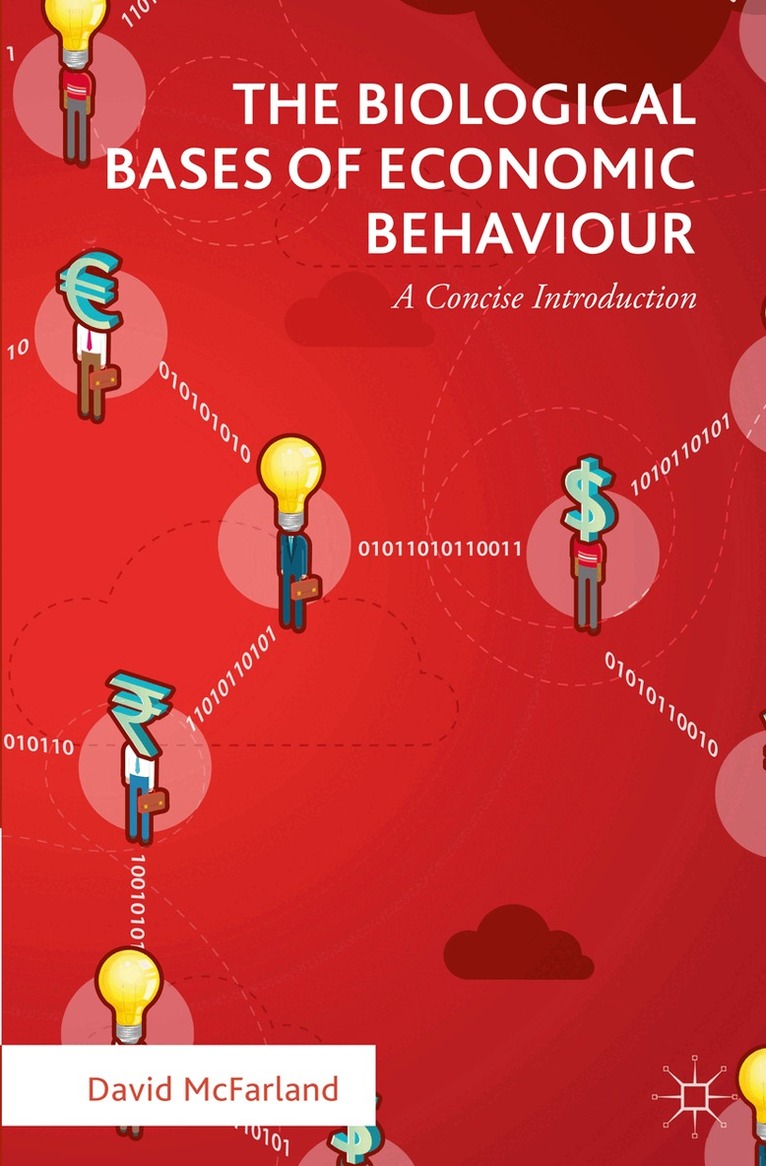
    Biological Bases of Economic Behaviour

    A Concise Introduction

    AvDavid McFarland

    Häftad, Engelska, 2015

    393 kr

    Beställningsvara. Skickas inom 10-15 vardagar. Fri frakt över 249 kr.

    Fler format och utgåvor

    E-bok

    432 kr

    Beskrivning

    Human genetics has changed little over the past 20,000 years, but human economic behaviour has changed a lot. These changes are probably due to human cultural evolution. But studies of human hunter-gatherers, and of a variety of other animal species, show that their micro-economic behaviour is much the same. Whereas the standard economic analysis focuses on money, the biological approach brings time and energy into the analysis. Moreover, humans and other animals tested under laboratory conditions do not exhibit the complexity of the results of field studies. In other words, results obtained in the real world are not the same as those obtained in the laboratory. The Biological Bases of Economic Behaviour invites readers to approach micro-economics from a biological viewpoint, in a clear and introductory manner.

    Produktinformation

    • Utgivningsdatum:2015-11-30
    • Mått:140 x 216 x 10 mm
    • Vikt:182 g
    • Format:Häftad
    • Språk:Engelska
    • Antal sidor:122
    • Upplaga:2016
    • Förlag:Palgrave Macmillan
    • ISBN:9781137568083

    Utforska kategorier

    • Mikroekonomi inom Ekonomi och Ledarskap
    • Nationalekonomi inom Ekonomi och Ledarskap

    Mer om författaren

    David McFarland studied zoology (BSc Hons) and psychology (DPhil). He researched and published in the fields of animal behaviour, philosophy, physiology, psychology and robotics. He retired in 2000, and is an Emeritus Fellow of Balliol College, Oxford, UK. Since retiring, he has published seven books.

    Innehållsförteckning

    • ContentsList Of FiguresPrefaceGlossaryPART I: THE EVOLUTION OF ECONOMIC BEHAVIOUR1.1 Evolution By Natural Selection1.1.1 Life History Strategy1.1.2 Kith And Kin1.1.3 Reciprocal Altruism1.1.4 Cultural Evolution1.1.5 Tool Use And Intelligence1.2 Human Evolution1.2.1 Recent Genetic Changes1.2.2 Human Cultural Evolution1.2.3 The Neolythic RevolutionPoints To RememberFurther ReadingEssential ReadingPART II: THE ECONOMIC BEHAVIOUR OF THE INDIVIDUAL2.1 A Biological Approach2.1.1 The Animal As An Economic Consumer2,1,2 The Supermarket Analogy2.1.3 Time And Energy Budgets In Animals2.2 Animal And Human Economics 2.2.1 Problems With Microeconomics2.2.2 Specific HungersPoints To RememberFurther ReadingEssential ReadingPART III: BEHAVIOURAL ECONOMICS3.1 The Experimental Situation3.1.1 The Sterile Environment3.1.2 The Captive Animal3.2 The Real World3.2.1 Animals In The Real World3.2.2 Humans In The Real World3.2.3 Hoarding And Caching3.3 The Rationality Muddle3.3.1 Rational Choice Theory3.3.2 Biological RationalityPoints To RememberFurther ReadingEssential ReadingPART IV: THE BIOLOGICAL BASES OF DECISION MAKING4.1 Decisions4.1.1 Recapitulation4.1.2 The Biological View4.1.3 Functionional Aspects Of Decision Making4.1.4 Trade-Off 4.2 'Voluntary' Decisions4.2.1 Introspection4.2.2 The Teleological Imperative4.2.3 Whither Homo Economicus?Points To RememberFurther ReadingEssential ReadingGlossaryEndnotes