• Fri frakt över 249 kr
  • •
  • Snabba leveranser
  • •
  • Billiga böcker
Kundservice

Du är på sajten för privatpersoner.

Företag, bibliotek eller offentlig verksamhet?

Du handlar på classic.bokus.com, där alla dina funktioner finns intakta.
Till classic.bokus.com
Bokus logotyp. Gå till startsidan.
  • Erbjudanden
  • Student
  • Topplistor
  • Barn & ungdom
  • Bokus Play
  • E-böcker
  • Ljudböcker
  • Pocketböcker
  • Spel och pussel

Pocketfynda! Hundratals böcker för 49 kr/st →

Sidfot

Mina sidor

    Hjälp

    • Kundservice
    • Vanliga frågor och svar
    • Frakt och leverans
    • Retur vid ångerrätt
    • Reklamera vara
    • Betalning
    • Köpvillkor
    • Allmänna villkor
    • Information om webbplatsens tillgänglighet

    Om Bokus

    • Om oss
    • Pressrum
    • För studenter
    • För företag
    • För bibliotek och offentlig verksamhet
    • För leverantörer
    • Hållbarhet

    Populärt

    • Aktuella erbjudanden
    • Presentkort
    • Studentlitteratur
    • Nya böcker
    • Topplistor
    • Signerade böcker
    • Engelska böcker

    Inspiration

    • Boktips
    • BookTok
    • Barnbokskaraktärer
    • Populära författare
    Logotyp för Bokus
    Följ oss på Facebook (extern länk)Följ oss på Instagram (extern länk)Följ oss på YouTube (extern länk)Följ oss på TikTok (extern länk)
    bokus @ CookiesAnpassa cookiesIntegritetspolicyKöpvillkor
    Till Citymail hemsida (extern länk)Till Budbee hemsida (extern länk)Till Postnord hemsida (extern länk)Till Schenker hemsida (extern länk)Till Early Bird hemsida (extern länk)Till Walleys hemsida (extern länk)
    1. Språk och ordböcker
    2. Språkvetenskap och lingvistik

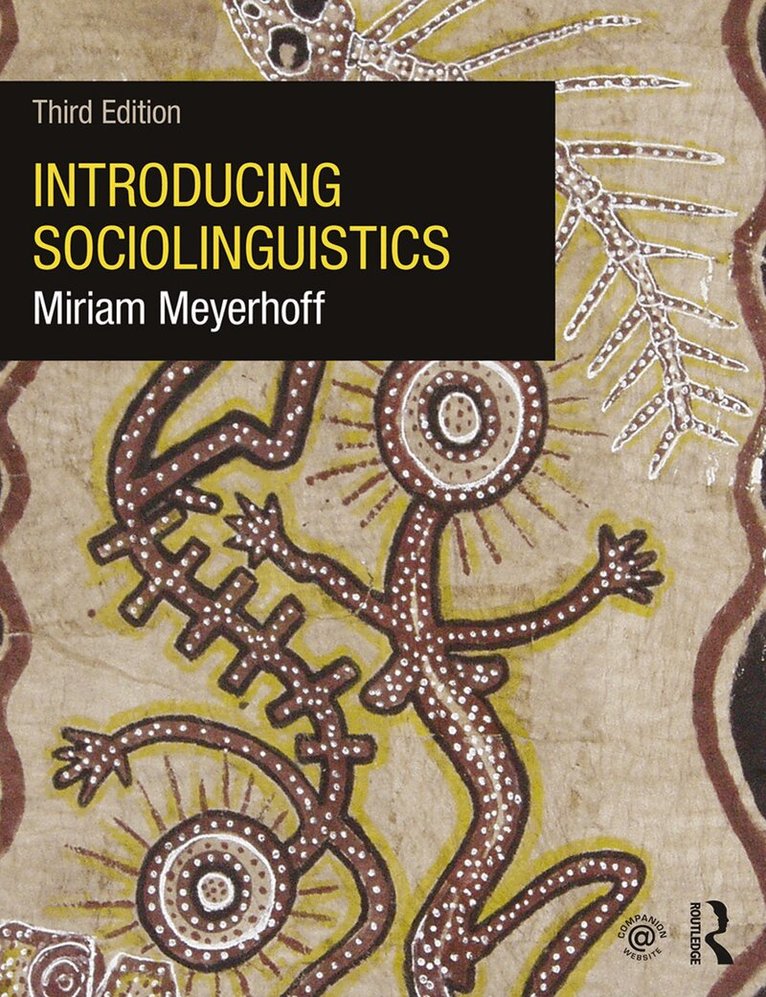
    Introducing Sociolinguistics

    AvMiriam Meyerhoff

    Häftad, Engelska, 2018

    669 kr

    Beställningsvara. Skickas inom 10-15 vardagar. Fri frakt över 249 kr.

    Fler format och utgåvor

    Inbunden

    2 238 kr

    E-bok

    794 kr

    E-bok

    797 kr

    Beskrivning

    This third edition of Miriam Meyerhoff’s highly successful textbook provides a solid, up-to-date appreciation of the interdisciplinary nature of the field and covers foundation issues, recent advances and current debates. It presents familiar or classic data in new ways, and supplements the familiar with fresh examples from a wide range of languages and social settings. It clearly explains the patterns and systems that underlie language variation in use, as well as the ways in which alternations between different language varieties index personal style, social power and national identity.New features of the third edition: Every chapter has been revised and updated with current research in the field, including material on sexuality, polylanguaging and lifespan change; Additional Connections with theory and Facts: No, really? are included throughout; Data from sign languages, historical linguistics and Asia-Pacific sociolinguistics have been revised and expanded; A brand new companion website featuring more examples and exercises can be found at www.routledge.com/textbooks/meyerhoff.Chapters include exercises that enable readers to engage critically with the text, break-out boxes making connections between sociolinguistics and linguistic or social theory, and brief, lively add-ons guaranteed to make the book a memorable and enjoyable read. With a full glossary of terms and suggestions for further reading, this text gives students all the tools they need for an excellent command of sociolinguistics. It can also be used in conjunction with The Routledge Sociolinguistics Reader, Doing Sociolinguistics and the online resources shared by all three books.

    Produktinformation

    • Utgivningsdatum:2018-08-01
    • Mått:189 x 246 x 20 mm
    • Vikt:873 g
    • Format:Häftad
    • Språk:Engelska
    • Antal sidor:400
    • Upplaga:3
    • Förlag:Taylor & Francis Ltd
    • ISBN:9781138185593

    Utforska kategorier

    • Språkvetenskap och lingvistik inom Språk och ordböcker

    Mer om författaren

    Miriam Meyerhoff has taught sociolinguistics in places as diverse as New Zealand, Hawai‘i, the mainland United States, Vanuatu and Scotland. She has consulted on sociolinguistic issues for the print and broadcast media and published books and articles on language variation, language and gender and language contact. She is Professor of Linguistics at Victoria University of Wellington, New Zealand.

    Recensioner i media

    'Fizzing with examples from around the world and presenting cutting-edge theoretical wisdom, this book is an absolute must for all students of sociolinguistics.'David Britain, University of Bern, Switzerland'This book is my text of choice for undergraduate modules because it introduces all the fundamental aspects of sociolinguistics and LVC, also in multilingual contexts and with varieties other than English. The online resources are great and the students are particularly fond of the glossary with accessible definitions for complex subject matter.'Nanna Haug Hilton, University of Groningen, The NetherlandsPRAISE FOR THE FIRST EDITION‘Here is a welcome introduction to sociolinguistics by a leading researcher in the field. Users will be inspired by the breadth and sweep of Meyerhoff’s treatment.’William Labov, University of Pennsylvania, USA‘Although the audience of this textbook . . . is primarily meant to be undergraduates, the exercises are so rich with stimulating ideas that students can develop these into theses . . . Another merit of the book is its coverage of the most recent advances in the field and their connections with theory.’Dinha T. Gorgis, Jadara University, Jordan‘I especially liked the way it includes studies from all over the world – not just from English-speaking countries . . . the author presents complex studies in a very clear manner without simplifying too much.’Hanne Pernille Anderson, Copenhagen University, Denmark

    Innehållsförteckning

    • List of figures; List of tables; Sounds and symbols used in the text; Acknowledgements; Maps; Chapter 1 Introduction; Chapter 2 Variation and language; Chapter 3 Variation and style; Chapter 4 Language attitudes; Chapter 5 Verbal politeness – interactional options; Chapter 6 Multilingualism and language choice; Chapter 7 Real time and apparent time; Chapter 8 Social class; Chapter 9 Social networks and communities of practice; Chapter 10 Gender; Chapter 11 Language contact; Chapter 12 Looking back and looking ahead; Notes on the exercises; Glossary; Bibliography; Index