• Fri frakt över 249 kr
  • •
  • Snabba leveranser
  • •
  • Billiga böcker
Kundservice

Du är på sajten för privatpersoner.

Företag, bibliotek eller offentlig verksamhet?

Du handlar på classic.bokus.com, där alla dina funktioner finns intakta.
Till classic.bokus.com
Bokus logotyp. Gå till startsidan.
  • Erbjudanden
  • Nyheter
  • Student
  • Topplistor
  • Barn & ungdom
  • Bokus Play
  • E-böcker
  • Pocketböcker
  • Spel & pussel

10% rabatt på allt med kod: NYSTART10 →

Sidfot

Mina sidor

    Hjälp

    • Kundservice
    • Vanliga frågor och svar
    • Frakt och leverans
    • Retur vid ångerrätt
    • Reklamera vara
    • Betalning
    • Köpvillkor
    • Allmänna villkor
    • Information om webbplatsens tillgänglighet

    Om Bokus

    • Om oss
    • Pressrum
    • För studenter
    • För företag
    • För bibliotek och offentlig verksamhet
    • För leverantörer
    • Hållbarhet

    Populärt

    • Aktuella erbjudanden
    • Presentkort
    • Studentlitteratur
    • Nya böcker
    • Topplistor
    • Signerade böcker
    • Engelska böcker

    Inspiration

    • Boktips
    • BookTok
    • Populära bokserier
    • Barnbokskaraktärer
    • Populära författare
    Logotyp för Bokus
    Följ oss på Facebook (extern länk)Följ oss på Instagram (extern länk)Följ oss på YouTube (extern länk)Följ oss på TikTok (extern länk)
    bokus @ CookiesAnpassa cookiesIntegritetspolicyKöpvillkor
    Till Citymail hemsida (extern länk)Till Budbee hemsida (extern länk)Till Postnord hemsida (extern länk)Till Schenker hemsida (extern länk)Till Early Bird hemsida (extern länk)Till Walleys hemsida (extern länk)
    1. Kultur
    2. Arkitektur

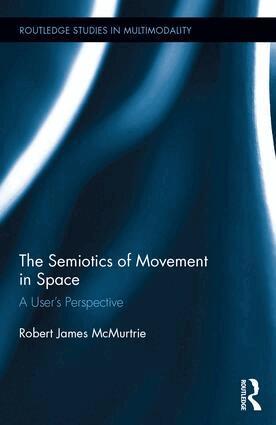
    Semiotics of Movement in Space

    AvRobert James McMurtrie

    Inbunden, Engelska, 2016

    Del i serien Routledge Studies in Multimodality

    2 724 kr

    Beställningsvara. Skickas inom 10-15 vardagar. Fri frakt över 249 kr.

    Fler format och utgåvor

    Häftad

    730 kr

    E-bok

    864 kr

    Beskrivning

    The Semiotics of Movement in Space explores how people move through buildings and interact with objects in space. Focusing on visitors to the Museum of Contemporary Art in Sydney, McMurtrie analyses and interprets movement and space relations to highlight new developments and applications of spatial semiotics as he proposes that people’s movement options have the potential to transform the meaning of a particular space. He illustrates people’s interaction with microcamera footage of people’s movement through the museum from a first-person point of view, thereby providing an alternative, complementary perspective on how buildings are actually used. The book offers effective tools for practitioners to analyse people’s actual and potential movement patterns to rethink spatial design options from a semiotic perspective. The applicability of the semiotic principles developed in this book is demonstrated by examining movement options in a restaurant and a café, with the hope that the principles can be developed and applied to other sites of displays such as shopping centres and transportation hubs. This book should appeal to scholars of visual communication, semiotics, multimodal discourse analysis and visitor studies.

    Produktinformation

    • Utgivningsdatum:2016-12-27
    • Mått:152 x 229 x 18 mm
    • Vikt:700 g
    • Format:Inbunden
    • Språk:Engelska
    • Serie:Routledge Studies in Multimodality
    • Antal sidor:292
    • Förlag:Taylor & Francis Ltd
    • ISBN:9781138191716

    Utforska kategorier

    • Arkitektur inom Kultur
    • Språkvetenskap och lingvistik inom Språk och ordböcker
    • Geografi inom Naturvetenskap och teknik

    Mer om författaren

    Robert James McMurtrie is a PhD from the University of New South Wales, Australia, in Multimodality and Spatiogrammatics.

    Innehållsförteckning

    • 1. Paving the Way: Theories, terms and texts2. Modelling Movement in Space as a Semogenic System: The discourse-semantic and expression strata3. Modelling Movement in Space as a Semogenic System: The hodogrammatical stratum4. Framing and Reframing Exhibition Space: Viewing stations, isoglosses and facial orientation5. Points of Departure and Connection: Theme, spatiotaxis and intersemiotic connection6. Transforming Space into Place: Rhythm and occupation value7. Interacting in Exhibition Space: (Dis)aligning with the semiotic designer8. Negotiation the Authorial Voice: Spatial engagement and graduation9. Repressing and Experiencing Perceptual Structures: Assigning participatory rules10. Exploratory Exhibition SpaceS: A child’s perspective11. Movement in Restaurants and Cafés: Sites of performance and display12. Retracing our Steps and Moving Forward