• Fri frakt över 249 kr
  • •
  • Snabba leveranser
  • •
  • Billiga böcker
Kundservice

Du är på sajten för privatpersoner.

Företag, bibliotek eller offentlig verksamhet?

Du handlar på classic.bokus.com, där alla dina funktioner finns intakta.
Till classic.bokus.com
Bokus logotyp. Gå till startsidan.
  • Erbjudanden
  • Nyheter
  • Student
  • Topplistor
  • Barn & ungdom
  • Bokus Play
  • E-böcker
  • Pocketböcker
  • Spel & pussel

10% rabatt på allt med kod: NYSTART10 →

Sidfot

Mina sidor

    Hjälp

    • Kundservice
    • Vanliga frågor och svar
    • Frakt och leverans
    • Retur vid ångerrätt
    • Reklamera vara
    • Betalning
    • Köpvillkor
    • Allmänna villkor
    • Information om webbplatsens tillgänglighet

    Om Bokus

    • Om oss
    • Pressrum
    • För studenter
    • För företag
    • För bibliotek och offentlig verksamhet
    • För leverantörer
    • Hållbarhet

    Populärt

    • Aktuella erbjudanden
    • Presentkort
    • Studentlitteratur
    • Nya böcker
    • Topplistor
    • Signerade böcker
    • Engelska böcker

    Inspiration

    • Boktips
    • BookTok
    • Populära bokserier
    • Barnbokskaraktärer
    • Populära författare
    Logotyp för Bokus
    Följ oss på Facebook (extern länk)Följ oss på Instagram (extern länk)Följ oss på YouTube (extern länk)Följ oss på TikTok (extern länk)
    bokus @ CookiesAnpassa cookiesIntegritetspolicyKöpvillkor
    Till Citymail hemsida (extern länk)Till Budbee hemsida (extern länk)Till Postnord hemsida (extern länk)Till Schenker hemsida (extern länk)Till Early Bird hemsida (extern länk)Till Walleys hemsida (extern länk)
    1. Kultur
    2. Musikböcker
    3. Musik: stilar och genrer
    4. Elektronisk musik

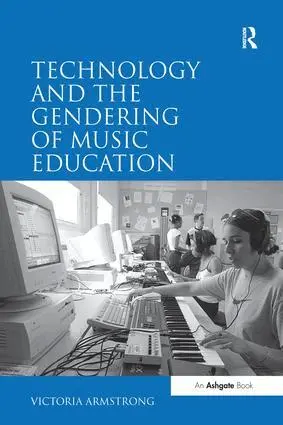
    Technology and the Gendering of Music Education

    AvVictoria Armstrong

    Häftad, Engelska, 2016

    860 kr

    Beställningsvara. Skickas inom 10-15 vardagar. Fri frakt över 249 kr.

    Fler format och utgåvor

    E-bok

    1 019 kr

    E-bok

    1 022 kr

    Inbunden

    2 493 kr

    Beskrivning

    Critical of technologically determinist assumptions underpinning current educational policy, Victoria Armstrong argues that this growing technicism has grave implications for the music classroom where composition is often synonymous with the music technology suite. The use of computers and associated compositional software in music education is frequently decontextualized from cultural and social relationships, thereby ignoring the fact that new technologies are used and developed within existing social spaces that are always already delineated along gender lines. Armstrong suggests these gender-technology relations have a profound effect on the ways adolescents compose music as well as how gendered identities in the technologized music classroom are constructed. Drawing together perspectives from the sociology of science and technology studies (STS) and the sociology of music, Armstrong examines the gendered processes and practices that contribute to how students learn about technology, the repertoire of teacher and student talk, its effect on student confidence and the issue of male control of technological knowledge. Even though girls and female teachers have technological knowledge and skill, the continuing material and symbolic associations of technology with men and masculinity contribute to the perception of women as less able and less interested in all things technological. In light of the fact that music technology is now central to many music-making practices across all sectors of education from primary, secondary through to higher education, this book provides a timely critical analysis that powerfully demonstrates why the relationship between gender and music technology should remain an important empirical consideration.

    Produktinformation

    • Utgivningsdatum:2016-10-19
    • Mått:156 x 234 x 9 mm
    • Vikt:453 g
    • Format:Häftad
    • Språk:Engelska
    • Antal sidor:168
    • Förlag:Taylor & Francis Ltd
    • ISBN:9781138274570

    Utforska kategorier

    • Elektronisk musik inom Kultur
    • Pedagogik inom Psykologi och pedagogik
    • Digital musik och digitalt ljud inom Data och IT

    Mer om författaren

    Dr Victoria Armstrong, St Mary's University, Twickenham, UK

    Recensioner i media

    'In this sharp analysis Victoria Armstrong lays bare many of the unexamined assumptions that lie behind our everyday musical practices. Illustrated throughout with entertaining, but critically analysed vignettes from everyday life in the music technology classroom, her discussion has relevance for so much else besides: the sociology of music in general, the sociology of technology, gender and education, studies of creativity, and musical meaning. The book challenges not only school teachers but university lecturers, students and all users of music technology - or indeed those who avoid using it - to stop and think again.' Lucy Green, London University Institute of Education '...this a valuable resource for students of music education and a must for gender studies... The bibliography and index are thorough... Recommended.' Choice ’... the remedial proposals [Armstrong] puts forward in the final chapter as ways of helping to redress the gender imbalance are persuasive and thought-provoking.’ British Journal of Educational Technology ’Victoria Armstrong’s book marks an important step in increasing the awareness of how music technology and the cultures surrounding it influence music making practices for students and teachers... Undoubtedly this worthwhile book offers important insights into music technology’s place in schools, making a clear case for gender equity in music education being more than just a matter of equal access to equipment. It challenges us to reconsider the role of technology in contemporary education through a greater awareness of the variety of practices, cultures and social meanings that emerge through and around its use. Recommended reading for anyone involved in the teaching of music.’ Music Education Research Journal ’... fluent, articulate and critical throughout. It engages with a broad range of ideas and there are constant provocations that got me thinking. It is hard to argue with her central thesis and her implications for

    Innehållsförteckning

    • Contents: Introduction; Challenging technological determinism in the music education classroom; Gendered cultures in the music technology classroom; Gendering technological expertise; Gendering the musical idea; Computers as a medium for composition; Reclaiming compositional spaces; Conclusion; Bibliography; Index.