• Fri frakt över 249 kr
  • •
  • Snabba leveranser
  • •
  • Billiga böcker
Kundservice

Du är på sajten för privatpersoner.

Företag, bibliotek eller offentlig verksamhet?

Du handlar på classic.bokus.com, där alla dina funktioner finns intakta.
Till classic.bokus.com
Bokus logotyp. Gå till startsidan.
  • Erbjudanden
  • Nyheter
  • Student
  • Topplistor
  • Barn & ungdom
  • Bokus Play
  • E-böcker
  • Pocketböcker
  • Spel & pussel

10% rabatt på allt med kod NYSTART10 →

Sidfot

Mina sidor

    Hjälp

    • Kundservice
    • Vanliga frågor och svar
    • Frakt och leverans
    • Retur vid ångerrätt
    • Reklamera vara
    • Betalning
    • Köpvillkor
    • Allmänna villkor
    • Information om webbplatsens tillgänglighet

    Om Bokus

    • Om oss
    • Pressrum
    • För studenter
    • För företag
    • För bibliotek och offentlig verksamhet
    • För leverantörer
    • Hållbarhet

    Populärt

    • Aktuella erbjudanden
    • Presentkort
    • Studentlitteratur
    • Nya böcker
    • Topplistor
    • Signerade böcker
    • Engelska böcker

    Inspiration

    • Boktips
    • BookTok
    • Populära bokserier
    • Barnbokskaraktärer
    • Populära författare
    Logotyp för Bokus
    Följ oss på Facebook (extern länk)Följ oss på Instagram (extern länk)Följ oss på YouTube (extern länk)Följ oss på TikTok (extern länk)
    bokus @ CookiesAnpassa cookiesIntegritetspolicyKöpvillkor
    Till Citymail hemsida (extern länk)Till Budbee hemsida (extern länk)Till Postnord hemsida (extern länk)Till Schenker hemsida (extern länk)Till Early Bird hemsida (extern länk)Till Walleys hemsida (extern länk)
    1. Ekonomi och Ledarskap
    2. Företagsekonomi
    3. Redovisning och finansiering
    4. Redovisning

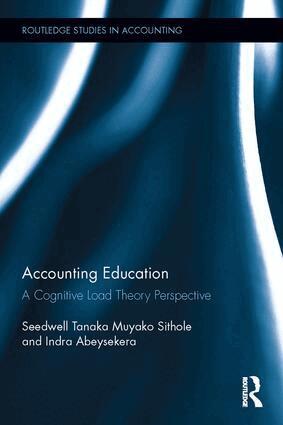
    Accounting Education

    A Cognitive Load Theory Perspective

    AvSeedwell Tanaka Muyako Sithole,Indra Abeysekera

    Inbunden, Engelska, 2017

    Del i serien Routledge Studies in Accounting

    2 495 kr

    Beställningsvara. Skickas inom 10-15 vardagar. Fri frakt över 249 kr.

    Fler format och utgåvor

    Häftad

    687 kr

    Beskrivning

    This book provides a comprehensive and critical overview of learning accounting. It illustrates that when learners need to mentally integrate two or more distinct items of information, it places unnecessary demands on cognitive load. The book discusses the cognitive load theory, which assumes that the task of mental integration increases the load on already limited working memory, and it does so to such an extent that learning may be severely impeded. The book also investigates how students could deal with cognitive overload when learning introductory accounting using three instructional design formats: the split-attention format, the integrated format, and the self-managed format.

    Produktinformation

    • Utgivningsdatum:2017-01-09
    • Mått:156 x 234 x 15 mm
    • Vikt:430 g
    • Format:Inbunden
    • Språk:Engelska
    • Serie:Routledge Studies in Accounting
    • Antal sidor:148
    • Förlag:Taylor & Francis Ltd
    • ISBN:9781138286306

    Utforska kategorier

    • Redovisning inom Ekonomi och Ledarskap

    Mer om författaren

    Seedwell Tanaka Muyako Sithole is Lecturer at the School of Business at the Western Sydney University, Australia. He holds a PhD in Accounting, and his areas of expertise lie in financial accounting, accounting education, and financial reporting and regulation. He lectures in accounting and finance at both the undergraduate and postgraduate levels.Indra Abeysekera is Professor in Accounting and Dean of DBA at the S. P. Jain School of Global Management in Sydney, Australia. He is a skilled and committed accounting academic and research leader with expertise in financial accounting. He has an outstanding track record in the accounting discipline, having published five peer-reviewed research books and more than 100 articles.

    Innehållsförteckning

    • List of figures List of tables Acknowledgments 1 Introduction 2 Elements of difficulty in introductory accounting 3 Human cognitive architecture 4 Cognitive load theory and instructional application 5 Self-management of cognitive load: background and research hypotheses 6 Experimental design and task description 7 Experiments and results 8 Implications of the findings, limitations, and suggestions for future research References Index