• Fri frakt över 249 kr
  • •
  • Snabba leveranser
  • •
  • Billiga böcker
Kundservice

Du är på sajten för privatpersoner.

Företag, bibliotek eller offentlig verksamhet?

Du handlar på classic.bokus.com, där alla dina funktioner finns intakta.
Till classic.bokus.com
Bokus logotyp. Gå till startsidan.
  • Erbjudanden
  • Nyheter
  • Student
  • Topplistor
  • Barn & ungdom
  • Bokus Play
  • E-böcker
  • Pocketböcker
  • Spel & pussel

10% rabatt på allt med kod: NYSTART10 →

Sidfot

Mina sidor

    Hjälp

    • Kundservice
    • Vanliga frågor och svar
    • Frakt och leverans
    • Retur vid ångerrätt
    • Reklamera vara
    • Betalning
    • Köpvillkor
    • Allmänna villkor
    • Information om webbplatsens tillgänglighet

    Om Bokus

    • Om oss
    • Pressrum
    • För studenter
    • För företag
    • För bibliotek och offentlig verksamhet
    • För leverantörer
    • Hållbarhet

    Populärt

    • Aktuella erbjudanden
    • Presentkort
    • Studentlitteratur
    • Nya böcker
    • Topplistor
    • Signerade böcker
    • Engelska böcker

    Inspiration

    • Boktips
    • BookTok
    • Populära bokserier
    • Barnbokskaraktärer
    • Populära författare
    Logotyp för Bokus
    Följ oss på Facebook (extern länk)Följ oss på Instagram (extern länk)Följ oss på YouTube (extern länk)Följ oss på TikTok (extern länk)
    bokus @ CookiesAnpassa cookiesIntegritetspolicyKöpvillkor
    Till Citymail hemsida (extern länk)Till Budbee hemsida (extern länk)Till Postnord hemsida (extern länk)Till Schenker hemsida (extern länk)Till Early Bird hemsida (extern länk)Till Walleys hemsida (extern länk)
    1. Språk och ordböcker
    2. Språk: referensverk och allmänt

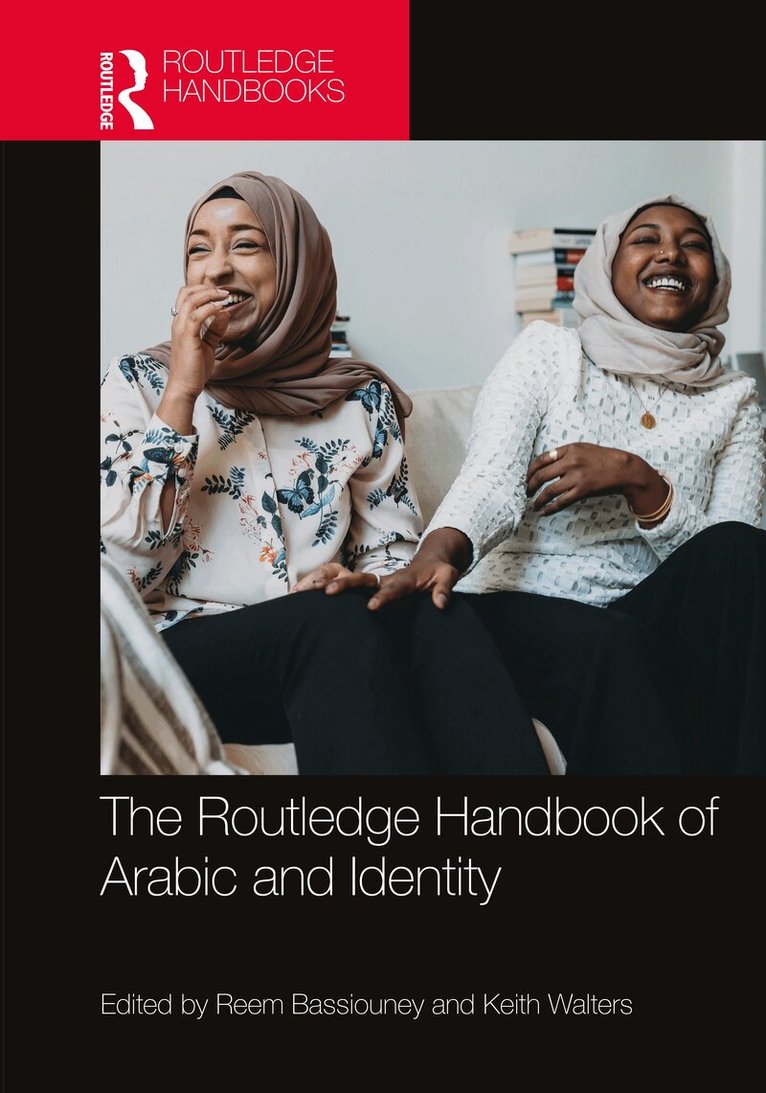
    Routledge Handbook of Arabic and Identity

    AvReem Bassiouney,Keith Walters

    Inbunden, Engelska, 2020

    3 765 kr

    Beställningsvara. Skickas inom 10-15 vardagar. Fri frakt över 249 kr.

    Beskrivning

    The Routledge Handbook of Arabic and Identity offers a comprehensive and up-to-date account of studies that relate the Arabic language in its entirety to identity. This handbook offers new trajectories in understanding language and identity more generally and Arabic and identity in particular.Split into three parts, covering ‘Identity and Variation’, ‘Identity and Politics’ and ‘Identity Globalisation and Diversity’, it is the first of its kind to offer such a perspective on identity, linking the social world to identity construction and including issues pertaining to our current political and social context, including Arabic in the diaspora, Arabic as a minority language, pidgin and creoles, Arabic in the global age, Arabic and new media, Arabic and political discourse.Scholars and students will find essential theories and methods that relate language to identity in this handbook. It is particularly of interest to scholars and students whose work is related to the Arab world, political science, modern political thought, Islam and social sciences including: general linguistics, sociolinguistics, discourse analysis, anthropological linguistics, anthropology, political science, sociology, psychology, literature media studies and Islamic studies.

    Produktinformation

    • Utgivningsdatum:2020-09-04
    • Mått:174 x 246 x 16 mm
    • Vikt:453 g
    • Format:Inbunden
    • Språk:Engelska
    • Antal sidor:278
    • Förlag:Taylor & Francis Ltd
    • ISBN:9781138303997

    Utforska kategorier

    • Språk: referensverk och allmänt inom Språk och ordböcker
    • Språkvetenskap och lingvistik inom Språk och ordböcker

    Mer om författaren

    Reem Bassiouney is a professor (and chair) at the American University in Cairo, Egypt. She has eight linguistics books to her name. She is the author of Functions of Code-Switching in Egypt (2006), Language and Identity in Modern Egypt (2014) and Arabic Sociolinguistics (2009; second edition 2020). Her edited volumes include The Routledge Handbook of Arabic Linguistics (co-editor with Benmamoun) and Identity and Dialect Performance (2017). She is also the editor and founder of the Routledge Studies in Language and Identity series. Bassiouney is also an award-winning novelist.Keith Walters is Professor Emeritus from the Department of Applied Linguistics at Portland State University, Portland, Oregon, USA. During his career, he also held positions in the English Department at the Ohio State University and the Linguistics Department at the University of Texas–Austin. He has taught English as an additional language in the US, Tunisia, Guinea and the West Bank and helped train teachers in those countries, Morocco, Egypt and Vietnam. His research interests include codeswitching, diglossic switching, language ideologies, and language and nationalism as well as language and the law. An award-winning teacher, Walters is co-author of two widely used composition textbooks, Everything’s an Argument (8th edn) and Everyone’s an Author (3rd edn).

    Innehållsförteckning

    • Table of ContentsNotes on the ContributorsList of FiguresList of TablesAcknowledgementsIntroduction and OverviewIntroduction: The Arabic Language and IdentityKeith WaltersPart I - Identity and Variation1. From Rajjal to Rayyal: Ideologies and shift among young Bedouins in Qatar Rizwan Ahmad and Heba Al-Kababji2. The emergence of a new national linguistic variety in Saudi Arabia: A perceptual dialectology account Yousef Al-Rojaie 3. Identity and/or acts of identity in light of discourse markers in spoken Arabic Abdelaadim Bidaoui4. The expression of rural and urban identities in Arabic Ahmed Ech-Charfi 5. Optional You​ and the invocation of shared identity in Levantine Arabic Youssef Haddad 6. Saudi folks’ attitudes and Pprceptions toward accent switches: The /k/ reflexes across dialects Manal Ismail 7. Language and identity in post-Revolution Tunisia between authenticity and commodification Lotfi Sayahi 8. Attitudes to language in the Arab World Nadia Shalaby Part II - Identity and Politics 9. Arabic language ideologies: Diglossia Ashraf Abdelhay and Yasir Suleiman 10. Egyptian identities at times of crisis Amira Agameya 11. Pan-Arab identity in the post-Arab-Spring Era Abdulkafi Albirini 12. Arabic and identity in (the conflict-ridden reality in) Israel Muhammad Amara 13. The discursive construction of Jordanian identity in online discourse Muhammad Badarneh 14. Erasing Arabic as an entrance ticket to Israeli society: On orientalism, militarism and the Mizrahi option in Israel/Palestine Yonatan MendelPart III - Identity Globalisation and Diversity 15. Language and identity construction in the Arabian Gulf: Challenges faced in a globalized world Ahmad Al-Issa and Laila S. Dahan 16. Arabic(s) in diaspora: Speakers, usages and contacts Alexandrine Barontini and Lauren Wagner 17. Complex identities: Arabic in the diaspora Luca D'Anna & Chiara AmorusoIndex