• Fri frakt över 249 kr
  • •
  • Snabba leveranser
  • •
  • Billiga böcker
Kundservice

Du är på sajten för privatpersoner.

Företag, bibliotek eller offentlig verksamhet?

Du handlar på classic.bokus.com, där alla dina funktioner finns intakta.
Till classic.bokus.com
Bokus logotyp. Gå till startsidan.
  • Erbjudanden
  • Nyheter
  • Student
  • Topplistor
  • Barn & ungdom
  • Bokus Play
  • E-böcker
  • Pocketböcker
  • Spel & pussel

10% rabatt på allt med kod NYSTART10 →

Sidfot

Mina sidor

    Hjälp

    • Kundservice
    • Vanliga frågor och svar
    • Frakt och leverans
    • Retur vid ångerrätt
    • Reklamera vara
    • Betalning
    • Köpvillkor
    • Allmänna villkor
    • Information om webbplatsens tillgänglighet

    Om Bokus

    • Om oss
    • Pressrum
    • För studenter
    • För företag
    • För bibliotek och offentlig verksamhet
    • För leverantörer
    • Hållbarhet

    Populärt

    • Aktuella erbjudanden
    • Presentkort
    • Studentlitteratur
    • Nya böcker
    • Topplistor
    • Signerade böcker
    • Engelska böcker

    Inspiration

    • Boktips
    • BookTok
    • Populära bokserier
    • Barnbokskaraktärer
    • Populära författare
    Logotyp för Bokus
    Följ oss på Facebook (extern länk)Följ oss på Instagram (extern länk)Följ oss på YouTube (extern länk)Följ oss på TikTok (extern länk)
    bokus @ CookiesAnpassa cookiesIntegritetspolicyKöpvillkor
    Till Citymail hemsida (extern länk)Till Budbee hemsida (extern länk)Till Postnord hemsida (extern länk)Till Schenker hemsida (extern länk)Till Early Bird hemsida (extern länk)Till Walleys hemsida (extern länk)
    1. Kultur
    2. Arkitektur

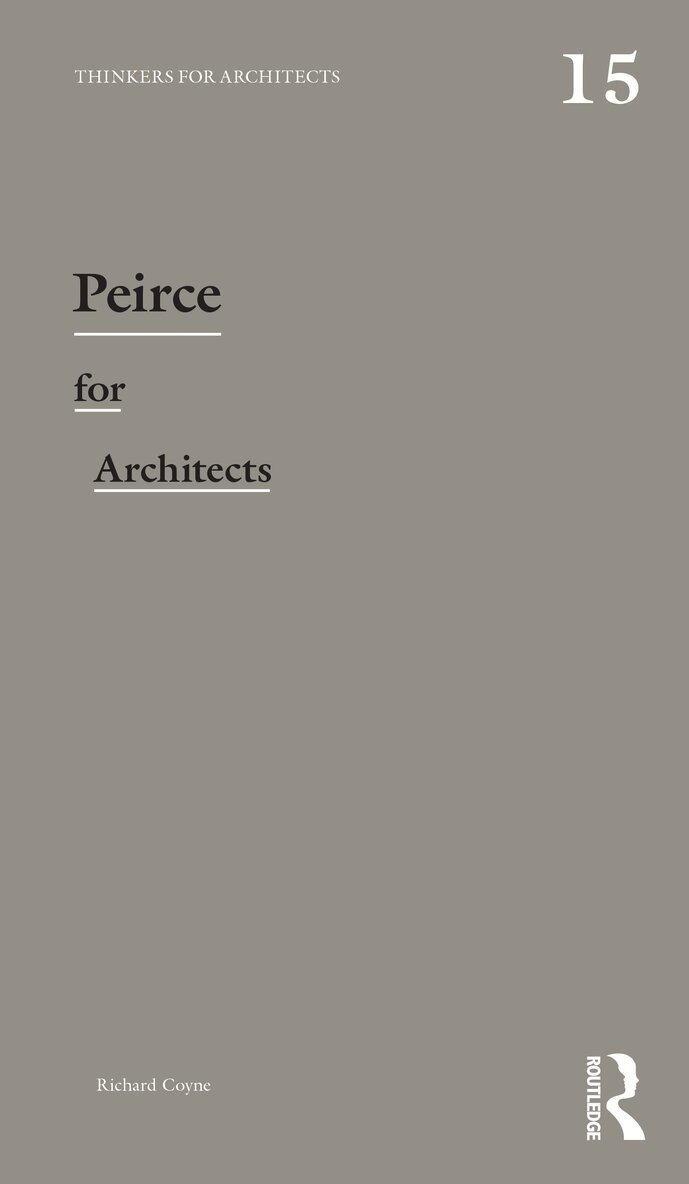
    Peirce for Architects

    AvRichard Coyne

    Häftad, Engelska, 2019

    Del i serien Thinkers for Architects

    442 kr

    Beställningsvara. Skickas inom 10-15 vardagar. Fri frakt över 249 kr.

    Fler format och utgåvor

    E-bok

    520 kr

    E-bok

    520 kr

    Inbunden

    1 468 kr

    Beskrivning

    Ideas gain legitimacy as they are put to some practical use. A study of Charles Sanders Peirce (1839-1914) supports this pragmatism as a way of thinking about truth and meaning. Architecture has a strong pragmatic strand, not least as we think of building users, architecture as a practice, the practical demands of building, and utility. After all, Vitruvius placed firmness and delight in the company of utilitas amongst his demands on architecture. Peirce (pronounced 'purse') was a logician, and so many of his ideas are couched in terms of formal propositions and their limitations. His work appeals therefore to many architects grappling with the digital age, and references to his work cropped up in the Design Methods Movement that developed and grew from the 1950s. That movement sought to systematise the design process, contributing to the idea of the RIBA Plan of Work, computer-aided design, and various controversies about rendering the design process transparent and open to scrutiny. Peirce’s commitment to logic led him to investigate the basic elements of logical statements, notably the element of the sign. His best-known contribution to design revolves around his intricate theory of semiotics, the science of signs. The study of semiotics divided around the 1980s between advocates of Peirce’s semiotics, and the broader, more politically charged field of structuralism. The latter has held sway in architectural discourse since the 1980s. Why this happened and what we gain by reviving a Peircean semiotics is the task of this book.

    Produktinformation

    • Utgivningsdatum:2019-03-05
    • Mått:138 x 216 x 7 mm
    • Vikt:236 g
    • Format:Häftad
    • Språk:Engelska
    • Serie:Thinkers for Architects
    • Antal sidor:136
    • Förlag:Taylor & Francis Ltd
    • ISBN:9781138319585

    Utforska kategorier

    • Arkitektur inom Kultur
    • Filosofiska discipliner inom Filosofi och religion

    Mer om författaren

    Richard Coyne is Professor of Architectural Computing in the Edinburgh School of Architecture and Landscape Architecture at the University of Edinburgh. He was formerly Head of the School of Arts, Culture and Environment. He inaugurated the MSc in Design and Digital Media, and is Programme Director of the MSc by Research in Digital Media and Culture. He researches and teaches in architectural theory, design theory and digital technologies, and is author of ten books that include Interpretation in Architecture: Design as a Way of Thinking (with Adrian Snodgrass, 2006), Derrida for Architects (2011), The Tuning of Place: Sociable Spaces and Pervasive Digital Media (2010) and Network Nature: The Place of Nature in the Digital Age (2018).

    Innehållsförteckning

    • 1. Introduction 2. Signs 3. Sign-Vehicles 4. Indexical architecture 5. Abduction in architecture 6. Nature semiotics 7. Pragmatism