• Fri frakt över 249 kr
  • •
  • Snabba leveranser
  • •
  • Billiga böcker
Kundservice

Du är på sajten för privatpersoner.

Företag, bibliotek eller offentlig verksamhet?

Du handlar på classic.bokus.com, där alla dina funktioner finns intakta.
Till classic.bokus.com
Bokus logotyp. Gå till startsidan.
  • Erbjudanden
  • Nyheter
  • Student
  • Topplistor
  • Barn & ungdom
  • Bokus Play
  • E-böcker
  • Pocketböcker
  • Spel & pussel

10% rabatt på allt med kod: NYSTART10 →

Sidfot

Mina sidor

    Hjälp

    • Kundservice
    • Vanliga frågor och svar
    • Frakt och leverans
    • Retur vid ångerrätt
    • Reklamera vara
    • Betalning
    • Köpvillkor
    • Allmänna villkor
    • Information om webbplatsens tillgänglighet

    Om Bokus

    • Om oss
    • Pressrum
    • För studenter
    • För företag
    • För bibliotek och offentlig verksamhet
    • För leverantörer
    • Hållbarhet

    Populärt

    • Aktuella erbjudanden
    • Presentkort
    • Studentlitteratur
    • Nya böcker
    • Topplistor
    • Signerade böcker
    • Engelska böcker

    Inspiration

    • Boktips
    • BookTok
    • Populära bokserier
    • Barnbokskaraktärer
    • Populära författare
    Logotyp för Bokus
    Följ oss på Facebook (extern länk)Följ oss på Instagram (extern länk)Följ oss på YouTube (extern länk)Följ oss på TikTok (extern länk)
    bokus @ CookiesAnpassa cookiesIntegritetspolicyKöpvillkor
    Till Citymail hemsida (extern länk)Till Budbee hemsida (extern länk)Till Postnord hemsida (extern länk)Till Schenker hemsida (extern länk)Till Early Bird hemsida (extern länk)Till Walleys hemsida (extern länk)
    1. Samhälle och politik
    2. Sociologi och antropologi
    3. Sociologi

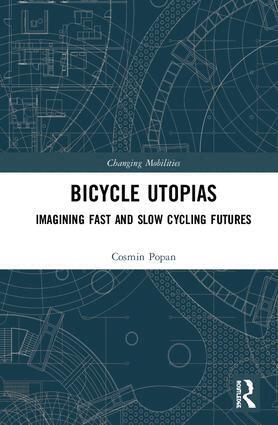
    Bicycle Utopias

    Imagining Fast and Slow Cycling Futures

    AvCosmin Popan

    Inbunden, Engelska, 2018

    Del i serien Changing Mobilities

    2 421 kr

    Beställningsvara. Skickas inom 10-15 vardagar. Fri frakt över 249 kr.

    Fler format och utgåvor

    Häftad

    695 kr

    E-bok

    822 kr

    E-bok

    822 kr

    Beskrivning

    Bicycle Utopias investigates the future of urban mobilities and post-car societies, arguing that the bicycle can become the nexus around which most human movement will revolve. Drawing on literature on post-car futures (Urry 2007; Dennis and Urry 2009), transition theory (Geels et al. 2012) and utopian studies (Levitas 2010, 2013), this book imagines a slow bicycle system as a necessary means to achieving more sustainable mobility futures.The imagination of a slow bicycle system is done in three ways: Scenario building to anticipate how cycling mobilities will look in the year 2050. A critique of the system of automobility and of fast cycling futures. An investigation of the cycling senses and sociabilities to describe the type of societies that such a slow bicycle system will enable. Bicycle Utopias will appeal to students and scholars in fields such as sociology, mobilities studies, human geography and urban and transport studies. This work may also be of interest to advocates, activists and professionals in the domains of cycling and sustainable mobilities.

    Produktinformation

    • Utgivningsdatum:2018-12-04
    • Mått:156 x 234 x 14 mm
    • Vikt:480 g
    • Format:Inbunden
    • Språk:Engelska
    • Serie:Changing Mobilities
    • Antal sidor:202
    • Förlag:Taylor & Francis Ltd
    • ISBN:9781138389182

    Utforska kategorier

    • Sociologi inom Samhälle och politik

    Mer om författaren

    Cosmin Popan is Research Assistant in the Department of Sociology at Manchester Metropolitan University

    Recensioner i media

    What might an urban cycling future look like? This book makes a unique contribution to the sociology of mobilities and mobile methods with a critical and creative examination of where we are and where we could be. Popan questions the normative dominance of ‘fast’ urban mobilities, namely the utopian promise of the car, with his thorough and in-depth analysis of ‘slow’ cycling cultures. This timely investigation of post-automobility futures challenges the reader to imagine the possibilities of different sensory, embodied and social worlds.Kat Jungnickel, Goldsmiths, University of London, author of Bikes and Bloomers: Victorian Women Inventors and Their Extraordinary Cycle Wear This book impressively explores so many dimensions of changing bicycle mobilities—among them economics, policy, cultural meaning, embodiment, identity, sociability, and technology—that it is a must-read. It is also a unique and forward-thinking book, weaving together innovative methods, critical analysis, and utopian thinking to envision a future ‘slow bicycle system,’ and, more importantly, the actions and changes necessary in the present to construct that future. Cosmin Popan is a sophisticated guide through these complicated issues, and one cannot but admire the ambition and accomplishment here.Luis Vivanco, University of Vermont, author of Reconsidering the Bicycle: An Anthropological Perspective on a New (Old) ThingWhere cycling receives massive attention in policy circles and academic discussion, by and large cycling is seen as an extension of existing paradigms. Using familiar concepts, language and tools cycling seems to be just another, long neglected member of our mobility family. But is it? With this book Cosmin Popan asks this question and proposes to use the inherent unique characteristics of cycling to challenge our existing, fundamental notions of mobility. By doing that, he presents us with much needed and refreshing thoughts on how cycling can be used to open our minds to different futures than we currently imagine.Marco te Brommelstroet, Associate Professor in Urban Planning, University of AmsterdamIn his book, Dr Popan shows how using bicycles and going slow are not just a part of romantic scenes but rather indispensable characteristics of an improved way of life that replaces the mistaken view of ‘speed is efficiency’. It emphasizes the crucial role of the bicycle in urban mobility and boldly proposes steps to integrate this vehicle into a wider understanding of cities within the framework of a post-automobility, slow-living Utopia.Carlosfelipe Pardo, Executive Director, Despacio.orgThis timely book sets out to examine how a new ontology of urban mobility (the things that we consider important in defining how we move around) may arise out of the study of contemporary embodied and social practices of cycling. In doing so the book will be of interest to scholars of mobilities, cycling and cycle activists more broadly. Situating the current system of automobility in the systems of late capitalism the chapters in the book use ethnographic observations and a very subjective view from the saddle to demonstrate how slower and seemingly chaotic practices of cycling might be seen as a prefigurative blueprint for a mobility system of tomorrow. Imagining a shift from a situation where speed, time, isolation and comfort dominate to one where slowness, openness, sensation and convenience come to the fore, the book cleverly use the conceit of a utopia to imagine how a shift might come about if only we started to value our experiences of mobility differently. Whilst the book has perhaps less to say about the broader attitudinal, governmental and planning shifts required for such a state of affairs to arise, it does well to start us down a road where our mobility systems might be derived from our sensory and social experiences of moving rather than those imposed upon us by the broader demands of capital accumulation and the legacies of automobility.Justin Spinney, Lecturer in Human Geography, School of Geography and Planning, Cardiff UniversityA thought-provoking read, encouraging us to imagine the policy and social transformations that could change cycle use from now to 2050. Cosmin is also not afraid to challenge, there is plenty here that I might agree with, and even some that I feel the need to argue with, but it is always well thought through and researched.Kevin Mayne, Development Director, European Cyclists' FederationPopan combines a critique of automobility with a sketch of a post-car future involving widespread bicycle use. This bicycle utopia is masterfully displayed and provides a signpost for our transport and urban planners. An exceptional and original reworking of future studies in sociology, linked to tractable and everyday ideas. The future could be on two wheels (if we have the courage to make it so). Simon Batterbury, Chair in Political Ecology at Lancaster Environment Centre

    Innehållsförteckning

    • Chapter 1, Prologue: Imagining a slow bicycle systemThe new ‘structure of feeling’The end of neoliberalism: embracing the slowThe urban formBike + train + cargo = loveCycling as mobility policyFrom subculture to cultureThe bicycle economy and big dataKnow-how and technology transferInnovations in bicycles and accessoriesBroader societal and economic changesSteps from 2016 to 2050Chapter 2, Introduction: Tips of the cycling iceberg Chapter 3: How to imagine biketopiasUtopia as methodConclusions: Enacting the socialChapter 4: Beyond autopiaThe elephant in the cityFrom autopia to CarmageddonElectric, autonomous, networked, sharedThe mobility growth paradigmGoing car-freeCareless car-free?Conclusions: Beyond cars, beyond growthChapter 5: Utopias, dystopias, biketopiasIn praise of slownessEarly biketopias of modernity and progressFast cycling for urban regeneration and growthSlow bicycle utopiasMad Max on a bikeConvivial biketopiasBike spaces of hopeConclusions: A break from growthChapter 6: SensesOn growing pedalsVelomobility at a glanceGrow ears, awaken the whole bodyWorking the inner body: balance and movementPain festivities: ‘sufferfest’How to achieve eurhythmia?Conclusions: Flowing towards eudaimonia Chapter 7: SociabilitiesCycling as interaction order and sociable practiceThe Ride-FormationSwarm sociabilitiesConversation sociabilitiesCarnivalesque sociabilitiesClub sociabilitiesThe chain-gangThe accordionConclusions: Fluid Ride-FormationsChapter 8: SlownessNeed for speedTactics of slownessAffecting the slowSlowness, sufficiency, de-growthConclusions: A norm of sufficiencyChapter 9: Conclusions