• Fri frakt över 249 kr
  • •
  • Snabba leveranser
  • •
  • Billiga böcker
Kundservice

Du är på sajten för privatpersoner.

Företag, bibliotek eller offentlig verksamhet?

Du handlar på classic.bokus.com, där alla dina funktioner finns intakta.
Till classic.bokus.com
Bokus logotyp. Gå till startsidan.
  • Erbjudanden
  • Nyheter
  • Student
  • Topplistor
  • Barn & ungdom
  • Bokus Play
  • E-böcker
  • Pocketböcker
  • Spel & pussel

10% rabatt på allt med kod: NYSTART10 →

Sidfot

Mina sidor

    Hjälp

    • Kundservice
    • Vanliga frågor och svar
    • Frakt och leverans
    • Retur vid ångerrätt
    • Reklamera vara
    • Betalning
    • Köpvillkor
    • Allmänna villkor
    • Information om webbplatsens tillgänglighet

    Om Bokus

    • Om oss
    • Pressrum
    • För studenter
    • För företag
    • För bibliotek och offentlig verksamhet
    • För leverantörer
    • Hållbarhet

    Populärt

    • Aktuella erbjudanden
    • Presentkort
    • Studentlitteratur
    • Nya böcker
    • Topplistor
    • Signerade böcker
    • Engelska böcker

    Inspiration

    • Boktips
    • BookTok
    • Populära bokserier
    • Barnbokskaraktärer
    • Populära författare
    Logotyp för Bokus
    Följ oss på Facebook (extern länk)Följ oss på Instagram (extern länk)Följ oss på YouTube (extern länk)Följ oss på TikTok (extern länk)
    bokus @ CookiesAnpassa cookiesIntegritetspolicyKöpvillkor
    Till Citymail hemsida (extern länk)Till Budbee hemsida (extern länk)Till Postnord hemsida (extern länk)Till Schenker hemsida (extern länk)Till Early Bird hemsida (extern länk)Till Walleys hemsida (extern länk)
    1. Samhälle och politik
    2. Politik och statsskick

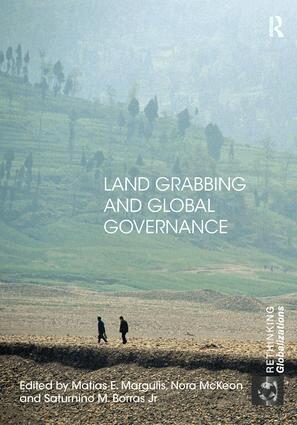
    Land Grabbing and Global Governance

    AvMatias E. Margulis

    Inbunden, Engelska, 2017

    Del i serien Rethinking Globalizations

    2 954 kr

    Beställningsvara. Skickas inom 10-15 vardagar. Fri frakt över 249 kr.

    Beskrivning

    Land grabbing per se is not a new phenomenon, given its historical precedents in the eras of imperialism. However, the character, scale, pace, orientation and key drivers of the recent wave of land grabs is a distinct historical event closely tied to the changing dynamics of the global agri-food, feed and fuel complex. Land grabbing is facilitated by ever greater flows of capital, goods, and ideas across borders, and these flows occur through axes of power that are far more polycentric than the North-South imperialist tradition. Land grabs occur in the context of changes in the character of the global food regime, formerly anchored by North Atlantic empires; the integrated food-energy complex seems to be headed towards multiple centres of power, especially with the rise of the BRICS and the proliferation of middle income countries participating in many of the land transactions. Land Grabbing and Global Governance offers insights from leading scholars and experts on contemporary land grabs. This volume examines land grabs in direct relation to a global economy undergoing profound change and the role of new configurations of actors and power in governance institutions and practices. This book was published as a special issue of Globalizations.

    Produktinformation

    • Utgivningsdatum:2017-06-28
    • Mått:174 x 246 x undefined mm
    • Vikt:453 g
    • Format:Inbunden
    • Språk:Engelska
    • Serie:Rethinking Globalizations
    • Antal sidor:232
    • Förlag:Taylor & Francis Ltd
    • ISBN:9781138430648

    Utforska kategorier

    • Politik och statsskick inom Samhälle och politik

    Mer om författaren

    Matias E. Margulis is Assistant Professor of International Studies at the University of Northern British Columbia. His current book project explores the global regulation of agricultural trade and food security. He is a former Canadian trade policy advisor and has worked on global food security policy at several multilateral organizations.Nora McKeon studied history at Harvard and political science at the Sorbonne before joining the Food and Agriculture Organization (FAO) of the United Nations where she became responsible for the overall direction of FAO’s policy and programme interaction with civil society. She now divides her time between research, teaching and activism around food systems, peasant farmer movements and UN-civil society relations.Saturnino M. Borras Jr. is Associate Professor at the International Institute of Social Studies (ISS) in The Hague, Adjunct Professor at the College of Humanities and Development Studies (COHD) of China Agricultural University in Beijing, and a Fellow of the Amsterdam-based Transnational Institute (TNI) and of the California-based Food First.

    Innehållsförteckning

    • 1. Land Grabbing and Global Governance: Critical Perspectives Section One: Theorizing Land Grabbing, Globalization and Governance 2. Land Grabs Today: Feeding the Disassembling of National Territory 3. Land Grabbing as Security Mercantilism in International Relations 4. Governing the Global Land Grab: Multipolarity, Ideas, and Complexity in Transnational Governance Section Two: Transnational Actors and Emerging Global Land Governance 5. The Governance of Gulf Agro-Investments 6. ‘One Does Not Sell the Land Upon Which the People Walk’: Land Grabbing, Transnational Rural Social Movements, and Global Governance 7. International Human Rights and Governing Land Grabbing: A View from Global Civil Society 8. Certification Schemes and the Governance of Land: Enforcing Standards or Enabling Scrutiny? 9. The Challenge of Global Governance of Land Grabbing: Changing International Agricultural Context and Competing Political Views and Strategies Section Three: Review of Recent Global Land Governance Instruments 10. The FAO Voluntary Guidelines on the Responsible Governance of Tenure of Land, Fisheries and Forests 11. The Principles of Responsible Agricultural Investment 12. The Minimum Human Rights Principles Applicable to Large-Scale Land Acquisitions or Leases 13. Private Governance and Land Grabbing: The Equator Principles and the Roundtable on Sustainable Biofuels 14. Restrictions to Foreign Acquisitions of Agricultural Land in Argentina and Brazil