• Fri frakt över 249 kr
  • •
  • Snabba leveranser
  • •
  • Billiga böcker
Kundservice

Du är på sajten för privatpersoner.

Företag, bibliotek eller offentlig verksamhet?

Du handlar på classic.bokus.com, där alla dina funktioner finns intakta.
Till classic.bokus.com
Bokus logotyp. Gå till startsidan.
  • Erbjudanden
  • Nyheter
  • Student
  • Topplistor
  • Barn & ungdom
  • Bokus Play
  • E-böcker
  • Pocketböcker
  • Spel & pussel

10% rabatt på allt med kod: NYSTART10 →

Sidfot

Mina sidor

    Hjälp

    • Kundservice
    • Vanliga frågor och svar
    • Frakt och leverans
    • Retur vid ångerrätt
    • Reklamera vara
    • Betalning
    • Köpvillkor
    • Allmänna villkor
    • Information om webbplatsens tillgänglighet

    Om Bokus

    • Om oss
    • Pressrum
    • För studenter
    • För företag
    • För bibliotek och offentlig verksamhet
    • För leverantörer
    • Hållbarhet

    Populärt

    • Aktuella erbjudanden
    • Presentkort
    • Studentlitteratur
    • Nya böcker
    • Topplistor
    • Signerade böcker
    • Engelska böcker

    Inspiration

    • Boktips
    • BookTok
    • Populära bokserier
    • Barnbokskaraktärer
    • Populära författare
    Logotyp för Bokus
    Följ oss på Facebook (extern länk)Följ oss på Instagram (extern länk)Följ oss på YouTube (extern länk)Följ oss på TikTok (extern länk)
    bokus @ CookiesAnpassa cookiesIntegritetspolicyKöpvillkor
    Till Citymail hemsida (extern länk)Till Budbee hemsida (extern länk)Till Postnord hemsida (extern länk)Till Schenker hemsida (extern länk)Till Early Bird hemsida (extern länk)Till Walleys hemsida (extern länk)
    1. Samhälle och politik
    2. Politik och statsskick
    3. Internationella relationer

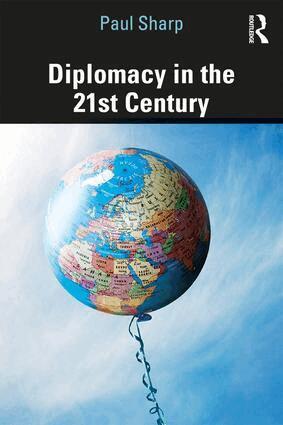
    Diplomacy in the 21st Century

    A Brief Introduction

    AvPaul Sharp

    Häftad, Engelska, 2019

    610 kr

    Beställningsvara. Skickas inom 10-15 vardagar. Fri frakt över 249 kr.

    Fler format och utgåvor

    Inbunden

    2 421 kr

    E-bok

    721 kr

    E-bok

    723 kr

    Beskrivning

    This book provides an introduction to the theory and practice of diplomacy and its vital role in an era of increasing international uncertainty.The work employs a distinctive "diplomatic perspective" on international relations and argues that the experience of conducting diplomacy gives rise to a set of priorities: first, the peaceful resolution of disputes; second, the avoidance of unwanted conflict; and, third, the minimization of the intensity of violent conflict where it has become unavoidable. It argues that changes in the international system require a shift in priorities from the diplomacy of problem-solving by building institutionalized cooperation, to the diplomacy of managing relationships between people. Divided into three sections, the first examines what is meant when we talk about diplomacy, why we need diplomats, and the operations of the modern diplomatic system of states. The second discusses the "three bads," about which people generally worry: bad leaders, bad media, and bad followers. The idea of "bad" is considered in terms of the moral character, professional competence, and the consequences of what people do for us. The final section discusses diplomacy and bad diplomats, reviewing what people can do to help themselves and the professionals be good diplomats. This book is intended as a primary text for courses in international diplomacy and as a supplementary text for courses on contemporary issues in international relations.

    Produktinformation

    • Utgivningsdatum:2019-05-20
    • Mått:174 x 246 x 9 mm
    • Vikt:290 g
    • Format:Häftad
    • Språk:Engelska
    • Antal sidor:140
    • Förlag:Taylor & Francis Ltd
    • ISBN:9781138554665

    Utforska kategorier

    • Internationella relationer inom Samhälle och politik

    Mer om författaren

    Paul Sharp is Professor of Political Science at the University of Minnesota Duluth, USA, and has authored or edited eight previous books on international relations.

    Recensioner i media

    "A clear, concise, and highly accessible explanation of how diplomacy works, and why it is important, Paul Sharp's book provides a timely and blunt assessment of both good and bad diplomacy."--Erik Goldstein, Boston University, USA"A very welcome textbook from a seasoned teacher and path-breaking scholar of diplomatic studies. Sharp approaches his subject with intelligence and tact, writes engagingly and precisely, outlining the historical necessity, the key skills and virtues of diplomats, as well as the bad and problematic practices of diplomacy."--Costas M. Constantinou, University of Cyprus"The clearly structured narration, well-explained history and concepts of diplomacy, excellent examples and straightforward language, combined with an up-to-date view of the challenges of modern diplomacy make this volume not only indispensable for students of diplomacy who have little background in the field, but also useful for the professional diplomat."--Ambassador Vahe Gabrielyan, Director of the Diplomatic School of Armenia"With clarity, boldness, and originality of thought, Paul Sharp describes the essence of diplomacy – not just the formal institution but also the character of all human relations that reflect diplomatic values and norms. Often regarded as a weak force in international relations, the practice of diplomacy, if better explained and extended beyond the professionals to the general public, can strengthen an uncertain world order. Drawing our attention to the 'bad' actors (specifically, leaders, media, and followers) we are living with today, Sharp’s keen analysis suggests, logically, that diplomacy is a public 'good' that should be recognized as important and relevant to us all."-Alan Henrikson, The Fletcher School of Law and Diplomacy, Tufts University, USA "Very few people challenge the idea that diplomacy today is in crisis. New technologies of communication allow decision-makers to communicate with each other and with the public without diplomats, while populist waves across democracies threaten traditional elites. Budgets of ministers of foreign affairs are shrinking. This book is precisely about this crisis – what is happening and why, why it should be worrying to everyone, and what we could do about it. Faced with bad leaders, bad media and bad followers, diplomacy needs to reinvent itself to adapt to the new – and sometimes harsh – realities of the 21st century. As this book masterfully shows, rather than focusing on the management of problems, diplomats, decision-makers and citizens alike need to learn again an ancient craft, the diplomatic management of relations between human beings. In this informed, accessible and timely book, Professor Sharp builds on his extensive knowledge and proven analytical skills to suggest possible solutions to the mess we are in. Anyone – students, the general public, professionals – with an interest for international politics should read it. It is particularly adapted as a textbook for undergraduate students in international relations courses."--Jérémie Cornut, Simon Fraser University, Canada "Paul Sharp has written one of the best introductory texts on diplomacy to date. The book is commendably clear and engaging as it traces the wide arc of diplomacy from its origins to its intriguing contemporary forms. All chapters come with concise introductions, illuminating text boxes with excellent examples, succinct summaries, and thoughtful exercises for group activity. This makes the book eminently useful for undergraduates and diplomatic trainees. But this introductory text does much more: with its detailed treatment of the challenges to contemporary diplomacy, we have here a leading authority clarifying the stakes of why diplomacy and diplomats matter in an age of rapid technological, social, and political uncertainty."--Deepak Nair, Assistant Professor of Political Science, National University of Singapore

    Innehållsförteckning

    • Part I: Diplomacy and Diplomats 1. Introduction: What are we talking about when we talk about diplomacy? 2. Why we need diplomacy and diplomats 3. The modern diplomatic system of states Part II: Diplomacy and "The Three Bads" of International Relations 4. Diplomacy and bad leaders 5. Diplomacy and bad media 6. Diplomacy and bad followers Part III: Conclusions 7. Diplomacy and bad diplomats