• Fri frakt över 249 kr
  • •
  • Snabba leveranser
  • •
  • Billiga böcker
Kundservice

Du är på sajten för privatpersoner.

Företag, bibliotek eller offentlig verksamhet?

Du handlar på classic.bokus.com, där alla dina funktioner finns intakta.
Till classic.bokus.com
Bokus logotyp. Gå till startsidan.
  • Erbjudanden
  • Nyheter
  • Student
  • Topplistor
  • Barn & ungdom
  • Bokus Play
  • E-böcker
  • Pocketböcker
  • Spel & pussel

10% rabatt på allt med kod: NYSTART10 →

Sidfot

Mina sidor

    Hjälp

    • Kundservice
    • Vanliga frågor och svar
    • Frakt och leverans
    • Retur vid ångerrätt
    • Reklamera vara
    • Betalning
    • Köpvillkor
    • Allmänna villkor
    • Information om webbplatsens tillgänglighet

    Om Bokus

    • Om oss
    • Pressrum
    • För studenter
    • För företag
    • För bibliotek och offentlig verksamhet
    • För leverantörer
    • Hållbarhet

    Populärt

    • Aktuella erbjudanden
    • Presentkort
    • Studentlitteratur
    • Nya böcker
    • Topplistor
    • Signerade böcker
    • Engelska böcker

    Inspiration

    • Boktips
    • BookTok
    • Populära bokserier
    • Barnbokskaraktärer
    • Populära författare
    Logotyp för Bokus
    Följ oss på Facebook (extern länk)Följ oss på Instagram (extern länk)Följ oss på YouTube (extern länk)Följ oss på TikTok (extern länk)
    bokus @ CookiesAnpassa cookiesIntegritetspolicyKöpvillkor
    Till Citymail hemsida (extern länk)Till Budbee hemsida (extern länk)Till Postnord hemsida (extern länk)Till Schenker hemsida (extern länk)Till Early Bird hemsida (extern länk)Till Walleys hemsida (extern länk)
    1. Ekonomi och Ledarskap
    2. Nationalekonomi
    3. Miljöekonomi

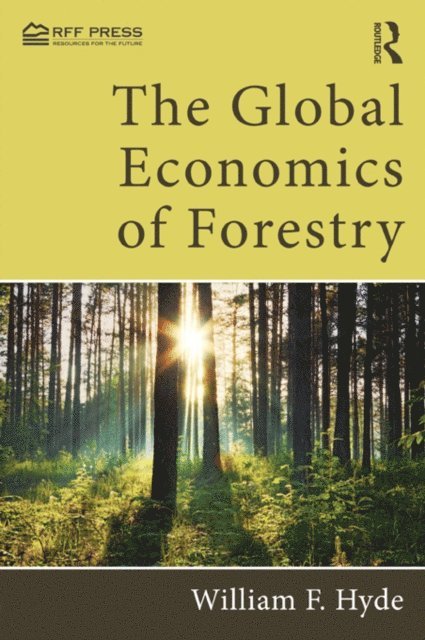
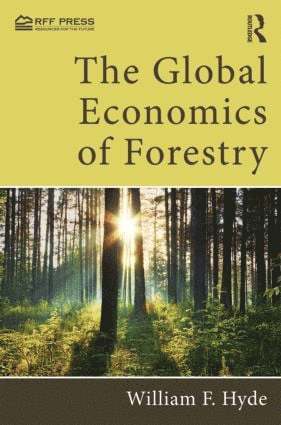
    Global Economics of Forestry

    AvWilliam F. Hyde

    Häftad, Engelska, 2018

    816 kr

    Beställningsvara. Skickas inom 10-15 vardagar. Fri frakt över 249 kr.

    Fler format och utgåvor

    Inbunden

    2 493 kr

    E-bok

    942 kr

    E-bok

    939 kr

    Beskrivning

    This book traces the economic and biological pattern of forest development from initial settlement and harvest activity at the natural forest frontier to modern industrial forest plantations. It builds from diagrams describing three discrete stages of forest development, and then discusses the management and policy implications associated with each, supporting its observations with examples and data from six continents and from both developed and developing countries. It shows that characteristic distinctions between the three stages make forestry unusual in natural resource management and that effective policy requires different, even contrasting, decisions at each stage. William F. Hyde’s comprehensive discussion covers a wide range of issues, including the impacts of both specific forest policies and broader macroeconomic policies, the unique requirements of current issues such as global warming, biodiversity and tourism, and the complexities of the different forest products industries. Concluding chapters review the roles of the newer institutional landowners, of smaller private and farm landowners, and of public agencies. This highly-original volume reaches far beyond forest economics; it explains what forestry can do for regional development and environmental conservation and what policies designed for other sectors and the macro-economy can do for forestry.

    Produktinformation

    • Utgivningsdatum:2018-04-16
    • Mått:156 x 234 x 36 mm
    • Vikt:920 g
    • Format:Häftad
    • Språk:Engelska
    • Antal sidor:478
    • Förlag:Taylor & Francis Ltd
    • ISBN:9781138590977

    Utforska kategorier

    • Miljöekonomi inom Ekonomi och Ledarskap

    Mer om författaren

    William F. Hyde has been a Senior Associate at Resources for the Future and at the Center for International Forestry Research in Indonesia, a professor at Duke University and Virginia Tech, and a visiting professor at the University of Gothenburg in Sweden. In a career that spans 35 years he has been a consultant to more than two dozen organizations in more than 30 countries and has authored or co-authored eight books and numerous other publications.

    Recensioner i media

    "This unique book covers the fundamental economic questions of forestry, but does not limit itself to a particular region or (time) frame. It comprehensively complements the contributions the author has made to our understanding of the economics of forestry with the broader research in the field. All of the topics are covered with sufficient clarity to provide a unified perspective on the fundamental questions facing forestry in the future." – David Newman, SUNY College of Environmental Science and Forestry"Relevant worldwide for many important policy decisions, including pressing climate issues, and equally helpful for training students across disciplines and levels of experience, Hyde's stages framework is clear and easy to grasp. Whether you prefer words, diagrams or equations, a tour of points and places is on offer from somebody who really has been there." – Alexander Pfaff, Duke University "Lives up to its title … will be a classic" – Runsheng Yin, Michigan State University"In his excellent book The Global Economics of Forestry, Hyde has done more than lay out the paradigm that unites the biology and bounty inherent in global forests with market economics that utilize the resource. He has gone to painstaking efforts to compile literature, sometimes spanning centuries, to identify where human experience matches or defies our modeled understanding of forest-related markets." - Gabriel Thoumi and Brian Loux, Mongabay, November 2012

    Innehållsförteckning

    • 1. Introduction 2. The Pattern of Forestry in the Course of Economic Development 3. Forest Development in the Long Run 4. Forest Policy 5. Forest Concessions: A Specialized Topic in Forest Policy and Management 6. The Effects of Trade, Macroeconomics, Growth and Development 7. Industrial Forestry 8. Institutional Investors 9. Non-industrial Private Landowners 10. Public Landowners 11. Forests and Local Human Communities 12. Summary, Conclusions, Policy Implications