• Fri frakt över 249 kr
  • •
  • Snabba leveranser
  • •
  • Billiga böcker
Kundservice

Du är på sajten för privatpersoner.

Företag, bibliotek eller offentlig verksamhet?

Du handlar på classic.bokus.com, där alla dina funktioner finns intakta.
Till classic.bokus.com
Bokus logotyp. Gå till startsidan.
  • Erbjudanden
  • Nyheter
  • Student
  • Topplistor
  • Barn & ungdom
  • Bokus Play
  • E-böcker
  • Pocketböcker
  • Spel & pussel

10% rabatt på allt med kod: NYSTART10 →

Sidfot

Mina sidor

    Hjälp

    • Kundservice
    • Vanliga frågor och svar
    • Frakt och leverans
    • Retur vid ångerrätt
    • Reklamera vara
    • Betalning
    • Köpvillkor
    • Allmänna villkor
    • Information om webbplatsens tillgänglighet

    Om Bokus

    • Om oss
    • Pressrum
    • För studenter
    • För företag
    • För bibliotek och offentlig verksamhet
    • För leverantörer
    • Hållbarhet

    Populärt

    • Aktuella erbjudanden
    • Presentkort
    • Studentlitteratur
    • Nya böcker
    • Topplistor
    • Signerade böcker
    • Engelska böcker

    Inspiration

    • Boktips
    • BookTok
    • Populära bokserier
    • Barnbokskaraktärer
    • Populära författare
    Logotyp för Bokus
    Följ oss på Facebook (extern länk)Följ oss på Instagram (extern länk)Följ oss på YouTube (extern länk)Följ oss på TikTok (extern länk)
    bokus @ CookiesAnpassa cookiesIntegritetspolicyKöpvillkor
    Till Citymail hemsida (extern länk)Till Budbee hemsida (extern länk)Till Postnord hemsida (extern länk)Till Schenker hemsida (extern länk)Till Early Bird hemsida (extern länk)Till Walleys hemsida (extern länk)
    1. Ekonomi och Ledarskap
    2. Ledarskapsböcker
    3. Projektledning

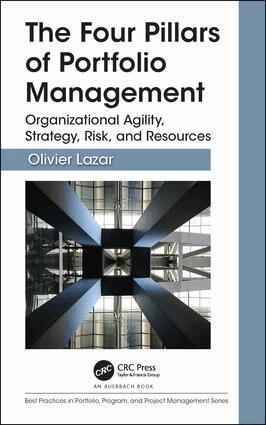
    Four Pillars of Portfolio Management

    Organizational Agility, Strategy, Risk, and Resources

    AvOlivier Lazar

    Inbunden, Engelska, 2018

    Del i serien Best Practices in Portfolio, Program, and Project Management

    2 117 kr

    Beställningsvara. Skickas inom 10-15 vardagar. Fri frakt över 249 kr.

    Fler format och utgåvor

    E-bok

    812 kr

    E-bok

    812 kr

    Häftad

    687 kr

    Beskrivning

    Portfolio management consists mainly of making decisions about which initiatives to undertake, which initiatives not to pursue, and which resources are to be allocated to which portfolio component. At least, that’s how it is most commonly presented in textbooks and courses. Indeed, it is all of that, but it is also so much more. Portfolio management is, of course, about making these decisions, but, more accurately, it is about making them with the goal of creating value for an organization’s wide population of stakeholders, both internal and external. This value is not only expressed in financial terms but also in social terms. The portfolio should create value for all stakeholders, who thereby support the portfolio organization and enable it to sustain itself. Portfolio management is about the realization of strategic vision, achieving a purpose, and developing an intelligent way of using resources to benefit stakeholders. This requires the ability to find a balance among the different dimensions of portfolio governance and among the constraints constantly shaping and reshaping the business environment. This is what portfolio management is truly about; this is what organizational management is about. The Four Pillars of Portfolio Management: Organizational Agility, Strategy, Risk, and Resources takes readers on a journey navigating the dimensions and constraints to be balanced and integrated as part of the portfolio and organizational decision-making process. By balancing the requirements of strategic alignment with the exposure to risk and by reconciling resource demands with capability, a portfolio manager can develop and sustain an organization despite the constant and dynamic evolution of the business environment. This book explains how to manage portfolios that create the agility all organizations require to survive and thrive.

    Produktinformation

    • Utgivningsdatum:2018-10-05
    • Mått:156 x 234 x 16 mm
    • Vikt:428 g
    • Format:Inbunden
    • Språk:Engelska
    • Serie:Best Practices in Portfolio, Program, and Project Management
    • Antal sidor:170
    • Förlag:Taylor & Francis Ltd
    • ISBN:9781138601321

    Utforska kategorier

    • Projektledning inom Ekonomi och Ledarskap
    • Affärsstrategi inom Ekonomi och Ledarskap

    Mer om författaren

    Olivier Lazar is an organizational architecture consultant, coach, and trainer, as well as a graduate with a master’s degree and an executive MBA in strategy, project, and program management from the Lille Graduate School of Management and a graduate from the PMI Leadership Institute Master Class in 2013. Committed to the advancement of the profession, he’s Managing Partner and COO at The Valense Palatine Group, acting Project Management Director at Altran Switzerland, a former president at the PMI Switzerland Chapter, and has hold various global volunteering leadership roles at PMI. With more than 20 years of Organizational Governance, Change, Project and Program Leadership experience, both on the operational and consulting perspective, Olivier has worked in a large scope of industries, from corporate finance to aerospace, and from E-business to pharmaceutical and energy where he has created organizationally agile environments fostering engagement, motivation and performance. Olivier accompanies organizations in their transition to higher levels of Maturity through in the rethinking of their structures and governance principles. Focusing on Value and Change Management, Olivier helps in delivering Organizational Transformation.

    Innehållsförteckning

    • DedicationContentsList of FiguresForewordAcknowledgmentsAbout the AuthorChapter 1 IntroductionChapter 2 Context of Portfolio Management Chapter 3 The First Pillar: Organizational AgilityChapter 4 The Second Pillar: Your Organization’s Strategy Chapter 5 The Third Pillar: Risk Chapter 6 The Fourth Pillar: Resource Demand PlanningChapter 7 Managing Your PortfolioChapter 8 Evolution and Future Developments in Portfolio ManagementChapter 9 ConclusionLexiconReferencesIndex