• Fri frakt över 249 kr
  • •
  • Snabba leveranser
  • •
  • Billiga böcker
Kundservice

Du är på sajten för privatpersoner.

Företag, bibliotek eller offentlig verksamhet?

Du handlar på classic.bokus.com, där alla dina funktioner finns intakta.
Till classic.bokus.com
Bokus logotyp. Gå till startsidan.
  • Erbjudanden
  • Nyheter
  • Student
  • Topplistor
  • Barn & ungdom
  • Bokus Play
  • E-böcker
  • Pocketböcker
  • Spel & pussel

10% rabatt på allt med kod: NYSTART10 →

Sidfot

Mina sidor

    Hjälp

    • Kundservice
    • Vanliga frågor och svar
    • Frakt och leverans
    • Retur vid ångerrätt
    • Reklamera vara
    • Betalning
    • Köpvillkor
    • Allmänna villkor
    • Information om webbplatsens tillgänglighet

    Om Bokus

    • Om oss
    • Pressrum
    • För studenter
    • För företag
    • För bibliotek och offentlig verksamhet
    • För leverantörer
    • Hållbarhet

    Populärt

    • Aktuella erbjudanden
    • Presentkort
    • Studentlitteratur
    • Nya böcker
    • Topplistor
    • Signerade böcker
    • Engelska böcker

    Inspiration

    • Boktips
    • BookTok
    • Populära bokserier
    • Barnbokskaraktärer
    • Populära författare
    Logotyp för Bokus
    Följ oss på Facebook (extern länk)Följ oss på Instagram (extern länk)Följ oss på YouTube (extern länk)Följ oss på TikTok (extern länk)
    bokus @ CookiesAnpassa cookiesIntegritetspolicyKöpvillkor
    Till Citymail hemsida (extern länk)Till Budbee hemsida (extern länk)Till Postnord hemsida (extern länk)Till Schenker hemsida (extern länk)Till Early Bird hemsida (extern länk)Till Walleys hemsida (extern länk)
    1. Medicin
    2. Medicin: allmänt
    3. Hälso- och sjukvård

    Logics of Healthcare

    The Professional’s Guide to Health Systems Science

    AvPaul Lillrank

    Häftad, Engelska, 2018

    686 kr

    Beställningsvara. Skickas inom 10-15 vardagar. Fri frakt över 249 kr.

    Fler format och utgåvor

    Inbunden

    2 493 kr

    E-bok

    812 kr

    E-bok

    814 kr

    Beskrivning

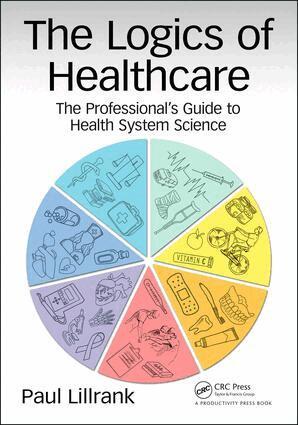
    Most of the current literature on healthcare operations management is focused on importing principles and methods from manufacturing. The evidence of success is scattered and nowhere near what has been achieved in other industries. This book develops the idea that the logic of production, and production systems in healthcare is significantly different. A line of thing that acknowledges the ingenious characteristics of health service production is developed. This book builds on a managerial segmentation of healthcare based on fundamental demand-supply constellations. Demand can be classified with the variables urgency, severity, and randomness. Supply is constrained by medical technology (accuracy of diagnostics, efficacy of therapies), patient health behavior (co-creation of health), and resource availability. Out of this emerge seven demand-supply-based operational types (DSO): prevention, emergencies, one-visit, electives, cure, care, and projects. Each of these have distinct managerial characteristics, such as time-perspective, level of co-creation, value proposition, revenue structure, productivity and other key performance indicators (KPI).The DSOs can be envisioned as platforms upon which clinical modules are attached. For example, any Emergency Department (ED) must be managed to deal with prioritization, time-windows, agitated patients, the necessity to save and stabilize, and variability in demand. Specific clinical assets and skill-sets are required for, say, massive trauma, strokes, cardiac events, or poisoning. While representing different specialties of clinical medicine they, when applied in the emergency – context, must conform to the demand-supply-based operating logic.A basic assumption in this book is that the perceived complexity of healthcare arises from the conflicting demands of the DSO and the clinical realms. The seven DSOs can neatly be juxtaposed on the much-used Business Model Canvas (BMC), which postulates the business model elements as value proposition; customer segments, channels and relations; key activities, resources and partners; the cost structure; and the revenue model.

    Produktinformation

    • Utgivningsdatum:2018-01-22
    • Mått:152 x 229 x 18 mm
    • Vikt:568 g
    • Format:Häftad
    • Språk:Engelska
    • Antal sidor:288
    • Förlag:Taylor & Francis Ltd
    • ISBN:9781138626249

    Utforska kategorier

    • Hälso- och sjukvård inom Medicin

    Mer om författaren

    Paul Lillrank has been Professor of Quality and Service Management at Aalto University since 1994. He has served as the Head of the Department of Industrial Engineering and management for eight years and been Academic Dean of the school’s MBA program. Aalto University was formed in 2010 through the merger of Helsinki University of Technology, Helsinki School of Economics, and Helsinki School of Art and Design.Paul Lillrank received a PhD in Social and Political Sciences at Helsinki University in 1988 after spending six years as a post-graduate student in Japan where he researched quality management in Japanese industry. After graduating he joined The Boston Consulting Group in Tokyo and later in Stockholm, returning to academia in 1992 as Affiliated Professor at the European Institute of Japanese Studies at the Stockholm School of Economics. He has been visiting professor at the University of Toyko, served as program director at College des Ingenieurs in Paris, and teaches regularly at the Indian Institute of Technology, Kharagpur.Professor Lillrank has conducted research in several service industries, such as software, telecom, airlines and retailing. During the recent past his focus has been in healthcare. He has been a pioneer in introducing industrial management methods to the study of healthcare service production. He has co-founded The Institute of Healthcare Engineering, Management and Architecture (HEMA), and the Nordic Healthcare Group (NHG), a consultancy. He has been a frequent speaker and advisor to several healthcare producers and government agencies. His research interests are in Healthcare Operations Management, particularly operating modes, process coordination, knowledge integration through mobile solutions, and regionally supply systems. A current topic is innovations in healthcare management, particularly frugal innovations in the Indian context.

    Innehållsförteckning

    • Chapter 1 Introduction; Chapter 2 Healthcare as a service industry; Chapter 3 Methodology; Chapter 4 Demand-Supply-based Operating Platforms (DSO); Chapter 5 The Business Model Canvas (BMC); Chapter 6 The DSOs as distinct business models; Chapter 7 DSO ion practice; Chapter 8 Summary, conclusion and discussion