• Fri frakt över 249 kr
  • •
  • Snabba leveranser
  • •
  • Billiga böcker
Kundservice

Du är på sajten för privatpersoner.

Företag, bibliotek eller offentlig verksamhet?

Du handlar på classic.bokus.com, där alla dina funktioner finns intakta.
Till classic.bokus.com
Bokus logotyp. Gå till startsidan.
  • Erbjudanden
  • Nyheter
  • Student
  • Topplistor
  • Barn & ungdom
  • Bokus Play
  • E-böcker
  • Pocketböcker
  • Spel & pussel

10% rabatt på allt med kod: NYSTART10 →

Sidfot

Mina sidor

    Hjälp

    • Kundservice
    • Vanliga frågor och svar
    • Frakt och leverans
    • Retur vid ångerrätt
    • Reklamera vara
    • Betalning
    • Köpvillkor
    • Allmänna villkor
    • Information om webbplatsens tillgänglighet

    Om Bokus

    • Om oss
    • Pressrum
    • För studenter
    • För företag
    • För bibliotek och offentlig verksamhet
    • För leverantörer
    • Hållbarhet

    Populärt

    • Aktuella erbjudanden
    • Presentkort
    • Studentlitteratur
    • Nya böcker
    • Topplistor
    • Signerade böcker
    • Engelska böcker

    Inspiration

    • Boktips
    • BookTok
    • Populära bokserier
    • Barnbokskaraktärer
    • Populära författare
    Logotyp för Bokus
    Följ oss på Facebook (extern länk)Följ oss på Instagram (extern länk)Följ oss på YouTube (extern länk)Följ oss på TikTok (extern länk)
    bokus @ CookiesAnpassa cookiesIntegritetspolicyKöpvillkor
    Till Citymail hemsida (extern länk)Till Budbee hemsida (extern länk)Till Postnord hemsida (extern länk)Till Schenker hemsida (extern länk)Till Early Bird hemsida (extern länk)Till Walleys hemsida (extern länk)
    1. Samhälle och politik
    2. Politik och statsskick
    3. Internationella relationer

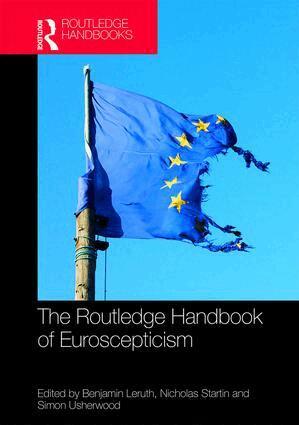
    Routledge Handbook of Euroscepticism

    AvBenjamin Leruth,Nicholas Startin

    Inbunden, Engelska, 2017

    3 656 kr

    Beställningsvara. Skickas inom 10-15 vardagar. Fri frakt över 249 kr.

    Beskrivning

    Since the advent of the 1992 Maastricht Treaty, a key turning point in terms of the crystallisation of opposition towards the European Union (EU), Euroscepticism has become a transnational phenomenon. The term ‘Euroscepticism’ has become common political language in all EU member states and, with the advent of the Eurozone, refugee and security crises have become increasingly ‘embedded’ within European nation states.Bringing together a collection of essays by established and up-and-coming authors in the field, this handbook paints a fuller, more holistic picture of the extent to which the Eurosceptic debate has influenced the EU and its member states. Crucially, it also focuses on what the consequences of this development are likely to be for the future direction of the European project. By adopting a broad-based, thematic approach, the volume centres on theory and conceptualisation, political parties, public opinion, non-party groups, the role of referendums – and the media – and of scepticism within the EU institutions. It also reflects on the future of Euroscepticism studies following the United Kingdom’s vote to leave the EU.Containing a full range of thematic contributions from eminent scholars in the field, The Routledge Handbook of Euroscepticism is a definitive frame of reference for academics, practitioners and those with an interest in the debate about the EU, and more broadly for students of European Studies, EU and European Politics.

    Produktinformation

    • Utgivningsdatum:2017-08-01
    • Mått:174 x 246 x 37 mm
    • Vikt:1 050 g
    • Format:Inbunden
    • Språk:Engelska
    • Antal sidor:486
    • Förlag:Taylor & Francis Ltd
    • ISBN:9781138784741

    Utforska kategorier

    • Internationella relationer inom Samhälle och politik

    Mer om författaren

    Benjamin Leruth is an Assistant Professor in Politics and Public Administration at the Institute for Governance and Policy Analysis (IGPA), University of Canberra, Australia. His research focuses on Euroscepticism, differentiated integration in the European Union and public attitudes to political institutions. His publications include a Journal of European Public Policy special issue on differentiated integration (2015), a co-edited book entitled Euroscepticism as a Transnational and Pan-European Phenomenon (Routledge, 2017) and After Austerity (2017).Nicholas Startin is Head of Department for Politics, Languages and International Studies (PoLIS) at the University of Bath, UK. His research focuses on Euroscepticism and the far right in contemporary Europe. He co-founded the UACES research network on Euroscepticism and has in recent years been the co-editor for two prominent, special issues on the topic in the Journal of Common Market Studies (2013) and the International Political Science Review (2015). He recently co-edited Euroscepticism as a Transnational and Pan-European Phenomenon (Routledge, 2017).Simon Usherwood is a Reader in Politics at the University of Surrey, UK. His research focuses on Euroscepticism which has led him to co-found and organise an extensive network of colleagues across Europe, as well as working with practitioners in the EU, national government and other civil society groups. As well as numerous publications in this field, he is also very active on matters relating to the UK–EU relationship.

    Innehållsförteckning

    • Part I Euroscepticism: Theory and Conceptualisation1. Defining Euroscepticism: From a Broad Concept to a Field of Study2. Contemporary Research on Euroscepticism: The State of the Art3. Theory, Concepts and Research Design in the Study of Euroscepticism4. Euroscepticism as Ideology5. Euroscepticism: Stand-alone Phenomenon or Embedded within a Broader Cleavage?Part II Eurosceptic Parties and Domestic Party Systems6. Euroscepticism and Political Parties: Theory and Practice7. ‘Euromondialisme’ and the Growth of the Radical Right8. Opposing Europe, Opposing Austerity: Radical Left Parties and the Eurosceptic Debate9. The UK Independence Party and other Primarily Eurosceptic Parties10. The Dynamic of Euroscepticism in Germany 11. Party-based Euroscepticism in the Nordic Region: Ever More ‘Reluctant Europeans’?12. Eurosceptic Parties in the Central and Eastern European Countries: A Comparative Case Study of Poland, Hungary and Bulgaria13. Changing the Rules, Changing the Winners? The Various Effects of European Election Rules on Party Oppositions to the EU in France14. Losing Loyalty: The Rise of Polity Euroscepticism in Southern Europe Part III Public Opinion, Referendums and Citizens’ Perceptions of the European Union15. Soft Sceptics and Hard Rejectionists: Identifying Two Types of Eurosceptic Voters16. Young People and the EU at Times of Crisis17. Eurosceptic Youth: Interest, Trust and Ideology18. The Pragmatic Euroscepticism of Scandinavia 19. Derailing European Integration? Euroscepticism and the Politics of EU Referendums20. EU Referendums in the ‘New’ Member States: Politicisation after a Decade of Support?21. Referendums and European Integration: The Case of the United Kingdom22. When ‘No’ means ‘Yes’: A Comparative Study of Referendums in Denmark and Ireland Part IV Non-state Actors: Civil Society and the Media23. Euroscepticism as EU Polity Contestation24. Euroscepticism and the Crisis: ‘Critical Europeanism’ and Anti-austerity Social Movements25. Euroscepticism and Big Business26. Euroscepticism and Trade Unionism: The Crisis of ‘Social Europe’27. Mirroring or Setting the Political Agenda? The Role of the Media in the Eurosceptic Debate28. Varieties of Opposition to the EU in the Low Countries: A Comparison of the Dutch and Flemish PressPart V Transnational and Pan-European Euroscepticism29. Euroscepticism in the EU Institutions: A Persistent and Embedded Phenomenon30. Transnational and Pan-European Euroscepticism: The Case of the European Conservatives and Reformists31. Eurosceptic Members of the European Parliament: Foxes in the Henhouse?32. The Far Right and the 2014 European Elections: Consequences for the Eurosceptic DebatePart VI Crises: Euroscepticism, Brexit and the Future of European Integration33. The Impact of the Economic Crisis on Euroscepticism34. Voting to Leave: Economic Insecurity and the Brexit Vote35. How the Referendum was Lost: An Analysis of the UK Referendum Campaign on EU Membership36. Conclusion: Euroscepticism and European (dis)integration in the Age of Brexit